


Perforated Sheet Metal 4×8
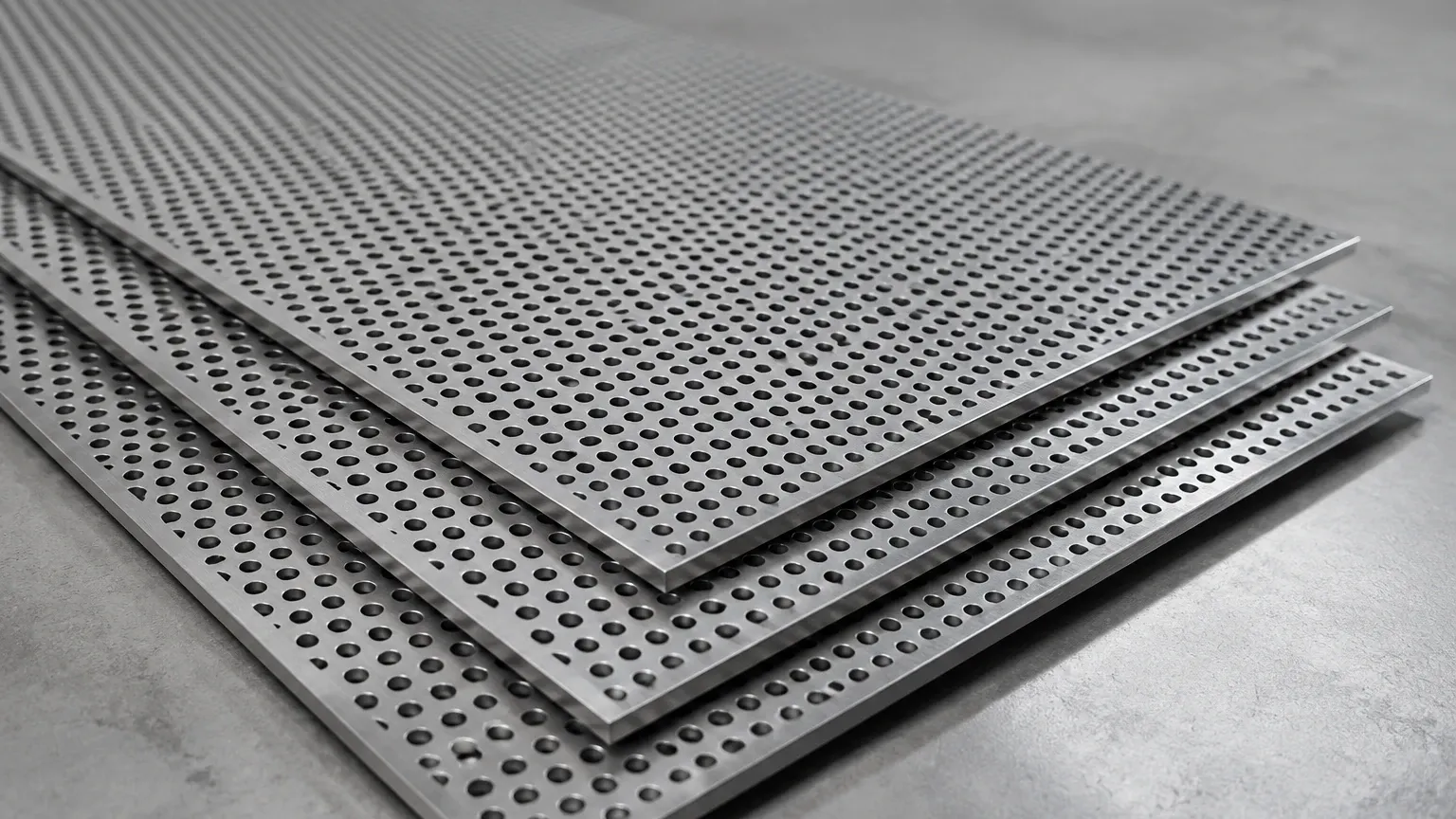
In the landscape of industrial manufacturing and filtration, the 4×8 sheet—measuring 4 feet by 8 feet (approximately 1219mm x 2438mm)—represents the most widely utilized standard dimension for metal substrates. For engineers and procurement specialists, selecting the right perforated sheet metal 4×8 involves more than just specifying dimensions; it requires a deep understanding of material properties, hole geometry, open area percentages, and how these factors influence the performance of a filtration system or structural component.
As a specialized manufacturer of stainless steel filtration solutions, Kaifil provides precision-engineered Perforated & Expanded Metal designed to meet the rigorous demands of chemical processing, food production, and hydraulic applications. This guide examines the technical variables that define high-quality perforated sheets and the engineering considerations necessary for optimal selection.
Understanding the 4×8 Standard in Industrial Applications
The 4×8 format has become the industry standard for several logistical and manufacturing reasons. From a production standpoint, most hydraulic presses and CNC punching machines are optimized for this footprint, minimizing material waste during the perforation process. For the end-user, these dimensions offer a manageable surface area that fits standard racking, transport pallets, and structural frames.
In filtration, a perforated sheet metal 4×8 often serves as the primary support structure or the "mother sheet" from which smaller, specialized filter components are fabricated. Whether the sheet is used as a debris screen in a water treatment plant or as a support cage for a fine wire mesh filter cartridge, the uniformity of the 4×8 sheet ensures consistent mechanical properties across the entire surface.
Material Selection: Stainless Steel vs. Alternatives
Material choice is the most critical factor in determining the longevity and chemical compatibility of a perforated sheet. While carbon steel and aluminum are common in architectural applications, industrial filtration often demands the superior properties of stainless steel.
Stainless Steel 304 and 316
Kaifil specializes in stainless steel perforated metals because of their exceptional resistance to corrosion and high temperatures.
- Grade 304: The most common choice for general industrial use, providing excellent durability and resistance to oxidation. It is widely used in food and beverage processing where hygiene is paramount.
- Grade 316: Contains molybdenum, which significantly enhances resistance to chlorides and marine environments. This is the preferred material for chemical processing and pharmaceutical applications where the filter is exposed to aggressive solvents or acidic cleaning agents.
Specialty Alloys
For environments involving extreme heat or highly corrosive chemicals, alloys such as Monel, Inconel, or Hastelloy may be required. These materials maintain their structural integrity under conditions that would cause standard stainless steel to fail, though they come at a higher total cost of ownership.
Technical Specifications of Perforation Patterns
The performance of a perforated sheet metal 4×8 is defined by its pattern. The arrangement of holes dictates the flow rate, pressure drop, and the size of particles the sheet can effectively retain.
Hole Shapes
1. Round Holes: The most popular and efficient pattern. Round holes offer the best balance of structural strength and open area. They are easier to punch, which reduces manufacturing costs and minimizes internal stresses in the metal.
2. Square Holes: Often selected for high open area requirements. While they provide more flow, square holes can create stress concentrations at the corners, making the sheet more prone to cracking under high-pressure cycles.
3. Slotted Holes: Ideal for filtering elongated particles or for applications requiring specific directional flow. Slotted patterns are frequently used in grain processing and vibrating screens.
Pitch and Orientation
The "pitch" refers to the distance between the centers of adjacent holes. Patterns are typically arranged in a 60-degree staggered orientation, which is the strongest and most versatile configuration. A staggered pattern ensures that the "bridges" (the metal between the holes) are uniform, providing maximum structural integrity even with a high open area. Straight-row patterns are available but are generally reserved for aesthetic or specific mechanical alignment needs.
Calculating Open Area and Its Impact on Filtration
The open area is expressed as a percentage of the total sheet surface that is occupied by holes. This is the primary metric for calculating flow capacity. For a standard 60-degree staggered round hole pattern, the formula is:
Open Area % = (D² × 90.69) / P²
*(Where D is hole diameter and P is the pitch)*
In industrial filtration, a higher open area reduces the pressure drop across the filter, which improves energy efficiency in pumping systems. However, as the open area increases, the mechanical strength of the perforated sheet metal 4×8 decreases. Engineers must find the "sweet spot" where the sheet is porous enough to allow efficient flow but strong enough to withstand the differential pressure (ΔP) during operation, especially when the filter begins to load with contaminants.
Engineering Considerations for Perforated & Expanded Metal
When integrating Perforated & Expanded Metal into a system, several mechanical factors must be confirmed to ensure reliability.
Gauge and Thickness
The thickness of the sheet (often measured in gauges) must be sufficient to prevent bowing or deformation. In high-pressure hydraulic or steam applications, a thicker gauge is necessary to support the weight of the filtered media and the force of the fluid. Kaifil provides guidance on selecting the appropriate thickness based on the span of the support frame and the expected vacuum or pressure loads.
Margins and Blank Areas
A standard perforated sheet metal 4×8 can be produced with "full-perf" (perforations extending to the edges) or with specific margins. Margins are unperforated borders that facilitate easier welding and mounting. Specifying the width of these margins is crucial during the design phase to avoid the need for secondary trimming, which increases labor costs.
Flatness and Stress Relief
The punching process naturally introduces stresses into the metal, which can cause the sheet to curl or bow. High-quality industrial sheets undergo a leveling process to ensure they remain flat. This is particularly important if the 4×8 sheet is to be laser-cut into smaller components or rolled into cylindrical filter cartridges.
Applications Across Key Industries
Because of its versatility, the 4×8 perforated sheet is found in nearly every sector of heavy industry:
* Chemical Processing: Used as catalyst support grids and internal components for reactor vessels where corrosion resistance is mandatory.
* Food and Beverage: Utilized in dewatering screens, pasteurization trays, and hop strainers. The smooth, burr-free finish of Kaifil’s perforated metal ensures that no food particles are trapped, maintaining sanitary standards.
* Water Treatment: Large 4×8 sheets serve as intake screens to protect pumps from large debris, or as the structural base for multi-stage filtration systems.
* Pharmaceuticals: Precision perforated components are used in centrifugal separators and fluid bed dryers, where exact hole diameters are required to ensure consistent product quality.
Customization and OEM Capabilities
While the 4×8 sheet is a standard size, many industrial applications require custom configurations. Kaifil’s OEM services allow for the customization of hole sizes (from micro-perforations to large decorative openings), unique materials, and secondary processing.
Common customization options include:
- Custom Dimensions: While 4×8 is standard, we can produce sheets in custom lengths and widths to minimize waste for specific project footprints.
- Surface Finishes: Electropolishing, pickling, or passivating to enhance corrosion resistance and aesthetic appeal.
- Forming and Fabrication: Rolling perforated sheets into cylinders, cones, or baskets to create ready-to-install filter elements.
Maintenance, Replacement, and Total Cost Considerations
The total cost of a perforated sheet metal 4×8 is not just the purchase price, but the cost over its entire service life. Choosing a high-grade stainless steel might involve a higher initial investment, but it drastically reduces the frequency of replacement and the risk of system downtime.
Cleaning and Longevity
In filtration applications, perforated metals are subject to fouling. The ease of cleaning depends on the hole geometry and surface finish. Round holes with a smooth internal bore are the easiest to backwash or chemically clean. Regular inspection for "blinding" (permanent clogging of the holes) and mechanical wear is essential to maintain system efficiency.
When to Replace
Signs that a perforated sheet needs replacement include:
- Visible deformation or "oil canning" of the sheet surface.
- Significant thinning of the bridges due to erosion or corrosion.
- Persistent pressure drop issues that cannot be resolved through standard cleaning cycles.
Conclusion: Selecting the Right Partner
Selecting a perforated sheet metal 4×8 requires balancing hydraulic performance with mechanical durability. By focusing on high-quality materials and precise manufacturing tolerances, Kaifil helps engineers achieve reliable filtration even in the most demanding environments. Whether you require a standard sheet for a structural application or a custom-engineered component for a complex filtration system, confirming the material grade, open area, and mechanical requirements is the first step toward a successful installation.
For technical assistance with material selection or to discuss custom perforation patterns for your specific industrial application, review our full range of Perforated & Expanded Metal solutions and consult with our engineering team to ensure your project meets its performance targets.
