


Perforated Steel 4×8
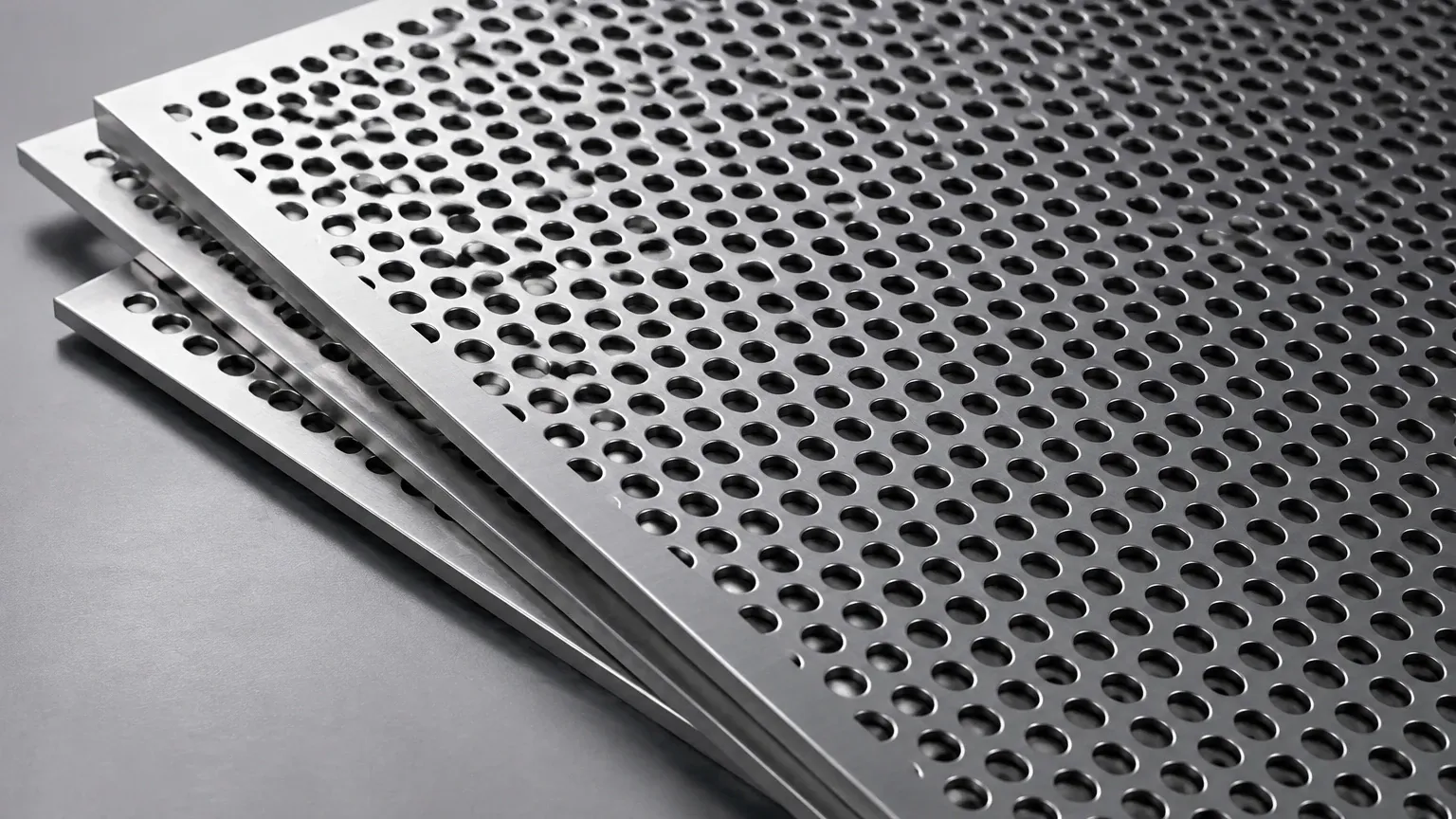
In the landscape of industrial manufacturing and filtration, the perforated steel 4×8 sheet stands as a fundamental building block. Measuring 48 inches by 96 inches, this standard dimension is widely adopted across chemical processing, water treatment, and pharmaceutical industries due to its compatibility with standard fabrication equipment and logistics frameworks. However, selecting the right Perforated & Expanded Metal involves far more than simply choosing a size; it requires a deep understanding of metallurgy, hole geometry, and the mechanical stresses the material will encounter in a filtration environment.
For engineers and procurement specialists, the 4×8 sheet serves as the primary raw material that is later transformed into filter cartridges, strainer baskets, or protective screens. Understanding the technical nuances of these sheets—ranging from the percentage of open area to the specific grade of stainless steel—is critical for ensuring the longevity and efficiency of the final filtration solution.
The Role of Standard Dimensions in Industrial Perforation
The 4×8 foot dimension is the industry standard for metal sheets globally. In the context of perforated steel, this size is favored because most high-speed perforating presses are optimized for 48-inch widths. Utilizing standard dimensions helps in reducing material waste during the fabrication of cylindrical filters or large-scale screening panels.
When a 4×8 sheet is processed, it undergoes a series of precision punches. The resulting product must maintain structural integrity despite the removal of a significant portion of its mass. This is why the choice of material and the pattern of the perforations are inextricably linked to the sheet's final performance. Whether used as a primary filter media or a support structure for finer wire mesh, the perforated steel 4×8 sheet must meet rigorous flatness and tolerance standards to be viable for secondary manufacturing processes like rolling and welding.
Material Selection and Grade Specifications
While perforated steel can be manufactured from carbon steel, industrial filtration applications almost exclusively demand stainless steel due to its corrosion resistance and mechanical strength. Kaifil specializes in high-performance alloys that withstand demanding chemical and thermal environments.
Austenitic Stainless Steels (304 and 316)
* Grade 304: This is the most common grade used for perforated steel 4×8 sheets. It offers excellent formability and weldability. It is suitable for food and beverage applications where sanitization is required but where the material is not exposed to high concentrations of chlorides.
* Grade 316/316L: For more aggressive environments, such as marine filtration, pharmaceutical processing, or chemical handling, Grade 316 is the standard. The addition of molybdenum provides superior resistance to pitting and crevice corrosion. Grade 316L (low carbon) is preferred when extensive welding is required, as it prevents carbide precipitation that can lead to intergranular corrosion.
Specialty Alloys
In high-temperature or highly acidic environments, engineers may specify duplex stainless steels or nickel alloys. These materials maintain their tensile strength and resist oxidation at temperatures where standard 304 or 316 would fail. When selecting a material for a perforated steel 4×8 sheet, the chemical compatibility with the fluid being filtered is the primary engineering constraint.
Technical Parameters: Hole Patterns and Open Area Calculations
The performance of a perforated sheet is defined by its hole pattern and the resulting open area. These factors determine the flow rate, pressure drop, and particle retention capabilities of the filter.
Hole Shapes
1. Round Holes: The most efficient and common pattern. Round holes offer the best balance of structural strength and open area. They are typically arranged in a 60-degree staggered pattern, which provides the highest strength-to-weight ratio.
2. Square Holes: These provide a higher open area than round holes but result in lower structural rigidity. They are often used in applications where high flow rates are prioritized over mechanical pressure.
3. Slotted Holes: Frequently used for the filtration of elongated particles or in applications where the direction of flow requires specific orientation. Slotted perforated steel is common in grain processing and heavy-duty liquid/solid separation.
Calculating Open Area
For an engineer, the "Percentage of Open Area" is the most critical metric. It is the ratio of the total area of the holes to the total area of the sheet. For a standard 60-degree staggered round hole pattern, the formula is:
Open Area % = (D² × 90.69) / P²
Where:
* D = Hole Diameter
* P = Center-to-Center Pitch
Maintaining a high open area is essential for reducing the energy consumption of pumps in a filtration system, as it minimizes the resistance to flow. However, if the open area is too high, the 4×8 sheet may lose its flatness or buckle under the pressure of the process fluid.
Manufacturing Tolerances and Quality Standards
Producing a perforated steel 4×8 sheet requires precision to ensure the product is "dead flat" and free of internal stresses. During the punching process, the metal is subjected to intense pressure, which can cause the sheet to curl or bow. Professional manufacturers use tension leveling equipment to restore flatness after perforation.
Margin Requirements
Margins are the unperforated areas along the edges of the sheet. For a 4×8 sheet, margins are critical for subsequent welding.
* Minimum Margins: Usually, the punch pattern leaves a small unperforated border to prevent edge distortion.
* Custom Margins: Engineers may specify wide margins on specific sides to facilitate the mounting of the sheet into a frame or the longitudinal welding of a filter cylinder.
Deburring and Surface Finishing
The punching process naturally creates burrs on the "exit" side of the hole. In filtration, these burrs can trap contaminants or cause turbulence. High-quality perforated steel 4×8 sheets undergo mechanical deburring or electropolishing. Electropolishing is particularly vital in the pharmaceutical and food industries, as it creates a microscopically smooth surface that prevents bacterial growth and facilitates easy cleaning (CIP – Clean In Place).
Applications in Industrial Filtration Systems
Perforated steel 4×8 sheets are versatile components within the filtration industry. Their role varies depending on the specific requirements of the process.
Support Media for Fine Mesh
In many high-pressure hydraulic or water treatment systems, fine wire mesh is used to achieve micron-rated filtration. However, fine mesh lacks the structural strength to withstand high differential pressures. In these cases, a perforated steel sheet acts as a "backup" or support tube. The perforated metal provides the mechanical skeleton, while the wire mesh performs the actual filtration.
Primary Filtration and Pre-Filtration
In applications involving large debris, such as intake screens for water treatment plants or cooling water systems, the perforated steel itself serves as the filter media. The hole size is engineered to catch large solids while allowing the liquid to pass with minimal pressure loss. Because of the durability of stainless steel, these filters can be backwashed or mechanically cleaned repeatedly without damage.
Diffusers and Flow Distributors
Perforated sheets are also used to normalize flow within a vessel. By placing a perforated steel panel upstream of a sensitive filter element, the fluid velocity is distributed evenly across the surface of the filter, preventing "hot spots" and extending the service life of the media.
Customization and Secondary Fabrication Services
While the 4×8 sheet is the starting point, most industrial applications require further processing. Kaifil provides comprehensive OEM services to transform these sheets into finished filtration components.
* Shearing and Notching: Cutting the 4×8 sheet into precise dimensions for specific filter housings.
* Rolling: Forming the sheet into cylinders or cones. This requires precise calculation of the "stretch" the metal undergoes during forming to ensure the final diameter is accurate.
* Welding: Utilizing TIG, MIG, or plasma welding to join the edges. For filtration, the weld must be continuous and free of voids to prevent bypass of unfiltered fluid.
* Degreasing: Removing all fabrication oils, which is a mandatory step for oxygen service or food-grade applications.
Procurement Considerations for Engineering Teams
When ordering perforated steel 4×8 sheets, providing incomplete specifications can lead to performance failures or increased costs. Technical professionals should confirm the following before procurement:
1. Hole Size and Pitch: Specify the exact diameter and the distance between hole centers. Do not just specify "open area," as different combinations of hole size and pitch can yield the same percentage but different filtration characteristics.
2. Gauge vs. Decimal Thickness: Always use decimal thickness (e.g., 0.060") rather than gauge numbers to avoid ambiguity, as gauge standards can vary between materials.
3. Hole Orientation: For staggered patterns, specify if the stagger should run parallel to the 4-foot or 8-foot dimension. This affects how the sheet behaves when rolled.
4. Flatness Tolerances: If the sheet is to be used in a precision CNC laser cutting process later, "standard commercial flatness" may not be sufficient.
5. Material Certification: Ensure the supplier provides Mill Test Reports (MTRs) to verify the chemical composition and mechanical properties of the steel, particularly for 316L applications.
Total Cost of Ownership in Filtration
While carbon steel or plastic perforated sheets may have a lower initial purchase price, the total cost of ownership (TCO) for a stainless steel perforated steel 4×8 sheet is often lower in industrial settings. The durability of stainless steel reduces the frequency of replacement, and its resistance to corrosion ensures that the filtration system does not introduce rust or contaminants into the process stream.
Furthermore, the precision of the perforation pattern directly impacts energy costs. A poorly designed pattern with insufficient open area increases the load on pumps, leading to higher electricity consumption over the life of the equipment. By investing in high-quality Perforated & Expanded Metal, companies can optimize their process efficiency and reduce long-term maintenance overhead.
Kaifil’s expertise in manufacturing and customizing these components ensures that every sheet meets the specific technical demands of the application, from the initial material selection to the final surface finish. Whether you are designing a new filtration system or replacing components in an existing one, understanding the technical depth of the perforated steel 4×8 sheet is the first step toward a high-performance solution.
