


Perforated Steel 5mm
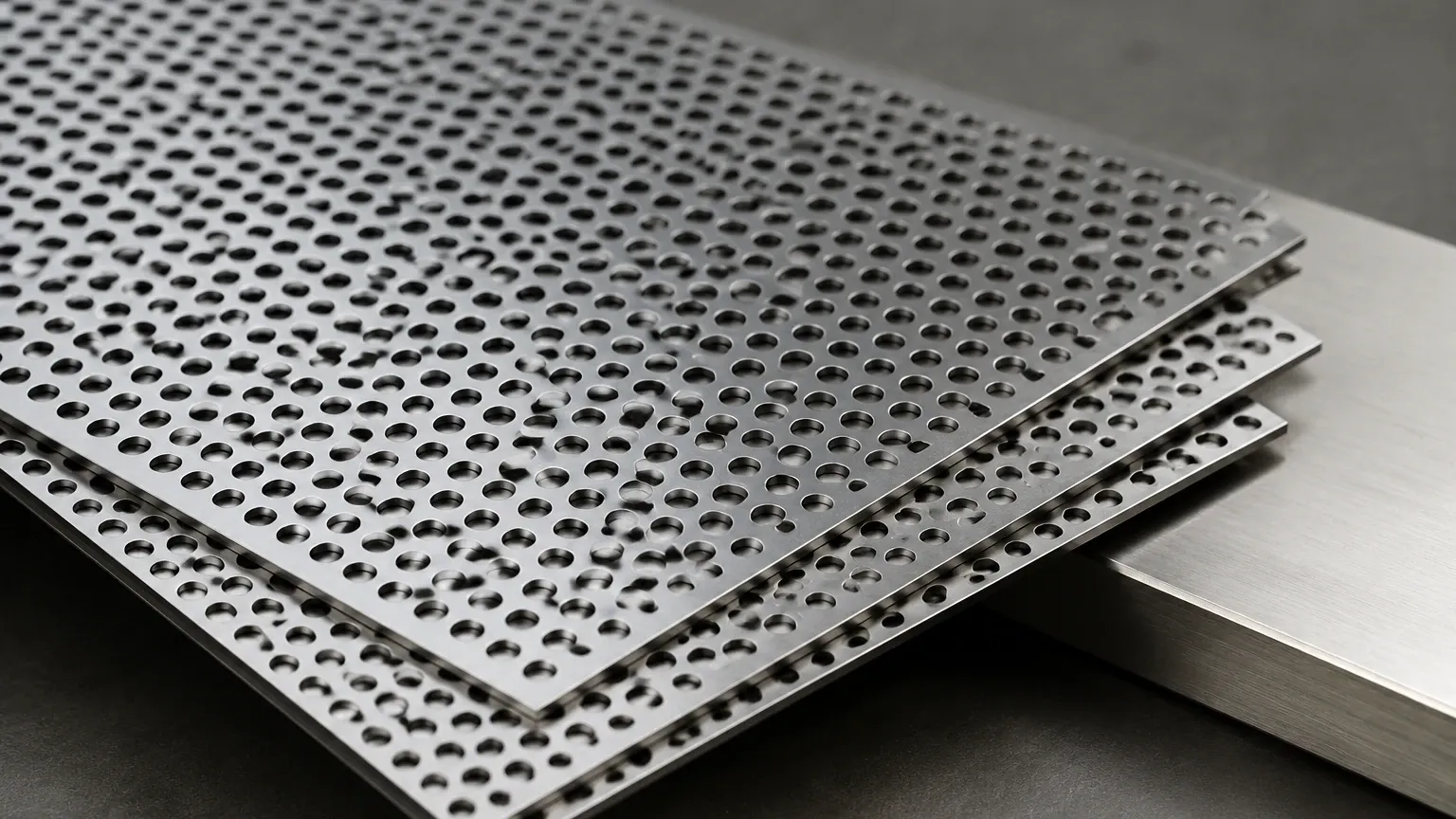
In industrial engineering and filtration, the specification of perforated steel 5mm serves as a critical benchmark for various mechanical and fluid-handling applications. Whether referring to a 5mm hole diameter or a 5mm sheet thickness, this dimension occupies a middle ground between fine precision screening and heavy-duty structural reinforcement. For engineers and procurement specialists, understanding the technical nuances of perforated steel is essential for ensuring system longevity, flow efficiency, and structural integrity.
At Kaifil, we specialize in high-performance filtration components, where Perforated & Expanded Metal acts as the backbone for complex industrial systems. This guide examines the technical parameters, material considerations, and engineering trade-offs associated with 5mm perforated steel specifications.
Understanding the Technical Parameters of 5mm Perforated Steel
When a technical drawing specifies "perforated steel 5mm," it typically refers to one of two primary dimensions: the hole diameter ($D$) or the sheet thickness ($T$). In the context of industrial filtration and screening, the 5mm hole diameter is a standard for medium-coarse separation.
Hole Diameter and Pitch
The performance of a perforated sheet is defined by the relationship between the hole size and the pitch ($P$). The pitch is the center-to-center distance between adjacent holes. For a 5mm hole, a common pitch might be 7mm or 8mm. This spacing determines the "ligament"—the solid metal remaining between the holes. If the ligament is too narrow, the sheet loses structural rigidity; if it is too wide, the open area decreases, leading to higher pressure drops in fluid applications.
Patterns and Orientations
* 60-Degree Staggered: The most common industrial pattern, providing the highest open area and uniform strength across the sheet.
* Straight Row: Holes aligned in both horizontal and vertical rows. While easier to manufacture for certain architectural applications, it offers lower structural stability compared to staggered patterns.
* 45-Degree Staggered: An alternative used for specific aesthetic or mechanical requirements, though less common in high-pressure filtration environments.
Material Selection: Why Stainless Steel Dominates
While perforated steel can be manufactured from carbon steel or galvanized steel, industrial applications—particularly in the chemical, food and beverage, and pharmaceutical sectors—overwhelmingly require stainless steel. The choice of grade significantly impacts the total cost of ownership and the replacement cycle.
Grade 304 Stainless Steel
Grade 304 is the standard for general-purpose industrial use. It provides excellent corrosion resistance and is suitable for most water treatment and hydraulic applications. However, in environments with high chloride exposure, it may be susceptible to pitting.
Grade 316 Stainless Steel
For more demanding environments, such as marine applications or chemical processing involving corrosive acids, Grade 316 is the preferred choice. The addition of molybdenum enhances its resistance to localized corrosion. In the context of perforated steel 5mm components used in pharmaceutical manufacturing, 316L (low carbon) is often specified to prevent sensitization during welding processes.
Calculating Open Area and Flow Dynamics
For engineers designing filtration or ventilation systems, the percentage of open area is the most vital metric. It directly influences the flow rate and the velocity of the medium passing through the screen.
For a standard 60-degree staggered round hole pattern, the open area percentage ($OA\%$) is calculated using the formula:
$$OA\% = \frac{D^2 \times 90.69}{P^2}$$
Where:
* $D$ = Hole Diameter (e.g., 5mm)
* $P$ = Pitch
If we have a perforated steel 5mm hole with a 7mm pitch, the open area would be approximately 46.2%. This provides a balance between high throughput and sufficient mechanical strength to withstand pressure differentials. If the application requires a higher flow rate, the pitch can be reduced, though this requires careful calculation of the resulting ligament strength to prevent deformation under load.
Engineering Applications for 5mm Perforated Metal
The versatility of Perforated & Expanded Metal with a 5mm specification allows it to serve multiple roles across various industries.
1. Support Cores for Fine Filtration
In high-pressure hydraulic or chemical filtration, fine wire mesh is often too delicate to withstand the fluid force on its own. A 5mm perforated steel cylinder acts as a robust internal or external support core. The 5mm holes allow for high permeability while the thick steel frame prevents the fine mesh from collapsing or pleating unevenly.
2. Coarse Strainers and Intake Screens
In water treatment and power generation, 5mm perforated screens serve as primary intake filters. They are sized to capture larger debris, such as stones, twigs, and biological matter, protecting sensitive downstream equipment like pumps and fine membranes.
3. Grain Drying and Food Processing
In the agricultural sector, perforated steel is used in silos and drying beds. A 5mm hole size is ideal for drying larger grains or legumes, allowing for optimal airflow while preventing the product from falling through the screen. The use of stainless steel ensures compliance with food safety regulations and prevents contamination from rust.
4. Acoustic Dampening and Ventilation
In industrial enclosures, perforated metal is used to house sound-absorbing materials. The 5mm perforations allow sound waves to pass into the insulation material while providing a durable, impact-resistant exterior surface for the machinery housing.
Manufacturing Precision and Customization Options
Producing high-quality perforated steel requires advanced machinery to ensure hole consistency and sheet flatness. At Kaifil, our manufacturing process focuses on eliminating common defects that can compromise industrial performance.
Punching vs. Laser Cutting
For high-volume production of perforated steel 5mm, CNC punching is the most cost-effective and efficient method. It produces clean, consistent holes at high speeds. However, for thicker materials (above 5mm thickness) or complex hole geometries, fiber laser cutting may be employed to ensure precision without the mechanical stress of traditional punching.
Margins and Blank Areas
Customization often involves leaving "margins"—unperforated solid edges—to facilitate welding or mounting. Engineers must specify whether they require "finished ends" (a complete pattern across the width) or "unfinished ends" (where the pattern is interrupted at the edge). For filter cartridge manufacturing, precise margins are essential for creating clean longitudinal seams.
Surface Finishing
To enhance durability and performance, perforated components can undergo various post-production treatments:
* Electropolishing: Removes surface impurities and creates a mirror-like finish, essential for pharmaceutical and food-grade applications to prevent bacterial growth.
* Pickling and Passivation: Restores the protective oxide layer on stainless steel after the punching or welding process.
* Deburring: A critical step to ensure that no sharp edges remain, which could otherwise damage fine mesh layers or cause safety hazards during maintenance.
Evaluation Criteria for Purchasing Teams
When sourcing perforated steel 5mm products, purchasing teams should evaluate suppliers based on technical capability rather than just unit price. Key factors to confirm before procurement include:
1. Tolerance Standards: What is the allowable variance in hole diameter and pitch? For precision filtration, tight tolerances are non-negotiable.
2. Flatness Requirements: Punching can introduce internal stresses that cause the sheet to curl. Suppliers should offer leveling services to ensure the final product meets flatness specifications for easy integration into larger assemblies.
3. Material Certification: Ensure the supplier provides Mill Test Reports (MTRs) to verify the chemical composition of the stainless steel, particularly for 316/316L grades.
4. Burr Height: Excessive burrs on the "exit" side of the punch can interfere with flow and make cleaning difficult. Specify a maximum allowable burr height based on the application's sensitivity.
Maintenance and Longevity
The lifespan of a perforated steel component is largely determined by its environment and cleaning protocol. In filtration applications, the 5mm holes may eventually become blinded by particulates.
* Cleaning Cycles: Depending on the medium, high-pressure water jetting or ultrasonic cleaning may be required. Stainless steel's durability allows for aggressive cleaning methods that would destroy synthetic or lighter metal screens.
* Replacement Indicators: Signs that a perforated screen requires replacement include visible deformation (bowing), significant pitting corrosion, or an unrecoverable increase in pressure drop across the screen.
By selecting the correct material and pattern for Perforated & Expanded Metal, industrial operators can significantly extend the time between maintenance intervals and reduce the total cost of ownership.
Conclusion
Perforated steel 5mm is a versatile and essential component in the industrial landscape. Whether it is used as a protective guard, a structural support for fine filter media, or a primary screening surface, its performance depends on the precise balance of hole size, pitch, and material grade.
For engineers, the priority lies in calculating the correct open area and ensuring material compatibility with the process fluid. For purchasing teams, the focus is on sourcing from manufacturers who can provide certified materials and maintain tight tolerances. By adhering to these technical standards, industries can ensure that their filtration and structural systems operate at peak efficiency with minimal downtime.
