


Red Tiger Expanded Metal
In the landscape of industrial materials, selecting the correct substrate for filtration, structural support, or security is a decision rooted in engineering precision. Red tiger expanded metal represents a specialized category of expanded metal known for its high strength-to-weight ratio and distinct structural rigidity. For engineers and procurement specialists, understanding the technical nuances of this material is essential for ensuring the longevity and efficiency of industrial systems. Whether utilized as a protective screen or a support layer in complex filtration assemblies, the performance of expanded metal depends on material grade, expansion ratios, and manufacturing tolerances.
As a critical component in many heavy-duty applications, expanded metal provides a unique combination of open area and structural integrity that perforated alternatives often cannot match without significant weight increases. This article examines the technical specifications, application environments, and selection criteria for high-performance Perforated & Expanded Metal solutions, focusing on the requirements of the chemical, pharmaceutical, and industrial processing sectors.
The Engineering Behind Expanded Metal Production
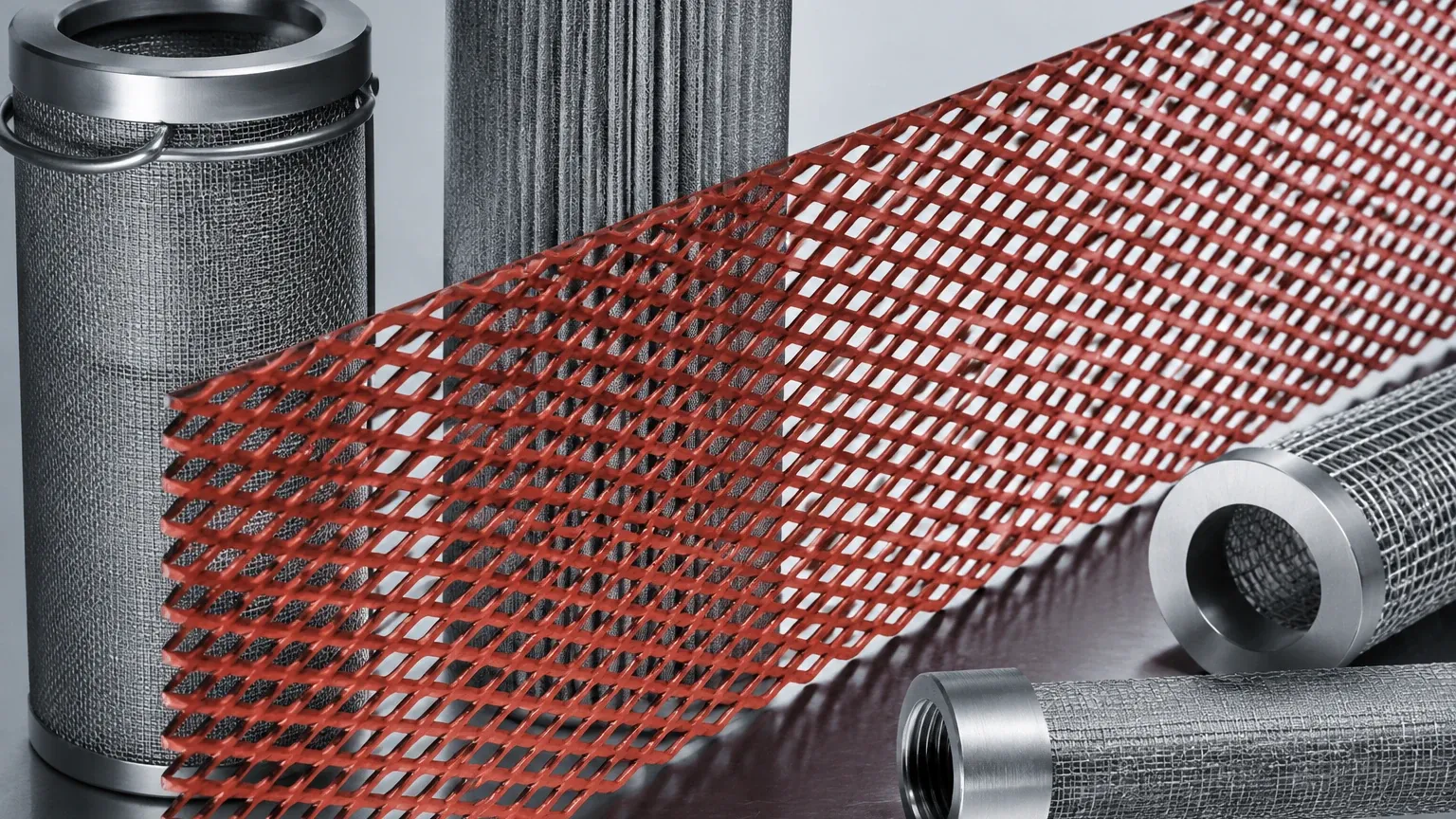
Expanded metal is produced through a process of simultaneous slitting and stretching. Unlike perforated metal, which involves punching holes and generating scrap material, the expansion process is a non-waste manufacturing method. A solid sheet of metal—frequently stainless steel in industrial contexts—is fed through a machine where a reciprocating knife slits the metal while stretching it into a diamond-shaped pattern.
This process creates a continuous piece of material without joins or welds. The resulting "truss-like" structure is inherently stronger than the original flat sheet because the strands and bonds are set at a uniform angle to the plane of the sheet. This angularity provides three-dimensional strength, which is particularly beneficial in applications requiring impact resistance or high load-bearing capacity. For "Red Tiger" variants, the focus is typically on heavy-duty gauges and specific strand widths that maximize this structural advantage.
There are two primary forms of expanded metal:
1. Standard (Raised) Expanded Metal: The strands and bonds are set at a sharp angle to the plane of the sheet. This creates a textured surface with high grip and maximum rigidity.
2. Flattened Expanded Metal: The standard expanded metal is passed through a cold rolling mill, which flattens the strands and bonds to create a smooth, level surface. This is often preferred for filtration support where a flat interface with a secondary mesh layer is required to prevent abrasion.
Material Selection and Corrosion Resistance
For industrial filtration and demanding environmental applications, material selection is the most significant factor in determining the service life of expanded metal. While carbon steel and aluminum are common in architectural or general-purpose use, industrial-grade solutions like those provided by Kaifil typically utilize stainless steel (304, 304L, 316, or 316L).
Stainless Steel 304 vs. 316
In chemical processing and water treatment, the choice between Grade 304 and Grade 316 is critical. Grade 304 offers excellent corrosion resistance for most general applications. However, in environments exposed to chlorides or high-salinity fluids, Grade 316 is required due to its molybdenum content, which provides superior resistance to pitting and crevice corrosion.
For high-temperature applications or highly acidic environments, specialized alloys such as Duplex stainless steel or Monel may be considered. When specifying red tiger expanded metal for a project, engineers must confirm the chemical compatibility of the alloy with the process fluid to prevent premature failure due to stress corrosion cracking or general oxidation.
Key Technical Specifications for Industrial Applications
When evaluating expanded metal for technical use, four primary measurements define the geometry and performance of the mesh:
* Long Way of Design (LWD): The distance from a point on a bond to a corresponding point on the next bond measured across the long diamond dimension.
* Short Way of Design (SWD): The distance from a point on a bond to a corresponding point on the next bond measured across the short diamond dimension.
* Strand Width: The amount of metal fed into the machine between the slitting and stretching process.
* Strand Thickness: The thickness of the original base metal sheet.
These dimensions dictate the Open Area Percentage, which is the most vital metric for filtration and airflow applications. A higher open area reduces the pressure drop across the system but may compromise the structural support provided to finer filter media. Conversely, a lower open area increases strength but can lead to higher energy costs due to increased resistance to flow. Finding the optimal balance between these factors is a core part of the engineering design phase.
Applications in Filtration and Industrial Protection
Red tiger expanded metal and similar heavy-duty expanded products serve several roles within industrial systems. Their versatility allows them to function as both primary components and secondary supports.
1. Support Grids for Filter Media
In high-pressure hydraulic or chemical filtration, fine wire mesh or fiber membranes lack the structural strength to withstand the differential pressure across the filter element. Expanded metal acts as a rigid skeleton, supporting the finer media and preventing it from collapsing or distorting under flow. The diamond pattern provides multiple contact points, distributing the load evenly across the surface.
2. Pre-Filtration and Coarse Screening
In water treatment and intake systems, expanded metal is used as a primary screen to remove large debris before the fluid reaches more sensitive downstream components. The rigid, non-clogging nature of the expanded diamond pattern makes it easier to clean than woven wire mesh in high-fouling environments.
3. Machine Guarding and Safety
Beyond filtration, the high strength-to-weight ratio of expanded metal makes it an ideal choice for machine guards and security partitions. It allows for visibility and airflow while providing a formidable physical barrier. In these contexts, the "Red Tiger" designation often refers to the material's ability to resist shearing and impact.
4. Heat Exchange and Catalyst Support
In the petrochemical industry, expanded metal is used to support catalyst beds within reactors. The open structure allows for the free passage of gases and liquids while holding the catalyst pellets in place, even under high thermal stress.
Selection Criteria: What Engineers Must Confirm
Specifying the wrong expanded metal can lead to system inefficiencies or mechanical failure. Before finalizing a purchase or design, technical teams should confirm the following parameters with their manufacturer:
* Dimensional Tolerances: Industrial applications often require tighter tolerances than architectural standards. Confirm the allowable variance in LWD, SWD, and overall sheet dimensions.
* Edge Configuration: Expanded metal can be supplied with "random sheared" edges (where diamonds are cut through) or "bond sheared" edges (where the cut follows the solid bond). Bond shearing provides a safer, more stable edge for handling and installation.
* Surface Finish: Depending on the application, the metal may require pickling and passivation (to restore corrosion resistance after manufacturing), electropolishing (for pharmaceutical or food-grade cleanliness), or specialized coatings.
* Load Requirements: If the expanded metal is used as a walkway or a heavy-duty support grid, the concentrated and uniform load requirements must be calculated to ensure the material does not exceed its yield strength.
Maintenance and Longevity in Demanding Environments
The durability of Perforated & Expanded Metal is one of its primary selling points, but it is not maintenance-free. In filtration systems, the buildup of particulates—known as the filter cake—can eventually lead to increased pressure drops. While expanded metal is more resistant to blinding than some other materials, regular inspection for signs of mechanical wear or localized corrosion is necessary.
In stainless steel applications, the integrity of the passive oxide layer is paramount. If the material is exposed to mechanical abrasion or harsh chemicals that strip this layer, localized rusting can occur. Regular cleaning with appropriate non-abrasive agents helps maintain the protective surface and extends the total cost of ownership (TCO) by delaying the need for replacement.
Customization and OEM Capabilities
Standard off-the-shelf expanded metal rarely meets the specific needs of specialized industrial equipment. Manufacturers like Kaifil offer extensive customization options to bridge the gap between standard production and engineering requirements. This includes custom diamond sizes, non-standard strand widths, and the ability to fabricate expanded metal into specific shapes, such as cylinders for filter cartridges or custom-sized panels for industrial housings.
When working with an OEM partner, engineers can leverage manufacturing expertise to optimize the mesh design for specific flow rates or weight constraints. This collaborative approach ensures that the final product integrates seamlessly into the larger assembly, reducing the risk of installation errors and improving overall system reliability.
Conclusion
Red tiger expanded metal is a robust solution for industrial professionals who require a material that balances transparency with extreme durability. By understanding the mechanical properties of the expansion process and the chemical implications of material selection, engineers can specify solutions that enhance the performance of filtration and structural systems. Whether the priority is maximizing flow, ensuring safety, or providing a rigid support for delicate media, high-quality expanded metal remains a cornerstone of modern industrial engineering. Selecting a manufacturer with deep technical expertise and a commitment to quality standards is the final, most important step in achieving long-term operational success.
