


Raised Expanded Metal Size Chart
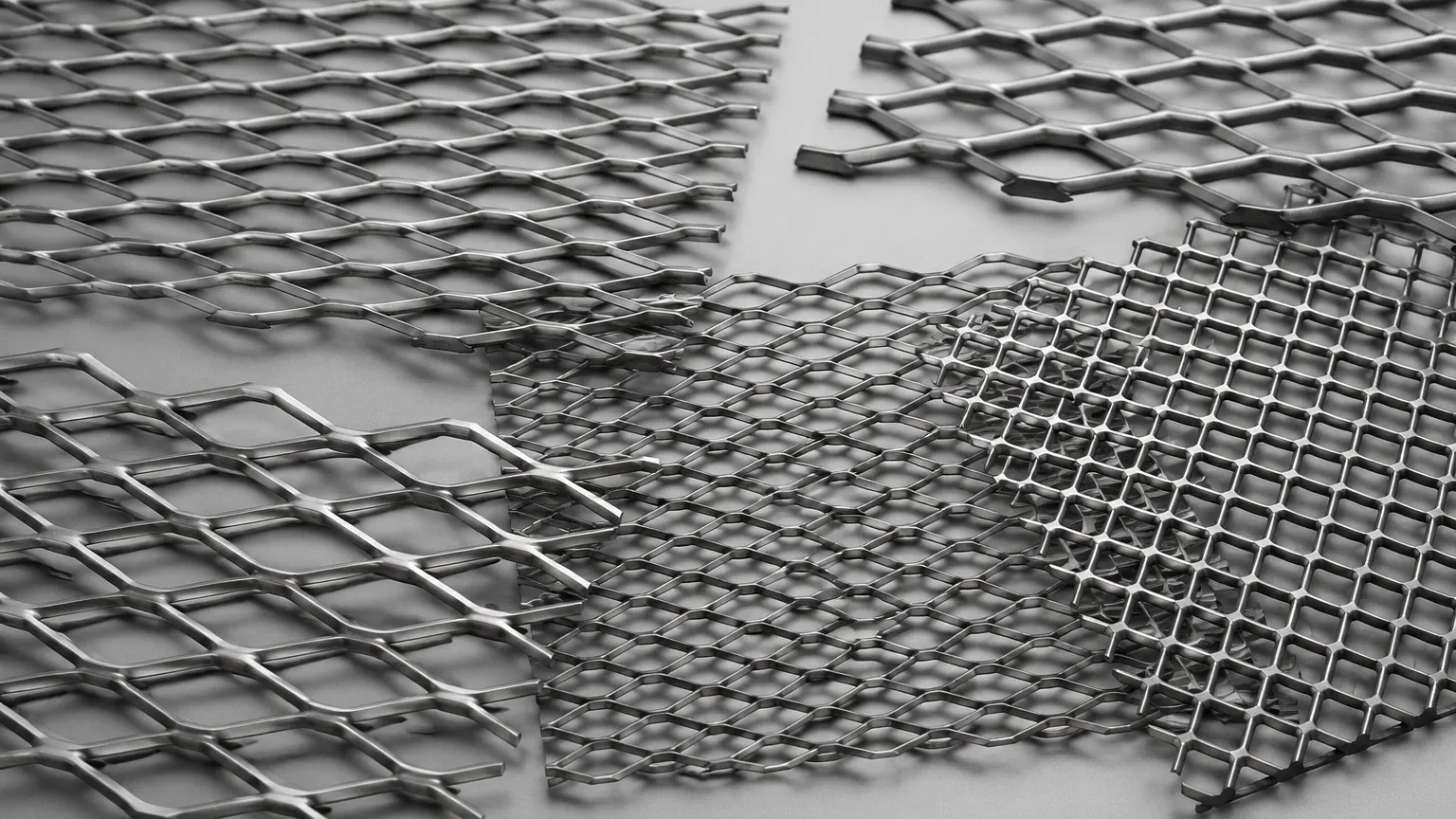
In industrial engineering and filtration design, selecting the correct structural media is critical for ensuring both mechanical integrity and process efficiency. Raised expanded metal is a versatile material produced by simultaneously slitting and stretching a metal sheet, resulting in a diamond-shaped pattern with strands set at an angle to the plane of the sheet. Unlike flattened expanded metal, raised expanded metal retains the original thickness of the strands and provides a three-dimensional surface that offers superior grip and structural rigidity.
For engineers and procurement specialists, a raised expanded metal size chart is an essential technical reference. It defines the geometric parameters that dictate the material's open area, weight, and load-bearing capacity. Understanding these specifications is vital when integrating Perforated & Expanded Metal into filtration systems, support structures, or protective enclosures.
Understanding Raised Expanded Metal Terminology
Before consulting a size chart, it is necessary to understand the specific nomenclature used to describe expanded metal dimensions. These terms are standardized across the industry to ensure precision in manufacturing and application.
* SWD (Short Way of Design): This is the distance measured from the center of a bond to the center of the next bond across the short axis of the diamond. It defines the width of the diamond opening.
* LWD (Long Way of Design): This is the distance measured from the center of a bond to the center of the next bond across the long axis of the diamond.
* SWO (Short Way of Opening): The actual width of the opening, measured from the inside of one bond to the inside of the opposite bond.
* LWO (Long Way of Opening): The actual length of the opening, measured from the inside of one bond to the inside of the opposite bond.
* Strand Thickness: The thickness of the original base metal sheet before expansion.
* Strand Width: The amount of metal fed into the machine between the upper and lower dies to produce one strand.
* Overall Thickness: In raised expanded metal, the overall thickness is significantly greater than the strand thickness because the strands are turned at an angle. This dimension is critical for clearance and housing calculations.
Typical Raised Expanded Metal Size Chart
Size charts vary based on the material type (e.g., stainless steel, carbon steel, or aluminum) and the intended application. Below is a representative technical data table for common stainless steel raised expanded metal specifications often used in industrial filtration and support roles.
| Style Designation | SWD (in) | LWD (in) | Strand Thickness (in) | Strand Width (in) | Overall Thickness (in) | Open Area (%) | Weight (lb/sq.ft) |
| :— | :— | :— | :— | :— | :— | :— | :— |
| 1/4" #20 | 0.250 | 1.000 | 0.036 | 0.072 | 0.140 | 45% | 0.86 |
| 1/2" #20 | 0.500 | 1.200 | 0.036 | 0.072 | 0.150 | 70% | 0.43 |
| 1/2" #18 | 0.500 | 1.200 | 0.048 | 0.088 | 0.175 | 65% | 0.70 |
| 3/4" #16 | 0.923 | 2.000 | 0.060 | 0.101 | 0.210 | 78% | 0.54 |
| 3/4" #13 | 0.923 | 2.000 | 0.092 | 0.105 | 0.235 | 77% | 0.80 |
| 1" #16 | 1.000 | 2.400 | 0.060 | 0.087 | 0.200 | 82% | 0.44 |
| 1-1/2" #13 | 1.330 | 3.000 | 0.092 | 0.105 | 0.240 | 84% | 0.60 |
*Note: These values are indicative of standard industrial configurations. Custom variations in strand width and thickness can be engineered to meet specific filtration or structural requirements.*
Material Selection and Engineering Considerations
When utilizing a raised expanded metal size chart, the choice of material is as important as the dimensions. For industrial filtration environments—particularly in chemical processing, food and beverage, and pharmaceuticals—stainless steel is the preferred choice due to its corrosion resistance and thermal stability.
Stainless Steel Grades
* Type 304: The most common grade, offering excellent formability and resistance to atmospheric corrosion. It is suitable for many water treatment and industrial equipment applications.
* Type 316/316L: Contains molybdenum, which provides superior resistance to chlorides and acidic environments. This is often required in marine applications, chemical processing, and pharmaceutical filtration where hygiene and chemical inertness are paramount.
Mechanical Integrity
The "raised" nature of this material provides a high strength-to-weight ratio. The angled strands act like structural trusses, distributing loads more effectively than flat sheets. When selecting a size from the chart, engineers must consider the direction of the diamond (LWD vs. SWD) relative to the load, as the material is significantly stiffer along the LWD axis.
The Role of Raised Expanded Metal in Filtration
In the context of filtration, raised expanded metal serves several critical functions. It is rarely the primary filtration media for fine particles but is indispensable as a secondary or support component.
1. Support for Fine Wire Mesh
Fine stainless steel wire mesh lacks the structural rigidity to withstand high pressure or flow rates on its own. Raised expanded metal is used as a "backup" or support layer in filter cartridges. The three-dimensional surface of the raised strands creates a gap between the mesh and the filter housing, facilitating better flow distribution and preventing the mesh from collapsing under differential pressure.
2. Coarse Pre-Filtration
In systems dealing with large debris, such as water intake or heavy industrial runoff, expanded metal acts as a primary screen. The size chart helps engineers select an SWD/LWD combination that blocks large contaminants while maintaining a high percentage of open area to minimize pressure drop.
3. Flow Turbulence and Diffusion
The angled strands of raised expanded metal can be used to break up laminar flow and induce controlled turbulence. This is sometimes beneficial in heat exchangers or specific chemical reactors where mixing or improved contact time is required.
How to Interpret Open Area and Pressure Drop
The percentage of open area listed in a raised expanded metal size chart is a theoretical calculation based on the ratio of the openings to the total area of the sheet. For filtration applications, this is a primary variable in calculating the initial pressure drop ($ΔP$) across the media.
A higher open area percentage generally correlates with a lower pressure drop but may result in reduced mechanical strength. Engineers must balance these two factors. For instance, a 3/4" #16 style provides a 78% open area, which is excellent for high-flow gas filtration, whereas a 1/4" #20 style offers only 45% open area but provides much finer physical protection and higher rigidity.
Customization and OEM Capabilities
While standard size charts cover a wide range of needs, many industrial applications require custom configurations. As a specialized manufacturer, Kaifil provides tailored solutions that go beyond standard catalog specifications. Customization options include:
* Variable Strand Widths: Adjusting the strand width can increase the strength of the material without changing the diamond size (SWD/LWD).
* Specific Alloy Selection: Beyond 304 and 316, specialized alloys like Monel, Inconel, or Hastelloy can be expanded for use in highly corrosive or high-temperature environments.
* Precision Cutting and Framing: Expanded metal can be supplied in custom-cut circles, cylinders, or framed panels ready for immediate integration into filter assemblies.
* Edge Treatments: For safety and ease of installation, expanded metal can be produced with "random sheared" edges or "bond sheared" edges to ensure a smooth perimeter.
Procurement Checklist for Engineers
When preparing to order or specify raised expanded metal based on a size chart, confirming the following details will ensure the final product meets application requirements:
1. Material Grade: Is the alloy compatible with the process fluid and cleaning chemicals?
2. Diamond Orientation: Should the LWD run parallel or perpendicular to the length of the sheet?
3. Overall Thickness Constraints: Will the 3D profile of the raised metal fit within the allocated space in the filter housing?
4. Tolerances: What are the allowable variances in SWD/LWD and sheet flatness?
5. Surface Finish: Does the application require a clean, degreased surface (common in oxygen service or food grade) or a specific electropolished finish?
By utilizing a detailed raised expanded metal size chart and understanding the engineering principles behind the dimensions, technical professionals can optimize the performance and longevity of their filtration systems. Whether used as a robust support structure or a coarse screening element, the correct selection of expanded metal is a foundational step in successful industrial design.
For more information on specific configurations or to discuss custom engineering requirements, technical teams can Review product options and application support to find the ideal solution for their unique filtration challenges.
