


Rhino Perforated Metal Material
In the landscape of industrial filtration and structural engineering, the selection of base materials determines the longevity and efficiency of the entire system. Among the most robust options available to engineers today is rhino perforated metal material. This term typically refers to heavy-duty, high-strength perforated sheets designed to withstand extreme mechanical stress, corrosive environments, and high-pressure differentials. For industries ranging from chemical processing to heavy machinery, understanding the technical specifications and engineering trade-offs of these materials is essential for optimizing performance and reducing the total cost of ownership.
Understanding the Engineering of Rhino Perforated Metal Material
Rhino perforated metal material is defined by its superior gauge thickness and high-performance alloy composition. Unlike standard decorative or light-duty perforated sheets, these materials are engineered to serve as the structural backbone of filtration systems or as protective barriers in demanding industrial environments. The manufacturing process involves precision punching of metallic sheets—most commonly stainless steel—to create a specific pattern of holes that balances open area with structural integrity.
When specifying rhino perforated metal material, engineers must consider the "yield strength" of the base alloy. In high-pressure filtration, the perforated metal often acts as a support core for finer mesh layers. If the perforated material deforms under pressure, the integrity of the primary filter media is compromised, leading to bypass or complete system failure. Therefore, selecting a material with the appropriate thickness-to-hole-diameter ratio is critical.
Material Composition and Grade Selection
The performance of rhino perforated metal material is largely dictated by its metallurgy. At Kaifil, the focus is often on stainless steel grades due to their inherent resistance to oxidation and chemical attack.
* AISI 304/304L: The standard for general industrial applications. It offers excellent formability and weldability, making it suitable for most water treatment and food-grade applications where extreme chemical resistance is not the primary concern.
* AISI 316/316L: Containing molybdenum, this grade is the preferred choice for rhino perforated metal material used in marine environments or chemical processing. It provides superior resistance to chloride-induced pitting and crevice corrosion.
* Specialty Alloys: For high-temperature or highly acidic environments, materials such as Duplex stainless steel or Monel may be utilized to ensure the perforated structure does not degrade prematurely.
Technical Parameters: Open Area and Hole Patterns
The functionality of Perforated & Expanded Metal is defined by its geometric configuration. For engineers, the most critical calculation is the percentage of open area, which dictates the flow rate and pressure drop across the material.
Calculating Open Area
For a standard 60-degree staggered round hole pattern—the most common configuration for rhino perforated metal material—the open area percentage is calculated using the formula:
Open Area % = (D² × 90.69) / P²
Where:
* D = Hole Diameter
* P = Center-to-Center Pitch
A higher open area reduces resistance to flow but decreases the mechanical strength of the sheet. In "Rhino" applications, the goal is often to maximize the hole density while maintaining enough metal "bridge" (the space between holes) to prevent the sheet from buckling under hydraulic loads.
Hole Geometry and Flow Dynamics
While round holes are the industry standard due to their ease of manufacturing and uniform stress distribution, other geometries serve specific technical purposes:
* Slotted Holes: Often used in vibrating screens or for filtering elongated particles where round holes might cause blinding.
* Square Holes: Provide a higher open area percentage than round holes but are more susceptible to stress concentrations at the corners, which can lead to fatigue cracking in high-vibration environments.
The Role of Perforated Metal in Industrial Filtration
In the context of filtration, rhino perforated metal material rarely acts as the final filtration stage. Instead, it serves several critical secondary roles that ensure the efficiency of the primary media.
Support Cores for Filter Cartridges
In high-pressure hydraulic or process fluid applications, fine wire mesh or fiber media lack the rigidity to withstand the differential pressure. Rhino perforated metal is rolled and welded into cylinders to act as an internal support core. This core prevents the fine media from collapsing inward as contaminants build up and the pressure drop increases. The precision of the perforation ensures that the support structure does not introduce significant turbulence or dead zones in the fluid flow.
Outer Guards and Protective Wraps
Conversely, perforated metal can be used as an outer shroud to protect delicate filter media from mechanical damage during installation, cleaning, or high-velocity fluid impingement. The "Rhino" designation implies a thickness that can withstand physical impact or the abrasive force of large particles in a pre-filtration stage.
Industrial Strainers and Baskets
For coarse filtration (removing particles in the millimeter range), rhino perforated metal material functions as the primary filter. These are common in pump suction strainers, where the material must be robust enough to handle the weight of collected debris without deforming.
Comparing Perforated Metal and Expanded Metal
While often grouped together, perforated and expanded metals have distinct engineering characteristics. Choosing between them depends on the specific requirements of the application.
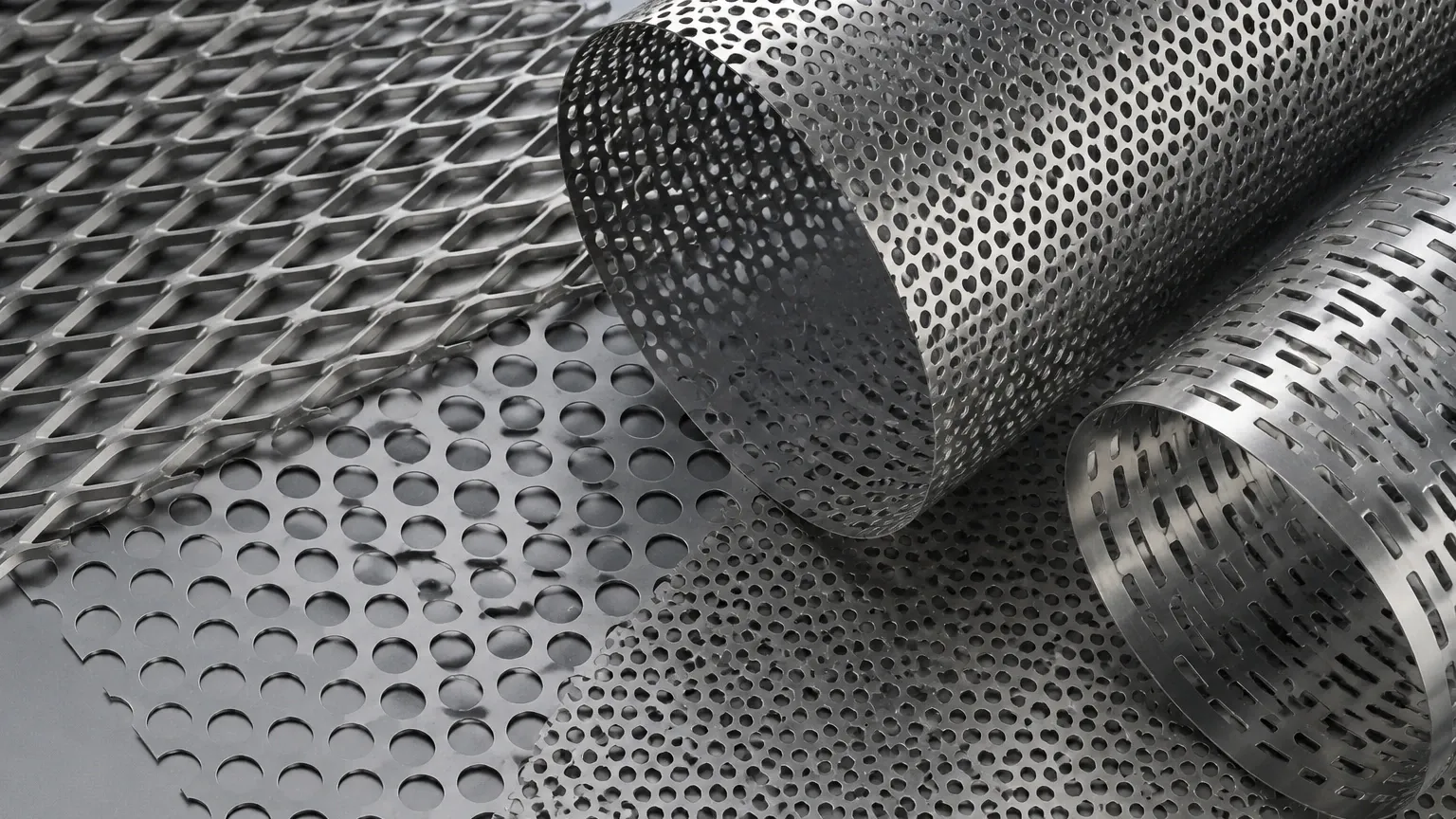
* Perforated Metal: Created by punching holes through the sheet. This process allows for extreme precision in hole size and placement. It results in a flat surface, which is easier to clean and provides a more uniform support for secondary mesh layers.
* Expanded Metal: Created by slitting and stretching the metal simultaneously. This process is more material-efficient (no scrap is punched out) and creates a 3D structure that can be beneficial for certain types of flow diffusion. However, expanded metal can have sharp edges and is generally less precise in terms of "micron-equivalent" openings compared to perforated metal.
For rhino-grade applications, perforated metal is usually preferred when structural predictability and ease of welding are the top priorities.
Customization and Manufacturing Considerations
One of the primary advantages of working with a specialized manufacturer like Kaifil is the ability to customize rhino perforated metal material to exact project specifications. Engineering teams should confirm several factors before finalizing a design:
Margins and Unfinished Edges
Standard perforated sheets often come with "minimum margins," meaning the hole pattern goes nearly to the edge. However, for components that require welding into a housing or onto a flange, specifying "blank margins" is essential. This provides a solid metal area for a clean, strong weld without the risk of burn-through associated with welding near open holes.
Surface Finishes and Deburring
In the pharmaceutical and food industries, the surface finish of the perforated metal is non-negotiable. The punching process naturally creates a "burr" side and a "smooth" side. For rhino perforated metal material, heavy-duty deburring or electropolishing may be required to ensure there are no sharp edges that could trap bacteria or damage downstream components. Electropolishing also enhances the corrosion resistance of stainless steel by stripping away iron impurities from the surface.
Flatness and Stress Relieving
The perforation process introduces significant internal stresses into the metal sheet, which can cause it to curl or bow. For precision filtration components, the material must undergo leveling to ensure it meets flatness tolerances required for automated assembly or high-tolerance housings.
Evaluating Total Cost and Replacement Cycles
When purchasing rhino perforated metal material, the initial material cost is only one component of the total cost of ownership. Engineers must evaluate:
1. Durability: A thinner, cheaper material may fail under a pressure spike, leading to catastrophic downstream damage to pumps or sensitive equipment.
2. Cleanability: High-quality stainless steel perforated materials can be backwashed or chemically cleaned repeatedly. The ability to restore the material to its original state extends the replacement cycle significantly.
3. Compatibility: Ensuring the alloy is perfectly matched to the process fluid prevents premature failure due to stress corrosion cracking (SCC) or intergranular corrosion.
Conclusion: Selecting the Right Partner for Rhino Materials
Specifying rhino perforated metal material requires a deep understanding of fluid dynamics, metallurgy, and mechanical engineering. It is not merely about selecting a hole size; it is about ensuring the material can survive the rigors of an industrial environment while facilitating efficient process flow.
By focusing on high-grade stainless steel, precise geometric configurations, and advanced finishing techniques, Kaifil provides the technical expertise necessary to integrate these materials into complex filtration systems. Whether the application calls for a high-strength support core or a heavy-duty industrial strainer, the right perforated metal choice is the foundation of a reliable, high-performance system.
