


Rubber Coated Expanded Metal
In industrial environments where durability, safety, and corrosion resistance are paramount, the combination of structural metal and protective polymers is essential. Rubber coated expanded metal represents a specialized category of industrial materials that bridges the gap between the rigid strength of steel and the resilient properties of elastomers. By applying a thick, protective layer of rubber or plastisol to an expanded metal substrate, manufacturers create a product capable of withstanding harsh chemical exposures, mitigating noise, and preventing mechanical damage to sensitive components.
For engineers and procurement teams, understanding the technical nuances of rubber coated expanded metal is critical for selecting the right filtration support, protective screening, or material handling solution. This guide examines the engineering principles, material selection criteria, and application-specific advantages of these composite materials within the broader context of Perforated & Expanded Metal solutions.
The Engineering Fundamentals of Expanded Metal Substrates
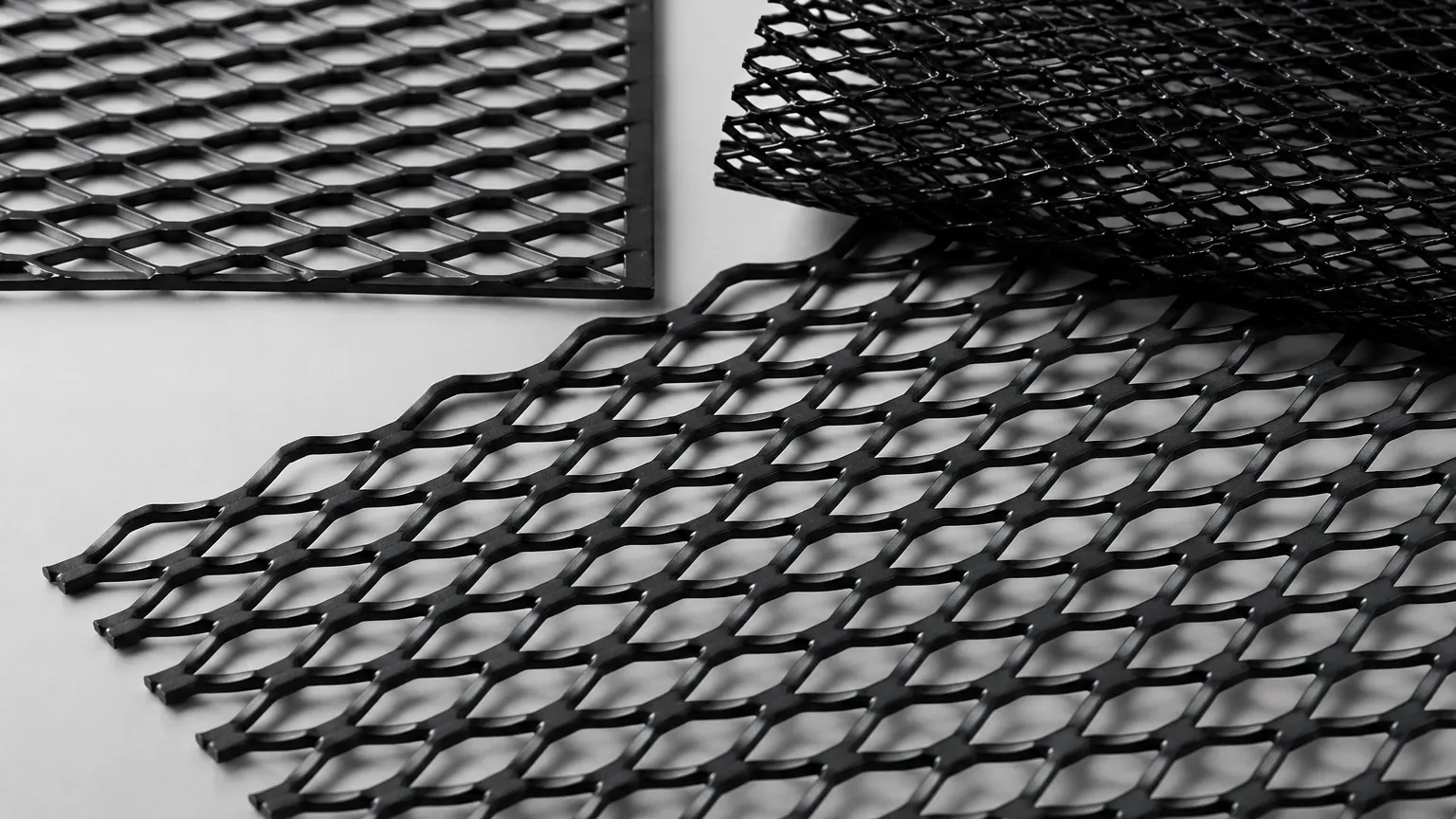
To understand the performance of the coated product, one must first evaluate the underlying substrate. Expanded metal is produced by simultaneously slitting and stretching a solid metal sheet, creating a series of diamond-shaped openings. Unlike perforated metal, which involves punching out material and creating waste, the expansion process is highly efficient and maintains the structural integrity of the original sheet.
Structural Terminology
When specifying the metal base for rubber coating, engineers must define several key dimensions:
* LWD (Long Way of Diamond): The distance from the center of one joint to the center of the next joint across the long axis.
* SWD (Short Way of Diamond): The distance across the short axis.
* Strand Width: The amount of metal between the openings.
* Strand Thickness: The gauge of the original metal sheet.
* Bond: The intersection where two strands meet.
For rubber coated expanded metal, the "standard" (raised) expanded metal is often preferred over "flattened" expanded metal because the raised strands provide a better mechanical key for the rubber coating to adhere to, resulting in superior delamination resistance.
Why Apply Rubber Coating to Expanded Metal?
The primary motivation for coating expanded metal is to introduce properties that bare metal lacks. While stainless steel offers excellent corrosion resistance, it remains hard, reflective of sound, and potentially abrasive to other materials. Rubber coating transforms these characteristics.
1. Corrosion and Chemical Protection
In chemical processing and water treatment applications, even high-grade stainless steel can succumb to specific corrosive agents over time. A rubber coating—typically PVC, EPDM, or Neoprene—acts as a primary barrier. It prevents the process fluid from reaching the metal substrate, significantly extending the service life of the component in acidic or alkaline environments.
2. Impact and Abrasion Resistance
In material handling and filtration systems involving slurry or abrasive particulates, bare metal strands can wear down quickly. Rubber coatings absorb the kinetic energy of impacting particles. The elastomer deforms slightly under impact and then returns to its original shape, whereas bare metal would suffer from erosion or pitting.
3. Noise and Vibration Dampening
Industrial machinery often generates significant acoustic energy. Metal-on-metal contact or high-velocity fluid flow through metal screens can create resonant noise. Rubber coated expanded metal acts as a vibration isolator. The coating dampens the resonance of the metal sheet, making it an ideal choice for machinery guards, acoustic baffles, and vibrating screen supports.
4. Product Protection
In the food and beverage or pharmaceutical industries, the items being processed must not be scratched or contaminated. The soft surface of rubber coated expanded metal ensures that delicate products or containers are handled gently during washing, drying, or transport phases.
Material Selection: Elastomers and Polymers
The performance of rubber coated expanded metal is largely dictated by the type of coating material used. The selection depends on the operating temperature, chemical exposure, and mechanical requirements of the application.
| Coating Material | Key Characteristics | Common Applications |
| :— | :— | :— |
| PVC (Plastisol) | Excellent chemical resistance, cost-effective, high dielectric strength. | General industrial screening, tool racks, battery trays. |
| EPDM | Superior UV and weather resistance, good for high-temperature water. | Outdoor filtration, cooling tower screens. |
| Neoprene | Moderate oil resistance, excellent physical toughness. | Marine environments, hydraulic fluid filtration supports. |
| Nitrile (Buna-N) | Exceptional resistance to petroleum-based oils and fuels. | Oil and gas filtration, fuel tank strainers. |
| Silicone | High temperature stability, FDA-compliant grades available. | Food processing, pharmaceutical drying trays. |
The Manufacturing and Coating Process
Achieving a high-quality rubber coated expanded metal product requires precise control over the coating application. The most common method is the dip-coating process, often using liquid Plastisol or specialized rubber dispersions.
1. Pre-treatment: The expanded metal substrate is degreased and often sandblasted to create a profile that promotes adhesion. A primer may be applied to ensure a chemical bond between the metal and the elastomer.
2. Pre-heating: The metal is heated to a specific temperature in an industrial oven. The temperature determines the thickness of the coating; a hotter part will cause more coating material to gel onto the surface.
3. Dipping: The heated metal is submerged into a tank of liquid polymer. The duration of the dip and the rate of extraction are carefully controlled to ensure uniformity and to prevent "webbing" (where the coating fills the diamond openings).
4. Curing: The coated part is returned to the oven to fuse the coating into a solid, durable layer. This step is critical for achieving the final durometer (hardness) and chemical resistance properties.
Impact on Filtration and Flow Dynamics
When using Perforated & Expanded Metal as a support structure for filtration media, engineers must account for the reduction in open area caused by the coating.
Because the rubber coating adds thickness to every strand, the effective size of the diamond opening (the "aperture") decreases. For example, if a bare expanded metal sheet has a 60% open area, a heavy rubber coating might reduce that to 45% or 50%. Engineers must calculate the required flow rate and pressure drop based on the *post-coating* dimensions to ensure the filtration system operates within its design parameters. This is particularly important in hydraulic and water treatment applications where flow resistance directly impacts pump efficiency.
Selection Criteria for Industrial Procurement
When sourcing rubber coated expanded metal for a project, engineers should confirm the following technical specifications with the manufacturer:
* Coating Thickness: Usually measured in mils (thousandths of an inch) or millimeters. Typical industrial coatings range from 10 to 60 mils.
* Durometer: The hardness of the rubber, usually on the Shore A scale. A lower durometer (e.g., 40A) is softer and better for grip/dampening, while a higher durometer (e.g., 80A) is harder and more abrasion-resistant.
* Adhesion Strength: Confirm if the coating is mechanically or chemically bonded. For high-pressure or high-flow applications, a chemical bond is necessary to prevent the coating from peeling off the strands.
* Temperature Limits: Ensure the coating can withstand the maximum and minimum operating temperatures of the process environment without becoming brittle or melting.
* Dimensional Tolerances: Coating adds to the overall thickness of the sheet, which may affect how the piece fits into frames or housings.
Maintenance and Service Life Considerations
Rubber coated expanded metal is designed for longevity, but it is not maintenance-free. In filtration and processing environments, the following factors should be monitored:
* Chemical Degradation: Over time, exposure to certain solvents can cause the rubber to swell, soften, or crack. Regular inspection for changes in surface texture is recommended.
* Mechanical Damage: While resilient, the coating can be gouged by sharp debris. If the coating is breached and the substrate is carbon steel, sub-film corrosion can occur, eventually leading to coating failure.
* Cleaning Protocols: When cleaning coated filters, avoid using high-pressure steam or harsh solvents that are incompatible with the specific elastomer used. Neutral detergents and moderate pressure are generally preferred.
Conclusion
Rubber coated expanded metal is a sophisticated solution for demanding industrial environments that require the strength of metal and the protective qualities of rubber. Whether used as a support grid for fine wire mesh, a protective guard in a chemical plant, or a noise-dampening screen in a hydraulic system, this material provides a unique set of performance benefits that bare metal cannot match.
At Kaifil, we specialize in providing customized filtration and metal solutions tailored to specific engineering requirements. By selecting the appropriate base metal and coating chemistry, we help our clients optimize their processes for durability and efficiency. For detailed specifications and to explore our range of custom metal components, engineers and purchasing teams are encouraged to review product options and application support regarding our Perforated & Expanded Metal capabilities.
