


Raised Expanded Metal Mesh
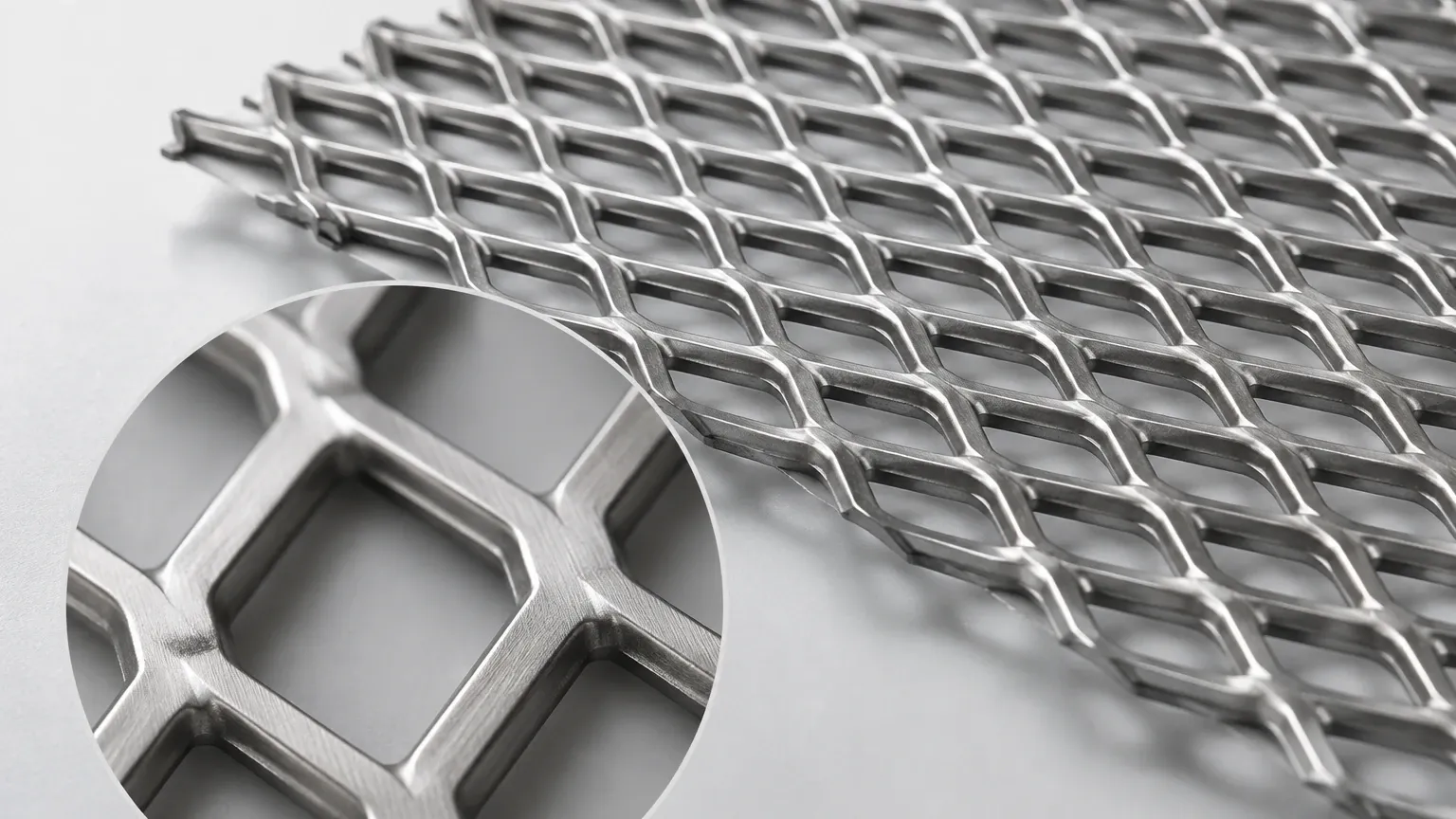
In industrial engineering and filtration design, selecting the appropriate structural support or protective barrier requires a deep understanding of material geometry and mechanical properties. Raised expanded metal mesh, often referred to as standard expanded metal, is a versatile material produced by simultaneously slitting and stretching a solid metal sheet. Unlike perforated metal, which involves punching out material, the expansion process creates a continuous, jointless mesh with strands set at a sharp angle to the plane of the sheet. This unique three-dimensional profile provides specific advantages in terms of strength, traction, and flow dynamics.
For engineers and procurement professionals evaluating Perforated & Expanded Metal solutions, understanding the technical nuances of the "raised" profile is essential. At Kaifil, we specialize in manufacturing high-precision stainless steel filtration components where raised expanded metal often serves as a critical structural element. This guide examines the engineering characteristics, selection criteria, and industrial applications of raised expanded metal mesh.
The Geometry and Manufacturing of Raised Expanded Metal
The manufacturing of raised expanded metal mesh is a cold-forming process. A metal plate or coil is fed through an expanding machine equipped with specialized knives. These knives slit the metal while simultaneously stretching it upward and outward. Because the metal is stretched rather than cut away, there is zero material waste, making it a highly cost-effective alternative to perforated sheets in many applications.
The resulting mesh consists of "strands" (the metal strips) and "bonds" (the points where strands intersect). In its raised state, the strands and bonds are angled relative to the original flat plane of the sheet. This creates a textured, three-dimensional surface that offers significantly higher rigidity than a flat sheet of the same weight.
Key Dimensional Variables
When specifying raised expanded metal mesh, engineers must define several critical dimensions:
* Long Way of Diamond (LWD): The distance from the center of one bond to the center of the next bond across the long axis of the diamond opening.
* Short Way of Diamond (SWD): The distance from the center of one bond to the center of the next bond across the short axis of the diamond opening.
* Strand Thickness: The thickness of the original base material.
* Strand Width: The amount of metal fed into the knives for each slit.
* Overall Thickness: The total depth of the mesh from the highest point to the lowest point of the raised strands.
Technical Advantages of the Raised Profile
The primary reason for selecting raised expanded metal mesh over flattened variants or perforated metal lies in its mechanical profile. The angular orientation of the strands provides several functional benefits that are critical in demanding industrial environments.
Structural Rigidity and Strength-to-Weight Ratio
Because the strands are angled, they act like structural trusses. This gives the mesh a high degree of stiffness and resistance to deflection. In filtration applications, this rigidity is vital for supporting delicate filter media against high-pressure differentials. For a given weight per square foot, raised expanded metal often provides greater structural integrity than solid plate or woven wire mesh.
Enhanced Traction and Slip Resistance
The raised edges of the strands provide an inherent multi-directional grip. This makes it an ideal material for industrial walkways, stair treads, and maintenance platforms where oil, water, or debris might otherwise create a slipping hazard. The open area allows liquids and small particles to fall through, keeping the walking surface clear.
Directional Flow and Shading
The three-dimensional nature of the mesh allows for controlled directional flow. Depending on the orientation of the mesh, it can deflect light, air, or fluid in specific directions. This property is frequently utilized in architectural sunscreens, machine guards, and specialized air intake filters where debris deflection is required without completely blocking airflow.
Material Selection for Industrial Filtration and Processing
While expanded metal can be produced from various materials, industrial applications—particularly in chemical processing, food and beverage, and pharmaceuticals—demand high-performance alloys. At Kaifil, we focus on stainless steel grades to ensure longevity and compliance with hygiene standards.
Stainless Steel 304
SS 304 is the most common choice for general industrial use. It offers excellent corrosion resistance and can withstand most oxidizing acids. It is frequently used for protective guards and support structures in water treatment and general manufacturing.
Stainless Steel 316
For environments involving chlorides, high salt concentrations, or aggressive chemicals, SS 316 is the preferred material. The addition of molybdenum enhances its resistance to pitting and crevice corrosion. This is the standard for marine applications, pharmaceutical processing, and high-end chemical filtration systems.
Specialty Alloys
In high-temperature or extremely corrosive environments, materials such as Duplex stainless steel or nickel alloys may be required. Selecting the right material is the first step in ensuring the total cost of ownership remains low by extending the replacement cycle of the filtration component.
Raised vs. Flattened Expanded Metal: Engineering Trade-offs
One of the most common questions during the procurement process is whether to use raised or flattened expanded metal. The choice depends entirely on the application's physical requirements.
Raised Expanded Metal Mesh
* Profile: Three-dimensional, textured surface.
* Rigidity: Higher resistance to bending.
* Grip: Superior anti-slip properties.
* Application: Filtration support cages, walkways, heavy-duty guards, and architectural panels.
Flattened Expanded Metal
Flattened expanded metal is produced by passing raised mesh through a cold-rolling mill. This process flattens the strands and bonds back into a single plane, reducing the overall thickness and creating a smooth surface.
* Profile: Two-dimensional, smooth surface.
* Rigidity: Slightly less rigid than the raised version.
* Safety: No sharp edges on the surface, making it safer for manual handling or contact with delicate materials.
* Application: Industrial shelving, security screens, and decorative grilles where a flush surface is required.
For filtration applications, raised expanded metal mesh is typically preferred as an outer support or inner core because its depth creates a standoff distance, which can help distribute flow more evenly across the primary filter media.
Applications in Industrial Filtration Systems
Raised expanded metal mesh plays a silent but critical role in the efficiency of industrial filtration. It is rarely the primary filtering element but serves as the backbone of the system.
Filter Media Support
In high-pressure hydraulic or chemical filtration, fine wire mesh or fiber media can collapse under the force of the fluid. A cylinder of raised expanded metal mesh provides the necessary hoop strength to maintain the filter's shape. The raised strands minimize the contact area with the filter media, maximizing the effective filtration area and reducing pressure drop.
Protective Outer Guards
Filter cartridges used in heavy industrial environments are susceptible to mechanical damage during installation or operation. An outer wrap of raised expanded metal protects the internal media from impact and abrasion while allowing the process fluid to pass through with minimal resistance.
Debris Pre-filtration
In water treatment and intake systems, large-opening raised expanded metal acts as a primary screen to remove large debris (such as stones or organic matter) before the fluid reaches the precision filtration stages. The angled strands are particularly effective at shedding debris, preventing premature blinding of the screen.
Engineering Considerations for Customization
When partnering with an OEM manufacturer like Kaifil, engineers can customize raised expanded metal mesh to meet specific performance envelopes. Several factors should be confirmed before finalizing a design:
1. Open Area Percentage: This is the ratio of the area of the openings to the total area of the sheet. It determines the flow rate and pressure drop across the mesh. For filtration, a high open area is usually desired, provided structural requirements are met.
2. Load-Bearing Requirements: If the mesh is used for a walkway or a pressurized support core, the LWD should generally run perpendicular to the support members to maximize strength.
3. Tolerances: Precision filtration components require tight tolerances on LWD, SWD, and overall thickness to ensure proper fitment within filter housings.
4. Edge Finishing: Raised expanded metal has sharp edges where the diamonds are cut. Depending on the application, edges may need to be framed, U-edged, or deburred to prevent damage to other components or injury to personnel.
Quality Evaluation and Common Risks
Procuring industrial-grade raised expanded metal mesh requires careful vetting of suppliers. Low-quality mesh often suffers from inconsistent diamond shapes, varying strand widths, or material defects introduced during the stretching process.
Common Risks to Avoid:
* Stress Cracking: If the metal is over-stretched or the material quality is poor, micro-cracks can form at the bonds. These cracks can propagate under vibration or pressure, leading to structural failure.
* Inconsistent Pitch: Variations in LWD or SWD can cause issues in automated assembly or welding processes.
* Material Substitution: Ensuring the chemical composition of the stainless steel matches the specification is critical for corrosion resistance.
At Kaifil, we mitigate these risks through rigorous material testing and precision manufacturing controls. Our focus on stainless steel filtration solutions ensures that every piece of raised expanded metal mesh we produce meets the exacting standards of industrial engineering.
Conclusion
Raised expanded metal mesh is more than just a structural material; it is an engineered component that offers unique advantages in rigidity, flow control, and surface traction. Whether used as a support structure for high-precision filter cartridges or as a safety barrier in a chemical plant, its performance depends on the correct specification of dimensions, materials, and manufacturing quality.
For engineers and technical buyers, the key to a successful implementation is understanding the relationship between the mesh geometry and the application's physical demands. By considering factors like the LWD/SWD ratio, strand profile, and alloy selection, organizations can achieve durable, cost-effective, and high-performance filtration results. For those requiring customized dimensions or specialized stainless steel grades, consulting with a manufacturer experienced in industrial filtration is the most reliable path to optimizing system performance.
