


Steel Expanded Metal Sheet
In industrial engineering and manufacturing, the selection of structural and filtration components requires a balance between mechanical strength, material efficiency, and functional performance. The steel expanded metal sheet is a fundamental material used across diverse sectors, including chemical processing, hydraulic systems, and water treatment. Unlike traditional woven wire mesh or perforated plates, expanded metal offers a unique set of characteristics derived from its specific manufacturing process, making it an essential component for both filtration support and protective shielding.
For engineers and procurement professionals, understanding the technical nuances of steel expanded metal sheet is critical for ensuring system longevity and operational efficiency. This guide explores the engineering specifications, material considerations, and application-specific advantages of expanded metal within industrial environments.
Understanding the Manufacturing Process of Expanded Metal
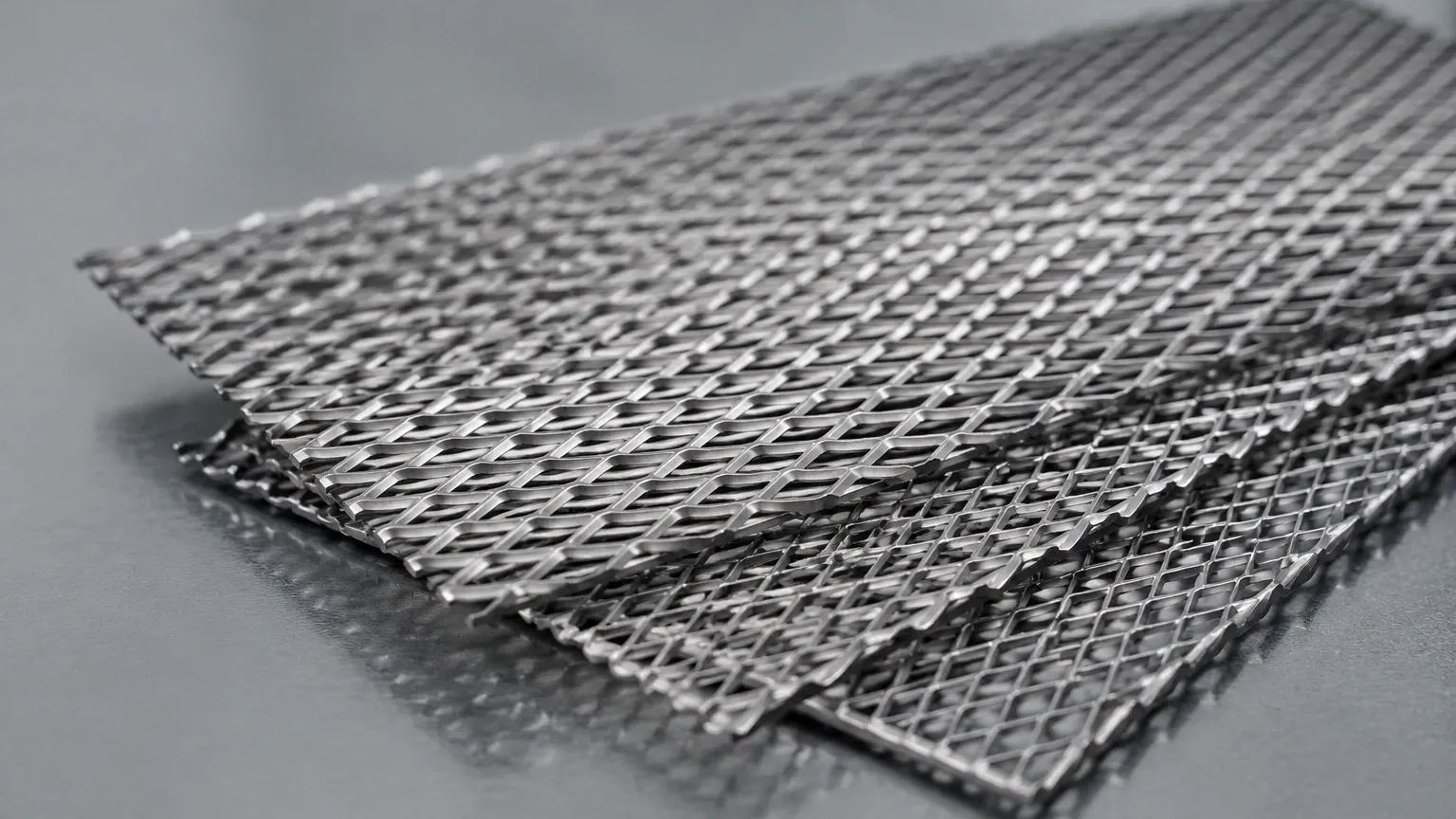
The production of a steel expanded metal sheet is a precision engineering process that distinguishes it from other metal forms. It is manufactured by simultaneously slitting and stretching a solid sheet of metal—typically stainless steel or carbon steel—using a specialized expanding machine. This process creates a series of diamond-shaped openings, transforming a solid plate into a rigid, one-piece mesh structure.
One of the primary advantages of this process is material efficiency. Because the metal is stretched rather than punched, there is virtually no scrap or waste generated during production. This makes the steel expanded metal sheet a cost-effective alternative to perforated metal, especially when working with high-grade alloys like 316L stainless steel. Furthermore, because the material remains a single piece of metal without joins or welds, it maintains excellent structural integrity and electrical conductivity. The "truss-like" configuration of the strands allows the material to distribute loads more effectively than woven mesh, which can shift or fray under mechanical stress.
Material Grades and Chemical Compatibility
When specifying a steel expanded metal sheet for industrial filtration or structural use, material selection is the most critical factor in determining the component's lifespan. The environment in which the filter or screen operates dictates the necessary alloy.
Stainless Steel Grades
For most B2B industrial applications, stainless steel is the preferred choice due to its corrosion resistance and thermal stability.
- Grade 304: The most common stainless steel used for expanded metal. It offers good corrosion resistance to many chemical corrodents and industrial atmospheres. It is widely used in food processing and general industrial screening.
- Grade 316/316L: Contains molybdenum, which provides superior resistance to chlorides and marine environments. In chemical processing and pharmaceutical applications, 316L (low carbon) is often specified to prevent sensitization during welding and to ensure maximum resistance to pitting.
Carbon Steel and Galvanized Options
In applications where corrosion is not a primary concern or where the environment is controlled, carbon steel expanded metal may be used. To enhance durability, these sheets are often hot-dip galvanized or powder-coated. However, for precision filtration and high-purity applications, stainless steel remains the industry standard due to its non-reactive nature and ease of sterilization.
Technical Specifications: SWD, LWD, and Open Area Calculations
Engineers must be precise when defining the geometry of a steel expanded metal sheet to ensure it meets the flow and pressure requirements of a system. The geometry is defined by several key parameters:
1. SWD (Short Way of Design): The distance from the center of a bond to the center of the next bond measured across the short diamond diagonal.
2. LWD (Long Way of Design): The distance from the center of a bond to the center of the next bond measured across the long diamond diagonal.
3. Strand Width: The amount of metal fed into the machine between the slits.
4. Strand Thickness: The thickness of the original base metal sheet.
5. Opening Size: The actual clear space (aperture) available for fluid or gas passage.
The Importance of Open Area
The "Open Area Percentage" is a vital metric for filtration engineers. It determines the total area through which a fluid can pass, directly impacting the pressure drop (delta P) across the filter. A higher open area reduces resistance to flow but may decrease the structural rigidity of the sheet. Conversely, a smaller open area provides greater mechanical strength but may lead to faster clogging or higher energy consumption in pumping systems. For custom filtration solutions, Perforated & Expanded Metal specifications must be calculated to balance these competing requirements.
Expanded Metal vs. Perforated Metal in Industrial Applications
While both materials are used for screening and support, the choice between expanded and perforated metal depends on the specific engineering goals of the project.
* Structural Integrity: Expanded metal is generally stronger per pound than perforated metal because the strands are oriented at an angle to the plane of the sheet, providing three-dimensional rigidity. It does not unravel if cut, unlike some woven meshes.
* Weight vs. Strength: A steel expanded metal sheet provides a high strength-to-weight ratio. This is particularly beneficial in the aerospace and automotive sectors where reducing component weight without sacrificing safety is paramount.
* Flow Dynamics: Perforated metal offers more precise control over hole shape (round, square, hexagonal) and spacing, which can be critical for certain laminar flow applications. Expanded metal, with its angled strands, can actually be used to deflect or diffuse flow, which is useful in air intake systems or as a flame arrestor component.
* Cost Efficiency: As mentioned, the lack of waste in the expansion process often makes it more economical for large-scale industrial projects compared to perforated sheets where the "slugs" (the punched-out metal) are essentially wasted material cost.
The Role of Steel Expanded Metal Sheet in Filtration Systems
In the context of industrial filtration, the steel expanded metal sheet rarely acts as the primary filtration media for fine particles. Instead, it serves as a critical structural backbone for more delicate media.
Support for Pleated Filter Cartridges
In high-pressure hydraulic or gas filtration, pleated wire mesh or synthetic media can collapse under the force of the fluid flow. Expanded metal is often formed into a cylindrical core or an outer cage. This "support tube" ensures that the pleats remain open and that the filter maintains its shape even as the differential pressure increases due to contaminant loading.
Pre-Filtration and Coarse Screening
In water treatment and intake systems, expanded metal sheets act as a first line of defense. They capture large debris, such as rocks, vegetation, or plastic, preventing damage to downstream pumps and finer filtration stages. The durability of stainless steel expanded metal is essential here, as these components are often submerged and subject to constant mechanical abrasion.
Mist Eliminators and Coalescers
In the oil and gas and chemical industries, expanded metal is used in mist elimination. The angled surfaces of the strands provide a large surface area for liquid droplets to impinge upon, coalesce, and eventually drain away from the gas stream. This is a specialized application where the three-dimensional nature of the expanded sheet is a functional advantage over flat perforated plates.
Engineering Considerations for Customization and Procurement
When ordering a steel expanded metal sheet for a specific industrial project, engineers should confirm several factors with the manufacturer to ensure the component performs as expected.
* Flattened vs. Raised: Standard expanded metal has a "raised" surface where the strands are turned at an angle. For applications requiring a smooth surface—such as when the sheet is in direct contact with a delicate filter membrane—the material can be run through a cold-rolling mill to create "flattened" expanded metal. This reduces the thickness and creates a smooth, level surface.
* Tolerances: Precise dimensions are required for components that must fit into existing filter housings. Confirming LWD/SWD tolerances and overall sheet flatness is essential for seamless integration.
* Edge Conditions: Expanded metal can have "open" or "closed" (bonded) edges. Open edges have sharp points where the diamonds are cut, while closed edges provide a smooth border. For safety and ease of handling in manual maintenance cycles, closed edges or U-edging frames are often preferred.
* Surface Finishes: Beyond material grade, consider if the application requires passivating (to remove surface contaminants and enhance the chrome-oxide layer) or electropolishing (to achieve a high-purity, mirror-like finish common in the pharmaceutical industry).
Conclusion
The steel expanded metal sheet is more than just a metal screen; it is a highly engineered component that provides essential structural support and filtration functionality in demanding industrial environments. By selecting the appropriate material grade, diamond geometry, and finish, engineers can significantly improve the reliability and efficiency of their filtration systems. Whether used as a support core for a high-pressure hydraulic filter or as a protective screen in a chemical reactor, the unique properties of expanded metal make it a versatile and cost-effective solution for modern B2B industrial applications.
