


Square Perforated Metal
In the landscape of industrial filtration and structural components, square perforated metal represents a specialized geometry designed to maximize open area while maintaining specific mechanical properties. While round-hole patterns are often the default for general-purpose applications, square holes offer distinct advantages in flow efficiency, visibility, and mechanical sorting. For engineers and procurement professionals, selecting the correct configuration of Perforated & Expanded Metal requires a deep understanding of material science, hole geometry, and the physical demands of the operating environment.
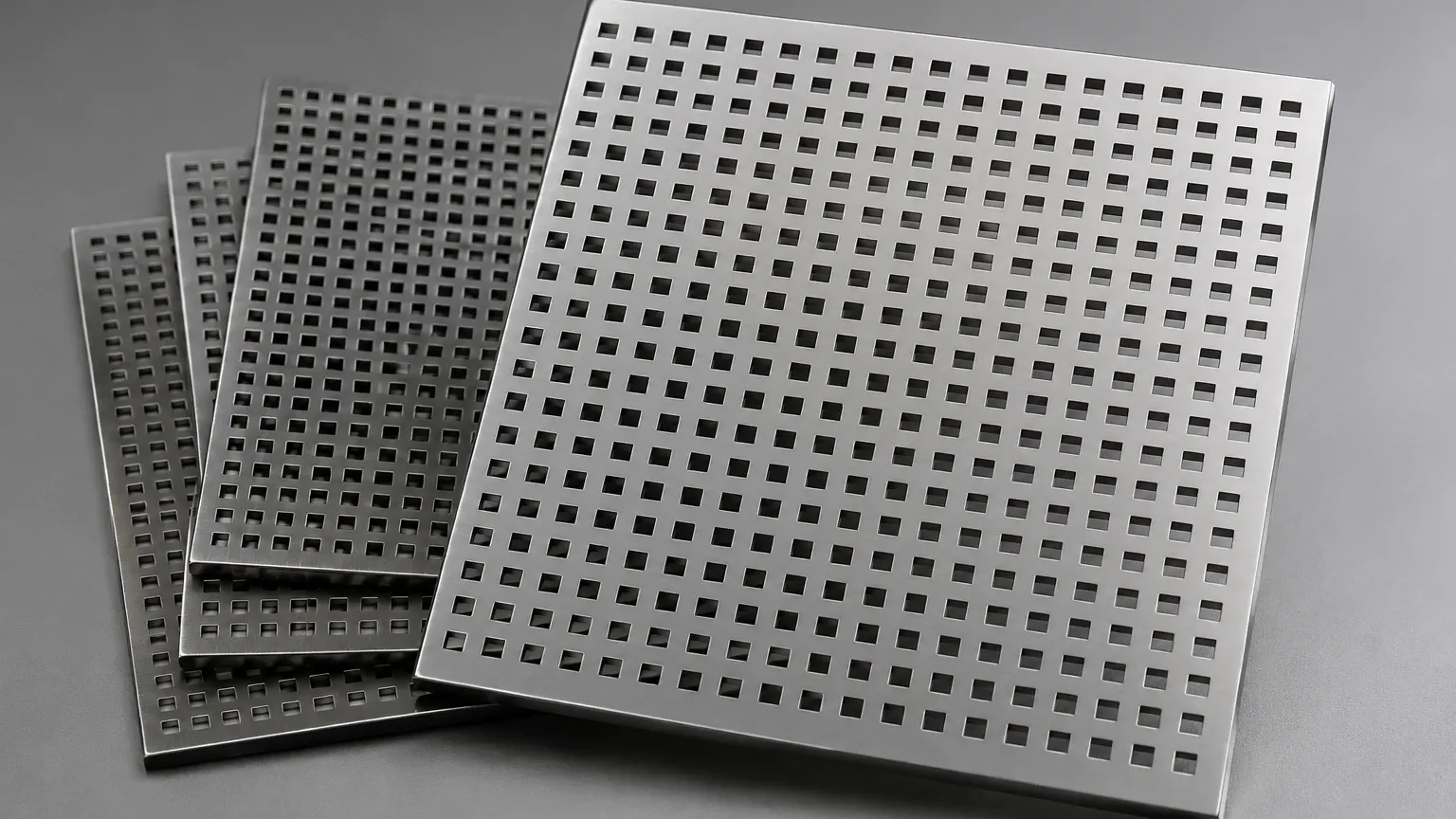
Square perforated metal is characterized by its four-sided apertures, which can be arranged in either a straight-line or staggered pattern. This article provides a technical analysis of these configurations, examining how material selection, hole-to-bar ratios, and manufacturing tolerances influence the performance of the final component in industrial settings.
Technical Geometry: Straight vs. Staggered Patterns
The performance of square perforated metal is fundamentally dictated by the arrangement of the holes. There are two primary patterns used in industrial manufacturing, each impacting the structural integrity and the flow dynamics of the sheet differently.
Straight Line Patterns
In a straight-line pattern, the square holes are aligned in both horizontal and vertical rows. This configuration is often preferred for applications where aesthetic symmetry is required or where the metal serves as a guide for mechanical components. However, from an engineering perspective, straight patterns create continuous "bars" of metal in both directions. While this provides predictable bending points, it can also lead to lower overall structural rigidity compared to staggered patterns when subjected to multi-directional stress.
Staggered Patterns
Staggered square patterns involve offsetting the rows of holes. This arrangement is less common than staggered round holes but is utilized when the application requires a specific distribution of material to prevent "tracking" or to increase the complexity of the path for fluids or particles passing through. Staggering can help distribute mechanical loads more evenly across the surface of the sheet, reducing the risk of deformation under high-pressure conditions.
Material Selection and Industrial Durability
For most industrial filtration and processing applications, the choice of material is as critical as the hole pattern. Kaifil specializes in stainless steel solutions, as this material provides the necessary balance of mechanical strength and chemical resistance required in demanding sectors such as chemical processing, pharmaceuticals, and food production.
Stainless Steel 304
Grade 304 is the standard "18/8" stainless steel. It offers excellent corrosion resistance in a wide range of atmospheric environments and many corrosive media. For square perforated metal used in interior architectural panels or general industrial guards, 304 provides a cost-effective solution with high durability.
Stainless Steel 316 and 316L
In environments involving chlorides, such as marine applications or chemical processing plants, Grade 316 is the preferred choice. The addition of molybdenum enhances its resistance to pitting and crevice corrosion. For components that require welding, 316L (low carbon) is utilized to prevent carbide precipitation, ensuring the integrity of the filtration system remains intact at the joints.
Specialty Alloys
Beyond standard stainless steel, high-performance applications may require duplex steels or nickel alloys. These are selected based on specific temperature requirements or the presence of highly aggressive chemical agents that would degrade standard alloys.
Calculating Open Area and Flow Efficiency
One of the primary reasons engineers specify square perforated metal over round-hole patterns is the achievement of a higher open area percentage. The open area is the ratio of the total area of the holes to the total area of the sheet, expressed as a percentage.
For square holes in a straight pattern, the formula is relatively straightforward:
Open Area % = (S² / P²) x 100
* S: The side length of the square hole.
* P: The pitch (the distance from the center of one hole to the center of the adjacent hole).
Because square holes do not have the "dead space" found between the curves of round holes, they can achieve open areas exceeding 60% or 70% while still maintaining a functional metal bridge (the bar). This high open area is vital for applications requiring maximum airflow or high-volume liquid throughput with minimal pressure drop. However, the engineer must balance this with the "minimum bar" requirement—the metal remaining between the holes must be thick enough to prevent the sheet from tearing during the punching process or failing under operational loads.
Engineering Considerations: Pressure Drop and Particle Retention
In filtration and separation, the geometry of the aperture significantly influences the behavior of the media. Square perforated metal is frequently used in the following capacities:
1. Mechanical Sorting: In the processing of grains, aggregates, or recycled materials, square holes allow for more precise passage of cubic or angular particles that might bridge or clog a round hole of similar diameter.
2. Support Structures: Due to its high open area, square perforated sheets often serve as the internal support core for fine wire mesh filter cartridges. This provides the necessary structural rigidity to withstand high differential pressures without significantly impeding the flow.
3. Acoustic Damping: In industrial machinery enclosures, the specific open area of square perforations can be tuned to work with acoustic insulation materials to attenuate specific sound frequencies.
Pressure Drop Analysis
When fluid passes through a perforated plate, it experiences a loss of energy, known as pressure drop. Because square holes provide a more direct path with less peripheral resistance than round holes for the same total open area, they can sometimes offer a more efficient flow profile. Engineers must calculate the Reynolds number and consider the thickness-to-hole-size ratio to ensure that the turbulence created at the hole edges does not lead to excessive vibration or cavitation in liquid systems.
Manufacturing Precision and Quality Control
The production of high-quality square perforated metal requires advanced CNC punching equipment. Unlike expanded metal, which is slit and stretched, perforated metal is created by removing material, which allows for much tighter tolerances and cleaner edge definitions.
Punching and Flatness
The punching process introduces internal stresses into the metal sheet. As the holes are punched, the material tends to curl or warp. Professional manufacturers like Kaifil utilize leveling rollers to restore the flatness of the sheet after perforation. This is a critical step for components that must be rolled into filter cylinders or fitted into tight-tolerance frames.
Deburring and Surface Finishing
Industrial filters must be free of burrs—small fragments of metal left over from the punching process. Burrs can break off and contaminate the downstream flow or cause injury during maintenance. Depending on the application, the metal may undergo electropolishing, pickling, or mechanical deburring to ensure a smooth, clean surface that resists fouling and is easy to sanitize.
Common Risks and Evaluation Criteria
When sourcing square perforated metal, several risks can impact the longevity and performance of the component. Understanding these allows procurement teams to set better quality benchmarks.
* Work Hardening: Stainless steel work-hardens quickly. If the punching speed or tool sharpness is not optimized, the edges of the square holes can become brittle, leading to stress cracks over time, especially in vibrating equipment.
* Inconsistent Margins: The "margin" is the unperforated area around the edges of the sheet. Inconsistent margins can make welding or mechanical fastening difficult. Engineers should specify whether they require "finished" margins (where the pattern stops cleanly before the edge) or "random" margins (where the pattern is cut off at the edge).
* Oil and Residue: The punching process requires lubricants. For pharmaceutical or food-grade applications, it is essential to confirm that the manufacturer uses food-safe lubricants or performs a rigorous degreasing process post-production.
Pre-Purchase Confirmation Checklist
Before moving from the design phase to procurement, technical teams should confirm the following data points with their manufacturer to ensure the final product meets the application's demands:
1. Exact Alloy Grade: Specify 304, 316, or 316L based on the chemical environment.
2. Hole Size (S) and Pitch (P): Define these clearly to ensure the required open area is met.
3. Sheet Thickness: Ensure the gauge of the metal is sufficient for the pressure loads but compatible with the punching equipment (typically, the hole size should not be smaller than the material thickness).
4. Tolerance Requirements: Define acceptable variances in hole dimensions and sheet flatness.
5. Edge Margins: Provide specific dimensions for the unperforated borders on all four sides.
6. Post-Processing: Indicate if the part requires rolling, welding into a cylinder, or specialized surface treatments.
By focusing on these technical parameters, engineers can leverage the high efficiency of square perforated metal to optimize their filtration systems and industrial components. Whether used as a primary screen or a structural support, the precision of the perforation and the quality of the base material remain the most critical factors in long-term operational success.
