


Usm Perforated Metal Panel
In the landscape of industrial filtration and structural engineering, the usm perforated metal panel serves as a critical component for both fluid management and mechanical support. While often associated with modular architectural systems, the technical application of these panels in industrial environments requires a deep understanding of material science, hole geometry, and fluid dynamics. For engineers and procurement specialists, selecting the correct Perforated & Expanded Metal solution involves balancing structural integrity with specific filtration requirements.
At its core, a perforated metal panel is a sheet of material—typically stainless steel, aluminum, or carbon steel—that has been mechanically punched or laser-cut to create a pattern of holes. In industrial filtration, these panels often act as the primary support structure for finer filter media or serve as a coarse pre-filter in high-flow systems. Understanding the nuances of these components is essential for optimizing the performance and longevity of filtration assemblies.
Engineering Fundamentals of Perforated and Expanded Metal
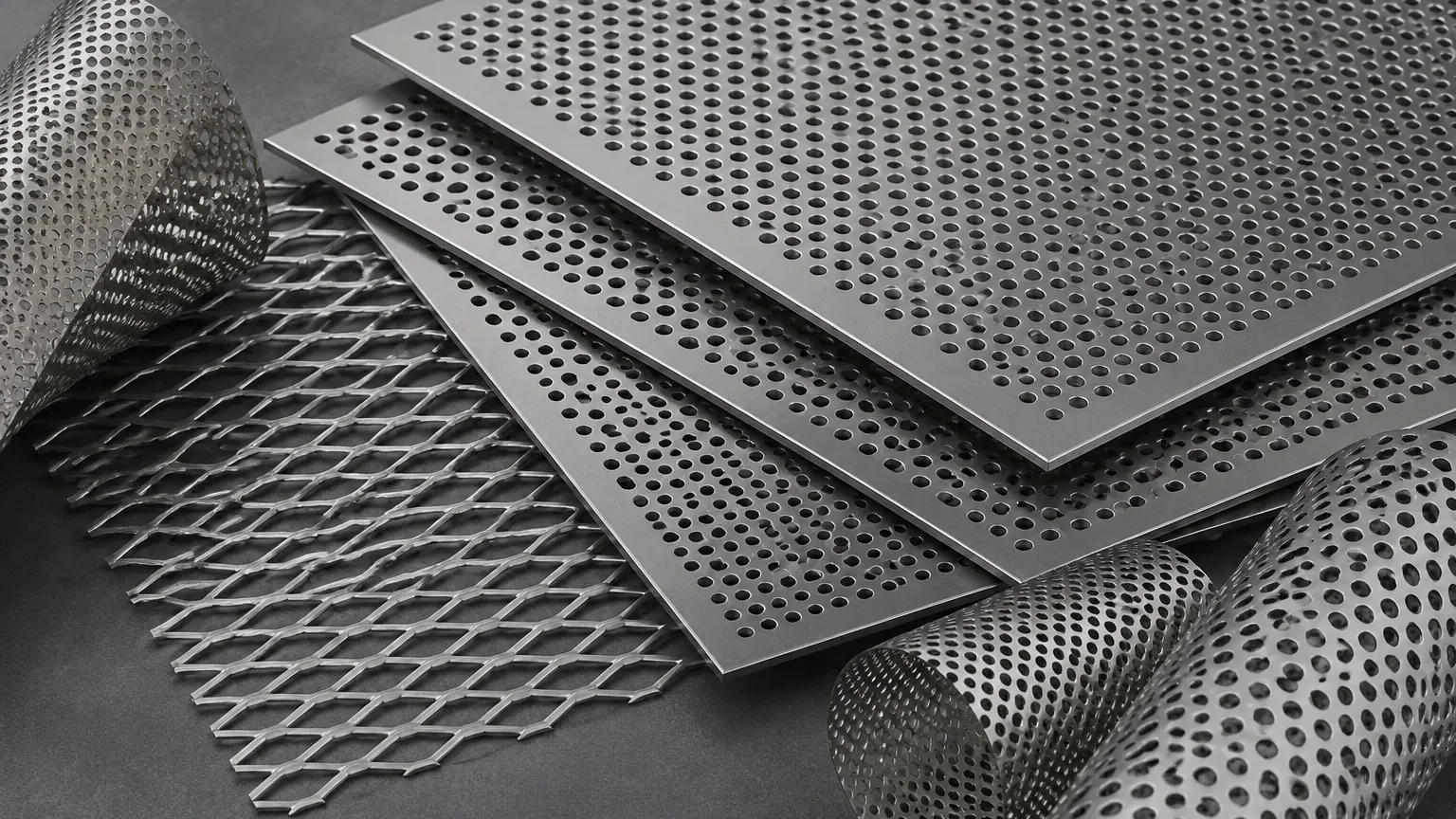
When evaluating a usm perforated metal panel for industrial use, it is important to distinguish between perforated and expanded metal manufacturing processes. Each method imparts different physical properties to the final product, affecting how it performs under pressure and in corrosive environments.
Perforated Metal Characteristics
Perforated metal is produced by punching holes into a solid metal sheet. This process allows for high precision in hole size, shape, and spacing. For filtration applications, round holes are the most common due to their structural stability and ease of cleaning. However, square, hexagonal, and slotted patterns are utilized when specific flow characteristics or aesthetic requirements are present. The primary advantage of perforated metal is its dimensional consistency and the ability to maintain flat margins (unperforated edges), which are crucial for welding and assembly into filter cartridges.
Expanded Metal Characteristics
Expanded metal is created by simultaneously slitting and stretching a metal sheet. This process creates diamond-shaped openings and results in a product that is lighter per square foot than the original sheet. While expanded metal is highly cost-effective and provides excellent grip and airflow, it lacks the precise aperture control found in perforated panels. In filtration, expanded metal is frequently used as an outer protective wrap or a spacer between layers of wire mesh.
Technical Specifications and Calculations
For an engineer, the most critical aspect of a usm perforated metal panel is the "open area." The open area percentage determines the flow rate and pressure drop across the panel. A higher open area allows for greater throughput but may compromise the mechanical strength of the panel.
Calculating Open Area
For a standard 60-degree staggered round hole pattern—the most common configuration in industrial filtration—the open area percentage is calculated using the following formula:
Open Area % = (D² × 90.69) / P²
Where:
* D = Hole diameter
* P = Pitch (the distance from the center of one hole to the center of the adjacent hole)
Selecting the right balance between hole diameter and pitch is essential. For instance, in a hydraulic filtration system, the perforated core must be strong enough to withstand high collapse pressures while providing enough open area to prevent significant flow restriction.
Material Selection for Demanding Environments
The choice of material for a usm perforated metal panel is dictated by the chemical composition of the fluid being filtered, the operating temperature, and the required mechanical strength. Kaifil specializes in stainless steel solutions, which are preferred in most industrial B2B applications due to their superior durability.
Stainless Steel 304 vs. 316
* Grade 304: This is the standard industrial grade, offering excellent formability and welding characteristics. it is suitable for most general filtration tasks in non-corrosive environments.
* Grade 316: Containing molybdenum, Grade 316 provides enhanced resistance to chlorides and pitting. This is the material of choice for pharmaceutical, food and beverage, and marine applications where sanitation and corrosion resistance are paramount.
In addition to stainless steel, specialized alloys like Monel or Hastelloy may be used for extreme chemical processing environments, though these are typically reserved for highly specific OEM requirements.
The Role of Perforated Panels in Filter Cartridge Design
In many industrial filtration systems, the usm perforated metal panel does not act alone. Instead, it serves as the "skeleton" of a multi-stage filter cartridge. Its primary functions in this context include:
1. Internal Support (Core): The perforated tube at the center of a pleated or wrapped filter cartridge must resist the inward pressure of the fluid. If the core fails, the entire filter element collapses, potentially releasing contaminants into the downstream flow.
2. External Protection (Cage): An outer perforated shroud protects the delicate filter media (such as fine wire mesh or fiberglass) from mechanical damage during installation and handling.
3. Flow Distribution: By strategically designing the hole pattern, engineers can ensure that the fluid is distributed evenly across the entire surface of the primary filter media, preventing "hot spots" and extending the filter's service life.
Manufacturing Precision and Quality Control
When sourcing a usm perforated metal panel, technical professionals must confirm that the manufacturer adheres to strict tolerances. Inaccuracies in hole alignment or sheet flatness can lead to significant issues during the fabrication of larger filtration units.
Deburring and Surface Finishing
The punching process naturally creates burrs on the exit side of the hole. In filtration, these burrs are more than just an aesthetic concern; they can tear fine wire mesh layers or trap contaminants that are difficult to remove during backwashing. High-quality industrial panels undergo rigorous deburring processes, such as vibratory finishing or electropolishing, to ensure a smooth surface.
Margin Specifications
Margins refer to the unperforated areas along the edges of the sheet. For panels that will be rolled into tubes and welded, precise margins are necessary to ensure a clean, strong weld seam without interrupting the hole pattern or creating structural weak points.
Application-Specific Considerations
Different industries have unique requirements for Perforated & Expanded Metal components. Identifying these early in the procurement process helps avoid costly redesigns.
Food and Beverage Industry
In food processing, the primary concern is "cleanability." Perforated panels must have smooth surfaces and radii that do not harbor bacteria. Stainless steel 316L is often required, and the panels may need to meet specific FDA or 3A sanitary standards.
Chemical and Petrochemical Processing
These environments often involve high temperatures and aggressive solvents. The mechanical stability of the usm perforated metal panel is tested by thermal expansion and contraction. Engineers must select gauges (thicknesses) that can withstand these stresses without warping.
Acoustic and Architectural Integration
While Kaifil focuses on industrial filtration, it is worth noting that perforated panels are also used for sound attenuation in industrial machinery housings. In these cases, the hole size and pattern are engineered to trap specific sound frequencies, often in conjunction with acoustic insulation materials.
Evaluating Total Cost of Ownership (TCO)
When purchasing usm perforated metal panels, the initial price is only one factor. Technical buyers should consider the total cost of ownership, which includes:
* Durability: A cheaper, thinner gauge panel may fail under pressure, leading to expensive system downtime.
* Maintenance: Panels that are easier to clean (due to superior surface finishing) reduce labor costs and chemical usage during CIP (Clean-In-Place) cycles.
* Compatibility: Ensuring the panel is perfectly matched to the housing and primary media reduces the risk of bypass, where unfiltered fluid escapes around the edges of the filter.
Selecting a Custom Filtration Partner
Standard off-the-shelf perforated sheets rarely meet the exacting needs of specialized industrial equipment. Working with a manufacturer like Kaifil allows for the development of customized solutions tailored to specific OEM requirements. This includes custom hole patterns, non-standard material thicknesses, and secondary fabrication services such as rolling, welding, and assembly.
Before finalizing a specification for a usm perforated metal panel, engineers should confirm the following with their supplier:
* Exact material grade and certification (MTRs).
* Tolerance levels for hole diameter and pitch.
* Required surface finish (e.g., 2B, No. 4, or electropolished).
* Specific margin requirements for downstream welding.
* Pressure drop expectations based on the calculated open area.
By focusing on these technical details, procurement teams can ensure they receive a product that not only fits the immediate application but also contributes to the overall efficiency and reliability of the industrial filtration system.
