


Sintered Metal Air Filter
In industrial environments where air and gas streams are subjected to extreme temperatures, high pressures, or corrosive chemicals, traditional disposable filtration media often fail to meet performance requirements. The sintered metal air filter has emerged as a critical component for engineers seeking a robust, reusable, and highly efficient solution for gas-solid separation. Unlike polymer or paper-based filters, these components leverage the mechanical strength of stainless steel and other alloys to provide consistent filtration performance under the most demanding conditions.
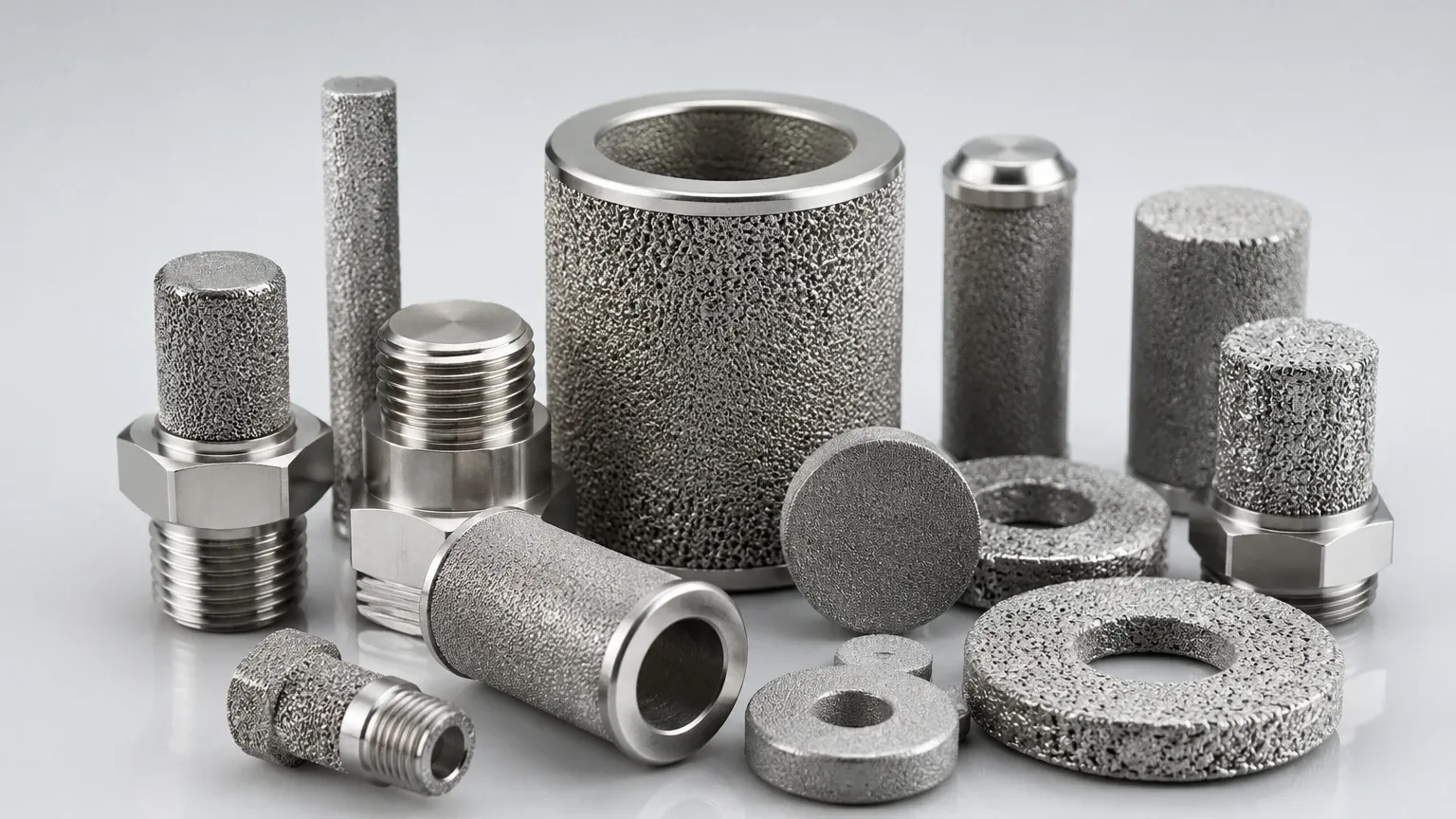
Sintered Metal Filters are manufactured through a specialized powder metallurgy process that creates a rigid, porous structure. This guide explores the technical specifications, engineering considerations, and application-specific advantages of utilizing sintered metal air filter technology in modern industrial systems.
Understanding the Engineering Behind Sintered Metal Air Filters
The efficacy of a sintered metal air filter is rooted in its unique manufacturing process. The process begins with high-purity metal powders, which are carefully graded by particle size. These powders are compacted into a specific shape—often a cylinder, disc, or plate—and then subjected to a sintering furnace. During sintering, the temperature is raised to just below the melting point of the metal. This causes the particles to bond at their contact points through molecular diffusion, creating a monolithic structure with a controlled network of interconnected pores.
From an engineering perspective, this structure offers several advantages over woven or non-woven fiber media:
1. Fixed Pore Geometry: Unlike fabric filters that can stretch or deform under pressure, the pores in a sintered metal air filter are permanent. This ensures that the micron rating remains constant throughout the filter's service life, preventing "particle unloading" during pressure surges.
2. High Porosity and Permeability: Despite their mechanical strength, these filters can be engineered with high porosity (up to 50% or more), which allows for high flow rates with relatively low initial pressure drops.
3. Depth Filtration Characteristics: The tortuous path created by the bonded powder particles provides depth filtration, capturing contaminants not just on the surface but within the thickness of the filter wall. This increases the dirt-holding capacity and extends the interval between cleaning cycles.
Material Selection and Structural Integrity
When specifying a sintered metal air filter, material selection is the primary factor in determining chemical compatibility and thermal limits. Kaifil utilizes a range of alloys to meet diverse industrial needs:
* 316L Stainless Steel: The industry standard for most air and gas applications. It offers excellent corrosion resistance and can operate in temperatures up to 450°C (842°F) in oxidizing environments and even higher in reducing environments.
* Hastelloy and Inconel: For applications involving highly corrosive gases, such as those found in chemical processing or flue gas filtration, nickel-based alloys provide superior resistance to pitting and stress-corrosion cracking.
* Titanium: Used in specialized applications where weight is a factor or where specific chemical resistance (such as to wet chlorine) is required.
The structural integrity of these materials allows the sintered metal air filter to withstand high differential pressures (ΔP). In many hydraulic or high-pressure gas systems, the filter must resist collapsing or bursting under pressures that would instantly destroy conventional media. This mechanical robustness also allows for the integration of the filter into high-velocity gas streams where vibration and turbulence are present.
Performance Metrics: Micron Rating and Pressure Drop
Selecting the correct sintered metal air filter requires an understanding of the relationship between filtration efficiency and system energy consumption. Engineers must balance the need for high-purity air with the allowable pressure drop across the media.
Absolute vs. Nominal Filtration
In the context of Sintered Metal Filters, the micron rating is typically expressed as an absolute value. An absolute rating of 5 microns means that 99.9% of particles larger than 5 microns will be captured. This is critical for protecting downstream equipment like precision valves, turbines, or sensitive analytical instruments. Nominal ratings, while sometimes used for pre-filtration, are less reliable in critical gas applications.
Pressure Drop (ΔP)
The pressure drop across a sintered metal air filter is influenced by the gas velocity, the viscosity of the gas, and the pore size of the filter. Because gas is compressible, the density change across the filter must also be considered in high-pressure systems. Using Darcy’s Law for porous media, engineers can calculate the expected flow resistance. To minimize energy costs, it is often recommended to size the filter housing to allow for a low face velocity, which significantly reduces the initial ΔP and extends the time until the filter reaches its terminal pressure drop.
Industrial Applications for Gas and Air Filtration
The versatility of the sintered metal air filter makes it suitable for a wide array of sectors where air purity and component durability are non-negotiable.
Compressed Air and Nitrogen Systems
In manufacturing plants, compressed air often contains oil aerosols, water vapor, and particulate matter from pipe scale. Sintered metal filters serve as excellent secondary filters or point-of-use filters to ensure that pneumatic tools and automated machinery receive clean, dry air. In nitrogen generation systems, they protect the carbon molecular sieves from particulate contamination.
Sterile Air for Food and Pharmaceuticals
In the food, beverage, and pharmaceutical industries, air used for tank venting or product carbonation must be free of bacteria and contaminants. Sintered stainless steel filters are ideal here because they can be sterilized in place (SIP) using high-pressure steam. Their inorganic nature means they do not shed fibers or leach chemicals into the process stream, meeting stringent FDA and cGMP requirements.
Catalyst Recovery and Flue Gas
In chemical reactors, gas streams often carry expensive catalyst particles. A sintered metal air filter can be used to capture these particles for reuse. Similarly, in high-temperature flue gas applications, these filters remove fly ash and other particulates before the gas is exhausted or further processed, even at temperatures that would melt polymer-based baghouse filters.
Gas Sparging
Beyond simple filtration, sintered metal components are used as spargers to introduce air or other gases into liquids. The controlled pore size allows for the creation of fine, uniform bubbles, which maximizes the surface area for gas-liquid mass transfer in fermentation tanks or water treatment aeration basins.
Maintenance, Cleaning, and Longevity
One of the most significant advantages of a sintered metal air filter is its cleanability. While the initial capital expenditure (CAPEX) for a metal filter is higher than that of a disposable filter, the total cost of ownership (TCO) is often lower due to the elimination of replacement costs and reduced waste disposal fees.
Regeneration Techniques
Depending on the nature of the contaminant, several methods can be used to restore the filter to its original performance levels:
* Backpulsing/Backwashing: For surface-loaded dust and particulates, a sudden reverse flow of gas or liquid can dislodge the cake and clear the pores. This can often be automated within the system.
* Ultrasonic Cleaning: For deep-seated particulates, removing the filter element and placing it in an ultrasonic bath with a suitable cleaning agent is highly effective. The high-frequency sound waves create cavitation bubbles that scrub the internal pore structures.
* Chemical Cleaning: Soaking the filter in solvents, caustic solutions, or acids can dissolve organic or inorganic deposits that cannot be removed mechanically.
* Thermal Burn-off: For organic contaminants, the filter can be heated in a controlled furnace to oxidize and remove the blockage, provided the temperature remains within the alloy's safe operating range.
Determining Replacement Cycles
While sintered metal filters are durable, they are not infinite. Over many cleaning cycles, the structural integrity may eventually degrade, or "permanent fouling" may occur where contaminants cannot be removed. Engineers should monitor the pressure drop after each cleaning cycle; a steady increase in the "clean" ΔP indicates that the filter is reaching the end of its useful life.
Customization and OEM Integration
Every industrial system has unique constraints regarding space, flow rate, and connection types. As a professional manufacturer, Kaifil provides customized filtration solutions that go beyond standard catalog items. When specifying a sintered metal air filter for a new project or an equipment upgrade, several customization options should be considered:
* End Fittings: Elements can be manufactured with NPT threads, flange mounts, or specialized O-ring seals (such as 222 or 226 configurations) to ensure a leak-proof fit in existing housings.
* Reinforcement: For applications involving extreme pressure differentials or mechanical shock, internal cores or external shrouds can be added to the filter element to prevent deformation.
* Hybrid Designs: Combining different layers of wire mesh and sintered powder can optimize the filter for specific tasks, such as combining high flow rates with fine particulate retention.
By working closely with an experienced manufacturer, purchasing teams can ensure that the selected Sintered Metal Filters are perfectly matched to the operational parameters of their facility. Confirming details such as the specific gas composition, operating temperature range, and required flow velocity during the design phase prevents costly performance issues post-installation.
In conclusion, the sintered metal air filter represents a high-performance solution for critical gas filtration. Its ability to provide absolute filtration in high-temperature and high-pressure environments, combined with its long-term reusability, makes it an essential component for modern industrial engineering. Whether the goal is protecting sensitive equipment, ensuring product purity, or recovering valuable materials, these precision-engineered metal components deliver the reliability and efficiency required by today’s global industries.
