


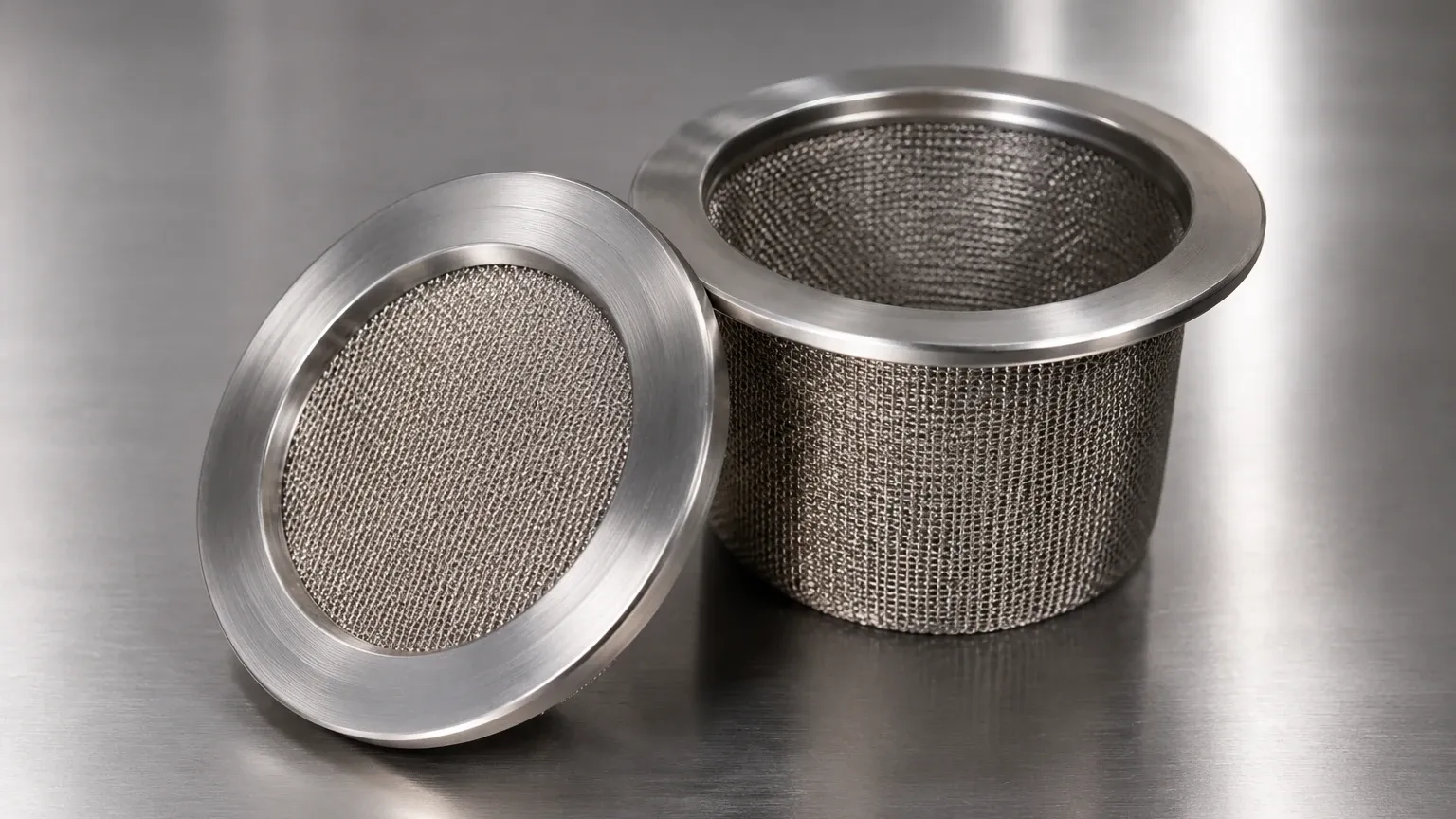
2 Piece Strainer Basket
In industrial fluid processing, the integrity of downstream equipment such as pumps, valves, and heat exchangers depends heavily on the efficiency of primary filtration components. Among the most versatile tools in a maintenance engineer’s arsenal is the 2 piece strainer basket. This specific configuration, a critical subset of industrial Strainers & Baskets, offers a modular approach to particulate removal, balancing structural durability with high-precision filtration.
Understanding the technical nuances of a 2 piece strainer basket—from material selection to hydraulic performance—is essential for optimizing system uptime and reducing total cost of ownership. This guide examines the engineering principles, application-specific benefits, and selection criteria for these essential industrial components.
The Engineering Logic of the 2 Piece Design
Standard strainer baskets are often manufactured as a single unit where the filtration media is permanently bonded to the support structure. While effective for simple applications, this can limit flexibility. A 2 piece strainer basket typically consists of two distinct components: a heavy-duty perforated metal outer basket and a removable, fine-mesh inner liner or insert.
Structural Support (The Outer Basket)
The outer layer is engineered for structural rigidity. In high-pressure systems, the force exerted by the fluid flow can be substantial, especially as the filter begins to capture debris and the differential pressure increases. The outer basket is usually made from thick-gauge stainless steel with large perforations, designed to withstand the mechanical stresses of the system without deforming.
Filtration Precision (The Inner Liner)
The inner piece is the primary filtration media, often constructed from high-quality stainless steel wire mesh. By separating the mesh from the main structural frame, manufacturers can offer a wider range of micron ratings. This modularity allows operators to switch liners to accommodate different production batches or varying fluid viscosities without replacing the entire housing assembly.
Material Science and Corrosion Resistance
For most industrial applications, the material of choice for a 2 piece strainer basket is stainless steel. Kaifil utilizes advanced alloys to ensure that the filtration components can withstand the aggressive chemical environments and high temperatures common in heavy industry.
1. 304 Stainless Steel: The standard for general industrial use, providing excellent corrosion resistance and durability in water treatment and food processing applications.
2. 316/316L Stainless Steel: Enhanced with molybdenum, these alloys are essential for chemical processing and marine environments where chloride corrosion is a risk. 316L (low carbon) is specifically used in applications requiring extensive welding to prevent carbide precipitation.
3. Specialty Alloys: For extreme environments involving high-concentration acids or ultra-high temperatures, alloys like Monel or Hastelloy may be utilized, though stainless steel remains the benchmark for the majority of B2B filtration needs.
Technical Performance Indicators
When specifying a 2 piece strainer basket, engineers must evaluate several performance metrics to ensure the component does not become a bottleneck in the system.
Flow Rate and Open Area
The efficiency of a strainer is largely determined by its "open area ratio." This is the ratio between the total area of the holes in the mesh and the total area of the basket. A higher open area results in a lower initial pressure drop. In a 2 piece design, the engineer must account for the combined restriction of both the outer perforated metal and the inner mesh liner. Ideally, the strainer should have an open area at least four to six times the cross-sectional area of the inlet pipe to ensure minimal flow resistance.
Micron Rating and Retention Efficiency
Filtration accuracy is defined by the micron rating. A 2 piece strainer basket can be fitted with liners ranging from coarse (several millimeters) to ultra-fine (down to 5 microns). It is important to distinguish between "nominal" and "absolute" ratings. Nominal ratings indicate the ability to retain a majority of particles of a certain size, while absolute ratings guarantee that 99.9% of particles above that size will be captured.
Differential Pressure (Delta P)
As the basket captures contaminants, the pressure drop across the strainer increases. Monitoring Delta P is crucial. A 2 piece strainer basket must be designed to handle the "maximum allowable pressure drop" before the mesh liner risks bursting or the outer basket collapses. High-quality manufacturing ensures that the seams and welds of both pieces can withstand these operational peaks.
Industrial Applications and Use Cases
The modular nature of the 2 piece strainer basket makes it a preferred choice across several demanding sectors:
Chemical and Petrochemical Processing
In these environments, fluids often contain aggressive particulates that can erode pump impellers. The 2 piece design allows for the frequent inspection and replacement of the inner mesh liner, which may wear faster than the structural outer basket due to the abrasive nature of the chemicals.
Food and Beverage Production
Hygiene is paramount in food-grade filtration. The ability to completely disassemble the 2 piece strainer basket ensures that no organic material is trapped in the crevices between the mesh and the support structure. This facilitates thorough Clean-in-Place (CIP) or manual sterilization processes.
Pharmaceutical Manufacturing
Precision is the defining requirement in pharmaceutical applications. The 2 piece configuration allows for the use of ultra-fine mesh liners that meet strict purity standards, while the outer basket provides the necessary support for high-velocity liquid transfers.
Hydraulic and Cooling Systems
In large-scale hydraulic systems, protecting sensitive valves from metal shavings or scale is vital. The 2 piece strainer basket acts as a robust line of defense, ensuring that even under high-pressure surges, the filtration media remains intact and effective.
Maintenance, Cleaning, and Replacement Cycles
One of the primary advantages of the 2 piece strainer basket is the ease of maintenance. Unlike single-piece units that may require specialized equipment to clean the deep folds of the mesh, the inner liner of a 2 piece system can be removed and cleaned independently.
* Cleaning Protocols: Depending on the contaminant, liners can be cleaned using ultrasonic baths, high-pressure water jets, or chemical solvents. Because the liner is a separate component, it is easier to inspect for signs of fatigue, such as broken wires or mesh blinding.
* Replacement Strategy: In many high-volume operations, facilities keep multiple inner liners on hand. This allows for a "swap-and-clean" strategy, where a dirty liner is replaced immediately with a clean one, minimizing system downtime to just a few minutes.
* Longevity: While the inner mesh liner is a wear item, the outer perforated basket is designed for long-term service. This separation of components significantly reduces long-term replacement costs, as only the less expensive mesh component needs to be replaced periodically.
* Total Cost of Ownership (TCO): While the initial capital expenditure for a 2 piece strainer basket may be slightly higher than a basic single-piece unit, the reduced downtime and lower cost of replacement parts typically result in a lower TCO over the life of the filtration system.
Customization and Engineering Support
No two industrial systems are identical, and off-the-shelf filtration components often fall short of specific operational requirements. Kaifil specializes in the custom manufacturing of 2 piece strainer baskets, providing engineering support to tailor the product to the application.
Custom Dimensions and Flanging
Baskets can be manufactured to fit existing strainer housings, including custom heights, diameters, and flange configurations. This is particularly useful for brownfield projects where legacy equipment must be upgraded with modern filtration media.
Specialized Mesh Weaves
Depending on the particle shape and fluid viscosity, different mesh weaves (such as plain, twilled, or Dutch weave) can be utilized for the inner liner. Each weave offers different characteristics regarding flow resistance and particle cake release.
Reinforced Designs
For applications involving significant pressure spikes or heavy debris loads, the outer basket can be reinforced with additional rings or longitudinal ribs to prevent buckling.
Key Considerations for Purchasing Teams
Before finalizing a specification for a 2 piece strainer basket, procurement and engineering teams should confirm the following data points with their manufacturer:
1. Fluid Compatibility: Ensure the stainless steel grade (304 vs 316) is appropriate for the chemical composition and temperature of the process fluid.
2. Micron Requirement: Determine the minimum particle size that must be removed to protect downstream equipment without causing excessive pressure drop.
3. Flow Dynamics: Provide the maximum and normal flow rates to ensure the basket's open area is sufficient.
4. Housing Constraints: Verify the internal dimensions of the strainer housing to ensure a precision fit, as gaps can lead to fluid bypass.
5. Certification Needs: Determine if the application requires specific certifications, such as FDA compliance for food contact or material traceability reports (MTRs).
By focusing on these technical parameters, industrial operators can ensure that their Strainers & Baskets provide reliable, long-term protection for their critical infrastructure. The 2 piece strainer basket remains a gold standard for those seeking a balance between high-performance filtration and operational flexibility.
