


2 Stainless Steel Basket Strainer
In industrial fluid handling systems, the 2-inch nominal pipe size (NPS) is a standard for medium-flow applications across chemical processing, food and beverage production, and hydraulic systems. A 2 stainless steel basket strainer serves as a critical protection component, designed to remove large particles, debris, and contaminants from liquid or gas streams before they reach sensitive downstream equipment like pumps, valves, and flow meters. Unlike Y-strainers, basket strainers are characterized by their larger internal volume and top-loading design, which allows for a lower pressure drop and easier maintenance.
Selecting the correct configuration for a 2 stainless steel basket strainer requires a deep understanding of material properties, filtration accuracy, and the specific hydraulic demands of the application. As a professional manufacturer, Kaifil provides customized Strainers & Baskets engineered to meet these rigorous industrial standards.
Material Selection: SS304 vs. SS316L
The choice of stainless steel grade is the most fundamental decision in the procurement process. For a 2 stainless steel basket strainer, the two primary options are Grade 304 and Grade 316L.
Grade 304 Stainless Steel
SS304 is the most common choice for general industrial applications. It offers excellent resistance to atmospheric corrosion and is suitable for water treatment, cooling systems, and non-corrosive chemical lines. It provides high durability and structural integrity at a lower cost point than higher-alloyed steels.
Grade 316L Stainless Steel
For environments involving chlorides, acids, or high-salinity fluids, SS316L is the preferred material. The addition of molybdenum enhances its resistance to pitting and crevice corrosion. In the pharmaceutical and food industries, SS316L is often mandatory due to its superior sanitary properties and resistance to harsh Cleaning-in-Place (CIP) chemicals. The "L" (low carbon) designation is particularly important if the strainer housing or basket requires extensive welding, as it prevents carbide precipitation and maintains corrosion resistance in the heat-affected zones.
Engineering Considerations for Flow and Pressure
When integrating a 2 stainless steel basket strainer into a piping system, engineers must account for the relationship between flow rate and pressure drop (Delta P). Because the basket strainer has a larger surface area than a Y-strainer of the same size, it typically offers a lower initial pressure drop, which is vital for maintaining system efficiency.
Flow Capacity
A standard 2-inch strainer is designed to handle flow rates typical of 2-inch piping, but the actual capacity is dictated by the viscosity of the fluid and the percentage of open area in the basket. For high-viscosity fluids like oils or resins, a larger basket or a coarser mesh may be required to prevent excessive flow restriction.
Clean vs. Dirty Pressure Drop
It is standard engineering practice to calculate the pressure drop for both a clean basket and a partially fouled basket (usually at 50% blockage). If the pressure drop exceeds the system's allowable limits, it can lead to cavitation in pumps or reduced throughput. Monitoring the pressure differential across the strainer is the most reliable way to determine when the basket requires cleaning.
Filtration Accuracy: Perforation and Mesh Selection
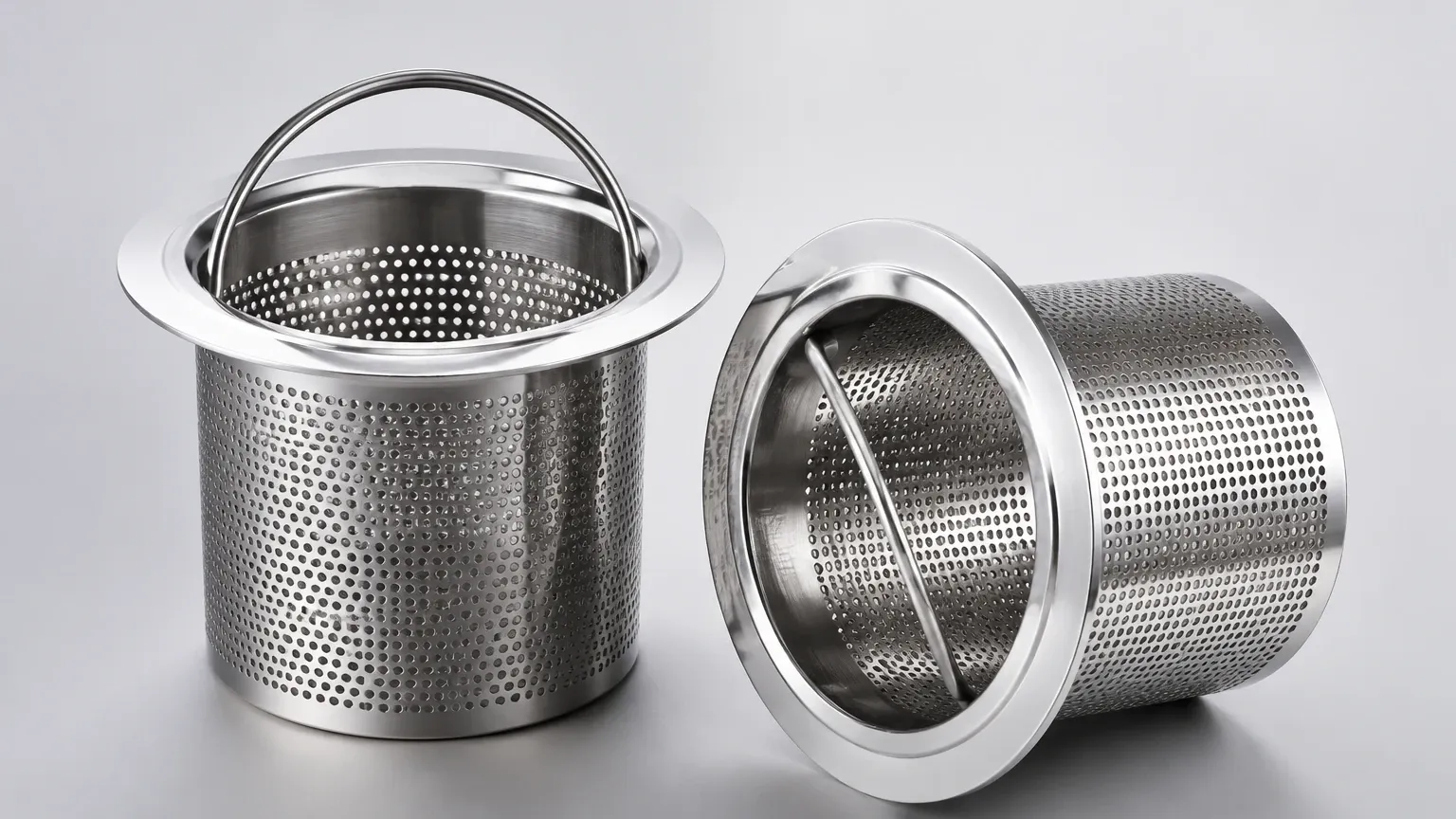
The filtration performance of a 2 stainless steel basket strainer is defined by the basket's internal lining. Depending on the particle size that needs to be captured, the basket may consist of a perforated metal sheet, a fine wire mesh, or a combination of both.
1. Perforated Baskets: These are used for coarse filtration, typically capturing particles from 1/32" to 1/4". They are structurally robust and can withstand higher pressure differentials without deforming.
2. Wire Mesh Liners: For finer filtration (ranging from 20 mesh down to 400 mesh or finer), a stainless steel wire mesh is sintered or welded to the inside of a perforated basket. This provides the necessary support for the delicate mesh while achieving high filtration accuracy.
3. Micron Ratings: In precision applications, such as pharmaceutical processing or fine chemical production, specifying the micron rating is essential. A 2-inch strainer can be fitted with baskets capable of capturing particles as small as 25-50 microns, though this requires more frequent maintenance due to faster loading.
Design Features and Connection Types
The physical configuration of a 2 stainless steel basket strainer impacts both installation and ease of operation.
Simplex vs. Duplex Designs
* Simplex Strainers: These are used in systems where the flow can be temporarily shut down to clean the basket. They are cost-effective and compact.
* Duplex (Twin) Strainers: For continuous processes where shutdown is not an option, a duplex strainer allows the operator to divert flow from one basket to another without interrupting the process. This is common in hydraulic oil systems and fuel lines.
Connection Interfaces
* Flanged (ANSI/DIN): The most common connection for a 2-inch industrial strainer, providing a secure, leak-proof seal that is easy to remove for maintenance.
* NPT/Threaded: Often used for lower-pressure applications or where space is limited.
* Socket Weld: Preferred in high-pressure or high-temperature systems where a permanent, leak-free joint is required.
Closure Types
To minimize downtime, many 2 stainless steel basket strainers feature quick-opening covers, such as swing bolts or V-band clamps. These allow operators to access the basket without specialized tools, significantly reducing the time required for cleaning cycles.
Application-Specific Requirements
Different industries impose unique demands on filtration components. A 2 stainless steel basket strainer must be configured to meet these specific standards:
* Food & Beverage: Requires polished internal surfaces (Ra < 0.8 µm) to prevent bacterial growth and must comply with FDA or 3A standards.
* Chemical Processing: Focuses on material compatibility. The gaskets and seals (EPDM, Viton, or PTFE) must be as resistant to the process fluid as the stainless steel housing itself.
* Water Treatment: Often deals with high volumes of organic debris, requiring baskets with a high open-area ratio to extend the time between cleanings.
* Hydraulic Systems: Focuses on protecting high-pressure pumps from metal shavings and particulate matter that could cause catastrophic component failure.
Maintenance and Total Cost of Ownership
While the initial purchase price of a 2 stainless steel basket strainer is a factor, the total cost of ownership (TCO) is driven by maintenance efficiency and the durability of the basket. Stainless steel is inherently more durable than plastic or cast iron alternatives, offering a longer service life and the ability to be cleaned and reused thousands of times.
Cleaning Cycles
Establishing a regular cleaning schedule is essential. If a basket is left to clog completely, the resulting pressure surge can burst the mesh or collapse the basket, allowing contaminants to bypass the filter and damage downstream equipment. Many modern systems utilize differential pressure sensors to trigger an automated alert when the basket reaches a pre-set debris level.
Replacement Parts
Maintaining a stock of replacement baskets and gaskets is recommended for critical 2-inch lines. Because Kaifil specializes in custom filtration, we can manufacture replacement baskets to specific dimensions and mesh counts, ensuring that even older or specialized strainer housings can be maintained with high-quality components.
Why Choose Kaifil for Strainers & Baskets?
Kaifil is a professional manufacturer dedicated to providing high-performance, custom stainless steel filtration solutions. We understand that a 2 stainless steel basket strainer is rarely a "one-size-fits-all" component. Our engineering team works closely with clients to determine the optimal material grade, filtration accuracy, and structural design for their specific industrial environment.
Our manufacturing capabilities include advanced wire mesh weaving, precision metal perforation, and specialized welding techniques. This allows us to produce Strainers & Baskets that deliver consistent performance in demanding applications, from chemical reactors to food processing lines.
When evaluating your next filtration project, consider the following technical factors:
* Fluid Viscosity and Density: How will they affect the flow through a 2-inch orifice?
* Contaminant Loading: Is the debris fine and constant, or large and sporadic?
* Operating Temperature and Pressure: Does the housing design meet the necessary safety factors for your facility?
* Sanitary Requirements: Does the application require specific surface finishes or weld treatments?
By addressing these questions during the selection phase, engineers can ensure that their 2 stainless steel basket strainer provides reliable protection, minimizes pressure loss, and contributes to the overall longevity of the industrial system.
