


3/4 Strainer
In industrial fluid handling and piping systems, the 3/4 strainer serves as a critical line of defense for downstream equipment. Designed for 3/4-inch nominal pipe sizes (NPS), these components are ubiquitous in auxiliary lines, pilot plants, and precision chemical dosing systems. Their primary function is the mechanical removal of unwanted solids from liquid, gas, or steam lines by means of a perforated or wire mesh straining element.
For engineers and procurement specialists, selecting a 3/4 strainer involves more than simply matching a pipe diameter. It requires a deep understanding of fluid dynamics, material compatibility, and the specific mechanical stresses of the application environment. As a specialized manufacturer, Kaifil provides a range of Strainers & Baskets engineered to meet the rigorous standards of the pharmaceutical, food and beverage, and chemical processing industries.
Technical Specifications and Engineering Fundamentals
A 3/4 strainer is typically defined by its connection size, which corresponds to a 0.75-inch internal or external thread (NPT/BSP) or a socket weld/flanged connection. While the size is standard, the internal configuration and the efficiency of the filtration media vary significantly based on the intended use.
Material Selection
In industrial B2B environments, stainless steel is the preferred material for 3/4 strainers due to its superior corrosion resistance and structural integrity.
* Grade 304 Stainless Steel: Suitable for general industrial water treatment, hydraulic oils, and non-corrosive chemical lines. It offers excellent durability at a lower cost point than higher-grade alloys.
* Grade 316/316L Stainless Steel: Essential for applications involving chlorides, organic acids, or high-purity requirements such as pharmaceutical manufacturing. The addition of molybdenum enhances resistance to pitting and crevice corrosion.
* Exotic Alloys: For highly aggressive media, such as concentrated sulfuric acid or seawater, specialized alloys like Hastelloy or Monel may be integrated into the basket or housing design.
Pressure and Temperature Ratings
The mechanical design of a 3/4 strainer must adhere to ASME or ISO standards for pressure piping. A standard stainless steel Y-strainer in this size often carries a rating of Class 150, 300, or even 600, depending on the wall thickness and connection type. Engineers must verify that the strainer’s Maximum Allowable Working Pressure (MAWP) exceeds the system’s peak surge pressure at the maximum operating temperature.
Design Variations in 3/4" Configurations
The geometry of a 3/4 strainer determines its flow characteristics, dirt-holding capacity, and ease of maintenance. Within the category of Strainers & Baskets, three primary designs dominate the 3/4-inch market.
Y-Strainers
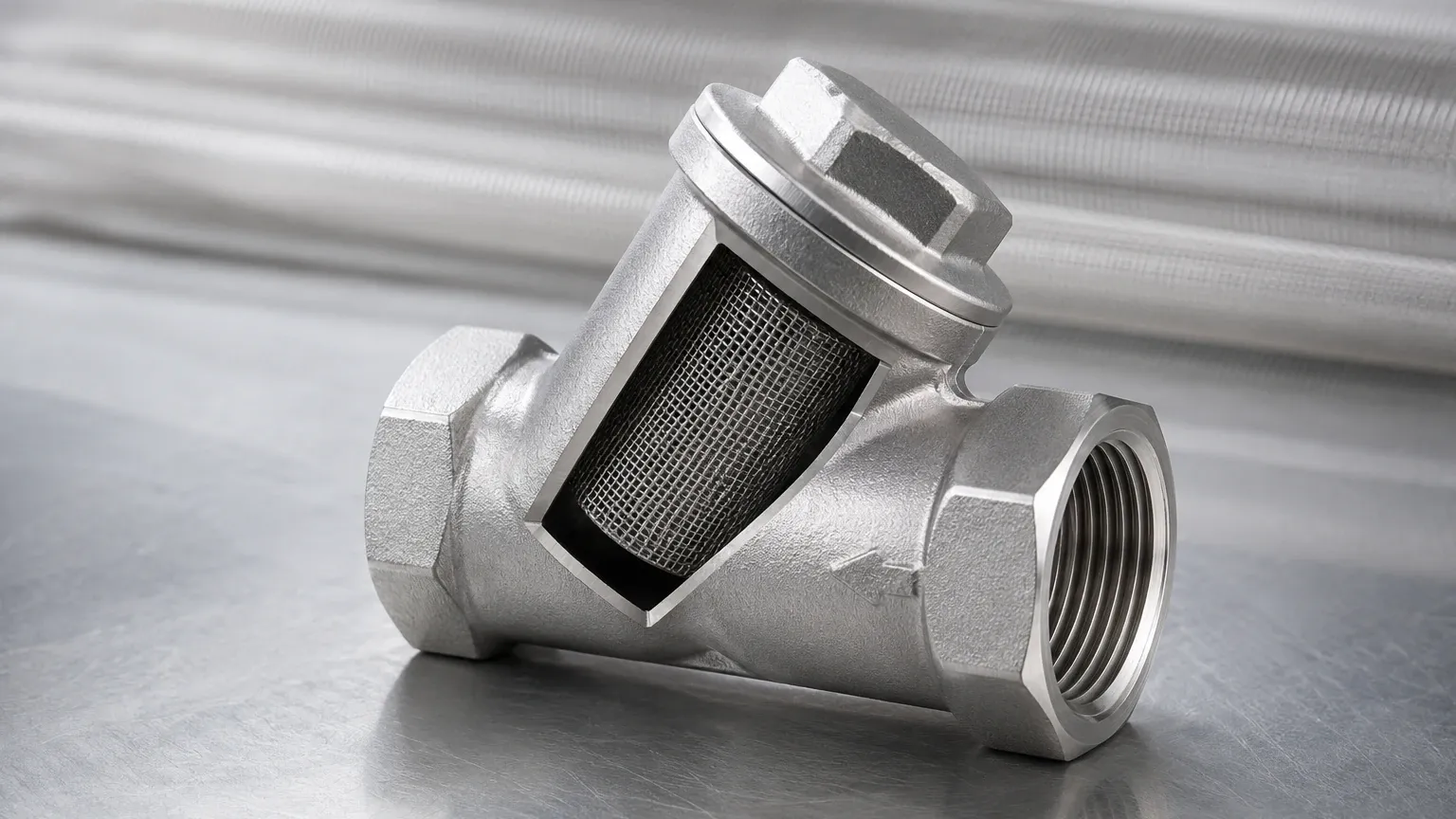
The Y-strainer is the most common configuration for 3/4" lines. Its compact, cylindrical shape allows for installation in both horizontal and vertical (downward flow) piping. The "Y" shape houses the filter element at an angle to the main flow path, which minimizes pressure drop while providing a collection pocket for debris. These are ideal for steam and high-pressure gas applications where the volume of solids is relatively low.
Simplex Basket Strainers
A 3/4 basket strainer features a larger, vertical chamber that houses a removable basket. This design offers a significantly higher dirt-holding capacity compared to a Y-strainer. In a 3/4" line, a basket strainer is used when the fluid contains a higher concentration of solids, as the larger surface area of the basket extends the time between cleaning cycles. The basket is easily accessed by removing a top cover, which can be bolted or equipped with a quick-release clamp for tool-free maintenance.
T-Type Strainers
Often used in space-constrained layouts, T-type strainers provide a straight-through flow path. While less common in the 3/4" size than Y-strainers, they are preferred in certain hydraulic or specialized chemical skids where the piping configuration requires a 90-degree or straight-line orientation with minimal footprint.
Performance Evaluation: Flow Rate and Pressure Drop
One of the most critical engineering considerations for a 3/4 strainer is the pressure drop ($ΔP$) across the unit. Every strainer introduces a restriction into the flow path. If the $ΔP$ is too high, it can lead to cavitation in pumps, reduced flow rates, and increased energy consumption.
The Flow Coefficient (Cv)
Engineers use the Cv value—the volume of water in gallons per minute that will flow through the strainer with a 1 psi pressure drop—to calculate performance. A typical 3/4 strainer will have a Cv ranging from 6 to 10 depending on the internal geometry and the mesh size.
The Ratio of Open Area
To ensure longevity and performance, the "Open Area Ratio" is calculated. This is the ratio of the total area of the holes in the mesh or screen to the internal cross-sectional area of the pipe. For a high-quality 3/4 strainer, a ratio of 4:1 or 6:1 is often targeted. This means the straining surface is four to six times larger than the pipe's cross-section, allowing the strainer to become partially clogged without significantly impacting the system's flow rate.
Industrial Applications for 3/4 Strainers
While larger strainers handle main process lines, the 3/4 strainer is essential for protecting sensitive components in branched lines and specialized equipment.
1. Pump Protection: Small centrifugal or diaphragm pumps used for chemical dosing are highly sensitive to particulates. A 3/4 strainer installed on the suction side prevents impeller damage and valve clogging.
2. Nozzle Protection: In food processing or industrial coating, spray nozzles have very fine orifices. Even a small amount of scale or sediment can disrupt the spray pattern. A 3/4" Y-strainer with a fine mesh (e.g., 100 mesh or finer) is standard for these applications.
3. Heat Exchangers: Small-scale plate heat exchangers have narrow channels that are prone to fouling. Installing a 3/4 strainer in the supply line ensures that the thermal efficiency of the exchanger is maintained over long periods.
4. Steam Traps: In steam systems, 3/4" is a standard size for condensate return lines. Strainers prevent pipe scale and rust from entering and seizing steam traps, which are critical for energy efficiency.
Customization and OEM Integration
Standard off-the-shelf components often fail to meet the specific requirements of complex industrial systems. This is where Kaifil’s expertise in custom manufacturing becomes invaluable. When sourcing Strainers & Baskets, engineers can request several levels of customization for a 3/4 strainer:
* Custom Mesh and Perforation: Depending on the particle size that needs to be captured, the internal element can be customized. Options range from coarse 1/8" perforations for large debris to ultra-fine 5-micron Dutch weave wire mesh for precision filtration.
* Reinforced Elements: In high-pressure or high-viscosity applications, standard mesh baskets may collapse. Kaifil can provide reinforced baskets with internal support structures or heavier gauge perforated metal backing.
* Magnetic Inserts: For systems where metallic fines (iron or steel particles) are a concern, magnetic rods can be integrated into the 3/4 strainer basket to capture sub-micron ferrous particles that might otherwise pass through the mesh.
* Specialized Coatings: While stainless steel is naturally resistant, certain chemical environments may require additional coatings or electropolishing to prevent bacterial growth (in food/pharma) or to further enhance chemical resistance.
Installation and Maintenance Protocols
The reliability of a 3/4 strainer is heavily dependent on proper installation and a consistent maintenance schedule.
Orientation Matters
For Y-strainers, the "leg" containing the screen must point downward. In horizontal lines, this ensures that debris is trapped in the pocket and does not fall back into the main pipe when the flow stops. In vertical lines, the flow must be downward so that gravity assists in directing the particles into the strainer leg.
Differential Pressure Monitoring
In sophisticated B2B operations, 3/4 strainers are often equipped with pressure gauges upstream and downstream. By monitoring the differential pressure, maintenance teams can determine exactly when a strainer needs cleaning. A common rule of thumb is to clean or replace the element when the pressure drop reaches 5-10 psi above the clean pressure drop.
Cleaning Procedures
Most 3/4 strainers allow for "blow-down" cleaning. By replacing the pipe plug in the strainer cap with a ball valve, operators can flush out accumulated debris without shutting down the system or dismantling the strainer. For basket strainers, the process involves isolating the unit, venting the pressure, and removing the basket for manual cleaning or ultrasonic bath treatment.
Total Cost of Ownership (TCO) Considerations
When evaluating 3/4 strainer options, purchasing teams should look beyond the initial acquisition cost. The Total Cost of Ownership includes:
* Durability: A high-quality stainless steel strainer from Kaifil may have a higher upfront cost than a plastic or carbon steel alternative, but its resistance to corrosion and mechanical wear ensures a much longer service life.
* Operational Efficiency: A well-designed 3/4 strainer with a high open-area ratio reduces the load on pumps, leading to lower electricity costs and fewer pump repairs.
* Downtime Mitigation: Choosing a strainer with a quick-release cover or a blow-down valve reduces the labor hours required for maintenance and minimizes process interruptions.
Conclusion
The 3/4 strainer is a fundamental component in industrial fluid systems, providing essential protection for expensive downstream equipment. Whether it is a Y-strainer for a steam line or a custom basket strainer for a chemical dosing skid, the choice of material, design, and filtration accuracy is paramount. By focusing on engineering specifications—such as Cv values, material grades, and open area ratios—technical professionals can ensure their systems operate with maximum efficiency and minimal risk. For those requiring specialized or high-performance solutions, exploring the range of Strainers & Baskets offered by Kaifil provides the technical assurance needed for demanding industrial applications.
