


3 4 Y Strainers
In industrial fluid handling systems, the protection of sensitive downstream equipment—such as pumps, control valves, meters, and steam traps—is a primary engineering concern. The 3/4" Y strainer serves as a compact yet critical mechanical component designed to remove unwanted solids from liquid, gas, or steam lines by means of a perforated or wire mesh straining element. As a specialized manufacturer of stainless steel filtration solutions, Kaifil provides high-performance Strainers & Baskets tailored to the rigorous demands of chemical processing, pharmaceutical production, and hydraulic systems.
Selecting the correct 3/4 y strainers requires a deep understanding of fluid dynamics, material compatibility, and the specific filtration accuracy needed for a given application. This guide examines the technical specifications, engineering considerations, and maintenance protocols essential for integrating these components into industrial piping systems.
Engineering Fundamentals of 3/4" Y-Type Strainers
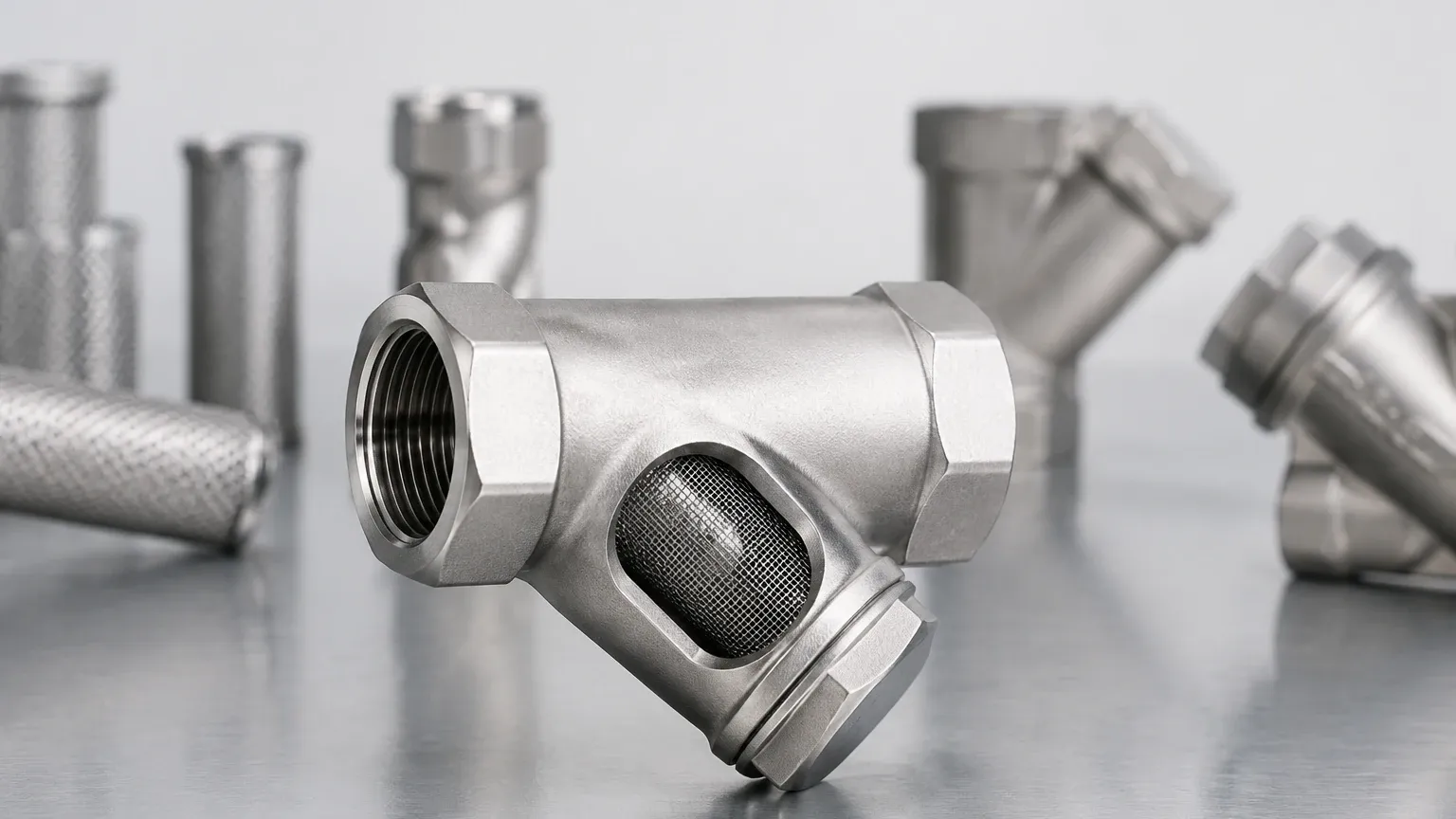
The "Y" configuration is named for its geometric shape, where the straining leg intersects the main flow path at an angle, typically 45 degrees. This design allows the strainer to be installed in either horizontal or vertical (downward flow) piping runs. The primary advantage of the Y-design in a 3/4" pipe size is its compact envelope, which provides effective filtration without requiring the extensive space necessitated by basket-type strainers.
In a 3/4" system, flow velocity and pressure drop are critical variables. The internal screen or basket within the Y-leg intercepts debris while allowing the fluid to pass through. Because the 3/4" size is common in pilot plants, sampling lines, and secondary process loops, the precision of the mesh is paramount. Engineers must balance the need for high filtration efficiency with the requirement to maintain system pressure, as an overly restrictive mesh can lead to significant cavitation or flow reduction.
Material Selection and Corrosion Resistance
For industrial applications, material integrity is non-negotiable. While Y-strainers are available in various materials, stainless steel remains the gold standard for durability and chemical resistance. Kaifil specializes in custom stainless steel filtration, focusing on two primary grades:
1. 304 Stainless Steel: Suitable for general industrial use, water treatment, and mildly corrosive environments. It offers excellent strength and cost-effectiveness for standard 3/4 y strainers.
2. 316/316L Stainless Steel: Essential for chemical processing, marine environments, and pharmaceutical applications. The addition of molybdenum provides superior resistance to chlorides and pitting corrosion.
Beyond the housing, the material of the internal mesh or perforated screen must be considered. In many high-pressure 3/4" lines, the screen is subjected to significant mechanical stress. Using high-grade stainless steel ensures that the mesh does not deform or bypass under surge conditions.
Filtration Accuracy: Mesh vs. Micron Ratings
When specifying 3/4 y strainers, engineers must define the required filtration level. This is typically expressed in mesh size or microns.
* Mesh Size: Refers to the number of openings per linear inch. A higher mesh count indicates finer filtration. For 3/4" lines, common mesh sizes range from 20 mesh (approx. 840 microns) for coarse protection to 200 mesh (approx. 74 microns) for fine particulate removal.
* Micron Rating: A more precise measurement of the largest particle that can pass through the filter.
It is a common engineering mistake to specify a mesh that is too fine for the application. A finer mesh increases the frequency of cleaning and creates a higher clean pressure drop. The general rule of thumb is to select a mesh size that is slightly smaller than the smallest orifice or clearance in the downstream equipment being protected.
Pressure Drop and Flow Coefficient (Cv)
The Flow Coefficient (Cv) represents the volume of water in gallons per minute that will flow through the strainer with a pressure drop of 1 psi. For a 3/4" Y strainer, the Cv value is influenced by the internal geometry of the casting and the open area ratio of the screen.
Engineers must calculate the "clean pressure drop" during the design phase. As debris accumulates on the screen, the effective open area decreases, leading to an exponential increase in pressure drop. If the pressure drop exceeds the system's allowable limits, it can result in reduced process efficiency or equipment failure. Utilizing high-quality Strainers & Baskets with optimized open area ratios is essential for maintaining consistent flow in 3/4" piping networks.
Industrial Applications for 3/4" Y Strainers
The versatility of the 3/4" size makes it a staple in various sectors:
Chemical and Petrochemical Processing
In these environments, 3/4 y strainers are used to protect sensitive instrumentation and sampling valves from pipe scale, weld slag, and other contaminants. The use of 316 stainless steel is often mandatory to withstand aggressive process fluids.
Food and Beverage Production
Filtration in the food industry requires components that are easy to clean and resistant to bacterial growth. Stainless steel Y-strainers with polished internals are used to remove particulates from ingredient lines, ensuring product purity and protecting downstream homogenizers or filling machines.
Steam Systems
Steam lines are notorious for carrying "black rust" or magnetite. A 3/4" Y strainer installed upstream of a steam trap or a pressure-reducing valve is vital for preventing clogging and ensuring the longevity of the steam system components. In steam applications, the strainer should be installed horizontally with the Y-leg in the horizontal plane to prevent water pocketing, which can lead to water hammer.
Maintenance and Blow-off Configurations
One of the primary advantages of the Y-strainer is the ease of maintenance. Most 3/4 y strainers are equipped with a threaded or bolted cover on the Y-leg. This cover can be removed to extract the screen for manual cleaning.
For systems where frequent cleaning is required but downtime must be minimized, a "blow-off" connection can be utilized. By replacing the standard pipe plug in the strainer cap with a ball valve, operators can flush out accumulated debris using the system's internal pressure without disassembly. This is particularly effective for removing loose sediment and scale. However, for fibrous or sticky contaminants, manual removal and ultrasonic cleaning of the stainless steel mesh may still be necessary.
Customization and OEM Solutions
Standard off-the-shelf strainers may not always meet the specific requirements of a unique industrial process. Engineering teams often require customized solutions regarding:
* Custom Mesh Liners: Adding a fine mesh liner over a heavy-duty perforated basket for increased structural integrity.
* Specialized End Connections: While NPT (threaded) is common for 3/4" sizes, applications may require socket weld, flanged, or sanitary tri-clamp connections.
* High-Pressure Ratings: Custom-engineered housings for applications exceeding standard Class 150 or Class 300 ratings.
Kaifil works closely with global customers to develop these specialized filtration components. By focusing on the specific flow characteristics and particulate nature of the application, we ensure that the 3/4 y strainers provide the optimal balance of protection and performance.
Critical Selection Criteria for Purchasing Teams
When procuring 3/4 y strainers, purchasing teams should confirm the following technical details with their engineering departments to avoid costly misapplications:
1. Operating Pressure and Temperature: Ensure the housing and gasket materials are rated for the maximum possible system excursions.
2. Fluid Compatibility: Verify that the stainless steel grade (304 vs. 316) is compatible with the chemical composition of the process fluid.
3. Required Open Area Ratio: A higher ratio (the relationship between the internal area of the screen and the area of the pipe) results in longer service intervals.
4. Seal Material: Gaskets or O-rings (PTFE, Viton, EPDM) must be selected based on temperature and chemical exposure.
By addressing these factors, facilities can reduce the total cost of ownership through extended equipment life and reduced maintenance frequency. For high-quality, precision-engineered solutions, explore the range of Strainers & Baskets designed to meet the most demanding industrial standards.
