


40 Μm Cell Strainers
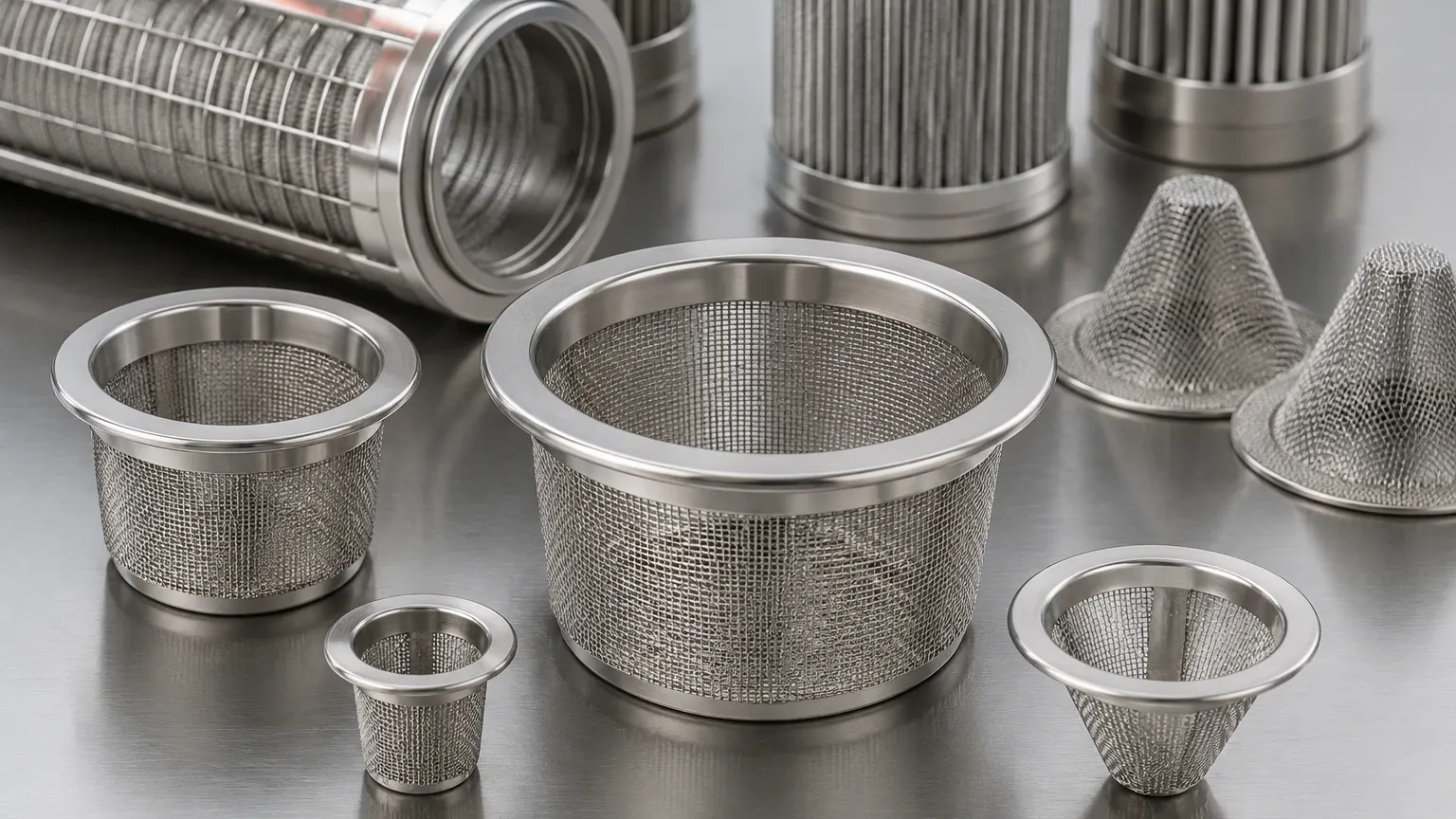
In the landscape of industrial filtration and precision separation, the requirement for consistent, high-accuracy particle retention is paramount. Among the various specifications utilized in fluid processing, 40 μm cell strainers represent a critical threshold for separating fine particulates from liquid media. While often associated with laboratory-scale cell dissociation, the engineering principles behind 40-micron filtration extend into large-scale industrial applications where stainless steel Strainers & Baskets are employed to ensure process integrity, protect downstream equipment, and maintain product purity.
Achieving a precise 40-micrometer cutoff requires a deep understanding of mesh geometry, material properties, and the mechanical stresses involved in industrial fluid dynamics. For engineers and procurement teams, selecting the right filtration component involves evaluating the trade-offs between filtration efficiency, flow rate, and the longevity of the filter media.
Technical Specifications of 40 μm Filtration Media
The performance of 40 μm cell strainers is fundamentally determined by the characteristics of the filter mesh. In industrial contexts, this typically involves high-precision woven wire cloth. A 40-micron rating indicates that the aperture—the clear space between adjacent parallel wires—is 40 micrometers wide.
Mesh Count and Wire Diameter
To achieve a 40 μm aperture, manufacturers must balance the wire diameter with the mesh count (the number of wires per linear inch). For example, a common industrial specification for 40-micron filtration might utilize a 325 x 325 mesh or similar high-density weaves. The wire diameter must be sufficient to provide structural stability without significantly reducing the open area. If the wire is too thick, the total open area decreases, leading to higher pressure drops; if the wire is too thin, the mesh becomes fragile and prone to deformation under hydraulic pressure.
Open Area Percentage
The percentage of open area is a critical metric for engineers calculating flow capacity. For a standard 40 μm stainless steel mesh, the open area typically ranges between 30% and 40%. This value directly impacts the "clean pressure drop" of the system. In high-volume industrial applications, maximizing the open area while maintaining the 40-micron rating is essential for reducing energy consumption and extending the time between cleaning cycles.
Material Selection: Stainless Steel vs. Synthetic Polymers
While disposable 40 μm cell strainers often utilize nylon or PES (polyethersulfone) mesh housed in plastic frames, industrial-grade filtration demands more robust materials. Stainless steel, specifically Grades 304 and 316L, is the industry standard for durable filtration solutions.
Chemical and Thermal Resistance
Industrial processes often involve aggressive solvents, high temperatures, or extreme pH levels that would degrade synthetic polymers. Stainless steel 316L offers superior resistance to pitting and corrosion, particularly in chloride-rich environments or applications involving organic acids. Furthermore, stainless steel components can operate at temperatures exceeding 400°C, whereas polymer-based strainers are usually limited to sub-100°C environments.
Mechanical Durability and Reusability
Unlike disposable plastic strainers, stainless steel Strainers & Baskets are designed for long-term service. They can withstand backwashing, ultrasonic cleaning, and high-pressure sterilization (autoclaving) without losing dimensional accuracy. This reusability significantly lowers the total cost of ownership (TCO) in high-throughput environments where disposable filters would generate excessive waste and operational downtime.
Engineering Considerations for Strainers & Baskets
Integrating a 40 μm filtration layer into an industrial system requires more than just the mesh itself. The mesh must be supported by a robust structure to prevent mechanical failure.
Structural Support and Reinforcement
At 40 microns, the wire mesh is relatively delicate. To handle the differential pressures encountered in industrial pumping systems, the mesh is typically sintered or welded to a perforated metal backup plate or a coarser support mesh. This multi-layer construction ensures that the 40 μm apertures remain uniform even under significant load. In the design of Strainers & Baskets, the outer cage provides the necessary hoop strength, while the inner fine mesh performs the actual separation.
Sealing and Bypass Prevention
One of the most common failure points in filtration is the bypass—where fluid flows around the filter media rather than through it. For 40 μm applications, even a microscopic gap in a seal can allow significant amounts of oversized particulate to pass through. Industrial strainers utilize precision-machined flanges, O-rings, or specialized gaskets (such as PTFE or EPDM) to ensure a hermetic seal between the strainer basket and the housing.
Flow Dynamics and Pressure Management
Engineers must account for the hydraulic behavior of fluids passing through a 40-micron barrier. As the pore size decreases, the resistance to flow increases exponentially.
Calculating Pressure Drop (ΔP)
The pressure drop across a 40 μm cell strainer is a function of fluid viscosity, flow velocity, and the percentage of open area. In industrial system design, it is standard practice to size the strainer so that the initial pressure drop does not exceed 2-3 psi. As the strainer captures particulates, the effective open area decreases, and the pressure drop rises. Monitoring this ΔP is the primary method for determining when a basket needs to be cleaned or replaced.
Particle Loading and Blinding
"Blinding" occurs when particles that are approximately the same size as the mesh apertures become lodged in the openings, effectively sealing them. This is a common challenge with 40 μm filtration. To mitigate this, engineers often specify a "graduated filtration" approach, where a coarser strainer (e.g., 100 μm or 200 μm) is placed upstream to remove larger debris, allowing the 40 μm strainer to focus solely on the fine particulate target.
Industrial Applications of 40 μm Filtration
The use of 40 μm cell strainers and baskets spans a wide range of sectors, each with specific regulatory and performance requirements.
* Pharmaceutical and Biotech: In the production of vaccines or biological therapeutics, 40-micron filtration is used to remove cell clumps, micro-carriers, or precipitates from growth media. The use of 316L stainless steel ensures that the process remains free from leachable contaminants.
* Food and Beverage: Precision filtration is used to clarify juices, oils, and syrups. A 40 μm rating is effective at removing fine pulp or crystalline impurities that could affect the clarity and shelf-life of the final product.
* Chemical Processing: 40-micron baskets protect high-pressure nozzles and sensitive instrumentation from fine catalysts or undissolved additives that could cause clogging or abrasive wear.
* Water Treatment: In advanced water purification, 40 μm strainers serve as a pre-filtration step for membrane systems (such as Reverse Osmosis), preventing fine silt and organic matter from fouling the membranes.
Maintenance, Cleaning, and Longevity
The primary advantage of industrial stainless steel strainers is their ability to be restored to "like-new" condition through proper maintenance. For a 40 μm mesh, cleaning must be handled with care to avoid damaging the fine wires.
1. Ultrasonic Cleaning: This is the most effective method for 40-micron mesh. High-frequency sound waves create cavitation bubbles that dislodge particles trapped deep within the weave.
2. Backwashing: Many automated systems use a reverse flow of clean fluid to push particles out of the mesh. This is effective for surface-loading contaminants but may be less effective for depth-loading particles that have wedged into the apertures.
3. Chemical Cleaning: Depending on the contaminant, acid or alkaline washes may be used to dissolve organic or mineral buildup. The chemical compatibility of the 316L stainless steel and the gasket materials must be verified beforehand.
Customization and OEM Solutions
Standard off-the-shelf strainers often fail to meet the specific spatial or hydraulic constraints of complex industrial machinery. Custom engineering allows for the optimization of the filtration surface area within a limited footprint.
When specifying custom 40 μm cell strainers, engineers should confirm the following parameters with the manufacturer:
* Total Filtration Area: Increasing the surface area (e.g., through pleating or multi-basket designs) reduces the frequency of cleaning.
* Connection Types: Options include NPT threads, ANSI flanges, or sanitary Tri-Clamp fittings for hygienic applications.
* Reinforcement Requirements: Depending on the expected flow surges, the basket may require internal or external support ribs.
Kaifil specializes in the production of these high-precision components, offering tailored solutions that bridge the gap between laboratory accuracy and industrial-scale durability. By focusing on material integrity and precision weaving, these filtration solutions provide the reliability necessary for demanding process environments.
Conclusion
Selecting a 40 μm filtration solution requires a balanced evaluation of material science, fluid mechanics, and operational costs. While the 40-micron threshold is a standard for fine separation, the transition from disposable lab components to industrial-grade stainless steel Strainers & Baskets is essential for scaling processes effectively. By understanding the technical nuances of mesh open area, structural reinforcement, and cleaning protocols, engineering teams can implement filtration systems that ensure long-term performance and high product quality.
