


5 Gallon Strainers
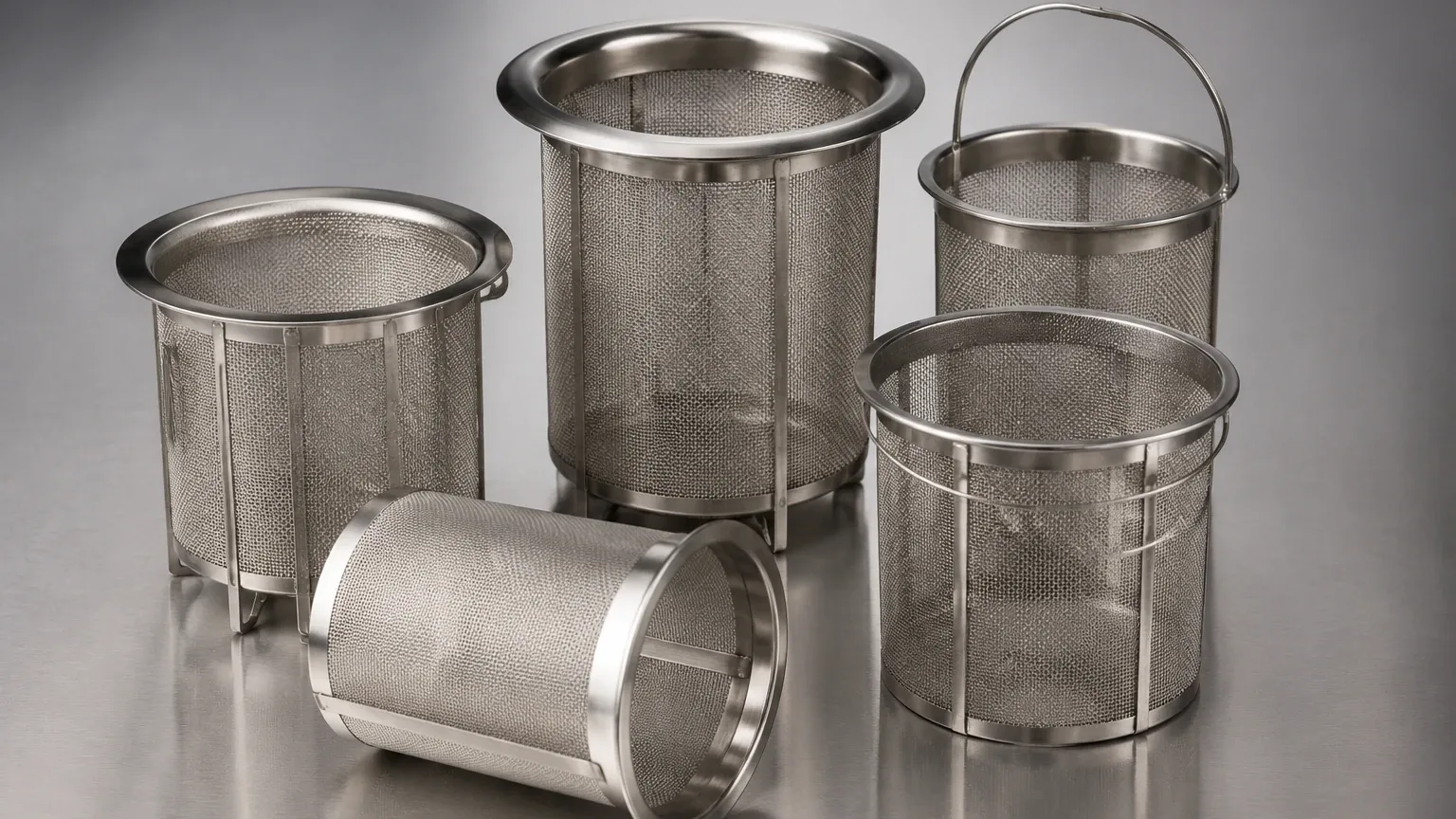
In industrial processing, the 5-gallon container is a ubiquitous standard for transporting, mixing, and storing liquid raw materials, intermediates, and finished products. Ensuring the purity of these fluids requires robust filtration solutions that can integrate seamlessly with standard pail dimensions while withstanding the mechanical stresses of industrial use. 5 gallon strainers, often designed as heavy-duty inserts or basket-style components, serve as the primary line of defense against particulate contamination in sectors ranging from chemical manufacturing to food processing.
Selecting the appropriate filtration component involves more than matching a diameter. It requires a technical understanding of material compatibility, flow dynamics, and the structural integrity of the mesh. As a specialized manufacturer of stainless steel filtration solutions, Kaifil provides engineered Strainers & Baskets designed to meet these rigorous industrial requirements.
Understanding the Role of 5 Gallon Strainers in Industrial Filtration
The primary function of a 5 gallon strainer is to remove oversized particles, agglomerates, or debris from a liquid medium before it enters a pump, a precision nozzle, or a final packaging line. Unlike disposable plastic liners, industrial-grade stainless steel strainers offer a permanent, cleanable solution that maintains its shape and filtration accuracy under load.
In many B2B applications, these strainers are used for "scalping" or coarse filtration. For instance, in the paint and coatings industry, 5 gallon strainers are essential for removing "skins" that form on the surface of the liquid or undissolved pigment clumps. In the food industry, they may be used to strain seeds or pulp from juices or oils. The choice of strainer directly impacts the efficiency of downstream equipment; a failure in the straining process can lead to clogged valves, damaged pumps, and costly production downtime.
Material Selection and Engineering Standards
For industrial applications, the material of construction is the most critical factor in determining the longevity and safety of the filtration process. While polymer strainers exist, they often lack the chemical resistance and thermal stability required for heavy-duty processing.
Stainless Steel 304 vs. 316L
Stainless steel is the industry standard for 5 gallon strainers due to its durability and ease of sterilization.
- Type 304: This is the most common grade, offering excellent corrosion resistance for most water-based and mildly acidic applications. It is widely used in the food and beverage industry.
- Type 316L: Containing molybdenum, 316L provides superior resistance to chlorides and more aggressive chemical environments. It is the preferred choice for pharmaceutical processing and marine-grade applications where pitting corrosion is a concern.
Mesh Construction and Weave Types
The filtration media within the strainer can be constructed from various types of stainless steel wire mesh. The choice of weave affects both the flow rate and the particle retention capability:
- Plain Weave: The most common type, where wires cross over and under each other. It provides a consistent opening size and is easy to clean.
- Dutch Weave: This utilizes thicker warp wires and finer weft wires, creating a denser mesh capable of finer filtration and higher pressure resistance.
- Perforated Metal: For very coarse filtration or as a support structure for finer mesh, perforated stainless steel sheets provide maximum structural rigidity.
Key Design Features for Industrial Performance
An effective 5 gallon strainer must be designed to withstand the weight of the fluid and the pressure of the flow without deforming. Engineering considerations include the rim design, the bottom reinforcement, and the handle configuration.
Rim and Flange Design
The top rim of the strainer must sit securely on the edge of the 5-gallon pail or within a dedicated housing. A flanged rim ensures that the strainer does not slip into the container under the weight of the liquid. In high-vibration environments, custom-fitted gaskets or locking mechanisms may be integrated into the rim to prevent bypass—where unfiltered liquid escapes around the edges of the strainer.
Support Structures
When filtering high-viscosity fluids like resins, adhesives, or heavy oils, the pressure exerted on the mesh can be significant. To prevent the mesh from sagging or tearing, industrial 5 gallon strainers often feature a reinforced skeleton. This may consist of a perforated metal basket that houses a finer wire mesh liner, or a series of cross-bars welded to the base of the strainer.
Ergonomics and Handling
In a fast-paced production environment, ease of use is vital. Heavy-duty handles, often made from stainless steel rod, allow operators to lift the strainer safely, even when it is loaded with heavy solids. The handle design should also account for the clearance required if a lid or a mixing paddle needs to be used simultaneously.
Application-Specific Considerations for 5 Gallon Systems
The versatility of 5 gallon strainers allows them to be deployed across diverse industries, but each application presents unique challenges that influence the final specification.
Chemical and Petrochemical Processing
In chemical plants, strainers must resist a wide range of pH levels and solvents. The integrity of the welds is paramount; TIG (Tungsten Inert Gas) welding is typically used to ensure that there are no crevices where chemicals can accumulate and cause localized corrosion or cross-contamination between batches.
Food and Beverage Industry
Food-grade strainers must comply with strict hygiene standards. This means the surfaces must be polished to a specific Ra (Roughness Average) to prevent bacterial growth. The design must be "sanitary," meaning it is free of sharp corners, pits, or dead zones that cannot be reached by cleaning agents.
Paints, Inks, and Coatings
Filtration in the coatings industry often involves high-viscosity fluids. The primary concern here is "blinding," where the mesh openings become clogged with sticky material. Selecting a strainer with a larger surface area or a specific wire diameter can help mitigate this issue and extend the time between cleaning cycles.
Evaluating Filtration Efficiency and Micron Ratings
When specifying 5 gallon strainers, engineers must define the required filtration accuracy, usually measured in microns (μm) or mesh count.
- Mesh Count: Refers to the number of openings per linear inch. A higher mesh count indicates a finer filter. For example, a 100-mesh strainer has 100 openings per inch.
- Micron Rating: Defines the size of the particles that the mesh will retain. A 150-micron strainer will stop most particles larger than 150 microns.
It is important to distinguish between nominal and absolute filtration. A nominal rating indicates that the mesh will retain a high percentage of particles of a certain size, while an absolute rating guarantees that no particles larger than the specified size will pass through. For most 5-gallon applications involving coarse straining, nominal ratings are sufficient, but precision chemical or pharmaceutical processes may require absolute-rated wire mesh components.
Maintenance, Cleaning, and Longevity
One of the primary B2B advantages of stainless steel 5 gallon strainers is their reusability. Unlike filter bags or plastic inserts, a high-quality metal strainer can be cleaned and returned to service thousands of times, significantly reducing the total cost of ownership and waste.
Cleaning Protocols
The cleaning method depends on the contaminant. For water-soluble materials, high-pressure water or steam cleaning is often sufficient. For resins or adhesives, solvent baths or ultrasonic cleaning may be required. Ultrasonic cleaning is particularly effective for fine mesh strainers, as it uses high-frequency sound waves to dislodge particles trapped deep within the weave without damaging the delicate wires.
Inspection for Wear
Regular inspection is necessary to ensure the strainer remains effective. Engineers should look for:
- Wire Displacement: Where the wires of the mesh have shifted, creating larger-than-specified openings.
- Mechanical Damage: Dents or tears in the mesh caused by heavy tools or improper handling.
- Corrosion: Signs of pitting or discoloration, which may indicate that the material grade is not suitable for the chemical environment.
Customization and OEM Solutions for Specialized Requirements
Standard off-the-shelf strainers do not always meet the specific needs of complex industrial systems. Customization is often required to optimize flow rates or to fit into proprietary equipment.
As a manufacturer, Kaifil specializes in developing custom Strainers & Baskets tailored to specific OEM requirements. Customization options include:
- Dimensional Adjustments: Modifying the depth, diameter, or taper of the basket to fit unique container shapes.
- Multi-Stage Filtration: Designing baskets with multiple layers of different mesh sizes to provide graduated filtration, which prevents premature clogging of the finest layer.
- Integrated Components: Adding features such as bungs, specialized fittings, or mounting brackets for automated systems.
When requesting a custom design, engineers should provide data on the fluid's viscosity, the expected flow rate, the operating temperature, and the nature of the solids being removed. This information allows for the calculation of the "open area" percentage, ensuring that the strainer does not create an excessive pressure drop that could impede production speed.
Conclusion: Selecting the Right Partner for Filtration
The 5 gallon strainer is a critical component in maintaining product quality and protecting industrial equipment. By moving away from disposable solutions and investing in precision-engineered stainless steel components, businesses can achieve more reliable filtration, lower long-term costs, and better environmental outcomes.
Whether the application requires a standard mesh insert for a 5-gallon pail or a highly customized basket for a specialized chemical process, understanding the technical nuances of material, weave, and construction is essential. For organizations seeking to optimize their filtration processes, partnering with a manufacturer that understands these engineering challenges is the first step toward operational excellence. Explore the full range of industrial Strainers & Baskets to find the solution that fits your specific process requirements.
