


5 Gallon Bucket Paint Strainers
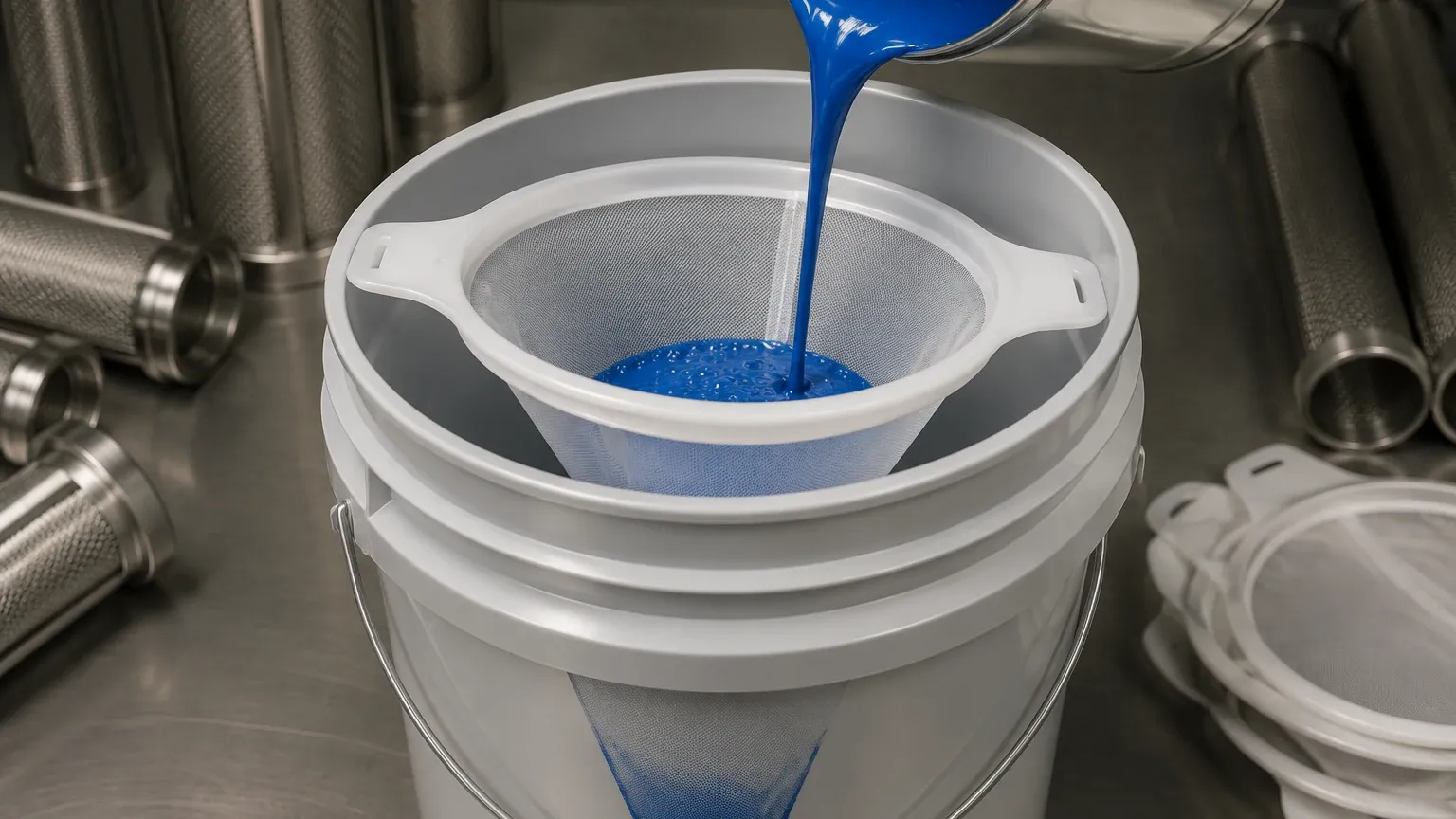
In industrial coating, chemical processing, and large-scale manufacturing, the 5-gallon bucket serves as a standard unit for batch mixing, transport, and dispensing. However, the presence of particulate matter—whether from undissolved pigments, skinning, or external contaminants—can compromise the integrity of the coating and damage expensive application equipment. High-performance 5 gallon bucket paint strainers are essential components in maintaining fluid purity and ensuring a consistent, high-quality finish.
For engineers and procurement professionals, selecting the right filtration hardware involves more than choosing a mesh size. It requires an understanding of material compatibility, structural durability under load, and the total cost of ownership compared to disposable alternatives. As a specialized manufacturer, Kaifil provides precision-engineered Strainers & Baskets designed to meet the rigorous demands of industrial environments.
The Role of Filtration in Industrial Coating Systems
Filtration is a critical stage in any fluid handling process. In the context of industrial painting, 5 gallon bucket paint strainers perform several vital functions:
1. Equipment Protection: Modern spray systems, particularly airless and HVLP (High Volume Low Pressure) units, utilize precision nozzles with extremely small orifices. Even microscopic debris can cause clogs, leading to uneven spray patterns, increased downtime for cleaning, and premature wear on pump seals and valves.
2. Surface Quality: For automotive, aerospace, or high-end furniture coatings, surface imperfections are unacceptable. Strainers remove "seeds" or clumps that would otherwise create visible defects in the dried film.
3. Batch Homogenization: During the mixing process, strainers help ensure that pigments and additives are fully integrated, catching any un-dispersed solids before the fluid enters the application line.
While disposable nylon or paper filters are common in DIY settings, industrial operations require robust, reusable solutions that can withstand aggressive solvents and high-viscosity materials.
Material Selection: The Case for Stainless Steel
When evaluating 5 gallon bucket paint strainers, the choice of material is the primary factor in performance and longevity. While nylon mesh is inexpensive, it lacks the structural rigidity and chemical resistance required for many industrial coatings.
Chemical Compatibility
Stainless steel (typically Grade 304 or 316) is the industry standard for industrial filtration. It is inert to a wide range of chemicals, including ketones (MEK), esters, and aromatic hydrocarbons found in solvent-based paints. Unlike synthetic fibers, stainless steel will not swell, soften, or degrade when exposed to harsh cleaning agents or thinners.
Thermal Stability
In certain chemical processing or food-grade applications, fluids may be processed at elevated temperatures to reduce viscosity. Stainless steel wire mesh maintains its mechanical properties and filtration accuracy at temperatures where nylon or polyester would lose structural integrity.
Mechanical Strength
Industrial 5 gallon bucket paint strainers must often support the weight of high-viscosity fluids or the pressure of a rapid pour. Stainless steel baskets are engineered with reinforced rims and support structures that prevent the mesh from sagging or tearing under the weight of the liquid column.
Engineering Specifications for Strainers & Baskets
Effective filtration is a balance between flow rate and particle retention. When specifying Strainers & Baskets, several engineering parameters must be considered to ensure the component fits the 5-gallon bucket interface and the specific fluid dynamics of the application.
Mesh Count and Micron Rating
The "mesh count" refers to the number of openings per linear inch. A higher mesh count indicates a finer filter. For industrial paint applications, common specifications include:
* Coarse (20–40 mesh): Used for heavy primers, textured coatings, or as a primary scalping filter to remove large debris.
* Medium (60–100 mesh): The standard for most industrial enamels and latex paints.
* Fine (150–200+ mesh): Required for high-gloss topcoats, automotive finishes, and thin stains.
Effective Filtration Area (EFA)
The EFA determines the flow capacity and the interval between cleanings. A basket-style strainer provides significantly more surface area than a flat disc filter. This increased area reduces the pressure drop across the mesh, allowing for faster pouring and reducing the likelihood of the filter "blinding" or clogging prematurely.
Structural Design
A professional-grade 5 gallon bucket paint strainer typically features a rigid top ring that rests securely on the bucket rim. This prevents the strainer from falling into the fluid. The basket depth is also a critical dimension; it must be deep enough to provide sufficient filtration area but not so deep that it interferes with mixing paddles or dip tubes.
Evaluating Filtration Accuracy and Flow Rates
Engineers must calculate the trade-off between filtration fineness and the time required to process a batch. A filter that is too fine will capture necessary pigments or cause the process to stall, while a filter that is too coarse will allow contaminants to pass through.
Viscosity is the most significant variable in this calculation. High-viscosity fluids like epoxies or heavy-duty marine coatings require a larger mesh opening or a larger filtration surface area to maintain an acceptable flow rate. Conversely, low-viscosity fluids like wood stains or solvent-based dyes can be processed through very fine mesh without significant resistance.
When selecting 5 gallon bucket paint strainers, it is advisable to test the specific coating material under actual operating temperatures, as viscosity changes significantly with heat. Kaifil’s engineering team often assists clients in determining the optimal mesh-to-viscosity ratio to maximize throughput without sacrificing fluid quality.
Durability and Total Cost of Ownership (TCO)
In a B2B environment, procurement decisions are driven by the total cost of ownership rather than the initial purchase price. While disposable filters appear cheaper on a per-unit basis, they generate significant recurring costs and environmental waste.
Reusability and Cleaning
Stainless steel 5 gallon bucket paint strainers are designed for years of service. After a batch is processed, the strainer can be cleaned using the appropriate solvent or through ultrasonic cleaning methods. The durability of the wire mesh ensures that it can be scrubbed or pressure-washed without distorting the pore size, maintaining consistent filtration performance over hundreds of cycles.
Waste Reduction
Industrial facilities are increasingly focused on sustainability. Using reusable metal strainers eliminates the disposal of thousands of paint-contaminated fabric bags or paper filters annually. This not only reduces the environmental footprint but also lowers hazardous waste disposal fees, which are often calculated by weight or volume.
Reliability
Disposable filters are prone to "bypass"—where the filter material pulls away from the bucket rim—or "breakthrough," where the mesh tears under pressure. A rigid stainless steel basket provides a positive seal and structural certainty, ensuring that 100% of the fluid passes through the filter media.
Customization Options for OEM and Specialized Applications
Standard off-the-shelf strainers may not meet the requirements of specialized industrial processes. As a custom manufacturer, Kaifil offers a range of modifications for 5 gallon bucket paint strainers to suit specific OEM needs:
* Custom Rim Designs: Flanges can be engineered to fit specific bucket diameters or to integrate with automated filling lines and lid assemblies.
* Reinforced Bottoms: For heavy-duty applications, a perforated metal plate can be added to the bottom of the wire mesh basket to provide additional support against high-pressure flow.
* Multi-Stage Filtration: Baskets can be designed with nested mesh layers (e.g., a coarse outer mesh protecting a fine inner mesh) to handle fluids with high solids loading.
* Handle and Lifting Options: For manual operations, ergonomically designed handles or cross-bars can be added to facilitate easy removal and cleaning.
By working directly with a manufacturer, engineering teams can ensure that the filtration component is perfectly matched to their equipment and process flow.
Maintenance Protocols for Industrial Metal Strainers
To ensure the longevity of stainless steel 5 gallon bucket paint strainers, proper maintenance is essential. Unlike disposable options, these components are an investment in the production line.
1. Immediate Rinsing: The strainer should be rinsed with the appropriate solvent immediately after use to prevent paint from drying and hardening within the mesh openings.
2. Ultrasonic Cleaning: For fine mesh (100 mesh and above), ultrasonic cleaning is the most effective way to remove microscopic particles from the wire intersections without damaging the weave.
3. Inspection: Regularly inspect the mesh for signs of mechanical damage or "blinding" (permanent clogging). Stainless steel is highly durable, but physical impact or improper cleaning tools (like wire brushes on very fine mesh) can cause damage.
4. Storage: Clean strainers should be stored in a dry, dust-free environment to prevent contamination before the next use.
Conclusion: Selecting the Right Filtration Partner
The selection of 5 gallon bucket paint strainers is a technical decision that impacts production efficiency, product quality, and operational costs. For industrial applications, the transition from disposable media to precision-engineered stainless steel Strainers & Baskets offers clear advantages in terms of chemical resistance, mechanical strength, and long-term value.
When sourcing these components, it is vital to partner with a manufacturer that understands the nuances of wire mesh engineering and industrial fluid dynamics. Kaifil’s expertise in custom stainless steel filtration allows us to provide solutions that are not only durable but also tailored to the specific challenges of your industry—whether you are dealing with high-viscosity coatings, aggressive solvents, or stringent purity standards.
By confirming material compatibility, required micron ratings, and structural requirements before purchase, engineers can optimize their coating processes and ensure a reliable, repeatable finish for every batch.
