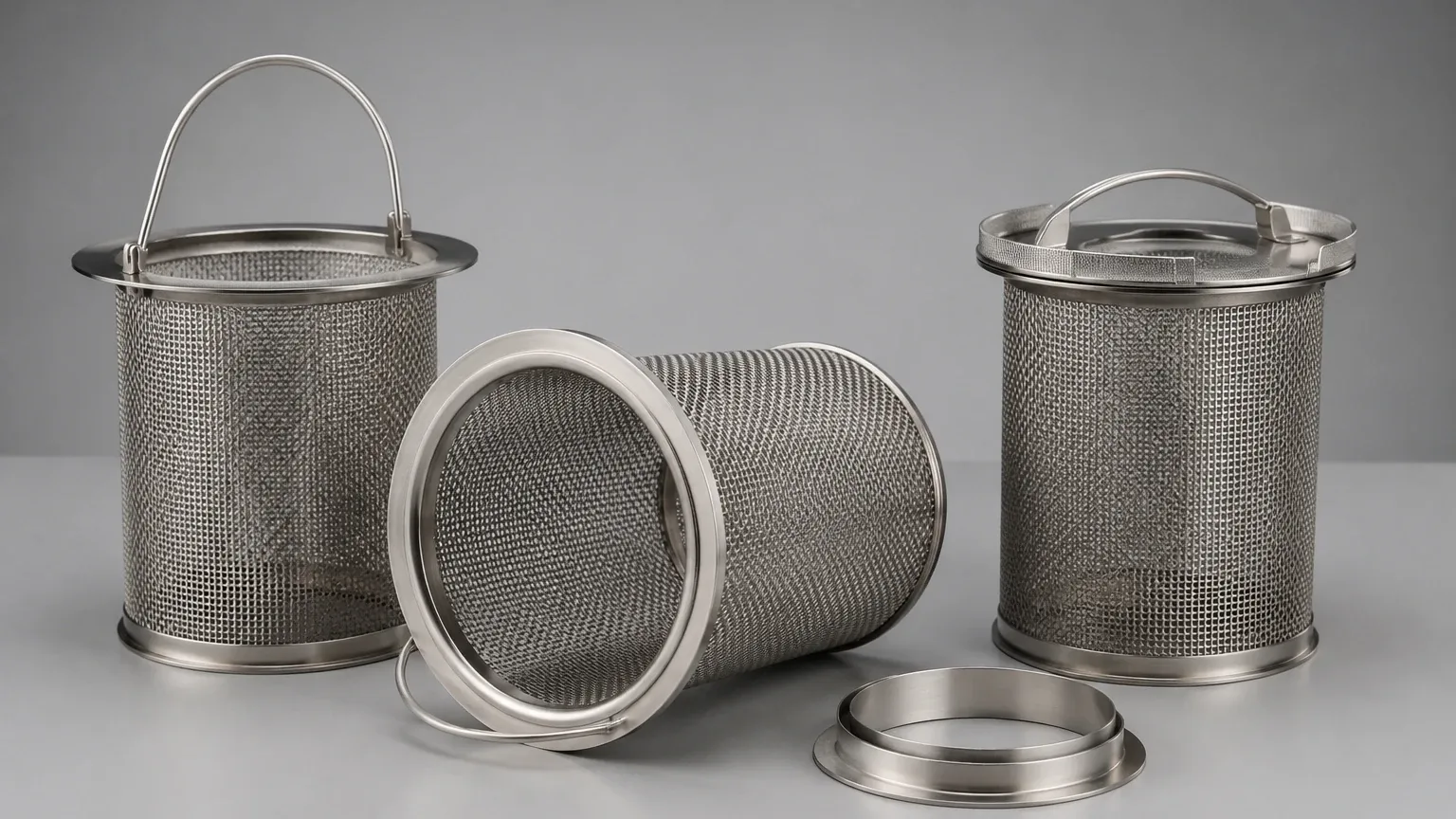
7 Basket Strainer
In high-volume industrial fluid handling, the efficiency of a filtration system is often determined by the balance between flow rate and the total surface area available for contaminant removal. As flow requirements increase, single-basket designs often reach their physical and operational limits, leading to excessive pressure drops or the need for frequent maintenance shutdowns. The 7 basket strainer represents a robust solution for these demanding environments, providing a significant increase in the effective filtration area (EFA) within a relatively compact footprint. For engineers and procurement teams, understanding the technical nuances of these multi-basket systems is essential for optimizing system longevity and process reliability.
The Mechanics of Multi-Basket Housing Design
A 7 basket strainer is a specialized industrial housing that contains seven individual filter baskets arranged in a parallel flow configuration. This design is engineered to handle significantly higher flow rates than single or dual-basket units. The internal geometry is typically designed so that the incoming fluid is distributed evenly across all seven baskets. This parallel distribution ensures that no single basket is overloaded, which maintains a consistent velocity across the filtration media.
The arrangement of the baskets—usually in a circular pattern around a central axis—is a critical engineering consideration. Proper spacing is required to ensure that the fluid can exit the baskets and reach the outlet port without creating turbulence or localized high-pressure zones. For manufacturers like Kaifil, the precision of the basket seats and the sealing mechanism is paramount. If a single basket is not seated correctly, the entire system is compromised by bypass, allowing unfiltered fluid to reach downstream equipment such as pumps, nozzles, or heat exchangers.
Optimizing Flow Rates and Reducing Pressure Drop
The primary driver for selecting a 7 basket strainer is the management of "Delta P" or differential pressure. In any filtration system, the pressure drop across the filter increases as the square of the flow rate. By utilizing seven baskets, the total surface area is effectively septupled compared to a single basket of the same size.
This increase in area has two major benefits:
1. Lower Initial Pressure Drop: With a larger EFA, the initial resistance to flow is minimized. This reduces the energy requirements for the system's pumps, leading to lower operational costs over the life of the equipment.
2. Extended Service Cycles: A larger surface area can hold a greater volume of solids before reaching the maximum allowable differential pressure. In a 7 basket strainer, the particulate loading is distributed across seven units, meaning the system can operate for much longer periods between cleaning cycles than a smaller unit could.
Engineers must calculate the "clean pressure drop" based on the fluid's viscosity and specific gravity. For high-viscosity fluids, such as heavy oils or chemical resins, the 7 basket configuration is often the minimum requirement to prevent the system from reaching a terminal pressure drop almost immediately upon startup.
Material Engineering: Stainless Steel in 7 Basket Strainer Construction
Given the industrial environments where these strainers are deployed, material selection is a critical factor in performance and durability. Stainless steel is the industry standard for 7 basket strainer construction due to its mechanical strength and resistance to a wide range of corrosive agents.
* 304 Stainless Steel: Suitable for general industrial applications, water treatment, and less aggressive chemical environments. It provides excellent structural integrity and cost-effectiveness.
* 316/316L Stainless Steel: The preferred choice for pharmaceutical, food and beverage, and marine applications. The addition of molybdenum enhances resistance to pitting and crevice corrosion, particularly in chloride-rich environments. The "L" (low carbon) version is essential if the housing requires extensive welding, as it prevents carbide precipitation that can lead to intergranular corrosion.
Beyond the housing, the baskets themselves must be engineered for durability. A typical 7 basket strainer will utilize baskets made of perforated metal for structural support, lined with a fine wire mesh to achieve the desired micron rating. The integrity of the mesh-to-perforation bond is vital; in high-pressure applications, poorly manufactured baskets can collapse or "blow out," leading to catastrophic downstream contamination.
Application-Specific Configurations
The versatility of the 7 basket strainer allows it to be adapted for diverse industrial sectors. Each industry brings unique challenges regarding fluid chemistry, temperature, and particulate type.
Chemical Processing
In chemical plants, strainers must withstand aggressive solvents and varying pH levels. Customization often involves specialized gasket materials like PTFE or Viton to ensure leak-proof operation. The 7-basket design is favored here for its ability to handle large batches of product with minimal interruption.
Food and Beverage
For food-grade applications, the internal surfaces of the 7 basket strainer must be polished to a specific Ra (Roughness Average) to prevent bacterial growth in microscopic crevices. These units often feature "sanitary" fittings and are designed for easy disassembly to facilitate Clean-in-Place (CIP) or manual cleaning protocols.
Water Treatment and Power Generation
In large-scale cooling water systems or municipal intake facilities, the 7 basket strainer acts as a primary defense against macro-particulates like sand, scale, and organic debris. The high flow capacity of the 7-basket arrangement is necessary to handle the thousands of gallons per minute required for turbine cooling or large-scale filtration stages.
Maintenance Protocols for Large-Scale Strainers & Baskets
Maintenance of a 7 basket strainer requires more planning than smaller units due to the size and weight of the components. A critical feature for any large multi-basket housing is the cover lifting mechanism. Because the lid of a 7-basket housing can weigh several hundred pounds, a davit arm or a spring-assisted hinge is usually integrated into the design to allow a single operator to open the unit safely.
When the differential pressure reaches the predetermined limit (usually between 10 to 15 psi above the clean pressure), the system must be serviced. For Strainers & Baskets, the cleaning process involves:
1. Isolating the Unit: Closing the inlet and outlet valves and depressurizing the housing via the vent and drain valves.
2. Basket Removal: Each of the seven baskets is removed. In a well-designed system, the baskets should be easily accessible and feature handles for ergonomic lifting.
3. Cleaning: Baskets are typically cleaned using high-pressure water, steam, or ultrasonic baths, depending on the nature of the contaminant. Stainless steel mesh is highly resilient and can be cleaned and reused many times, provided it is not mechanically damaged during the process.
4. Inspection: Operators should inspect the O-rings or gaskets for signs of wear or compression set. Replacing seals during every cleaning cycle is a common best practice to prevent leaks.
Technical Specifications and Selection Criteria
When specifying a 7 basket strainer, engineers should provide manufacturers with a comprehensive data sheet to ensure the housing and baskets are fit for purpose. Key variables include:
* Flow Rate (GPM or m³/h): The maximum and operating flow rates determine the size of the inlet/outlet flanges (typically ranging from 8" to 18" for 7-basket units).
* Design Pressure and Temperature: The housing must be rated for the maximum possible system pressure, often following ASME Section VIII standards.
* Micron Rating: The size of the smallest particle that must be removed. This dictates the mesh count of the basket lining.
* Allowable Pressure Drop: Both the clean and dirty limits must be established to size the unit correctly.
Customization is often necessary to fit the strainer into existing piping layouts. This may involve offset nozzles, custom floor stands, or the integration of differential pressure sensors that can trigger an alarm in a central control room when cleaning is required.
Total Cost of Ownership Considerations
While the initial capital expenditure for a 7 basket strainer is higher than that of a single-basket unit, the total cost of ownership (TCO) is often lower in high-flow applications. The reduction in downtime, the lower frequency of basket replacements, and the energy savings from reduced pump head pressure contribute to a faster return on investment. Furthermore, by choosing a manufacturer like Kaifil that specializes in custom stainless steel filtration, facilities can ensure that the components are precisely matched to their specific chemical and mechanical requirements, reducing the risk of premature equipment failure.
In summary, the 7 basket strainer is an essential component for industrial processes that demand high-capacity filtration without compromising on footprint or operational efficiency. Through careful material selection, precise engineering of the internal flow dynamics, and a commitment to robust maintenance practices, these systems provide a reliable barrier against contamination, protecting sensitive downstream equipment and ensuring the purity of the final product.