


70 Micron Eppendorf Strainers
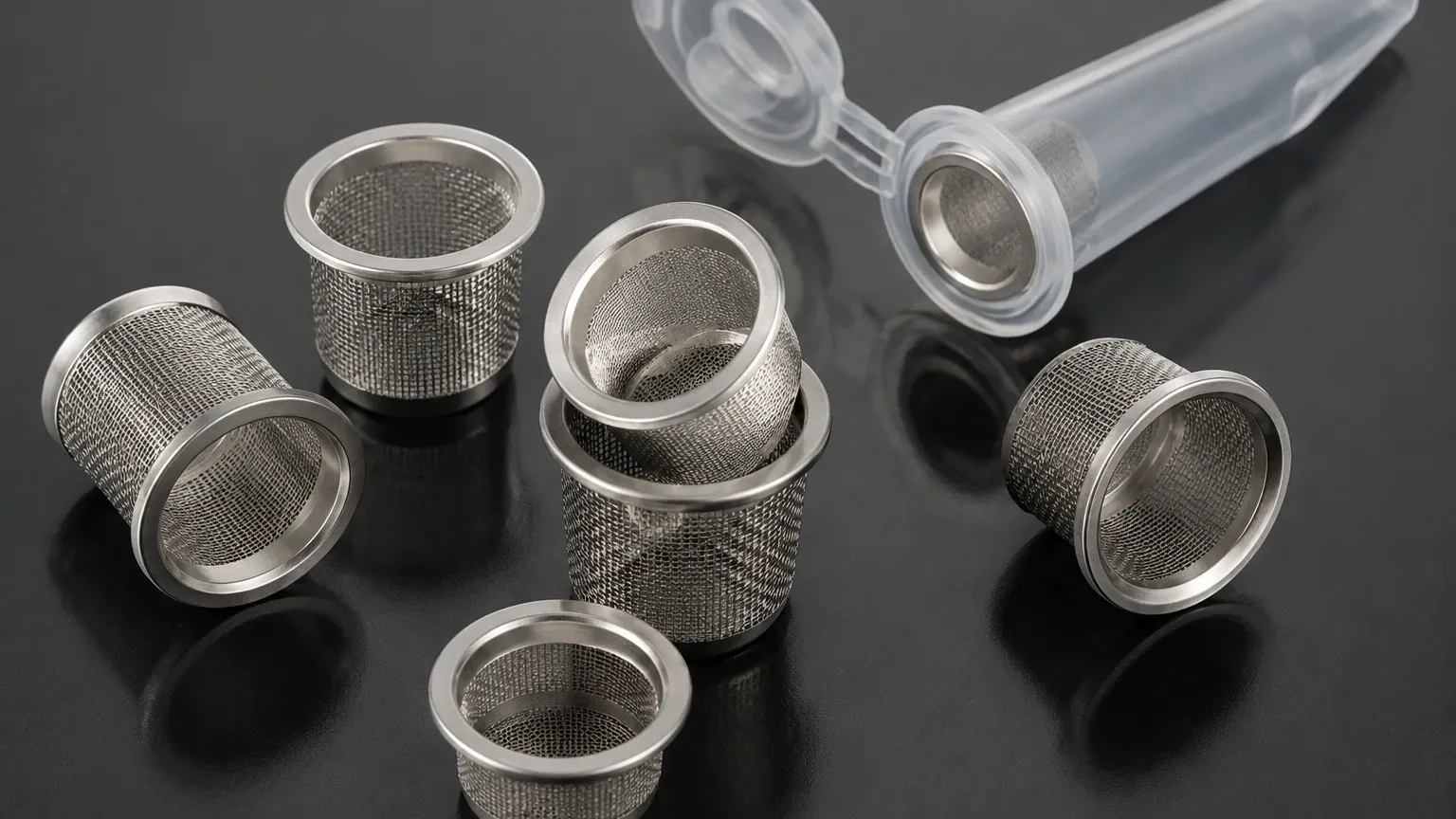
In the landscape of precision filtration, the 70-micron threshold represents a critical specification for both laboratory-scale sample preparation and industrial-scale processing. While the term is frequently associated with disposable laboratory consumables used for cell dissociation and tissue processing, the engineering principles governing 70-micron filtration extend into robust industrial applications. For engineers and procurement specialists, understanding the transition from small-scale 70 micron eppendorf strainers to industrial-grade Strainers & Baskets is essential for scaling production while maintaining filtration integrity.
Industrial filtration requires a deep understanding of material science, fluid dynamics, and mechanical durability. When a process moves beyond the benchtop, the requirements for chemical compatibility, thermal resistance, and structural longevity necessitate a shift from synthetic polymers to precision-engineered stainless steel components.
Technical Specifications of 70-Micron Filtration Media
The performance of a 70-micron strainer is defined by its aperture size—the clear distance between two adjacent wires or fibers. In a 70-micron mesh, this aperture is precisely controlled to ensure that particles larger than the rated size are retained while the filtrate passes through.
Mesh Count and Wire Diameter
In industrial stainless steel mesh, the 70-micron rating (approximately 200 to 230 mesh per inch, depending on wire diameter) is achieved through sophisticated weaving techniques. Engineers must consider the "open area percentage," which is the ratio of the total area of the apertures to the total area of the mesh. A higher open area reduces the initial pressure drop across the strainer but may compromise the mechanical strength of the mesh if the wire diameter is too thin.
Weave Types
For 70-micron applications, a plain weave is common, where each warp wire crosses alternately over and under each weft wire. This provides a stable structure with consistent pore sizes. However, in high-pressure industrial environments, a twilled weave or a Dutch weave may be employed to increase the density of the mesh and enhance its resistance to mechanical deformation under load.
Material Selection: Stainless Steel vs. Synthetic Polymers
Standard laboratory 70 micron eppendorf strainers are typically manufactured from nylon or polyester mesh housed in a polypropylene frame. While suitable for single-use applications in a sterile lab environment, these materials have significant limitations in industrial B2B contexts.
Chemical and Thermal Resistance
Industrial processes often involve aggressive solvents, high temperatures, or extreme pH levels that would degrade synthetic polymers. Stainless steel (Grade 304 or 316L) offers superior resistance to corrosion and can withstand operating temperatures far exceeding the melting points of plastics. 316L stainless steel, in particular, is preferred in pharmaceutical and food processing due to its enhanced resistance to pitting and crevice corrosion in chloride-rich environments.
Durability and Reusability
Unlike disposable lab strainers, stainless steel baskets and strainers are designed for long-term service. They can be subjected to rigorous cleaning protocols, including ultrasonic cleaning, backwashing, and high-pressure steaming (SIP – Sterilization in Place). This reusability significantly reduces the total cost of ownership (TCO) and minimizes the environmental impact associated with high-volume disposable waste.
Engineering Considerations for Industrial Strainers & Baskets
When integrating 70-micron filtration into an industrial system, several engineering factors must be evaluated to ensure system efficiency and prevent equipment failure.
Pressure Drop (ΔP)
The resistance to flow created by the strainer mesh leads to a pressure drop. As the strainer captures particles, the effective open area decreases, and the pressure drop increases. Engineers must calculate the "clean pressure drop" and establish a "terminal pressure drop" at which the strainer must be cleaned or replaced. For 70-micron mesh, the fine nature of the wires means that excessive pressure can lead to mesh "blinding" or even structural rupture if the basket is not properly reinforced.
Structural Integrity and Support
A 70-micron mesh is relatively delicate. In industrial Strainers & Baskets, this fine mesh is often supported by a coarser perforated metal cylinder or a heavier backup mesh. This multi-layer construction allows the fine mesh to perform the filtration while the outer structure provides the mechanical strength required to withstand high flow rates and differential pressures.
Flow Dynamics
The geometry of the strainer—whether it is a conical, basket, or cylindrical design—affects the flow pattern of the fluid. A well-designed basket strainer maximizes the surface area available for filtration, which extends the time between cleaning cycles and ensures a more uniform distribution of the particle cake.
Applications and Compatibility in Industrial Processes
The use of 70-micron filtration is prevalent in industries where precise particle size control is a prerequisite for product quality or the protection of downstream equipment.
1. Pharmaceutical and Biotech: In the transition from lab-scale cell culture to large-scale bioreactors, 70-micron strainers are used to remove cellular debris, precipitates, or micro-carriers from the harvest stream. The ability to autoclave stainless steel components is vital here for maintaining sterility.
2. Food and Beverage: 70-micron filtration is often used as a polishing step in the production of juices, oils, and syrups to ensure clarity and remove fine particulates that could affect the texture or shelf-life of the product.
3. Chemical Processing: Protecting high-precision spray nozzles or sensitive instrumentation from fine contaminants requires reliable 70-micron filtration. Stainless steel strainers are essential when dealing with hot or corrosive chemical intermediates.
4. Water Treatment: In advanced water purification systems, fine mesh strainers serve as a pre-filtration stage for membrane systems (such as Reverse Osmosis), preventing the fouling of expensive membranes by larger suspended solids.
Customization and OEM Solutions for Precision Filtration
Every industrial application has unique constraints regarding space, flow rate, and connection types. Off-the-shelf solutions rarely meet the exacting needs of specialized engineering projects. Customization is often required in several areas:
* Dimensional Tailoring: Custom-built baskets can be designed to fit existing housings, ensuring a perfect seal and preventing bypass—a common issue when using incorrectly sized filtration components.
* Flange and Connection Types: Depending on the piping standards (ANSI, DIN, JIS), strainers must be equipped with the appropriate flanges or threaded connections to ensure leak-proof integration.
* Surface Finishes: For sanitary applications, the stainless steel must be polished to a specific Ra (Roughness Average) to prevent bacterial growth and facilitate easier cleaning. Electropolishing is often used to achieve a mirror-like finish on complex basket geometries.
Maintenance, Cleaning, and Lifecycle Costs
One of the primary advantages of moving to professional-grade stainless steel Strainers & Baskets is the predictability of the maintenance cycle. While 70 micron eppendorf strainers are discarded after a single use, industrial stainless steel components are an investment in process stability.
Cleaning Protocols
Effective cleaning is critical to restoring the flow characteristics of a 70-micron strainer. Because the pores are so small, traditional manual scrubbing can damage the mesh. Instead, industrial users typically employ:
* Ultrasonic Cleaning: Using high-frequency sound waves to create cavitation bubbles that dislodge particles from deep within the mesh.
* Chemical Cleaning: Soaking the strainer in specialized solvents or caustic solutions to dissolve organic or inorganic fouling.
* Backpulsing: Reversing the flow of fluid through the mesh to push trapped particles out of the apertures.
Total Cost of Ownership (TCO)
When evaluating the cost of 70-micron filtration, engineers must look beyond the initial purchase price. The TCO includes the cost of downtime for cleaning, the labor involved in maintenance, and the replacement frequency. High-quality stainless steel strainers, although more expensive upfront than synthetic alternatives, offer a lower TCO over several years due to their extreme durability and the elimination of recurring consumable costs.
Selection Criteria for Technical Professionals
Before specifying a 70-micron filtration solution, technical teams should confirm the following data points with their manufacturer:
* Maximum Differential Pressure (ΔP): What is the collapse pressure of the basket assembly?
* Effective Filtration Area (EFA): How much surface area is actually available for fluid to pass through?
* Material Certification: Can the manufacturer provide Mill Test Reports (MTRs) to verify the grade of stainless steel?
* Compliance: Does the strainer meet industry-specific standards such as FDA, 3A, or ASME BPE for sanitary applications?
By focusing on these technical parameters, engineers can ensure that their choice of 70-micron filtration media provides the reliability and performance required for demanding industrial environments. Whether the goal is protecting sensitive equipment or ensuring product purity, the transition to precision-engineered Strainers & Baskets is a vital step in industrial process optimization.
