


7 Strainer
In industrial liquid processing, the efficiency of a filtration system often depends on the precision and durability of its internal components. The 7 strainer, typically referring to a 7-inch diameter basket used in high-capacity liquid filtration housings, serves as a primary defense against particulate contamination. These components are essential for protecting downstream equipment, such as pumps, valves, and spray nozzles, from damage caused by debris. As a specialized manufacturer, Kaifil provides engineered Strainers & Baskets designed to meet the rigorous demands of chemical, pharmaceutical, and food processing environments.
Selecting a 7 strainer requires a deep understanding of fluid dynamics, material compatibility, and mechanical stress. This article explores the technical specifications, engineering considerations, and selection criteria necessary for optimizing industrial filtration performance.
Understanding the Role of 7-Inch Basket Strainers in Industrial Filtration
The designation of a "7 strainer" usually identifies the nominal diameter of the filter basket. In the industry, 7-inch baskets are most commonly associated with Size 1 and Size 2 filter housings. A Size 1 basket typically has a 7-inch diameter and a 16-inch length, while a Size 2 basket maintains the 7-inch diameter but extends to a 32-inch length. This standardization allows for high flow rates while providing a significant surface area for contaminant collection.
The primary function of these strainers is coarse filtration or pre-filtration. Unlike fine membrane filters, a 7 strainer is designed to handle high solids loading. It acts as a mechanical barrier, capturing larger particles while allowing the liquid phase to pass through with minimal resistance. The choice between a 16-inch or 32-inch length (Size 1 vs. Size 2) is dictated by the required flow rate and the expected dirt-holding capacity. A larger surface area reduces the frequency of cleaning cycles, thereby decreasing downtime in continuous industrial processes.
Material Selection and Engineering Standards
Material integrity is the foundation of any industrial filtration component. Because 7 strainer units are often exposed to corrosive chemicals, high temperatures, and high-pressure differentials, the choice of alloy is critical.
Stainless Steel 304 vs. 316L
Stainless steel is the industry standard due to its mechanical strength and corrosion resistance.
- SS304: Suitable for general-purpose applications, including water treatment and mild chemical processing. It offers excellent durability and cost-effectiveness.
- SS316L: The preferred choice for pharmaceutical, food and beverage, and highly corrosive chemical applications. The addition of molybdenum provides superior resistance to pitting and crevice corrosion, particularly in chloride-rich environments.
Structural Reinforcement
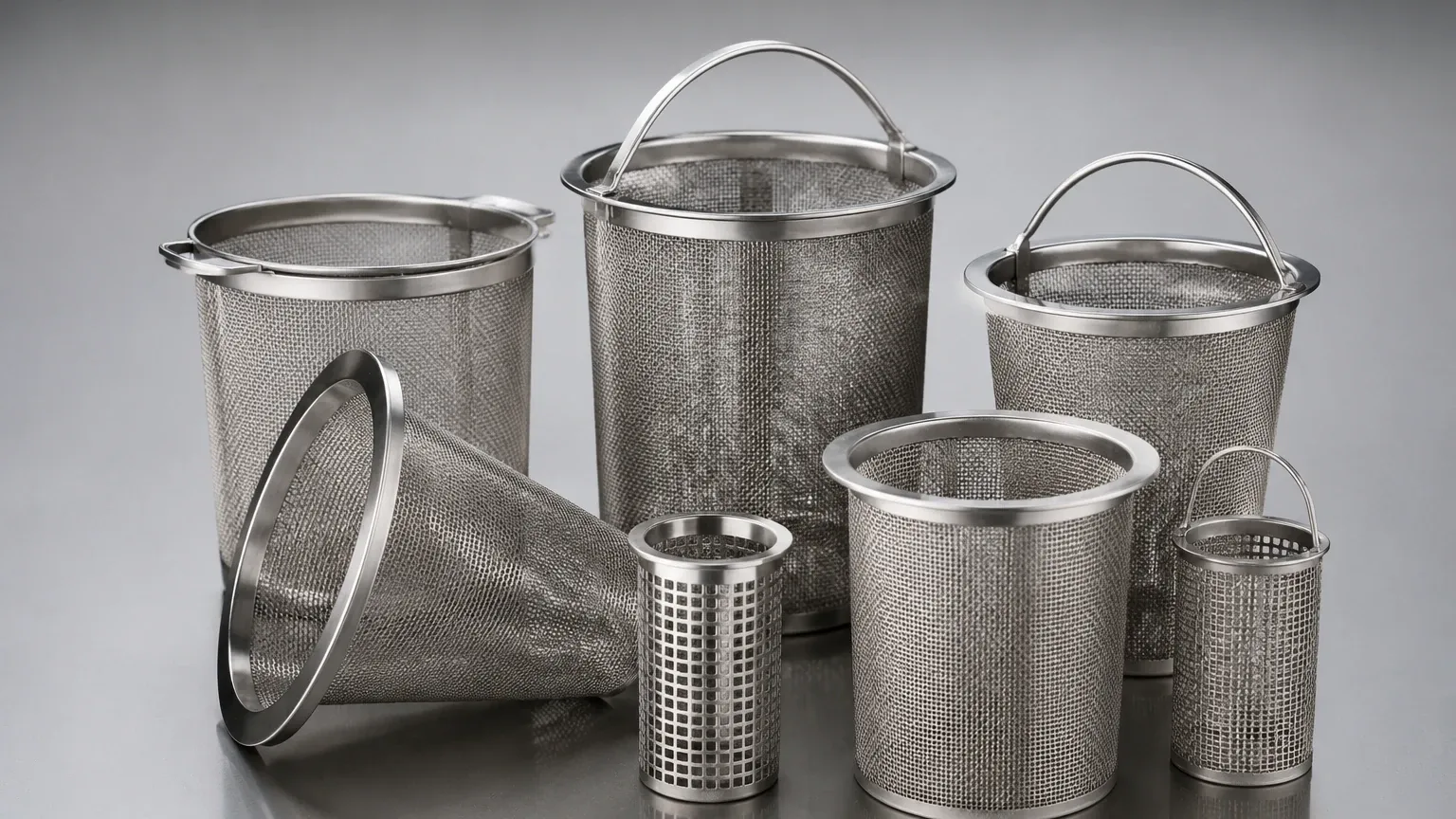
An industrial 7 strainer is not merely a piece of mesh. It is a structural component. For high-pressure applications, the basket consists of a heavy-duty perforated metal support cylinder lined with a precision wire mesh. The perforation pattern—usually staggered to maximize open area without sacrificing hoop strength—provides the necessary rigidity to prevent the basket from collapsing under high differential pressure ($ΔP$).
Performance Evaluation: Flow Rate and Pressure Drop
Engineers must calculate the clean pressure drop of a 7 strainer before installation. The pressure drop is influenced by the fluid's viscosity, the specific gravity, the flow velocity, and the open area of the strainer media.
Open Area Ratio
The "Open Area Ratio" is the relationship between the total area of the openings in the strainer and the cross-sectional area of the inlet pipe. A well-engineered 7 strainer should ideally offer an open area ratio of at least 4:1. This ensures that even as the basket begins to fill with debris, the pressure drop remains within acceptable limits, preventing cavitation in centrifugal pumps located downstream.
Viscosity Considerations
As fluid viscosity increases, the resistance through the wire mesh or perforated holes increases exponentially. For high-viscosity liquids, such as resins, syrups, or heavy oils, engineers often specify a larger 7 strainer or a coarser mesh to maintain the required flow velocity. Kaifil’s engineering team works with clients to determine the optimal mesh-to-perforation ratio to balance filtration efficiency with flow requirements.
Customization Options for Specialized Applications
Standard off-the-shelf strainers often fail to meet the unique requirements of complex industrial systems. Customization is frequently necessary to ensure a perfect fit and optimal performance.
Mesh and Micron Ratings
A 7 strainer can be customized with various linings ranging from coarse 20-mesh (approx. 840 microns) to fine 400-mesh (approx. 37 microns). For applications requiring even finer filtration, multi-layered sintered mesh can be utilized, providing the structural support of a basket with the precision of a filter cartridge.
Handle and Sealing Configurations
The ease of maintenance is often determined by the basket's top design. Customizations include:
- Slant-top baskets: Designed for specific housing geometries to ensure a tight seal.
- Heavy-duty handles: Ergonomic designs that facilitate rapid removal during change-outs.
- O-ring seals: Integrated grooves for Viton, EPDM, or PTFE encapsulated gaskets to ensure zero-bypass filtration.
Reinforced Bottoms and Specialized Coatings
In high-velocity systems, the bottom of the strainer experiences the greatest impact from incoming debris. Reinforced solid bottoms or double-layered mesh bases can prevent premature wear. Additionally, specialized coatings like Teflon (PTFE) can be applied to reduce adhesion for sticky or viscous fluids, making the cleaning process more efficient.
Maintenance Protocols and Service Life Optimization
The total cost of ownership (TCO) of a 7 strainer is heavily influenced by its maintenance requirements. Unlike disposable filter bags, stainless steel baskets are designed for long-term reuse, provided they are maintained correctly.
Cleaning Procedures
Effective cleaning is essential to restore the original flow characteristics. Depending on the contaminant, cleaning methods may include:
- Backwashing: Reversing the flow to dislodge particles.
- Ultrasonic Cleaning: Using high-frequency sound waves to remove fine particles trapped within the mesh weave.
- Chemical Soaking: Utilizing compatible solvents to dissolve organic or mineral buildup.
Monitoring Differential Pressure
The most critical maintenance tool for a 7 strainer is a differential pressure gauge. Operators should establish a "clean" $ΔP$ baseline. When the $ΔP$ reaches a predetermined limit (typically 10-15 psi above baseline), the basket must be removed and cleaned. Delaying this process can lead to "media migration" or structural failure of the basket, potentially contaminating the entire downstream system.
Strategic Selection Factors for Engineering Teams
When specifying a 7 strainer for a new project or as a replacement part, purchasing teams and engineers should confirm several key data points to ensure compatibility and performance:
1. Fluid Characteristics: Confirm the chemical composition, temperature range, and viscosity of the process fluid.
2. Contaminant Profile: Determine the size and type of particles (hard, soft, fibrous) to select the appropriate mesh or perforation size.
3. Housing Compatibility: Verify the exact dimensions of the housing. Even a 1/16-inch discrepancy in the flange diameter can lead to bypass, rendering the filtration system ineffective.
4. Regulatory Compliance: For food and pharmaceutical applications, ensure the materials meet FDA or 3A sanitary standards. Kaifil provides material traceability reports (MTRs) to verify alloy composition.
5. Flow Dynamics: Calculate the maximum and minimum flow rates to ensure the strainer can handle surge conditions without excessive pressure spikes.
Conclusion: The Value of Precision Engineering
A 7 strainer is a small but vital component in the industrial infrastructure. Its ability to withstand harsh conditions while maintaining precise filtration determines the reliability of the entire production line. By focusing on high-quality materials, robust structural design, and customized configurations, manufacturers can significantly improve process efficiency and protect expensive capital equipment.
For engineers seeking reliable, high-performance filtration components, Kaifil offers extensive expertise in the design and manufacture of custom Strainers & Baskets. Whether the application requires a standard Size 2 basket or a highly specialized 7-inch strainer for a unique chemical process, prioritizing technical excellence in selection and maintenance is the key to long-term operational success.
