


Amazon Sink Strainers
In the modern procurement landscape, the search for hardware and filtration components often begins on massive e-commerce platforms. For many facility managers, maintenance engineers, and purchasing agents, "amazon sink strainers" represents a common starting point for sourcing replacement parts or basic filtration components. However, while retail platforms offer convenience and speed for residential needs, industrial and commercial environments demand a level of precision, material integrity, and durability that standard consumer-grade products often cannot provide.
Understanding the distinction between a generic consumer strainer and a professional-grade solution is critical for maintaining operational efficiency and preventing costly plumbing or process failures. This guide examines the technical considerations of Strainers & Baskets, comparing the common attributes found in retail listings with the rigorous requirements of industrial applications.
The Landscape of Commercial and Industrial Sink Strainers
When searching for amazon sink strainers, the results typically prioritize aesthetic appeal, ease of installation for DIY users, and low price points. These products are generally designed for domestic kitchens where the primary task is catching food scraps and preventing household clogs.
In contrast, industrial strainers—often referred to as basket strainers or suction strainers—are engineered for much more demanding scenarios. In chemical processing, food and beverage production, and pharmaceutical manufacturing, a strainer is not just a drain cover; it is a critical piece of filtration equipment designed to protect downstream pumps, valves, and instrumentation from particulate damage.
Professional procurement teams must look beyond the "one-size-fits-all" approach of retail platforms. They must evaluate filtration efficiency, flow rate capacities, and the chemical compatibility of the materials used in construction. While a retail strainer might suffice for an office breakroom, it will likely fail prematurely in a laboratory or a high-volume commercial kitchen where caustic cleaning agents and high-temperature effluents are the norm.
Material Integrity: Why Stainless Steel Grade Matters
One of the primary differences between high-volume retail strainers and industrial-grade components is the specific alloy used. Most amazon sink strainers are marketed simply as "stainless steel." For a residential user, this usually implies it won't rust under normal tap water conditions. However, for an engineer, the specific grade of stainless steel is the most important factor in the component's lifespan.
Type 304 Stainless Steel
Type 304 is the most common grade used in quality commercial strainers. It offers excellent corrosion resistance to a wide range of domestic and industrial environments. It is the standard for most food service applications. However, even within Type 304, there are variations in the thickness (gauge) of the metal. Many retail products use thin-gauge sheets that can warp or dent under the weight of heavy industrial use.
Type 316 Stainless Steel
For environments involving salt water, chlorides, or aggressive chemicals, Type 316 stainless steel is required. It contains molybdenum, which provides superior resistance to pitting and crevice corrosion. If a facility is sourcing strainers for a marine environment or a chemical processing plant, the generic "stainless steel" found in many amazon sink strainers may not be Type 316, leading to rapid degradation and system contamination.
Kaifil specializes in utilizing high-quality stainless steel alloys to ensure that every basket and strainer meets the specific environmental demands of the client's industry, providing a level of material certification that is rarely available through retail-focused marketplaces.
Engineering for Flow: Perforation vs. Mesh Selection
Filtration performance is defined by two main factors: what it stops and how much fluid it lets through. When evaluating Strainers & Baskets, engineers must calculate the "open area ratio." This is the ratio of the total area of the holes to the total area of the strainer basket.
Perforated Metal Strainers
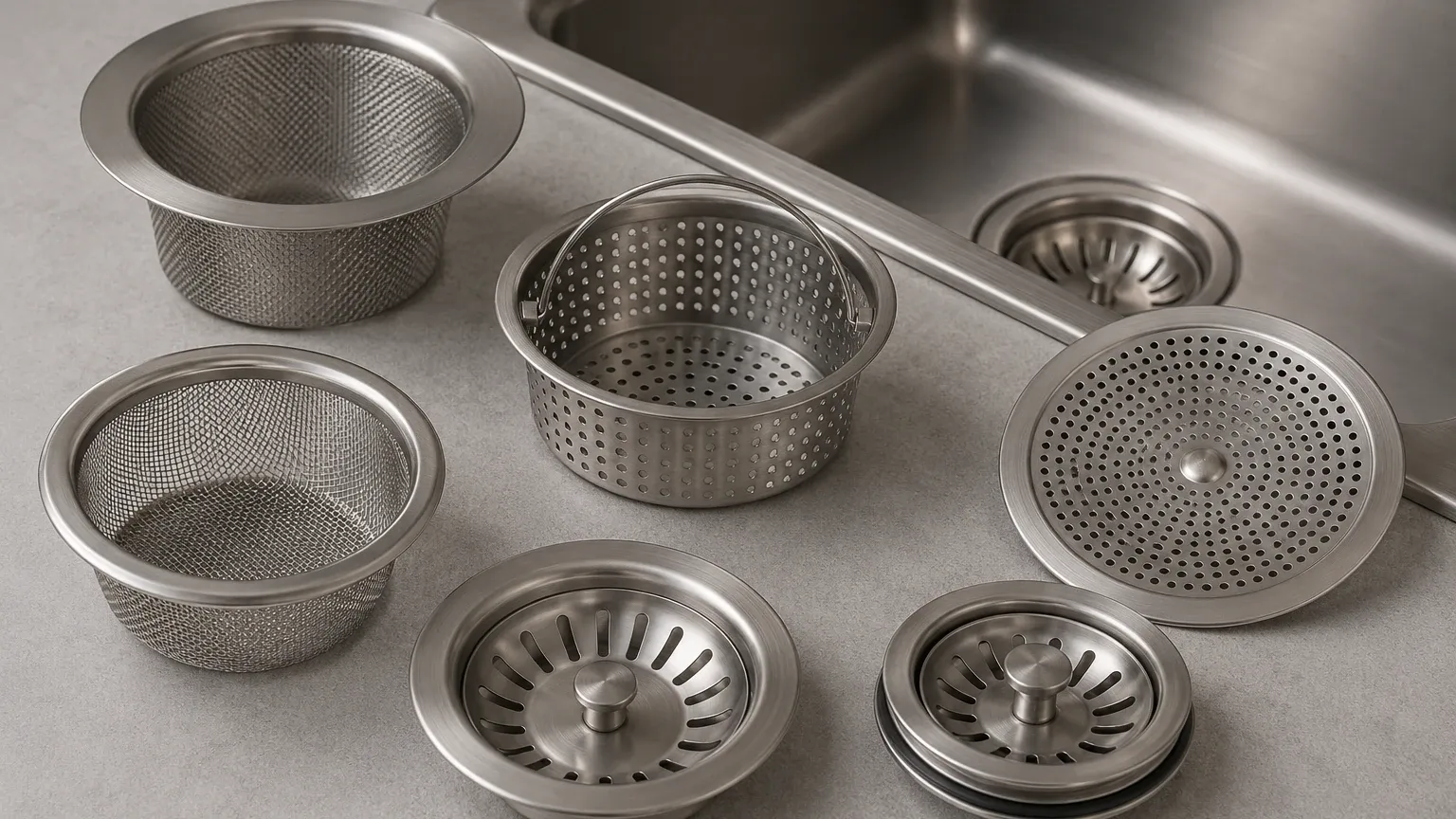
Most basic sink strainers use perforated metal. The size of the perforations determines the filtration grade. In industrial settings, these are used for "coarse" filtration. The challenge with many consumer-grade strainers found on Amazon is that the perforation pattern may not be optimized for flow, leading to frequent backups and increased pressure on the plumbing system.
Wire Mesh Liners
For finer filtration, industrial baskets often incorporate a stainless steel wire mesh liner. This allows for the capture of much smaller particles while maintaining a high open area for fluid flow. This level of technical specification—choosing between a 20-mesh, 40-mesh, or 100-mesh liner—is a standard part of industrial procurement but is almost never an option when purchasing retail sink strainers.
By selecting a manufacturer that understands these engineering nuances, businesses can ensure they are not sacrificing flow rate for filtration efficiency, or vice versa.
Limitations of Off-the-Shelf Consumer Strainers
While the convenience of purchasing amazon sink strainers is undeniable, there are several technical limitations that can impact long-term operational costs in a B2B context:
1. Structural Integrity: Industrial baskets often need to withstand significant pressure differentials. If a basket becomes clogged, the fluid pressure builds up. A retail-grade strainer may collapse or bypass, allowing debris to enter the pump housing.
2. Seal Quality: Professional strainers often feature precision-machined seats or high-grade gaskets (such as EPDM, Viton, or PTFE) to ensure a leak-proof fit. Retail products frequently use low-cost rubber compounds that degrade quickly when exposed to hot water or detergents.
3. Attachment Methods: In industrial applications, strainers may need to be flanged, threaded, or welded into place. Amazon products are almost exclusively designed for standard residential drop-in or screw-in sinks, offering no flexibility for specialized piping configurations.
4. Cleanability: Industrial strainers are designed for frequent "blow-down" or manual cleaning. The handles, lift-out bails, and smooth interior finishes are engineered to make maintenance fast and effective. Consumer products often have "blind spots" or rough edges where bacteria and debris can accumulate.
Customization and OEM Solutions for Specialized Applications
One of the most significant advantages of working with a dedicated manufacturer like Kaifil over a retail aggregator is the ability to customize. In many industrial settings, the "standard" size simply doesn't work.
Customization options include:
* Bespoke Dimensions: Creating baskets that fit existing, non-standard housings to avoid expensive piping reworks.
* Reinforced Structures: Adding support rods or double-walled mesh for high-pressure or high-viscosity fluids.
* Specific Micron Ratings: Engineering the filtration level to protect sensitive downstream equipment like spray nozzles or heat exchangers.
* Specialty Coatings: Applying electropolishing or specialized coatings for pharmaceutical or high-purity water applications.
For original equipment manufacturers (OEMs) building commercial dishwashers, industrial washing machines, or fluid processing skids, sourcing a custom-engineered component is essential for the performance and reputation of their own product. A generic sink strainer cannot offer the repeatable quality and documented specifications required for OEM integration.
Evaluating Total Cost of Ownership in Filtration Components
Procurement professionals often distinguish between "price" and "cost." The price of amazon sink strainers may be low, but the total cost of ownership (TCO) can be significantly higher in a commercial environment.
Consider the following factors when calculating TCO:
* Replacement Frequency: If a $10 retail strainer lasts three months in a commercial kitchen before the mesh tears or the handle breaks, and a $50 industrial strainer lasts five years, the industrial option is significantly cheaper over time.
* Labor Costs: The time spent by maintenance staff replacing inferior components is a hidden cost. Furthermore, if a strainer fails and allows debris to damage a $2,000 pump, the "savings" from the cheap strainer are instantly negated.
* Downtime: In a production environment, a clogged or broken strainer that halts a line can cost thousands of dollars per hour. Investing in high-capacity Strainers & Baskets reduces the frequency of maintenance-related shutdowns.
* Compliance and Safety: In food and pharmaceutical industries, using uncertified materials can lead to regulatory fines or product recalls. Industrial manufacturers provide the necessary material certifications (MTRs) to ensure compliance with health and safety standards.
Engineering Selection Criteria for Purchasing Teams
Before deciding between a retail-grade product and a professional industrial strainer, engineering and purchasing teams should confirm the following technical parameters:
* Fluid Characteristics: What is the viscosity of the fluid? Are there corrosive chemicals or extreme temperatures involved?
* Contaminant Load: Is the strainer intended to catch occasional large debris, or is it a primary filter for high-volume particulate matter?
* Flow Rate Requirements: What is the maximum allowable pressure drop (Delta P) across the strainer when it is 50% clogged?
* Housing Compatibility: Does the strainer need to fit a specific flange, or is it a gravity-fed drain application?
* Maintenance Protocol: How often will the basket be pulled for cleaning? Does it require a heavy-duty handle or a quick-release mechanism?
By answering these questions, technical professionals can move beyond the limitations of generic search results and identify the specific filtration solution that will provide the best long-term value.
Conclusion: Making Informed Procurement Decisions
While the search for "amazon sink strainers" may provide a quick fix for a household problem, it rarely satisfies the complex requirements of industrial and commercial filtration. For engineers and facility managers, the goal is to find a balance between filtration efficiency, mechanical durability, and cost-effectiveness.
Manufacturers like Kaifil provide the technical expertise and manufacturing precision necessary to move beyond off-the-shelf limitations. Whether you require standard stainless steel baskets or highly customized filtration components, focusing on material quality and engineering specifications is the only way to ensure reliable performance in demanding environments.
When the protection of expensive machinery and the efficiency of your process are at stake, choosing a professional-grade solution is always the superior investment. For more information on selecting the right components for your facility, you can explore the range of professional Strainers & Baskets designed for industrial durability and precision.
