


Arctic Steel Strainers
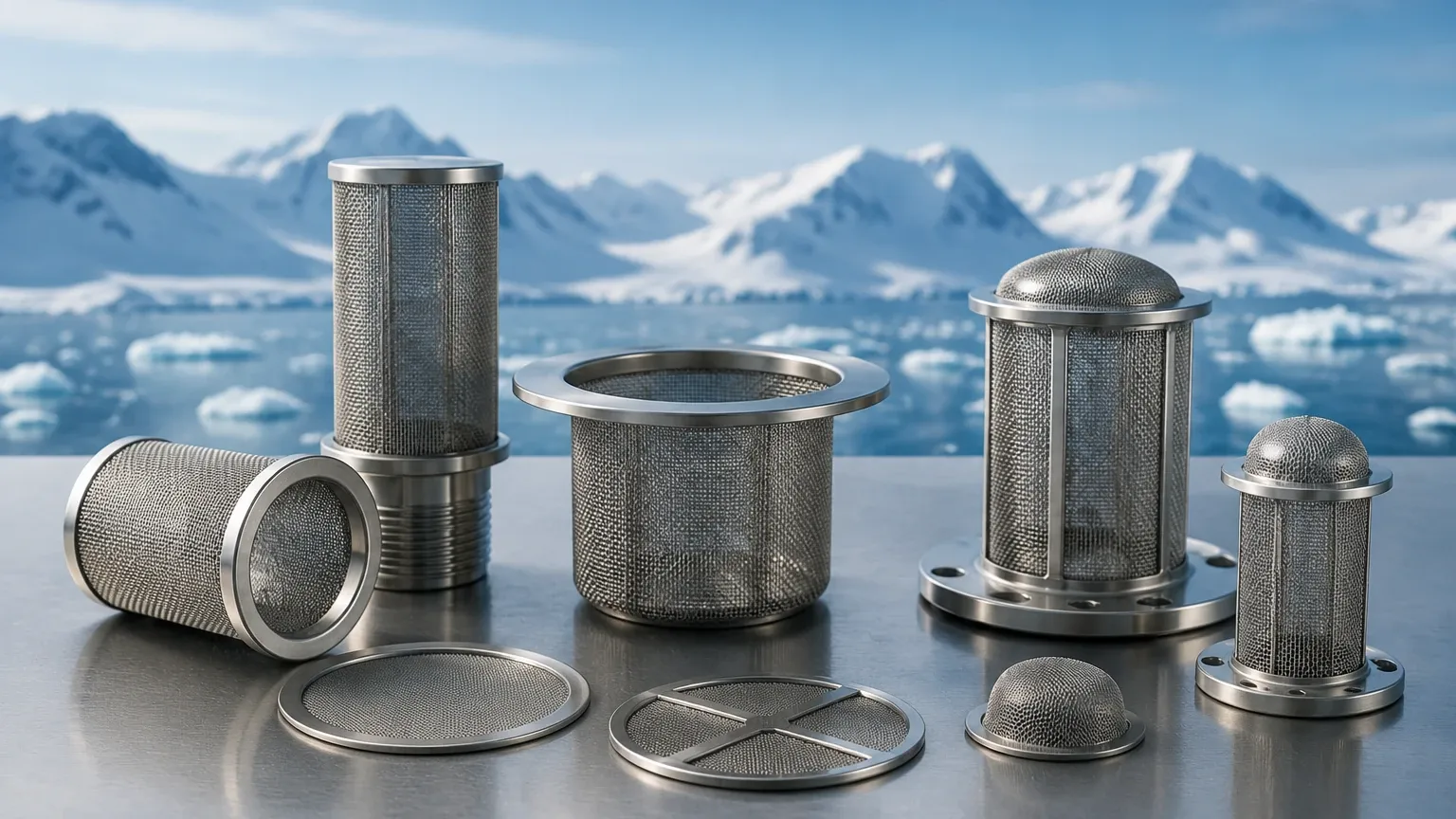
In industrial and marine fluid handling, the integrity of filtration components is critical to the longevity of downstream equipment such as pumps, heat exchangers, and spray nozzles. Arctic steel strainers represent a specialized segment of high-performance filtration hardware designed to meet the rigorous demands of corrosive environments, particularly in marine, chemical processing, and water treatment sectors. These components are engineered to provide coarse filtration, removing large particulates from liquid streams before they can cause mechanical wear or blockages.
For engineers and procurement professionals, selecting the correct strainer involves more than simply matching pipe sizes. It requires a deep understanding of material science, fluid dynamics, and the specific operational stresses of the application. This guide examines the technical considerations, material advantages, and selection criteria for high-grade stainless steel filtration solutions.
The Engineering Behind High-Performance Strainers
The primary function of a strainer is the mechanical removal of solids from a flowing liquid. Unlike fine filters that may operate at the sub-micron level, strainers are typically used for primary protection. Arctic steel strainers are often distinguished by their robust construction, typically utilizing cast or fabricated 316 stainless steel. This material choice is essential for applications involving seawater or aggressive industrial chemicals where carbon steel or bronze would succumb to pitting and galvanic corrosion.
One of the defining characteristics of high-performance strainers is their "Open Area Ratio" (OAR). The OAR is the relationship between the total open area of the internal basket and the cross-sectional area of the inlet pipe. A high-quality strainer often maintains an OAR of at least 6:1. This ratio ensures that the pressure drop (Delta P) across the unit remains low even as the basket begins to collect debris, extending the time between cleaning cycles and reducing the energy load on the system's pumps.
Material Integrity: Why 316 Stainless Steel is Standard
In the context of arctic steel strainers, the choice of 316L stainless steel (the low-carbon variant of 316) is frequently the engineering standard. The addition of molybdenum in 316 stainless steel significantly enhances its resistance to chlorides, making it the preferred choice for marine environments and chemical plants handling de-icing agents or saline solutions.
Corrosion Resistance and Longevity
In cold-water or "arctic" conditions, materials can become brittle or experience accelerated localized corrosion if not properly specified. Stainless steel maintains its mechanical properties across a wide temperature range. Furthermore, the passive oxide layer on 316 stainless steel provides a self-healing barrier. If the surface is scratched during a maintenance procedure, the chromium in the steel reacts with oxygen to reform the protective layer, preventing the deep-seated rust that often plagues coated carbon steel alternatives.
Casting vs. Fabrication
Industrial strainers are either cast from a mold or fabricated from plate and pipe. Cast strainers, common in the Arctic Steel design philosophy, offer a smoother internal flow path which minimizes turbulence and erosion-corrosion. Fabricated strainers, on the other hand, allow for greater customization in terms of flange-to-flange dimensions and the placement of auxiliary ports for pressure gauges or drain valves.
Technical Evaluation Criteria for Selection
When evaluating Strainers & Baskets for a specific project, engineers must confirm several technical parameters to ensure the component performs as expected under peak load.
Flow Rate and Pressure Drop
The clean pressure drop is a critical metric. If the initial pressure drop is too high, the system's efficiency is compromised from the start. Engineers should request flow coefficient (Cv) data from the manufacturer. The Cv value represents the flow of water in gallons per minute (GPM) at 60°F that will pass through the strainer with a pressure drop of 1 psi. A higher Cv indicates less resistance to flow.
Filtration Accuracy (Mesh vs. Perforation)
The internal element of the strainer can be a simple perforated plate or a plate lined with a fine wire mesh.
- Perforated Plates: These are used for removing larger debris (e.g., 1/8" or 1/16" holes). They are structurally robust and easy to clean.
- Mesh Liners: For finer filtration, a stainless steel wire mesh is sintered or spot-welded to the perforated basket. This allows for filtration down to 40 microns or less, though it increases the frequency of required maintenance.
Seal and Gasket Compatibility
The effectiveness of a strainer is also dependent on its seals. In marine or industrial chemical applications, the gasket material must be compatible with the fluid. Viton (FKM) is often used for high-temperature or chemical-heavy applications, while Buna-N (Nitrile) is a standard for general water and oil service. For arctic or cryogenic applications, specialized PTFE or silicone seals may be required to maintain elasticity at low temperatures.
Customization and OEM Capabilities
Not every industrial application fits a standard off-the-shelf strainer profile. This is where custom manufacturing becomes essential. Manufacturers like Kaifil specialize in developing bespoke filtration components that integrate seamlessly into existing infrastructure. Customization options often include:
- Non-Standard Flange Connections: Matching ANSI, DIN, or JIS standards depending on the global location of the project.
- Duplex Configurations: For systems that cannot be shut down for cleaning, a duplex strainer arrangement with a diverter valve allows one side to be serviced while the other remains in operation.
- Reinforced Baskets: In high-pressure systems, standard baskets may collapse under the force of the fluid if they become heavily clogged. Reinforced structural ribs can be added to the basket design to prevent mechanical failure.
- Material Upgrades: For extremely aggressive environments, alloys like Duplex 2205 or Super Duplex may be substituted for standard 316 stainless steel to provide even greater resistance to stress corrosion cracking.
Operational Efficiency and Maintenance
The total cost of ownership (TCO) of arctic steel strainers is heavily influenced by ease of maintenance. A strainer that is difficult to open will often be neglected, leading to increased pressure drops and potential pump cavitation.
Quick-Release Covers
Modern industrial strainers often feature tool-free access. Swing bolts or ergonomic threaded handles allow operators to remove the lid and clean the basket in minutes. This is particularly important in marine applications where sea strainers may need to be cleared of biological growth or debris in heavy weather conditions.
Monitoring Performance
To move from reactive to proactive maintenance, engineers should install differential pressure gauges across the strainer inlet and outlet. By monitoring the "Delta P," operators can determine the exact moment the basket requires cleaning, preventing unnecessary downtime and ensuring the system always operates within its optimal energy envelope.
Common Risks and Mitigation
One of the most common risks in strainer selection is undersizing the unit to save on initial capital expenditure. An undersized strainer leads to high fluid velocity through the mesh, which can cause "wire drawing"—a form of erosion where the high-speed fluid cuts through the metal of the basket. It also leads to frequent clogging and increased labor costs.
Another risk is galvanic corrosion. When a stainless steel strainer is installed in a piping system made of a different metal (such as copper-nickel or carbon steel), the stainless steel can act as a cathode, accelerating the corrosion of the surrounding pipes. Using dielectric isolation kits or ensuring proper grounding and sacrificial anodes can mitigate these risks in marine installations.
Conclusion: Confirming Technical Specifications
Before finalizing a purchase for arctic steel strainers or similar high-performance filtration components, procurement teams and engineers should confirm the following data points with the manufacturer:
1. Maximum Working Pressure (MWP): Ensure the housing is rated for the system's peak surge pressures, not just the operating pressure.
2. Hydrostatic Test Certifications: Verify that the units have been pressure tested to 1.5x their rated capacity.
3. Material Traceability: For critical applications, request Mill Test Reports (MTRs) to verify the chemical composition of the stainless steel.
4. Effective Screen Area: Confirm the OAR to ensure long-term operational efficiency.
By focusing on these technical fundamentals, industrial operators can ensure that their filtration systems provide reliable protection, minimize maintenance overhead, and withstand the harshest environmental conditions. Whether for a desalination plant, a chemical refinery, or a marine vessel, the right strainer is a foundational component of a resilient fluid handling system.
