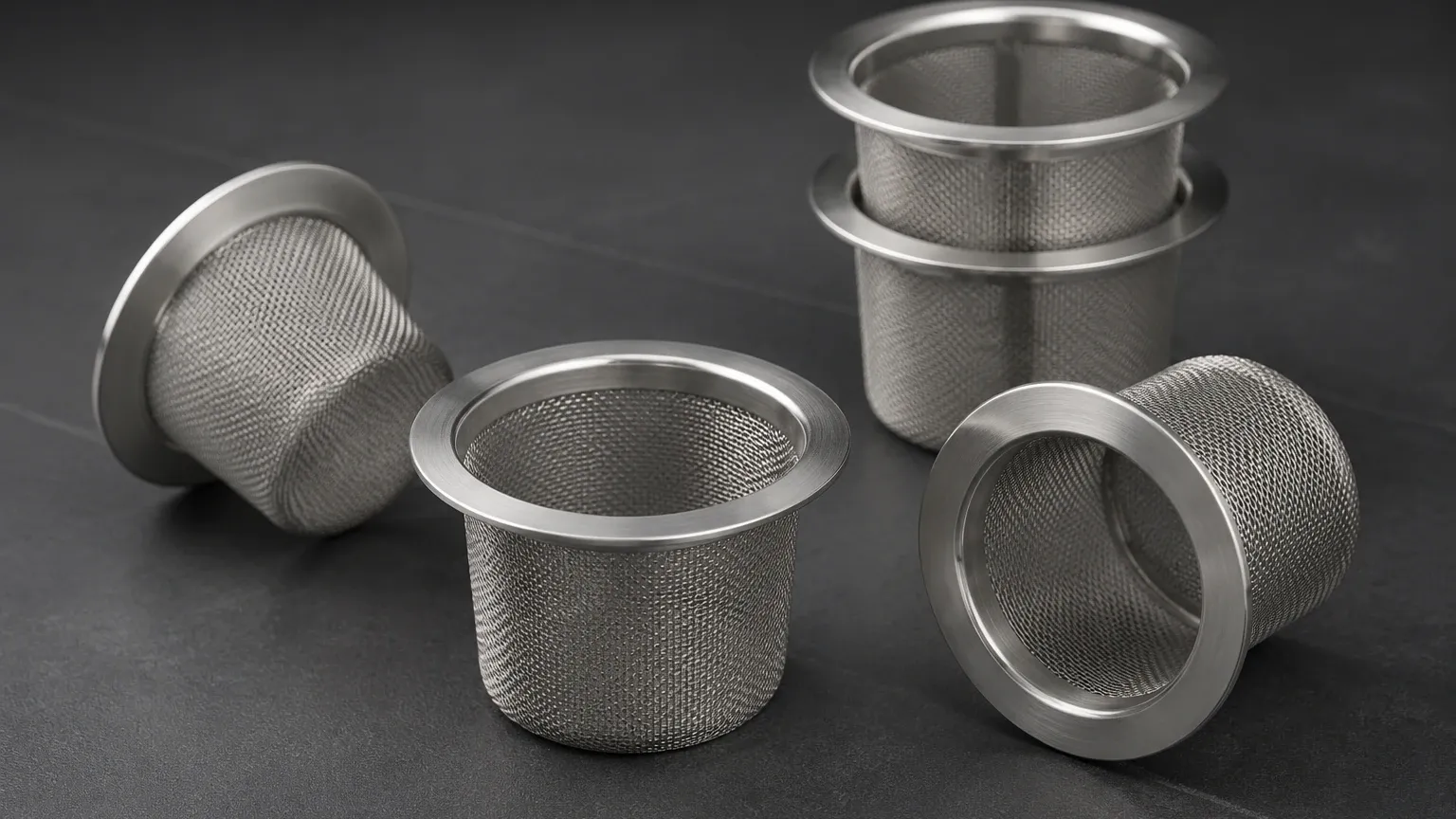
Basket Strainer 60mm
In the landscape of industrial fluid management, the efficiency of a system often hinges on the smallest components. Among these, the basket strainer 60mm serves as a fundamental line of defense, protecting downstream equipment from particulate contamination. Whether utilized in chemical processing, food and beverage production, or hydraulic systems, selecting the correct basket strainer requires a nuanced understanding of material science, fluid dynamics, and mechanical engineering. As a specialized manufacturer, Kaifil provides high-performance Strainers & Baskets designed to meet the rigorous demands of modern industrial environments.
Understanding the Basket Strainer 60mm Specification
When engineers specify a basket strainer 60mm, the measurement typically refers to the outer diameter (OD) of the filter basket itself or, in some specific localized standards, the nominal diameter of the housing connection. In most precision filtration contexts, a 60mm basket diameter is a common size for mid-range flow applications where space is a constraint but high dirt-holding capacity is still required.
The geometry of a 60mm basket is engineered to maximize the effective filtration area (EFA). The EFA is the total surface area of the mesh or perforated metal that is actually open to fluid flow. A well-designed basket ensures that the ratio of the open area to the pipe inlet area is sufficient to prevent excessive pressure drops. For a 60mm diameter basket, maintaining a high open-area ratio—often 4:1 or higher—is critical for extending the time between cleaning cycles and protecting the integrity of the pump or valve it precedes.
Material Engineering and Chemical Compatibility
The choice of material for a basket strainer 60mm is perhaps the most critical decision in the procurement process. Industrial fluids range from benign water to highly corrosive acids and abrasive slurries. Stainless steel remains the industry standard due to its mechanical strength and resistance to oxidation.
1. AISI 304 Stainless Steel: This is the most common material for general-purpose filtration. It offers excellent corrosion resistance in most atmospheric conditions and is widely used in water treatment and food processing where sanitation is a priority.
2. AISI 316/316L Stainless Steel: For more demanding environments, such as marine applications or chemical processing involving chlorides, 316 stainless steel is preferred. The addition of molybdenum enhances its resistance to pitting and crevice corrosion. The "L" variant (low carbon) is essential if the basket requires extensive welding, as it prevents carbide precipitation that can lead to intergranular corrosion.
3. Specialty Alloys: In extreme cases involving high temperatures or highly aggressive chemicals, manufacturers like Kaifil can utilize Hastelloy or Monel, though stainless steel covers the vast majority of industrial 60mm basket requirements.
Filtration Media: Mesh vs. Perforated Metal
A basket strainer 60mm can be constructed using different types of media depending on the required filtration accuracy. Understanding the difference between these media is essential for technical professionals.
Perforated Metal Baskets
Perforated baskets serve as the primary "coarse" filter. They are typically used to remove larger debris like stones, scale, or metal shavings. Common hole patterns include staggered rounds or square holes. For a 60mm basket, the thickness of the perforated sheet must be balanced against the hole size to ensure structural rigidity under high differential pressure.
Wire Mesh Liners
When finer filtration is required, the perforated basket acts as a support structure for a fine wire mesh liner. This mesh can range from coarse 20 mesh (approx. 840 microns) down to ultra-fine 500 mesh (approx. 25 microns). In a basket strainer 60mm, the mesh is often spot-welded or mechanically fastened to the interior of the basket. Engineers must consider the "burst pressure" of the mesh; if the mesh becomes clogged, the differential pressure can rise rapidly, potentially tearing the mesh if it is not properly supported by the outer perforated layer.
Engineering Considerations for Flow and Pressure Drop
Every filter introduces a restriction to the flow, known as pressure drop ($ΔP$). For a basket strainer 60mm, calculating the expected pressure drop is a vital part of system design. The total $ΔP$ is a sum of the losses through the housing and the losses through the basket media.
* Viscosity Factors: As the viscosity of the fluid increases (e.g., heavy oils or syrups), the pressure drop across a 60mm basket increases exponentially. This often necessitates a larger mesh size or a larger strainer housing to maintain acceptable flow rates.
* Velocity Limits: To prevent erosion of the filter media and to ensure efficient particle capture, fluid velocity through the basket should typically be kept within specific limits (often under 3 meters per second for liquids).
* Clean vs. Dirty $ΔP$: A system should be designed based on the "dirty" pressure drop. If a 60mm basket is allowed to reach a differential pressure exceeding 15-20 psi (1.0-1.4 bar), the risk of basket collapse or bypass increases significantly.
Design Variations: Simplex vs. Duplex Systems
The application environment dictates the configuration of the housing containing the basket strainer 60mm.
* Simplex Strainers: These are used in batch processes or systems where the flow can be intermittently stopped. When the 60mm basket is full, the system is shut down, the housing is opened, and the basket is cleaned or replaced.
* Duplex Strainers: In continuous flow operations—such as power generation or chemical refining—stopping the flow is not an option. Duplex systems utilize two separate chambers, each housing a basket. A diverter valve allows the operator to switch flow to the clean basket while the other is serviced. For a 60mm basket size, duplex configurations are common in lubricating oil systems and fuel lines.
Maintenance and Replacement Cycles
To ensure the longevity of a basket strainer 60mm, a rigorous maintenance schedule is required. Unlike disposable cartridge filters, stainless steel baskets are designed to be cleaned and reused, which significantly reduces the total cost of ownership.
Cleaning Protocols:
1. Manual Cleaning: Removing the basket and using a high-pressure water jet or soft brush. It is vital to clean from the outside in to push trapped particles out of the mesh.
2. Ultrasonic Cleaning: For fine mesh baskets where particles are deeply embedded, ultrasonic baths provide a superior level of cleaning without damaging the delicate wire structures.
3. Chemical Soaking: In industries like food processing, caustic soaks may be necessary to remove organic buildup or proteins.
When to Replace:
Even the most durable stainless steel basket will eventually succumb to fatigue or mechanical wear. Signs that a basket strainer 60mm needs replacement include visible deformation of the support structure, broken wires in the mesh liner, or bypass occurring due to a compromised sealing surface.
Customization and OEM Solutions
Standard off-the-shelf components rarely meet the exact needs of specialized industrial machinery. This is where Kaifil’s expertise in custom manufacturing becomes invaluable. A basket strainer 60mm can be customized in several ways:
* Flange and Connection Types: Adapting the strainer to match specific piping standards (ANSI, DIN, JIS).
* Reinforced Structures: Adding internal ribs or heavier gauge metal for high-pressure applications.
* Magnetic Inserts: For hydraulic and machining applications, adding a magnetic rod to the center of the 60mm basket can capture fine ferrous particles that might otherwise pass through the mesh.
* Handle Designs: Ergonomic handles or lift-out loops can be added to facilitate easier removal in tight spaces.
Total Cost of Ownership (TCO) Analysis
When purchasing a basket strainer 60mm, procurement teams often focus on the initial unit price. However, a technical TCO analysis reveals that the initial cost is only a fraction of the lifetime expense. A high-quality, precision-manufactured basket from Kaifil reduces costs in several ways:
* Reduced Downtime: Durable baskets withstand more cleaning cycles and higher pressure spikes without failing.
* Downstream Protection: A more effective strainer prevents expensive repairs to high-value components like flow meters and pumps.
* Energy Efficiency: A basket designed with a higher open-area ratio results in a lower pressure drop, reducing the energy required by pumps to maintain flow.
Conclusion for Engineers and Purchasing Teams
Selecting a basket strainer 60mm is an engineering decision that impacts the reliability and efficiency of the entire fluid system. By focusing on material quality, filtration accuracy, and structural integrity, technical professionals can ensure optimal performance. Kaifil remains committed to delivering precision-engineered Strainers & Baskets that meet these exacting standards.
Before finalizing a purchase, engineers should confirm the exact fluid properties, flow rates, and maximum allowable pressure drop. For those requiring specific dimensions or unique material requirements, consulting with a manufacturer that understands the nuances of stainless steel filtration is the most effective path to a successful installation. Whether you are replacing an existing component or designing a new system, the right 60mm basket strainer is a critical investment in industrial uptime.