


Basket Strainer and Tailpiece
In industrial fluid handling and processing, the integrity of downstream equipment—such as pumps, valves, and heat exchangers—depends heavily on the efficiency of primary filtration components. Among these, the assembly comprising a basket strainer and tailpiece serves as a critical line of defense. While often viewed as simple mechanical components, the engineering behind these units involves complex considerations regarding fluid dynamics, material compatibility, and structural integrity under pressure. For engineers and procurement specialists, understanding the technical nuances of Strainers & Baskets is essential for ensuring long-term operational stability and minimizing the total cost of ownership.
Understanding the Role of the Basket Strainer and Tailpiece
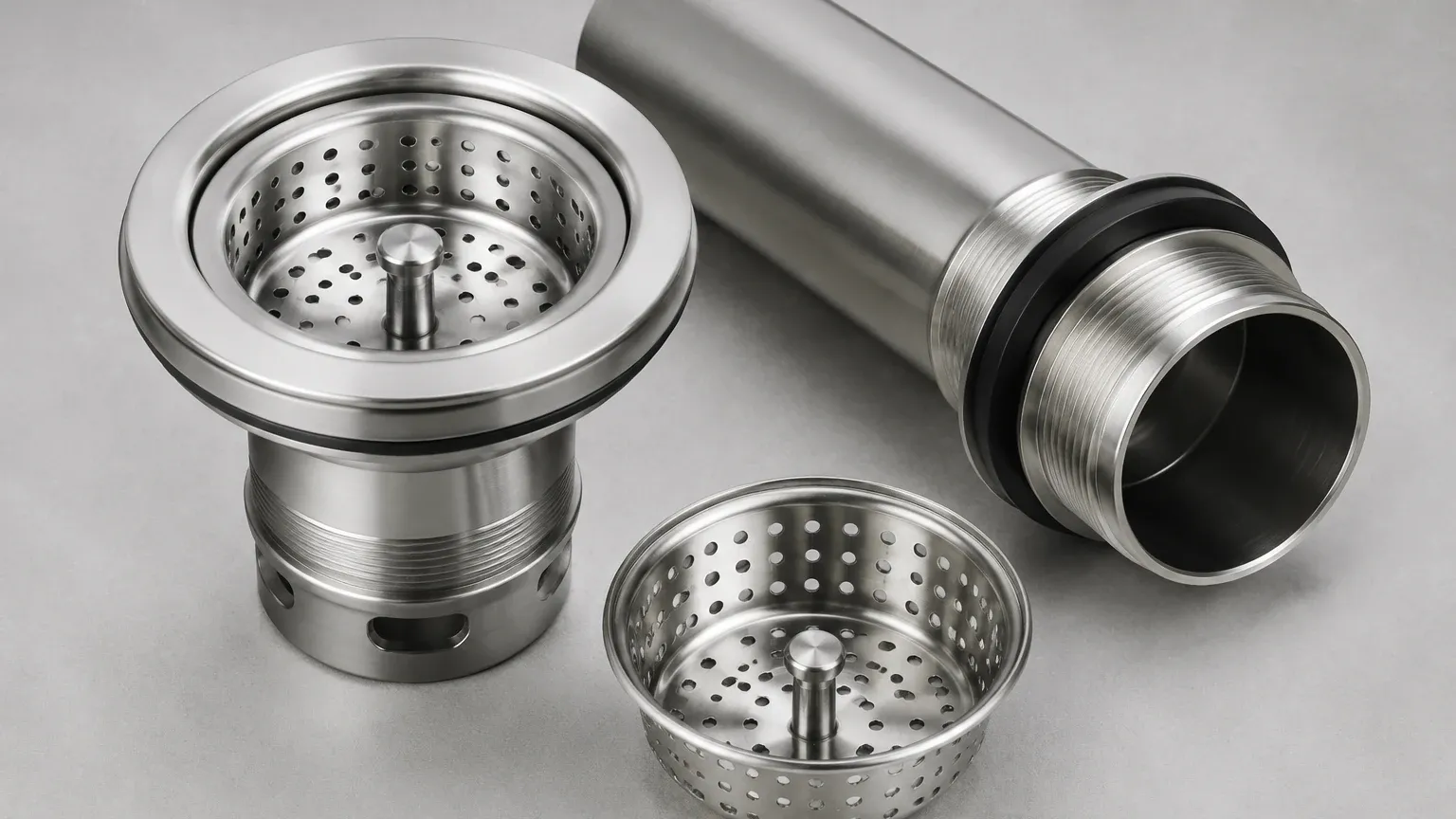
A basket strainer is a closed vessel with a removable screen or basket that captures and retains particulate matter from a flowing liquid. Unlike Y-strainers, which are typically used for smaller amounts of debris, basket strainers are designed for applications requiring high flow rates and a larger dirt-holding capacity.
The "tailpiece" in an industrial filtration context refers to the specific outlet connection or the transition component that bridges the strainer housing to the downstream piping system. While in residential plumbing a tailpiece is a simple tube, in industrial B2B applications, the tailpiece is a precision-engineered fitting that must withstand the same pressure, temperature, and chemical stresses as the strainer body itself. The synergy between the basket strainer and tailpiece is vital; a mismatch in sizing or material can lead to turbulence, accelerated corrosion, or mechanical failure at the connection point.
Material Selection for Demanding Industrial Environments
Industrial filtration systems often operate in aggressive environments where chemical corrosion, high temperatures, and abrasive particles are constant threats. Consequently, the material used for both the basket strainer and tailpiece must be selected based on the specific properties of the process fluid.
Stainless Steel Alloys
Stainless steel is the industry standard for high-performance filtration. Kaifil specializes in utilizing 304 and 316L stainless steel for these components.
- 304 Stainless Steel: Suitable for general industrial applications, providing excellent strength and basic corrosion resistance for water treatment and non-acidic chemical processing.
- 316L Stainless Steel: The "L" denotes low carbon, which is crucial for components that require welding. 316L offers superior resistance to chlorides and organic acids, making it the preferred choice for pharmaceutical, food and beverage, and marine applications.
Specialized Coatings and Treatments
In some instances, the basket strainer and tailpiece may require additional surface treatments, such as electropolishing or passivation. Electropolishing is particularly important in the pharmaceutical and food industries, as it removes surface irregularities where bacteria could proliferate, ensuring a sterile environment.
Engineering Specifications: Basket Design and Filtration Precision
The heart of the strainer is the basket. Its design dictates the filtration efficiency and the frequency of maintenance cycles. When specifying a basket for an industrial strainer, several factors must be evaluated:
Perforation vs. Mesh
Baskets are typically constructed from a perforated metal sheet which acts as a structural support for a finer wire mesh liner. The perforation size (e.g., 1/8" or 1/4") provides the mechanical strength necessary to resist collapsing under differential pressure, while the mesh liner determines the actual filtration rating, measured in microns.
Open Area Ratio
The ratio of the open area of the basket to the cross-sectional area of the inlet pipe is a key performance indicator. A high open area ratio (typically 6:1 or higher in high-quality industrial strainers) ensures that the pressure drop across the unit remains low even as the basket begins to fill with debris. If the basket strainer and tailpiece assembly is under-designed, the resulting flow restriction can lead to pump cavitation and system inefficiency.
Structural Reinforcement
For high-viscosity fluids or high-pressure systems, baskets may require longitudinal reinforcements or heavy-duty handles to prevent deformation during extraction. Precision welding, such as TIG or plasma welding, ensures that the mesh remains securely bonded to the perforated frame, preventing bypass—a condition where unfiltered fluid leaks around the edges of the filter element.
The Tailpiece: Ensuring System Integrity and Flow Dynamics
The tailpiece is more than just a connector; it is a functional extension of the filtration housing. In a professional B2B setup, the tailpiece must be engineered to match the specific piping standards of the facility, whether that involves ANSI flanges, NPT threads, or sanitary Tri-Clamp fittings.
Alignment and Sealing
One of the most common causes of leaks in a basket strainer and tailpiece assembly is improper alignment or the use of incompatible gaskets. The tailpiece must provide a perfectly flat and smooth sealing surface. In high-pressure hydraulic or chemical lines, the tailpiece often incorporates a groove for an O-ring or a specific gasket seat to ensure a leak-proof seal that can withstand thermal cycling.
Minimizing Turbulence
As fluid exits the strainer basket and moves through the tailpiece, any sudden change in diameter or sharp internal edge can create turbulence. This turbulence increases the pressure drop and can cause localized erosion of the metal. High-quality tailpieces are machined with smooth internal transitions to maintain laminar flow as the fluid moves back into the main process line.
Operational Considerations: Pressure Drop and Dirt-Holding Capacity
For engineers, the two most critical metrics for evaluating a basket strainer and tailpiece assembly are the initial pressure drop (Clean $\Delta P$) and the dirt-holding capacity.
Calculating Pressure Drop
The pressure drop is influenced by the fluid's viscosity, specific gravity, and flow rate. A well-engineered assembly will have a negligible initial pressure drop. If the tailpiece is too narrow or the basket mesh is too fine for the application, the system will consume more energy to move the fluid, increasing operational costs.
Monitoring Differential Pressure
In most industrial installations, pressure gauges are installed on both the inlet and outlet sides of the strainer. The difference between these two readings—the differential pressure—indicates how full the basket is. Procurement teams should look for basket strainer designs that allow for easy access to the basket without requiring the removal of the tailpiece or the entire housing from the line.
Maintenance Protocols and Replacement Cycles
The longevity of a basket strainer and tailpiece depends on a disciplined maintenance schedule. Unlike disposable cartridge filters, stainless steel baskets are designed to be cleaned and reused, which significantly reduces the long-term environmental impact and material costs.
Cleaning Procedures
Depending on the nature of the debris, baskets may be cleaned via backflushing, ultrasonic cleaning, or manual scrubbing with a soft brush. It is vital to avoid abrasive tools that could damage the fine wire mesh. During cleaning, the tailpiece and the sealing surfaces should also be inspected for signs of pitting or erosion.
When to Replace
While the housing and tailpiece may last for decades, the basket is a wear item. Signs that a basket needs replacement include:
- Wire Mesh Fraying: Broken wires can enter the downstream flow, defeating the purpose of the strainer.
- Permanent Deformation: If the basket has been subjected to excessive differential pressure, it may become misshapen, preventing a proper seal within the housing.
- Corrosion Pitting: Even stainless steel can succumb to localized corrosion if the process chemistry changes or if the material grade was incorrectly specified.
Selection Criteria for Technical Procurement Teams
When sourcing a basket strainer and tailpiece for a new project or as a replacement in an existing system, engineers should confirm the following technical details with the manufacturer:
1. Fluid Characteristics: What is the chemical composition, temperature range, and viscosity of the fluid?
2. Filtration Target: What is the smallest particle size that must be removed to protect downstream equipment?
3. Flow Rate Requirements: What are the minimum, normal, and maximum flow rates the system must handle?
4. Connection Standards: Does the tailpiece need to conform to specific regional or industry standards (e.g., DIN, SMS, or ASME)?
5. Customization Needs: Does the application require a specific housing orientation, specialized drain valves, or magnetic inserts to capture ferrous particles?
By addressing these questions, purchasing teams can ensure they receive a solution that is tailored to their specific operational environment rather than a generic off-the-shelf component that may underperform.
Conclusion
The assembly of a basket strainer and tailpiece is a fundamental component of industrial fluid management. Through precise material selection, rigorous engineering of the basket's open area, and meticulous machining of the tailpiece connections, manufacturers like Kaifil provide the reliability required for modern industrial processes. Investing in high-quality stainless steel filtration components not only protects expensive downstream machinery but also optimizes flow efficiency and reduces the frequency of unscheduled downtime. For any technical professional, the goal is clear: achieve the highest level of filtration precision with the lowest possible impact on system hydraulics.
