


Basket Strainer Basket
In industrial fluid handling, the efficiency of a piping system often depends on the reliability of its protection components. The basket strainer basket is the functional core of any basket strainer assembly, acting as the primary barrier against particulate contamination. While the outer housing provides the pressure vessel and connection points, the internal basket determines the filtration accuracy, flow capacity, and mechanical durability of the system. For engineers and procurement teams, selecting the correct replacement or custom-designed basket is critical to preventing downstream damage to pumps, valves, and sensitive instrumentation.
At Kaifil, we specialize in the engineering and manufacturing of high-performance Strainers & Baskets designed for demanding industrial environments. Understanding the technical nuances of basket design—from material selection to open area ratios—is essential for optimizing system uptime and reducing the total cost of ownership.
Understanding the Role of the Basket Strainer Basket in Industrial Systems
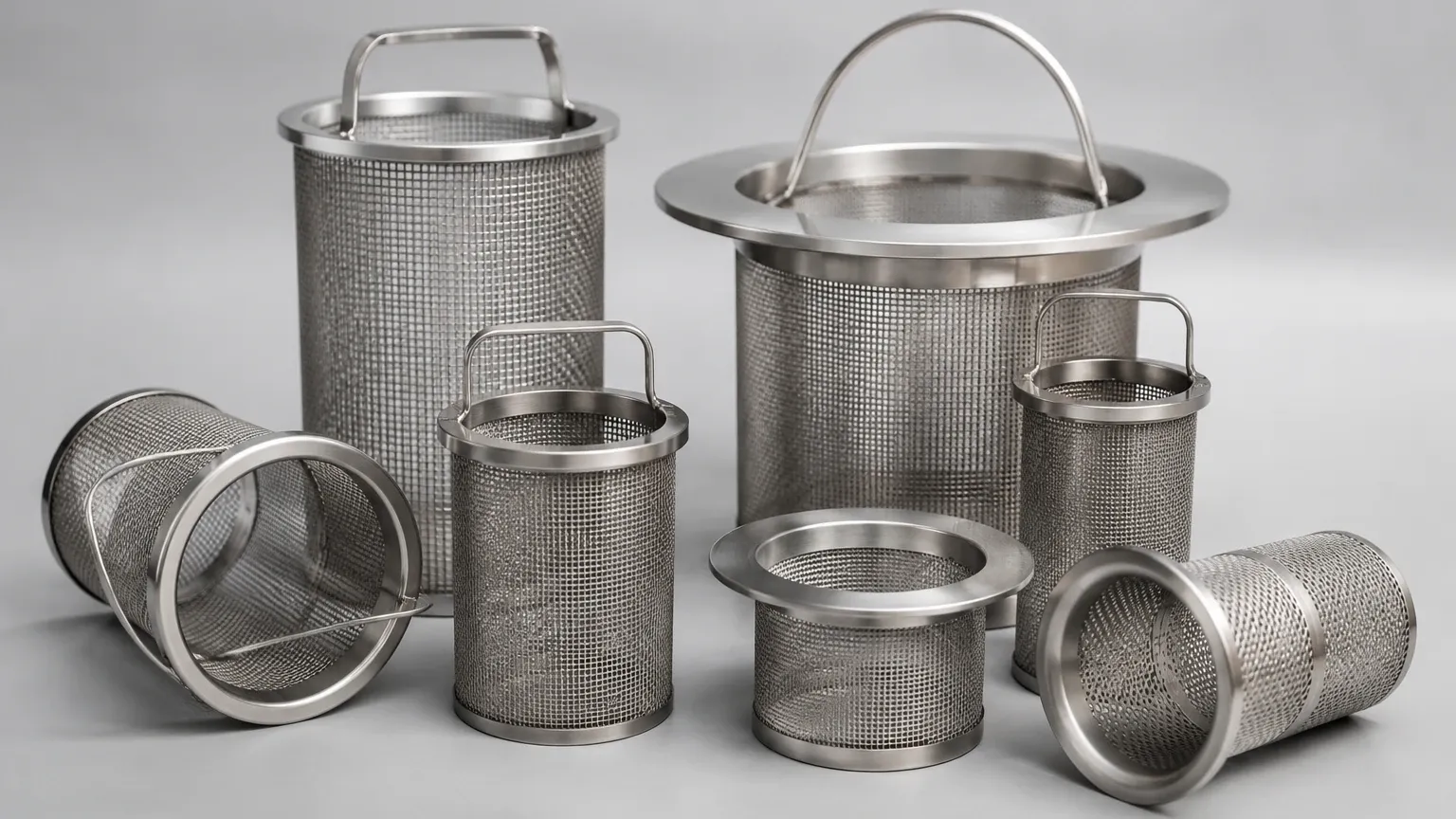
A basket strainer basket is a removable, perforated, or mesh-lined component designed to capture solid debris from a liquid stream. Unlike Y-strainers, which are typically used for smaller amounts of debris, basket strainers are designed for applications where high flow rates and high solids loading are common. The basket design allows for a larger surface area, which translates to a lower pressure drop and longer intervals between cleaning cycles.
In most industrial configurations, the fluid enters the top or side of the strainer housing and flows through the center of the basket. The debris is trapped inside the basket, while the clean fluid passes through the walls and exits the housing. Because the debris is contained within the basket, maintenance is simplified; once the system is depressurized, the basket can be lifted out without the debris falling back into the downstream piping.
Engineering Specifications: Materials and Construction
The longevity of a basket strainer basket is dictated by its construction materials and the manufacturing techniques used to assemble it. Industrial applications require materials that can withstand corrosive fluids, high temperatures, and mechanical stress.
Material Selection
Stainless steel is the industry standard due to its excellent strength-to-weight ratio and resistance to oxidation.
* SS304: Suitable for general-purpose applications, including water treatment and non-corrosive chemical processing.
* SS316L: Preferred for pharmaceutical, food and beverage, and highly corrosive chemical environments. The addition of molybdenum provides superior resistance to pitting and crevice corrosion, particularly in chloride-rich environments.
* Specialty Alloys: For extreme conditions, materials like Monel, Hastelloy, or Duplex stainless steel may be required to handle specific chemical compatibilities or high-temperature requirements.
Construction Types
Depending on the required filtration fineness, the basket may be constructed in several ways:
1. Perforated Metal: These are the most robust baskets, used for coarse straining (typically 1/32" to 1/2" perforations). They serve as a primary filter or as a structural support for finer mesh.
2. Wire Mesh Lined: For finer filtration (down to 20 microns or lower), a stainless steel wire mesh is pleated or wrapped around a perforated metal support. The perforated core provides the necessary mechanical strength to prevent the mesh from collapsing under pressure.
3. Wedge Wire: For high-viscosity fluids or applications requiring backwashing, wedge wire baskets offer a non-clogging surface and high structural integrity.
Key Performance Metrics: Open Area and Pressure Drop
One of the most critical engineering considerations for a basket strainer basket is the "Open Area Ratio." This is the ratio of the total area of the holes in the basket to the cross-sectional area of the inlet pipe.
The Importance of the 6:1 Ratio
A well-designed basket should ideally provide an open area that is at least six times the area of the inlet pipe. A high open area ratio ensures that even as the basket begins to fill with debris, the pressure drop (Delta P) across the unit remains low. If the open area is too small, the velocity of the fluid through the remaining holes increases, which can lead to:
* Accelerated Wear: High-velocity particles can erode the basket material.
* Media Migration: Excessive pressure can force particles through the mesh or cause the mesh to tear.
* Pump Cavitation: A significant pressure drop on the suction side of a pump can lead to cavitation, causing catastrophic pump failure.
Calculating Pressure Drop
Engineers must calculate the clean pressure drop based on the fluid's viscosity and specific gravity. As the basket strainer basket accumulates solids, the pressure drop increases. Monitoring this differential pressure is the most effective way to determine when a basket requires cleaning.
Customization Options for Specialized Industrial Applications
Standard off-the-shelf baskets often fail to meet the specific requirements of unique industrial processes. Customization allows engineers to tailor the basket to the exact needs of the application.
Handle and Lifting Configurations
Ease of maintenance is a major factor in industrial design. Baskets can be equipped with various handle types:
* Bail Handles: Standard for easy manual removal.
* Slant Handles: Designed for housings with side-entry or specific lid clearances.
* Heavy-Duty Lifting Lugs: For large-diameter baskets that require mechanical hoists for removal.
Structural Reinforcements
In high-pressure systems or applications with high-viscosity fluids, the basket may be subject to significant differential pressure. To prevent deformation, baskets can be reinforced with external rings, longitudinal bars, or heavy-gauge perforated cores. These reinforcements ensure the basket maintains its shape and seal during operation.
Specialized Coatings and Finishes
In the food and beverage or pharmaceutical sectors, surface finish is paramount. Baskets can be electropolished to achieve a specific Ra (Roughness Average) value, ensuring that no bacteria can grow in microscopic surface imperfections and making the cleaning process more effective.
Maintenance, Cleaning, and Replacement Cycles
The operational life of a basket strainer basket depends heavily on the maintenance protocol. Because these components are designed to be reused, a proper cleaning regimen is essential.
Cleaning Protocols
* Manual Cleaning: For coarse debris, a simple high-pressure water wash or soft-bristle brushing is often sufficient.
* Ultrasonic Cleaning: For baskets lined with fine mesh, ultrasonic baths can remove microscopic particles trapped within the wire weave that manual cleaning cannot reach.
* Chemical Cleaning: In industries like resin or chemical manufacturing, baskets may need to be soaked in compatible solvents to dissolve hardened build-up.
When to Replace
While stainless steel baskets are durable, they are not permanent. Signs that a basket strainer basket needs replacement include:
* Mechanical Deformation: Any bowing or crushing of the perforated support.
* Broken Welds: Inspect the seams and handle attachments for fatigue cracks.
* Mesh Fraying: In mesh-lined baskets, any signs of the wire cloth pulling away from the support core will allow bypass, compromising downstream equipment.
Critical Factors to Confirm Before Procurement
When sourcing a replacement or a custom basket, engineers should confirm several technical details to ensure compatibility and performance:
1. Dimensional Accuracy: Confirm the outside diameter (OD), total height, and the dimensions of the flange or seat. Even a 1/16" discrepancy can prevent a proper seal, leading to fluid bypass.
2. Micron vs. Mesh Rating: Ensure the filtration level is clearly defined. Mesh count refers to the number of wires per inch, while micron rating refers to the actual pore size.
3. Gasket and Seal Compatibility: If the basket utilizes an O-ring or gasket to seal against the housing, ensure the elastomer material (Buna-N, EPDM, Viton) is compatible with the process fluid.
4. Maximum Allowable Pressure Drop: Confirm that the basket construction is rated for the maximum differential pressure the system might encounter during a surge or if the basket becomes completely blinded.
For organizations looking to optimize their filtration processes, Kaifil provides comprehensive technical support and manufacturing expertise. Whether you require a standard replacement or a highly customized solution, our team ensures that every basket strainer basket meets the rigorous standards of modern industrial applications.
To explore our full range of capabilities and technical specifications, Review product options and application support to find the ideal filtration component for your specific system requirements.
