


Basket Strainer Extension
In industrial fluid handling systems, the efficiency of a filtration process is often dictated by the relationship between the flow rate, the particle load, and the available surface area of the filter media. A basket strainer extension—referring to both the physical elongation of the strainer basket to increase filtration surface area and the modification of the strainer housing or handle for specific installation requirements—is a critical engineering consideration for optimizing system performance. For engineers and maintenance professionals, understanding the technical implications of extending a basket strainer is essential for reducing pressure drops, extending service intervals, and protecting sensitive downstream equipment.
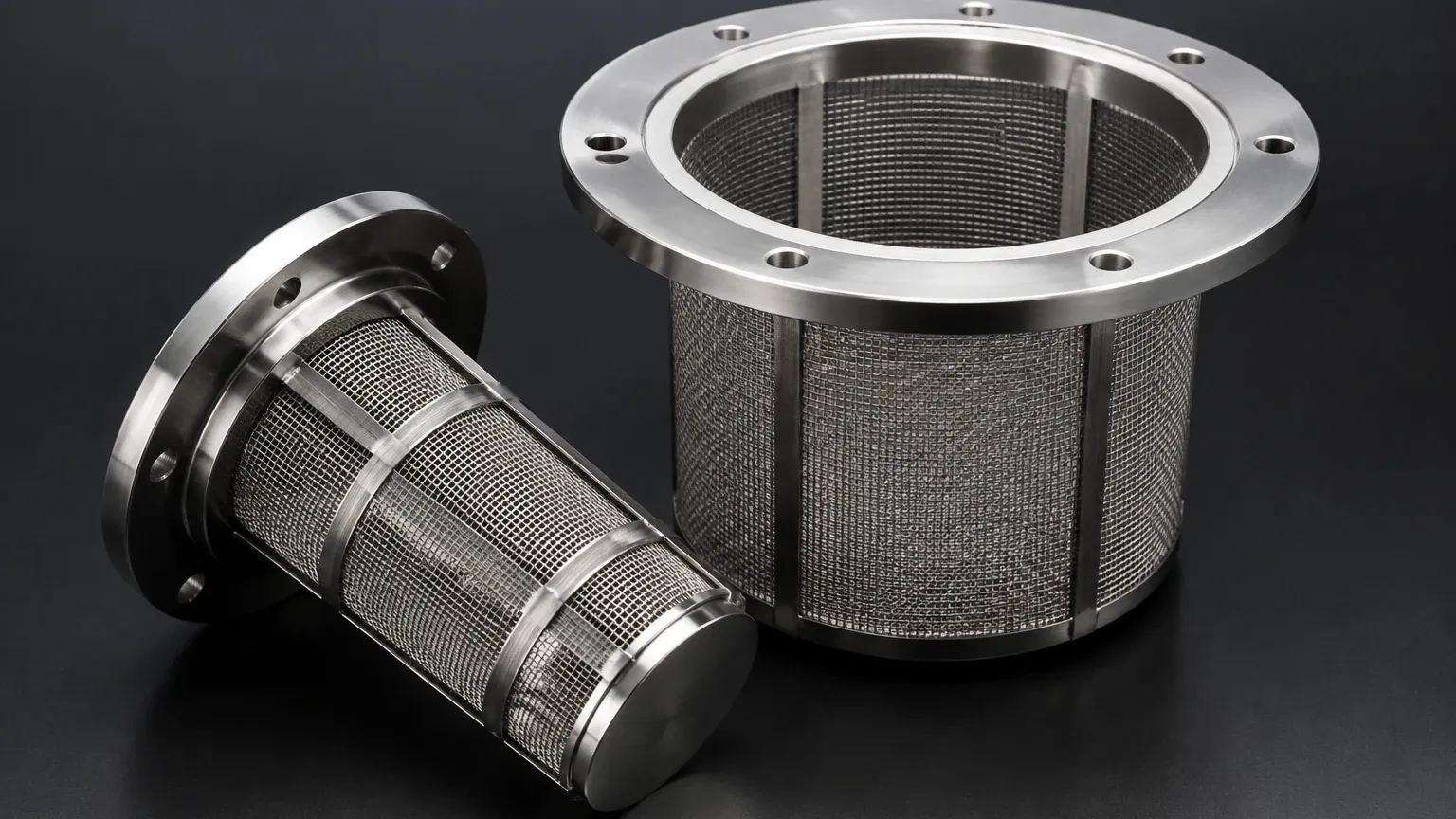
Industrial filtration demands vary significantly across sectors such as chemical processing, water treatment, and food production. When standard off-the-shelf components fail to meet specific dirt-holding capacities or flow requirements, customized Strainers & Baskets become necessary. This article examines the technical parameters, material considerations, and engineering advantages of implementing basket strainer extensions in demanding industrial environments.
Technical Objectives of Basket Strainer Extension
The primary motivation for specifying a basket strainer extension is the management of the Open Area Ratio (OAR). The OAR is the relationship between the internal cross-sectional area of the inlet pipe and the total open area of the strainer basket. A higher OAR results in a lower initial pressure drop and a longer period of operation before the basket requires cleaning.
Increasing Dirt-Holding Capacity
By extending the length of a strainer basket, the total square inches of filtration media (wire mesh or perforated metal) are increased. In systems with high solids loading, a standard-length basket may clog rapidly, leading to frequent downtime. An extension allows the system to capture a larger volume of debris without reaching the terminal pressure drop ($ΔP$) that would necessitate a shutdown. This is particularly vital in continuous process industries where every hour of downtime represents significant lost revenue.
Optimizing Flow Dynamics
Flow velocity through the filter media is another critical factor. When the surface area is increased via a basket strainer extension, the localized velocity of the fluid passing through the mesh decreases. Lower velocity reduces the risk of "particle migration," where high-pressure flow forces flexible or small contaminants through the mesh openings. It also minimizes the mechanical stress on the wire mesh, preventing premature fatigue and failure.
Engineering Considerations for Custom Extensions
Designing an effective basket strainer extension involves more than simply adding length to a cylinder. Several mechanical and hydraulic factors must be evaluated to ensure the component performs reliably under operational stresses.
Structural Integrity and Reinforcement
As a basket becomes longer, it is subjected to higher cantilevered loads and potential hydraulic surging. For a basket strainer extension to remain durable, it often requires additional structural support. This may include:
* Internal or External Caging: Using a heavier gauge perforated metal as a support structure for a finer inner wire mesh.
* Reinforcing Rings: Adding circumferential rings along the length of the extension to prevent the basket from collapsing under high differential pressure.
* Heavy-Duty Bottom Plates: Ensuring the base of the extended basket is securely welded to handle the weight of accumulated debris.
Housing Compatibility
A basket extension is only feasible if the strainer housing can accommodate the added length. In many cases, a "leg extension" or a "body extension" is fabricated for the housing itself to house a deeper basket. Engineers must verify that there is sufficient clearance below the strainer for basket removal. If overhead or bottom clearance is limited, a multi-segment or folding basket design may be required, though these are more complex to manufacture and maintain.
Handle and Retrieval Mechanisms
When a basket is extended deep into a housing, retrieval becomes a challenge. A basket strainer extension often necessitates an extended handle or a specialized lifting eye. The handle must be robust enough to withstand the pull force required to lift a basket that may be heavy with captured sludge or scale. For deep-well strainers, T-handle extensions allow operators to reach and secure the basket from the top flange without specialized tools.
Material Selection for Industrial Environments
The longevity of a basket strainer extension is heavily dependent on the materials used in its construction. Since these components are often exposed to corrosive chemicals, high temperatures, and abrasive particulates, stainless steel is the industry standard.
Stainless Steel 304 vs. 316L
* SS304: Suitable for general-purpose applications, including water filtration and non-corrosive chemical handling. It offers excellent strength and cost-effectiveness.
* SS316L: Preferred for pharmaceutical, food and beverage, and marine applications. The addition of molybdenum provides superior resistance to chlorides and pitting corrosion. The "L" (low carbon) designation is crucial for components that require extensive welding, as it prevents sensitisation and intergranular corrosion at the weld seams.
Specialized Alloys
In extreme environments, such as those involving high-concentration acids or high-temperature steam, exotic alloys like Monel, Hastelloy, or Duplex stainless steel may be specified. These materials ensure that the basket strainer extension does not become the weak point in a high-performance piping system.
Impact on Maintenance and Total Cost of Ownership (TCO)
While a custom basket strainer extension may involve a higher upfront cost compared to standard components, the impact on the Total Cost of Ownership is usually positive.
1. Reduced Labor Costs: By extending the time between cleaning cycles, maintenance teams spend fewer man-hours servicing the filtration system.
2. Extended Equipment Life: By maintaining a lower pressure drop and ensuring more consistent filtration, downstream components such as pumps, seals, and heat exchangers are protected from the erosive effects of bypass contaminants.
3. Process Stability: Fewer shutdowns for filter cleaning mean more stable thermal and pressure profiles within the production line, which often translates to higher product quality.
When evaluating Strainers & Baskets, engineers should calculate the projected savings from reduced downtime to justify the investment in customized extensions.
Application-Specific Requirements
Different industries utilize basket strainer extensions to solve unique operational hurdles:
* Chemical Processing: Extensions are used to handle high-viscosity fluids where a standard basket would create an unacceptable pressure drop. The increased area allows the thick fluid to pass through at a manageable rate.
* Food and Beverage: In these applications, the extension must be designed with sanitary principles in mind. This includes smooth weld finishes (ground to a specific Ra value) and the absence of "dead zones" where bacteria could proliferate.
* Pulp and Paper: Large-scale water intake systems use extended baskets to manage high volumes of organic debris, such as leaves and twigs, which would quickly overwhelm standard-sized strainers.
* Oil and Gas: In midstream applications, extended baskets help manage the "slugs" of paraffin or scale that can occasionally move through the pipeline, providing a buffer that prevents complete flow blockage.
Specifying a Basket Strainer Extension
To ensure a successful procurement process, technical buyers and engineers should provide the manufacturer with a detailed set of specifications. When requesting a custom extension, the following data points are essential:
* Fluid Properties: Viscosity, specific gravity, and operating temperature.
* Contaminant Profile: Type of solids, particle size distribution, and estimated loading (PPM or mg/L).
* Flow Parameters: Minimum, normal, and maximum flow rates.
* Allowable Pressure Drop: Both clean and dirty ($ΔP$).
* Dimensional Constraints: Maximum allowable length and diameter based on the existing housing and surrounding infrastructure.
* Connection Type: Flanged, threaded, or quick-disconnect handle requirements.
Conclusion
A basket strainer extension is a strategic engineering modification designed to enhance the reliability and efficiency of industrial filtration systems. By focusing on the Open Area Ratio, structural durability, and material compatibility, facilities can significantly optimize their fluid handling processes. Whether the goal is to protect high-value downstream assets or to reduce the frequency of manual maintenance, a precision-engineered extension provides a tailored solution to the limitations of standard filtration hardware.
For organizations looking to implement these solutions, partnering with a manufacturer that understands the nuances of custom stainless steel fabrication is key. By integrating advanced manufacturing techniques with rigorous engineering standards, it is possible to develop filtration components that withstand the most demanding industrial environments while delivering consistent, long-term performance.
