


Basket Strainer Gasket Order
In industrial fluid handling, the efficiency of a filtration system is often determined by its weakest link. While the structural integrity of Strainers & Baskets ensures the removal of particulate matter, it is the sealing component—the gasket—that maintains system pressure and prevents bypass or external leakage. Initiating a basket strainer gasket order requires more than just a part number; it demands a technical understanding of material compatibility, compression dynamics, and environmental variables.
For engineers and procurement professionals, ensuring the correct specification during the ordering process is critical to avoiding unplanned downtime. This guide explores the technical parameters necessary for a successful procurement cycle, focusing on how to match gasket materials to specific industrial applications.
The Critical Role of Sealing in Industrial Filtration
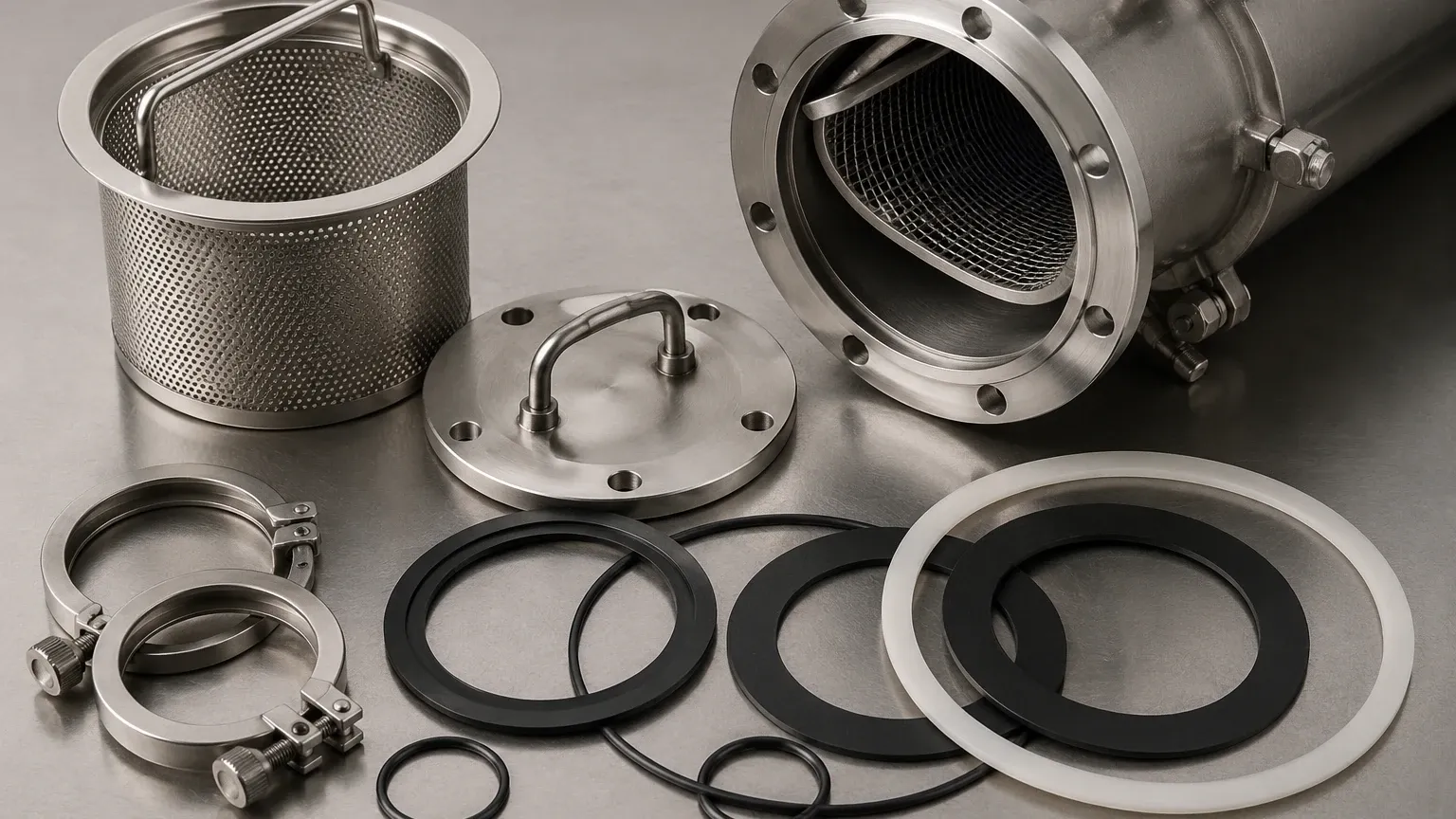
Basket strainers are typically installed in piping systems to protect expensive downstream equipment such as pumps, valves, and heat exchangers. These strainers feature a removable basket that captures debris. To access this basket for cleaning, the strainer housing usually has a bolted or quick-opening cover. The interface between this cover and the housing body is where the gasket resides.
If a gasket fails, the consequences range from minor fluid loss to catastrophic system depressurization. In chemical processing or pharmaceutical applications, a leak can also present significant safety hazards or contamination risks. Therefore, when placing a basket strainer gasket order, the primary objective is to select a seal that can withstand the chemical nature of the fluid, the thermal range of the process, and the mechanical stresses of the assembly.
Technical Parameters for a Basket Strainer Gasket Order
To ensure a precise fit and reliable performance, several technical data points must be confirmed before finalizing an order. Relying solely on "standard" sizes can be risky, as manufacturing tolerances and housing wear can affect seal effectiveness.
1. Material Compatibility
The most frequent cause of gasket failure is chemical degradation. The elastomer or polymer must be inert to the process fluid. Common materials include:
* Buna-N (Nitrile): The standard for water, oils, and some fuels. It offers good abrasion resistance but has limited temperature ranges (typically up to 100°C).
* EPDM (Ethylene Propylene Diene Monomer): Ideal for steam, water, and phosphate-ester based hydraulic fluids. It is widely used in water treatment but should never be used with petroleum-based oils.
* Viton (FKM): A high-performance fluorocarbon elastomer resistant to a wide range of chemicals, including acids and hydrocarbons. It handles temperatures up to 200°C.
* PTFE (Teflon): Virtually chemically inert. It is used in highly aggressive chemical environments and pharmaceutical processes requiring FDA compliance. However, PTFE is less resilient than elastomers and may require specific housing designs to prevent "cold flow."
2. Dimensional Accuracy
When a part number is unavailable, physical measurements are required. A standard basket strainer gasket order should specify:
* Inside Diameter (ID): Must clear the basket opening without obstructing flow.
* Outside Diameter (OD): Must fit within the bolt circle or the machined groove of the housing.
* Thickness: Critical for maintaining the correct compression ratio. Too thin, and it won't seal; too thick, and it may cause flange distortion.
3. Pressure and Temperature Ratings
Every gasket has a P-T (Pressure-Temperature) limit. As temperature increases, the maximum allowable pressure for a given material typically decreases. Engineers must provide the maximum operating pressure and the maximum excursion temperature to the manufacturer to ensure the gasket won't soften or become brittle in service.
Engineering Considerations: Compression and Recovery
A gasket works by being compressed into the microscopic imperfections of the flange surfaces. This creates a physical barrier to fluid flow. When evaluating a basket strainer gasket order, consider the following engineering concepts:
Compression Set
This refers to the permanent deformation of a gasket after being compressed. If a material has a high compression set, it loses its ability to "spring back" when the load is removed. For basket strainers that are opened frequently for cleaning, a material with low compression set is vital to ensure the seal can be reused or will maintain its seal over multiple thermal cycles.
Durometer (Hardness)
The hardness of the gasket material, measured on the Shore A scale, affects how much bolt torque is required to achieve a seal. Softer materials (50-60 Shore A) seal more easily on irregular surfaces but may extrude under high pressure. Harder materials (75-90 Shore A) are more resistant to high pressures but require higher clamping forces.
Common Risks in Gasket Procurement
Procurement teams often face challenges when sourcing replacement seals for older or custom-built filtration units. Avoiding these common pitfalls can save significant costs in the long run:
* Generic Substitutions: Substituting a "commercial grade" Nitrile for a "high-spec" Nitrile can lead to premature failure. Industrial gaskets often require specific formulations to handle additives in oils or trace chemicals in process streams.
* Shelf-Life Overlook: Elastomers degrade over time, especially when exposed to UV light or ozone. When placing a large basket strainer gasket order for inventory, ensure the supplier provides the cure date and storage recommendations.
* Ignoring Surface Finish: If the strainer housing has been pitted by corrosion or scratched during maintenance, a standard thin gasket may no longer suffice. In such cases, a thicker or more conformable material (like expanded PTFE) might be necessary to fill the gaps.
Maintenance and Replacement Cycles
In a professional B2B environment, the goal is proactive rather than reactive maintenance. Gaskets should be inspected every time the basket is removed for cleaning. Signs that a gasket needs replacement include:
1. Cracking or Crazing: Indicates thermal or ozone degradation.
2. Thinning: Indicates the material has reached its compression limit.
3. Swelling: Indicates chemical incompatibility where the fluid is being absorbed into the elastomer.
4. Hardening: Indicates the plasticizers have leached out, making the seal brittle.
For critical processes, it is standard engineering practice to replace the gasket every time the cover is opened, regardless of its visual condition. This "one-time use" policy eliminates the risk of a used gasket failing to re-seat properly.
Customization and OEM Solutions
Kaifil specializes in providing high-performance filtration components that often exceed standard off-the-shelf specifications. When a standard gasket does not meet the rigors of a specific application—such as cryogenic temperatures, high-vacuum environments, or highly corrosive slurry handling—customized solutions become necessary.
By working with a manufacturer that understands the interplay between the metal housing and the polymer seal, purchasing teams can secure gaskets that are precision-cut to match the exact geometry of their Strainers & Baskets. Customization can also include integrated handles for easier removal, metal-detectable elastomers for food safety, or color-coding to prevent installation errors in facilities with multiple fluid types.
Information to Confirm Before Ordering
To streamline your basket strainer gasket order, ensure your technical inquiry includes the following checklist:
* Strainer Model and Size: (e.g., 4-inch Simplex Basket Strainer).
* Fluid Media: (e.g., 30% Sulfuric Acid, Hydraulic Oil ISO 46).
* Operating Temperature: Normal and Maximum.
* Operating Pressure: Normal and Maximum.
* Gasket Dimensions: (ID, OD, and Thickness if the model number is unknown).
* Quantity: Consider ordering in bulk for high-wear applications to reduce unit costs and shipping overhead.
* Compliance Requirements: (e.g., FDA, USP Class VI, REACH, or RoHS).
Conclusion
The procurement of gaskets for industrial strainers is a technical task that impacts the safety and efficiency of the entire plant. By focusing on material science, dimensional precision, and application-specific requirements, engineers can ensure that their basket strainer gasket order results in a reliable, long-lasting seal.
Kaifil remains committed to supporting global industries with robust filtration components and the engineering expertise required to solve complex sealing challenges. Whether you are maintaining a standard water treatment line or a complex chemical reactor, the right gasket choice is the foundation of a leak-free operation. For more information on compatible components and customized filtration housing, explore the full range of Strainers & Baskets designed for demanding industrial environments.
