


Basket Strainer in Piping
In industrial fluid handling, the integrity of downstream equipment such as pumps, valves, meters, and spray nozzles depends heavily on the cleanliness of the process media. A basket strainer in piping serves as a critical mechanical component designed to remove large-scale debris and particulate matter from liquids. Unlike fine filtration systems that target microscopic particles, basket strainers focus on protecting the system from "trash"—including weld beads, pipe scale, pebbles, and other foreign materials that can cause catastrophic mechanical failure or significant abrasive wear.
As a specialized manufacturer, Kaifil provides high-performance Strainers & Baskets engineered to meet the rigorous demands of chemical processing, food and beverage production, and hydraulic systems. Understanding the engineering principles behind these components is essential for selecting the right configuration for specific piping architectures.
Core Functions and Equipment Protection
The primary role of a basket strainer in piping is the protection of expensive rotating and control equipment. In many industrial processes, even a small amount of debris can lead to downtime. For example, in a pumping system, solids entering the impeller housing can cause imbalance, cavitation, or physical blockage, leading to motor burnout or seal failure.
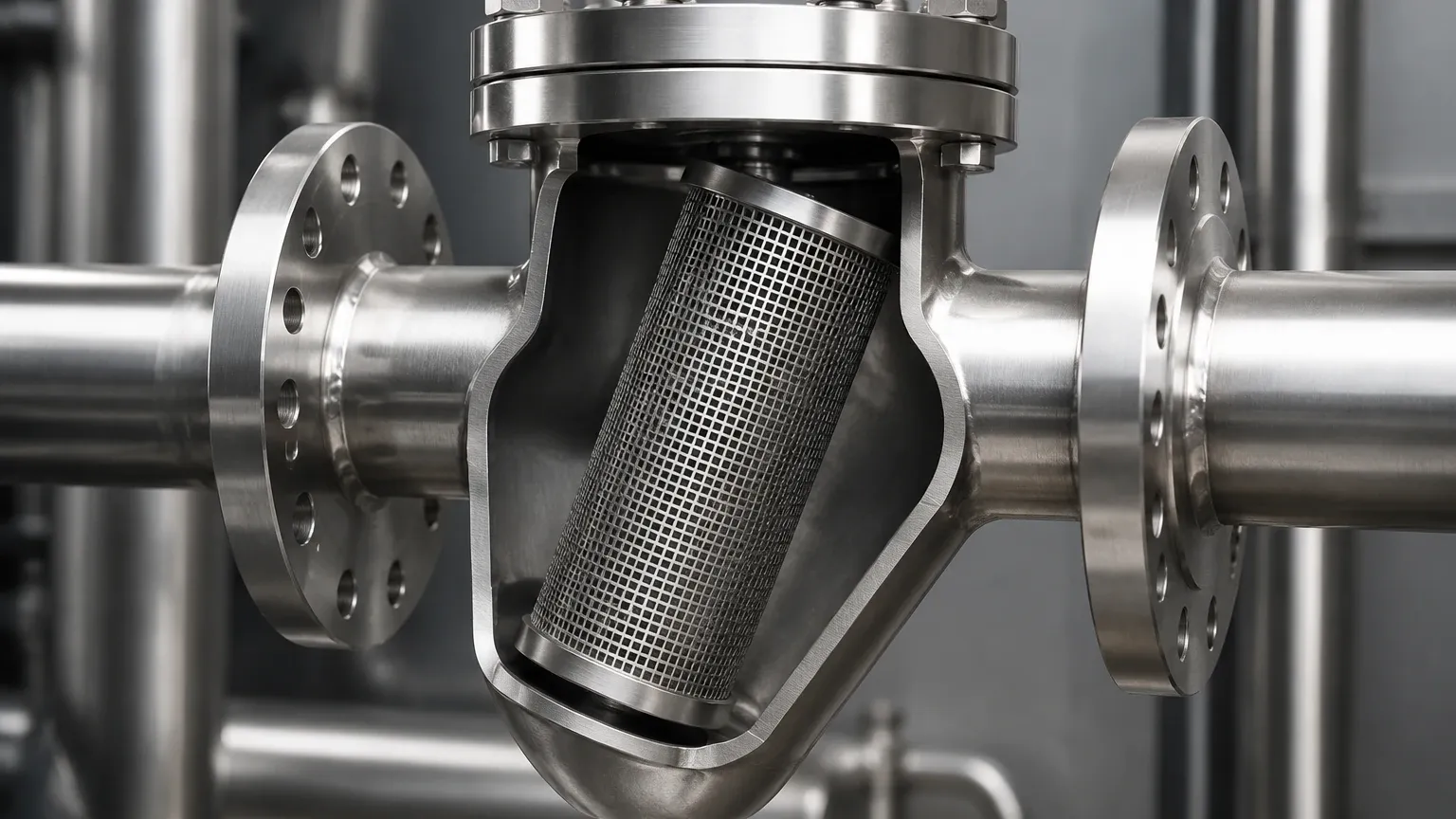
Basket strainers are characterized by their "basket-like" screen, which offers a larger surface area for debris collection compared to Y-strainers. This increased surface area allows for a higher dirt-holding capacity and a longer interval between cleaning cycles. In high-flow piping systems, the basket design ensures that the flow velocity does not drop significantly as the screen begins to capture particles, maintaining the hydraulic efficiency of the overall system.
Engineering and Material Selection
Material compatibility is the most critical factor when integrating a basket strainer in piping. The housing and the internal basket must withstand the chemical properties of the fluid, the operating temperature, and the system pressure.
Stainless Steel Alloys
Stainless steel is the industry standard for high-performance filtration. Kaifil utilizes various grades to meet specific environmental needs:
- Type 304 Stainless Steel: Suitable for general industrial applications, providing excellent strength and basic corrosion resistance.
- Type 316/316L Stainless Steel: Preferred for chemical processing and marine environments due to the addition of molybdenum, which enhances resistance to pitting and chloride-induced corrosion.
- Specialty Alloys: For highly corrosive or high-temperature environments, alloys like Monel or Hastelloy may be required to prevent premature failure of the strainer element.
Structural Integrity
The basket itself must be engineered to withstand the "burst pressure"—the differential pressure at which the mesh or perforated metal will deform or fail. This is particularly important in high-viscosity fluid applications where the pressure drop across a clogged basket can rise rapidly.
Hydraulic Performance: Managing Pressure Drop
Every component added to a piping system introduces a degree of resistance to flow, measured as pressure drop (ΔP). For a basket strainer in piping, the pressure drop is influenced by the fluid's viscosity, the flow rate, and the "Open Area Ratio" (OAR) of the basket.
The Open Area Ratio (OAR)
The OAR is the ratio of the total open area of the basket holes to the internal cross-sectional area of the inlet pipe. An OAR of 6:1 is common for industrial strainers, meaning the open area of the basket is six times the area of the pipe. A higher OAR results in a lower initial pressure drop and allows the strainer to operate longer before cleaning is required. Engineers must balance the OAR with the structural strength of the basket; more holes mean less metal and potentially lower structural rigidity.
Calculating Allowable ΔP
In a clean state, the pressure drop should typically not exceed 2 psi (0.14 bar). If the initial pressure drop is higher, it may indicate that the strainer is undersized for the application. As debris accumulates, the ΔP increases. Most industrial protocols recommend cleaning or replacing the basket when the differential pressure reaches 5 to 10 psi above the clean state. Failure to do so can lead to flow restriction or basket collapse.
Simplex vs. Duplex Configurations
The choice between a simplex and a duplex basket strainer in piping depends on whether the process can be interrupted for maintenance.
Simplex Basket Strainers
Simplex strainers consist of a single chamber and a single basket. They are ideal for batch processes or systems that can be shut down periodically. To clean a simplex strainer, the flow must be stopped, the chamber depressurized, and the cover removed. While cost-effective and simpler in design, they are not suitable for 24/7 continuous operations where downtime is prohibitively expensive.
Duplex Basket Strainers
Duplex strainers feature two separate chambers connected by a diverter valve. When one basket becomes clogged, the flow is diverted to the clean chamber without interrupting the process. This allows the operator to clean the dirty basket while the system remains online. This configuration is essential for lubrication systems, cooling water lines, and continuous chemical reactors.
Installation Parameters for Optimal Flow
Proper installation of a basket strainer in piping is vital for both performance and ease of maintenance.
1. Orientation: Basket strainers are typically designed for horizontal piping runs. The basket hangs below the pipe line, using gravity to help settle debris into the bottom of the basket. Vertical installation is generally avoided unless the strainer is specifically designed for upward flow, as debris could fall back down the pipe during cleaning.
2. Clearance: Engineers must ensure there is sufficient overhead or side clearance to remove the basket. In many installations, the "pull space" required to lift the basket out of the housing is overlooked during the design phase, leading to difficult maintenance procedures.
3. Support: Because basket strainers can be heavy, especially when full of fluid and debris, the piping must be properly supported to prevent stress on the strainer flanges or the pipe joints.
4. Venting and Draining: High-quality strainers include vent plugs on the cover to release trapped air and drain plugs at the bottom of the housing to allow for complete fluid removal before opening the chamber.
Maintenance Protocols and Total Cost of Ownership
The total cost of ownership (TCO) for a basket strainer in piping extends far beyond the initial purchase price. It includes the cost of replacement gaskets, labor for cleaning, and the potential cost of lost production during maintenance.
Replacement Cycles
While the stainless steel housing of a strainer can last for decades, the internal baskets and seals are wear items. Baskets should be inspected for:
- Wire Fraying: In mesh-lined baskets, high-velocity flow can cause individual wires to break.
- Bypass: If the basket does not seat perfectly within the housing, fluid will bypass the filtration media. This is often caused by damaged O-rings or debris buildup on the seating surface.
- Corrosion: Even stainless steel can succumb to localized corrosion if the fluid chemistry changes or if stagnant pockets of fluid are left in the housing during shutdowns.
Automation Options
To reduce labor costs and ensure timely cleaning, many facilities install differential pressure sensors linked to a central control system. In some cases, automated back-washable strainers are used, though these are more complex and expensive than standard basket designs.
Customization for Specific Industrial Applications
Standard off-the-shelf strainers may not meet the requirements of specialized industrial environments. Customization is often necessary to address specific engineering challenges.
- Micron Ratings: Depending on the sensitivity of downstream equipment, a basket may require a perforated metal support with a fine wire mesh liner. Mesh sizes can range from coarse (20 mesh) to very fine (400 mesh or higher).
- Heating Jackets: In applications involving high-viscosity fluids like resins, chocolate, or heavy oils, a steam or hot water jacket is added to the strainer housing to maintain fluid temperature and prevent solidification.
- Magnetic Inserts: For systems prone to fine metallic wear particles (such as hydraulic return lines), magnetic rods can be suspended inside the basket to capture ferrous debris that might otherwise pass through the mesh.
- Surface Finishes: In the pharmaceutical and food industries, internal surfaces must be polished to a specific Ra (Roughness Average) to prevent bacterial growth and ensure effective Clean-in-Place (CIP) cycles.
Kaifil specializes in these customized OEM solutions, ensuring that every basket strainer in piping is optimized for the specific flow rates, pressures, and fluid characteristics of the client's application. By focusing on precision manufacturing and high-grade materials, we help engineers achieve long-term system reliability and reduced maintenance overhead.
Conclusion
Selecting and maintaining a basket strainer in piping is a fundamental aspect of industrial engineering. By considering material compatibility, pressure drop constraints, and the operational necessity of continuous flow, purchasing teams can select a filtration solution that provides maximum protection for their infrastructure. Whether opting for a simplex or duplex configuration, the focus should always remain on the structural integrity of the basket and the ease of maintenance to ensure the lowest total cost of ownership over the life of the system.
