


Strainer Basket Intex
In industrial and high-demand fluid handling systems, the role of a strainer basket is critical for protecting downstream equipment, such as pumps, valves, and instrumentation. While the term "strainer basket Intex" is frequently associated with residential pool filtration systems, the underlying engineering principles apply across a broad spectrum of liquid filtration applications. For engineers and facility managers, understanding the limitations of standard consumer-grade components and the advantages of industrial-grade Strainers & Baskets is essential for maintaining system uptime and operational efficiency.
This guide examines the technical specifications, material considerations, and performance criteria relevant to strainer baskets, providing the technical context necessary for selecting the right filtration component for specific fluid environments.
The Fundamental Role of Pump Strainer Baskets
A strainer basket serves as a mechanical barrier designed to remove large solids and debris from a liquid stream. In pump-driven systems—including those utilizing Intex-style configurations—the basket is typically housed within a strainer pot located on the suction side of the pump.
Its primary function is to prevent debris from reaching the pump impeller. If solids like stones, plastic fragments, or fibrous materials bypass the strainer, they can cause mechanical blockages, erode the impeller blades, or lead to catastrophic seal failure. In an industrial context, the failure of a simple strainer basket can result in thousands of dollars in pump repairs and lost production time. Therefore, evaluating a strainer basket based on its structural integrity and filtration accuracy is a priority for technical teams.
Material Selection: Plastic vs. Stainless Steel
One of the most significant distinctions in the market for a strainer basket Intex or similar components is the material of construction. Standard components are often manufactured from injection-molded plastics like ABS or polypropylene. While cost-effective for light-duty applications, these materials have inherent limitations that may not meet industrial requirements.
Polypropylene and ABS Limitations
* UV Degradation: Plastic baskets exposed to sunlight or high-intensity UV sterilization systems can become brittle over time.
* Thermal Constraints: Most plastics have a low heat deflection temperature, making them unsuitable for hot water loops or chemical processes involving exothermic reactions.
* Chemical Sensitivity: While resistant to some acids, common plastics can swell or degrade when exposed to specific industrial solvents or high concentrations of chlorine over long periods.
The Industrial Alternative: Stainless Steel
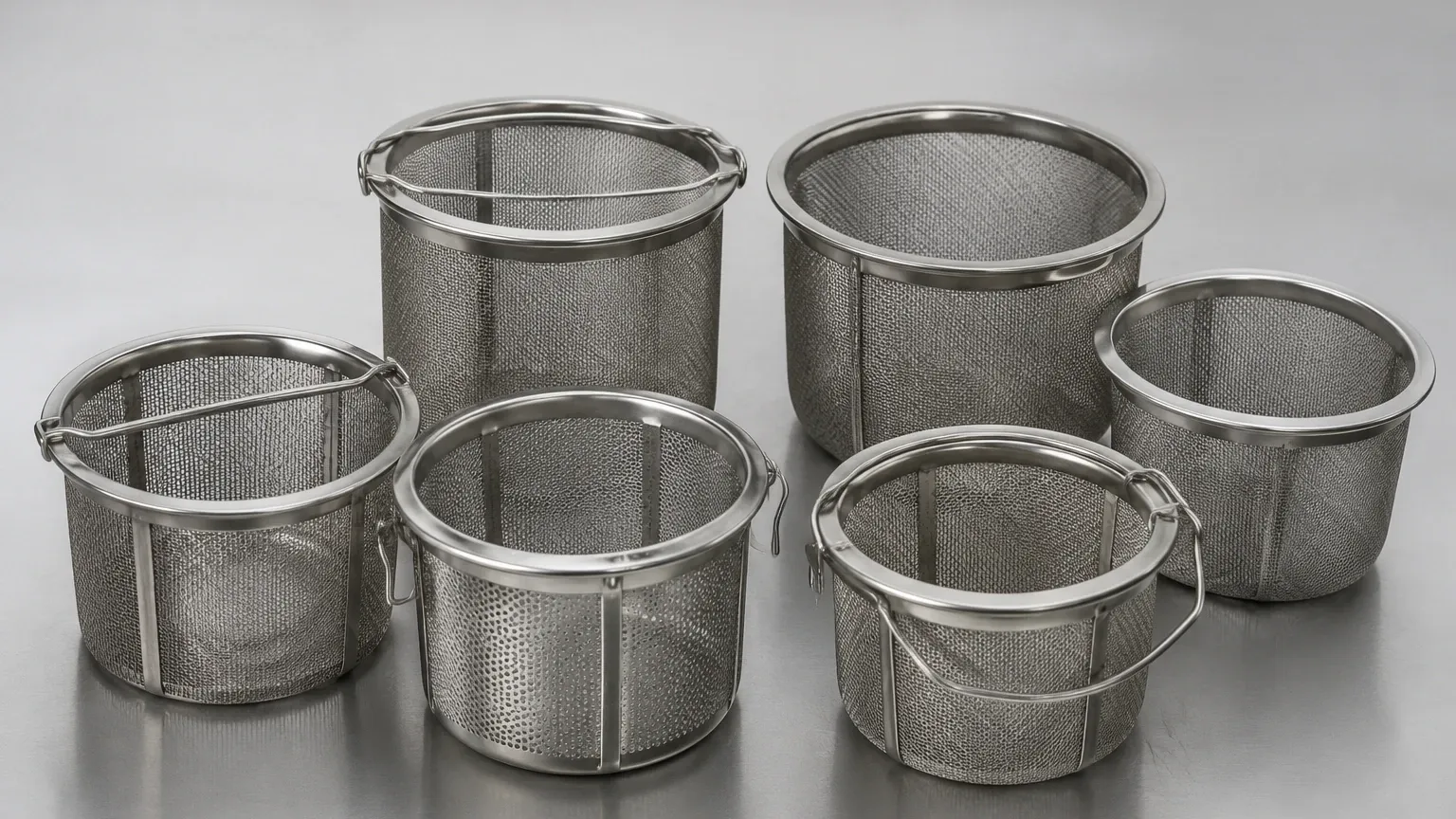
For applications requiring high durability, Kaifil specializes in manufacturing stainless steel filtration solutions. Upgrading to a stainless steel basket offers several engineering advantages:
* Corrosion Resistance: Utilizing 304 or 316L stainless steel ensures compatibility with a wide range of chemicals and saline environments.
* Mechanical Strength: Metal baskets can withstand higher differential pressures without collapsing, a common failure mode for plastic baskets when they become heavily fouled.
* Longevity: Stainless steel does not suffer from the embrittlement seen in plastics, significantly extending the replacement cycle and lowering the total cost of ownership (TCO).
Engineering Considerations for Filtration Accuracy
When specifying a strainer basket, the "filtration accuracy" or mesh size is the most critical technical parameter. This determines what size of debris will be captured and what will pass through to the pump.
Perforation vs. Mesh Lining
Standard strainer baskets often feature molded circular or slotted perforations. For finer filtration, industrial baskets utilize a dual-media approach: a heavy-duty perforated metal cylinder provides structural support, while a fine wire mesh liner (measured in microns or mesh count) provides the actual filtration.
Engineers must balance the need for fine filtration with the risk of rapid pressure drop. A mesh that is too fine will clog quickly, requiring frequent manual intervention. Conversely, a mesh that is too coarse will allow harmful particles to pass through. In most pump protection applications, a "coarse" filtration level (ranging from 1/8" perforations down to 400 microns) is sufficient to protect the impeller while maintaining high flow rates.
Open Area Ratio
The open area ratio is the total area of the holes in the basket divided by the total area of the basket surface. A higher open area ratio results in a lower initial pressure drop ($ΔP$). For high-flow systems like those found in large-scale aquatic facilities or industrial cooling towers, maintaining a high open area ratio is vital to prevent pump cavitation.
Common Risks and Failure Modes
Understanding why a strainer basket Intex or similar component fails is the first step toward optimizing a system. Technical professionals should be aware of the following risks:
1. Bypass Leakage: This occurs when the basket does not seat properly within the housing. Debris can flow around the rim of the basket rather than through the mesh. Industrial designs often incorporate a machined flange or a gasketed seal to prevent this.
2. Structural Collapse: If a basket becomes completely clogged and the pump continues to operate, the resulting vacuum on the suction side can exceed the structural limits of the basket. A collapsed basket often releases all captured debris into the pump at once.
3. Stress Cracking: In plastic baskets, the interface between the handle and the basket body is a common point of mechanical failure due to the stress of lifting a heavy, debris-filled basket.
To mitigate these risks, it is recommended to confirm the maximum pressure rating and the material compatibility of the basket with the fluid being processed before procurement.
Customization and OEM Solutions
In many industrial scenarios, off-the-shelf components do not meet the specific dimensions or performance requirements of the existing infrastructure. This is where custom manufacturing becomes necessary. When searching for a strainer basket Intex replacement for a specialized application, engineers should consider the following customization options:
* Dimensional Accuracy: Custom baskets can be fabricated to fit existing strainer housings exactly, ensuring a tight seal and preventing bypass.
* Reinforced Bottoms: For systems with high heavy-solids loading, reinforcing the bottom of the basket prevents sagging and mechanical fatigue.
* Handle Variations: Depending on the depth of the housing, custom handle lengths or folding handles can be designed to facilitate easier maintenance and cleaning.
Kaifil provides comprehensive OEM capabilities, allowing for the development of high-performance Strainers & Baskets tailored to specific industrial environments, from food and beverage processing to chemical filtration.
Maintenance and Replacement Cycles
The longevity of a strainer basket is directly tied to the maintenance protocol. For both plastic and metal components, a regular inspection schedule should be established.
Cleaning Procedures
* Manual Inspection: Baskets should be checked for signs of deformation, mesh tearing, or chemical pitting.
* Backwashing vs. Manual Cleaning: While some systems allow for backwashing, most strainer baskets require manual removal. It is essential to use cleaning tools that do not damage the mesh. For stainless steel baskets, high-pressure water or ultrasonic cleaning is often effective.
* Replacement Indicators: A basket should be replaced immediately if there is any breach in the mesh or if the structural frame shows signs of cracking. In industrial settings, keeping a spare basket on-site is a standard best practice to minimize downtime during cleaning cycles.
Conclusion for Purchasing and Engineering Teams
Whether you are maintaining a light-duty water system or a complex industrial process, the choice of strainer basket impacts the reliability of your entire fluid handling circuit. While a standard strainer basket Intex may suffice for basic residential needs, industrial applications demand the durability and precision of metal filtration components.
Before taking the next step in procurement, technical teams should confirm:
* The specific chemical composition and temperature of the fluid.
* The required micron rating to protect downstream equipment.
* The physical dimensions and seating requirements of the existing strainer housing.
* The expected solids loading and desired cleaning frequency.
By focusing on high-quality materials and precise engineering, facilities can ensure long-term performance and protect their most valuable mechanical assets from the risks of debris contamination.
