


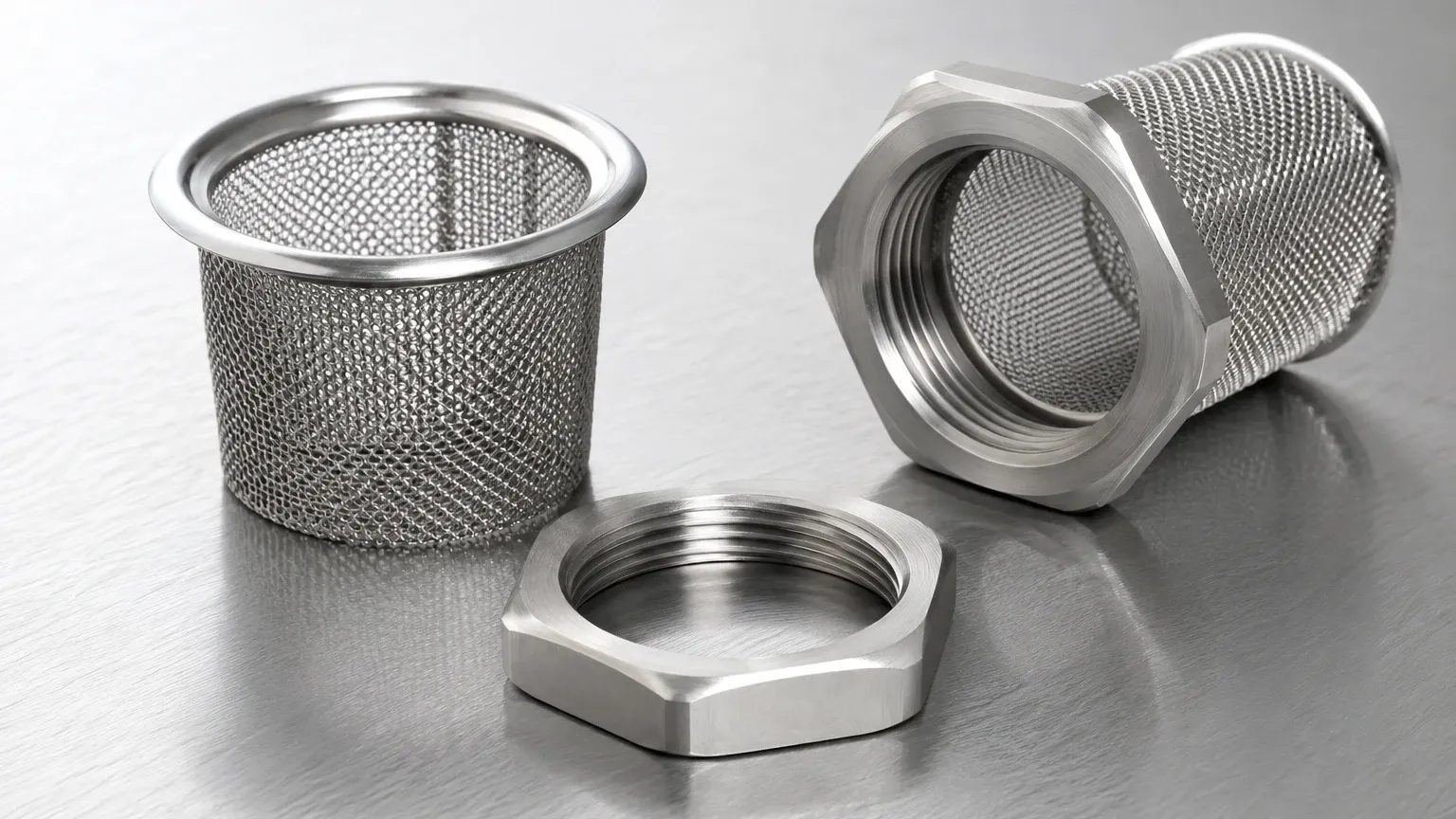
Basket Strainer Nut
In industrial fluid management and filtration systems, the structural integrity of a housing is only as reliable as its fastening components. While the primary focus of an engineer is often on the micron rating or the flow rate of the internal mesh, the mechanical security of the assembly depends heavily on the basket strainer nut. This component is responsible for providing the compressive force necessary to create a liquid-tight seal between the strainer body and the vessel or piping system.
As a critical hardware element within the broader category of Strainers & Baskets, the selection, installation, and material composition of the nut directly impact the longevity and safety of the filtration process. For technical professionals and purchasing teams, understanding the engineering nuances of these nuts is essential for preventing leaks, avoiding downtime, and ensuring compliance with industry-specific hygiene and safety standards.
Understanding the Mechanical Function of the Basket Strainer Nut
The primary role of a basket strainer nut is to act as a locknut or slip nut that secures the strainer assembly to a fixed surface, such as the bottom of a tank, a processing vat, or a specialized industrial sink. In high-pressure or high-vibration environments, the nut must maintain a constant load on the sealing gaskets to prevent fluid bypass or external leakage.
Technically, the nut works in conjunction with a friction washer and a rubber or synthetic gasket. When the nut is tightened onto the threaded shank of the strainer body, it pulls the flange of the strainer down against the mounting surface. This creates a sandwich effect where the gasket is compressed to fill any microscopic irregularities in the mating surfaces. In industrial applications, where fluids may be corrosive or under significant thermal stress, the mechanical stability provided by the basket strainer nut ensures that the internal basket remains correctly seated and functional.
Material Selection for Industrial Environments
Material compatibility is perhaps the most important consideration when specifying a basket strainer nut. While residential applications may use plastic or thin-walled brass, industrial filtration requires materials that can withstand chemical exposure, extreme temperatures, and physical impact. At Kaifil, the focus is on high-performance metals that offer superior durability.
Stainless Steel (304 and 316)
Stainless steel is the industry standard for most chemical, pharmaceutical, and food-processing applications.
- Grade 304: Offers excellent resistance to oxidation and is suitable for most water treatment and general industrial uses.
- Grade 316: Contains molybdenum, which provides enhanced resistance to chlorides and pitting corrosion. This is the preferred choice for marine environments or processes involving harsh acids and sanitizing chemicals.
Brass and Bronze
Brass nuts are often used in hydraulic or non-corrosive fluid applications. They offer good machinability and are less prone to "galling" (cold welding) than stainless steel. However, in food and beverage production, brass must be lead-free and is often passed over in favor of stainless steel to meet strict sanitary requirements.
Specialized Coatings
In some instances, a basket strainer nut may be zinc-plated or chrome-plated to provide an extra layer of protection against atmospheric corrosion. However, for long-term industrial reliability, solid stainless steel remains the most cost-effective solution due to its inherent material properties that do not rely on a surface coating which could chip or wear away.
Sizing and Thread Standards for Strainer Assemblies
Engineers must ensure that the thread profile of the nut matches the strainer body perfectly to avoid cross-threading or mechanical failure. Most industrial strainers utilize straight mechanical threads rather than tapered pipe threads.
1. NPSM (National Pipe Straight Mechanical): This is the most common thread type for strainer nuts. Unlike NPT (National Pipe Tapered), which seals via thread interference, NPSM threads are designed to allow the nut to travel freely along the shank until it applies pressure to the gasket. The seal is created by the gasket, not the threads themselves.
2. Metric Standards: In European and Asian markets, metric threads are common. It is vital to confirm whether the system requires a standard 1.5-inch or 2-inch NPSM nut or a metric equivalent (e.g., M48 or M60).
3. Thread Pitch: For heavy-duty industrial strainers, a coarser thread pitch is often preferred to allow for faster assembly and to reduce the risk of stripping the threads during high-torque tightening.
When sourcing Strainers & Baskets, it is standard practice to verify the outer diameter (OD) of the strainer shank to ensure the nut has sufficient clearance for the specific wall thickness of the vessel it is being attached to.
Installation Best Practices and Torque Management
Improper installation of the basket strainer nut is a leading cause of premature failure in filtration systems. Engineers should follow a standardized protocol to ensure a reliable seal:
Surface Preparation
The mounting surface must be clean, flat, and free of burrs. Any debris between the nut, the washer, and the vessel wall can create a point of stress concentration that may lead to a leak or a cracked nut over time.
The Role of the Friction Washer
A friction washer (usually made of fiber or polyethylene) is placed between the nut and the rubber gasket. This allows the nut to rotate freely during tightening without bunching or tearing the rubber gasket. Skipping the friction washer often leads to uneven gasket compression.
Torque Specifications
Over-tightening is a common mistake. In stainless steel assemblies, excessive torque can lead to galling, where the threads seize together, making future maintenance impossible without cutting the component off. Conversely, under-tightening results in leaks under pressure. Professional installers often use a spud wrench or a specialized basket strainer wrench that fits the lugs of the nut to apply even pressure without deforming the circular shape of the nut.
Maintenance, Troubleshooting, and Replacement Cycles
Even the most robust basket strainer nut is subject to the rigors of the industrial environment. Regular inspection cycles should include a check for the following issues:
* Stress Corrosion Cracking (SCC): In high-heat or high-chemical environments, stainless steel nuts can develop micro-fractures. If a nut appears to have hairline cracks, it must be replaced immediately to prevent catastrophic failure.
* Vibration Loosening: In systems with heavy pumps or rapid flow fluctuations, the nut may gradually back off. The use of a thread-locking compound or a nut with integrated locking features can mitigate this risk.
* Galling and Seizing: If a nut cannot be turned by hand after the initial break-loose with a wrench, galling has likely occurred. To prevent this, technicians should use an anti-seize lubricant specifically rated for the industry (e.g., food-grade anti-seize for beverage plants).
Replacement cycles for the nut generally align with the replacement of the gaskets. Whenever a strainer is removed for deep cleaning or a basket change-out, the nut should be inspected for thread wear. If the "play" between the nut and the shank increases significantly, the nut has reached the end of its service life.
Custom Engineering and OEM Integration
For many industrial equipment manufacturers, standard off-the-shelf components do not meet the specific requirements of a unique filtration system. This is where custom manufacturing capabilities become essential.
Kaifil provides OEM solutions where the basket strainer nut can be customized in terms of:
- Flange Width: Larger flanges for thin-walled tanks to distribute pressure more evenly.
- Knurled Surfaces: For applications where hand-tightening is required for frequent tool-free maintenance.
- Integrated Seals: Specialized nuts that incorporate an O-ring groove for high-vacuum or high-pressure applications.
By working closely with a manufacturer that understands the entire assembly—from the wire mesh filter to the final fastening hardware—engineers can ensure that every component is optimized for the intended flow rate, chemical environment, and pressure rating.
Conclusion: The Importance of Component Quality
While the basket strainer nut may seem like a simple commodity, it is a foundational element of industrial filtration safety. Selecting a nut made from high-quality stainless steel, ensuring correct thread alignment, and following precise installation torques are the hallmarks of a well-engineered system.
When evaluating Strainers & Baskets for your next project, consider the total cost of ownership. A low-quality nut that fails in the field can result in expensive fluid loss, environmental contamination, and hazardous working conditions. By prioritizing technical specifications and material integrity, purchasing teams can secure reliable filtration performance that stands up to the most demanding industrial challenges. Kaifil remains committed to providing the precision-engineered components necessary to keep these vital systems running efficiently and safely.
