


Basket Strainer Titan
In industrial fluid handling, the protection of downstream equipment—such as pumps, valves, flow meters, and heat exchangers—is a primary engineering concern. Among the various mechanical filtration solutions available, the basket strainer stands out as a robust and high-capacity option for removing solids from liquid streams. When engineers discuss a "basket strainer titan," they are typically referring to the heavy-duty, high-performance standards set by industry leaders like Titan Flow Control, which define the benchmarks for durability, pressure ratings, and flow efficiency.
For technical professionals and purchasing teams, selecting the right Strainers & Baskets involves more than just matching pipe sizes. It requires a deep understanding of fluid dynamics, material compatibility, and the specific mechanical stresses of the application. This guide explores the technical parameters of high-performance basket strainers, the engineering considerations for selection, and the role of precision manufacturing in maintaining system integrity.
Engineering Fundamentals of Basket Strainer Design
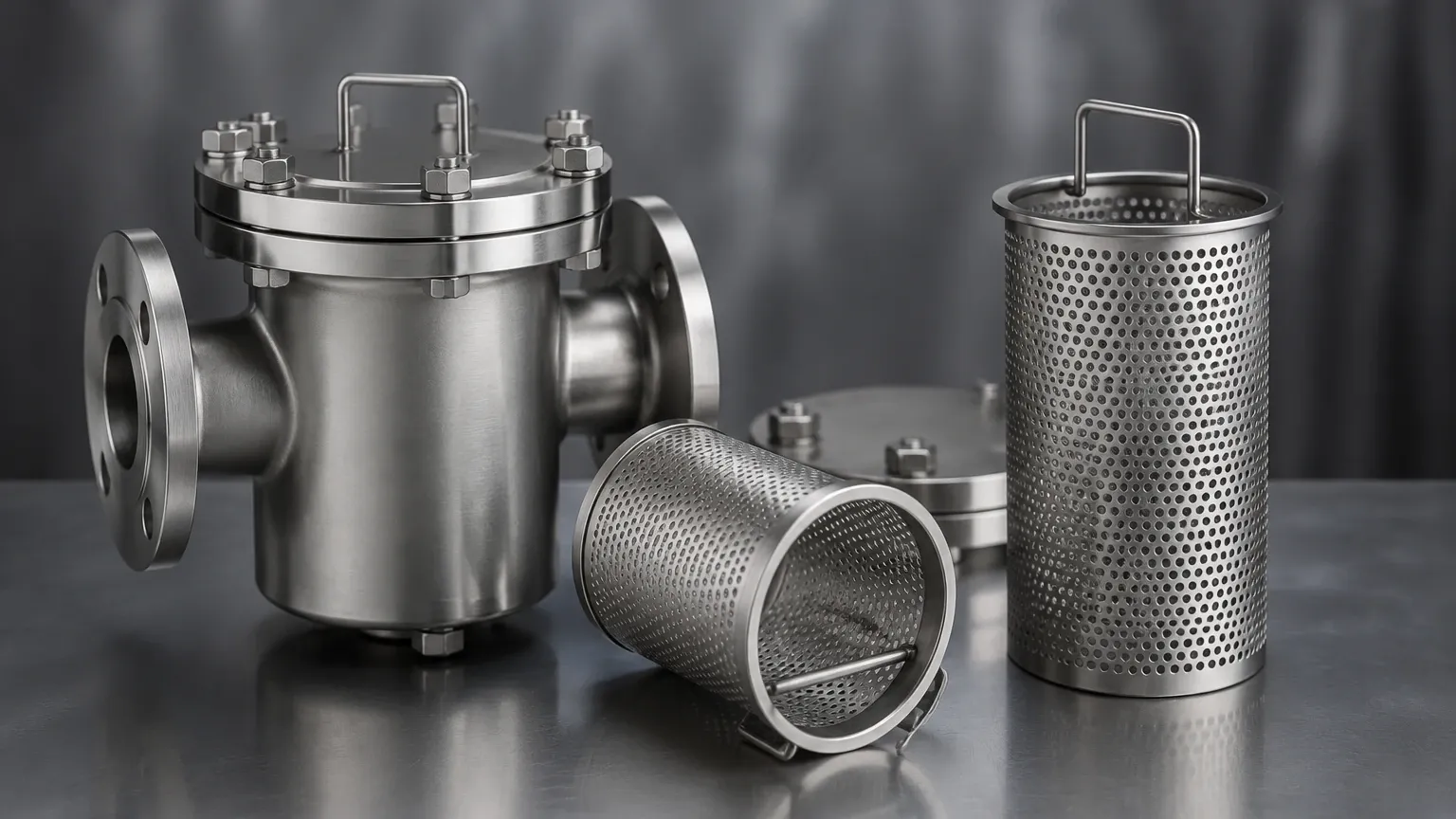
A basket strainer is a closed vessel with a removable screen (the basket) that captures and retains debris. Unlike Y-strainers, which are often used for smaller amounts of particulate in high-pressure steam or gas lines, basket strainers are designed for liquid applications where the volume of solids is higher.
The "basket" geometry offers a significantly larger surface area than a standard cylindrical screen. This design choice is critical for two reasons: it allows for longer periods between cleaning cycles and minimizes the pressure drop across the unit. In a high-performance basket strainer titan configuration, the internal basket is often engineered with a high Open Area Ratio (OAR). The OAR is the relationship between the total open area of the basket mesh and the internal cross-sectional area of the inlet pipe. A well-engineered strainer typically maintains an OAR of at least 6:1, ensuring that even as the basket begins to fill with debris, the flow rate remains consistent without straining the pump.
Material Selection and Corrosion Resistance
The longevity of a basket strainer is dictated by its housing and internal components' resistance to the process fluid. While cast iron and carbon steel are common for water and oil services, stainless steel remains the gold standard for demanding industrial environments.
Stainless Steel Grades (304 vs. 316L)
Kaifil specializes in stainless steel filtration solutions because of the material's inherent strength and chemical passivity.
- Type 304 Stainless Steel: Suitable for general industrial use, providing excellent resistance to atmospheric corrosion and many organic and inorganic chemicals.
- Type 316L Stainless Steel: Contains molybdenum, which provides superior resistance to chlorides and pitting. This is essential in chemical processing, pharmaceutical manufacturing, and marine environments where a "basket strainer titan" must withstand aggressive media.
Beyond the housing, the basket itself must be manufactured from high-quality wire mesh or perforated plate. In many industrial applications, a perforated metal basket serves as the structural support, while a fine wire mesh liner provides the actual filtration. Ensuring these materials are welded with precision is vital to prevent bypass, where unfiltered fluid escapes around the edges of the basket.
Simplex vs. Duplex Configurations
When specifying a basket strainer, engineers must decide between simplex and duplex designs based on the system's operational requirements.
Simplex Basket Strainers
Simplex strainers are used in systems where the flow can be shut down periodically for basket cleaning. They are common in batch processing or systems with redundant lines. A high-quality simplex unit features a bolted or quick-opening cover to facilitate rapid maintenance.
Duplex Basket Strainers
In critical applications where flow cannot be interrupted—such as cooling water for power plants or continuous chemical reactors—a duplex strainer is required. This configuration consists of two separate strainer chambers connected by a diversion valve. When one basket becomes clogged, the operator can switch the flow to the clean chamber without stopping the process. The design of the diversion valve is a critical failure point; high-performance units utilize synchronized butterfly valves or ball valves to ensure a leak-proof seal and smooth transition.
Technical Specifications and Performance Evaluation
To ensure a basket strainer titan meets the demands of a specific installation, several technical specifications must be verified during the procurement process.
Pressure Ratings and Temperature Limits
Strainers are pressure vessels and must be rated according to ASME standards (e.g., Class 150, 300, or 600). The thickness of the housing walls and the integrity of the flange connections must be able to withstand the maximum system pressure, including potential surges or water hammer effects. Temperature limits are equally important, as thermal expansion can affect the seals (O-rings or gaskets) and the structural integrity of the basket.
Micron Ratings and Mesh Selection
Filtration accuracy is defined by the mesh size or micron rating. Selecting a mesh that is too fine will result in frequent clogging and high pressure drops, while a mesh that is too coarse will allow damaging particles to pass through. Engineers must balance the need for protection with the realities of maintenance cycles. Common mesh sizes range from 20 mesh (approx. 840 microns) for coarse straining to 400 mesh (approx. 37 microns) for fine filtration.
Differential Pressure (Delta P)
Monitoring the pressure difference between the inlet and outlet of the strainer is the most effective way to determine when a basket needs cleaning. High-performance strainers often include tapped ports for differential pressure gauges. A clean basket should ideally result in a pressure drop of less than 2 PSI. Once the Delta P reaches 5-10 PSI, maintenance is typically required to prevent basket collapse or flow restriction.
Customization and OEM Considerations
While standard off-the-shelf units satisfy many requirements, unique industrial challenges often demand customized filtration solutions. As a professional manufacturer, Kaifil provides the engineering flexibility needed to adapt basket strainers to specific spatial constraints or unique fluid profiles.
Customization options often include:
- Specialized Inlet/Outlet Orientations: To fit into existing piping configurations where space is limited.
- Reinforced Baskets: For high-viscosity fluids or applications with high differential pressure risks.
- Magnetic Inserts: To capture fine ferrous particles that might otherwise pass through the mesh.
- Heating Jackets: For fluids that must be maintained at a specific temperature to remain pumpable (e.g., resins, waxes, or heavy oils).
For companies utilizing a basket strainer titan, sourcing high-quality replacement baskets is a common maintenance challenge. OEM-quality replacements must match the original specifications exactly to ensure a proper seal within the housing. Kaifil’s expertise in wire mesh and precision metal components allows for the production of custom baskets that meet or exceed the performance of original equipment manufacturer parts.
Maintenance and Total Cost of Ownership (TCO)
The initial purchase price of a basket strainer is only one component of its total cost. Long-term value is found in durability, ease of maintenance, and the protection it provides to more expensive equipment.
Effective Cleaning Procedures
Improper cleaning is a leading cause of basket failure. Baskets should be cleaned using ultrasonic baths or high-pressure water jets, depending on the nature of the debris. Mechanical scrubbing should be avoided as it can damage the fine wire mesh.
Seal Integrity
The cover gasket or O-ring is a wear item. In high-temperature or chemically aggressive applications, selecting the right elastomer (such as Viton, EPDM, or PTFE) is essential to prevent leaks. A leaking strainer not only wastes fluid but can also introduce air into the system, leading to pump cavitation.
Replacement Cycles
While a well-maintained stainless steel housing can last for decades, the internal baskets are subject to mechanical fatigue and erosion. Regular inspection for broken wires, distorted frames, or thinning metal is necessary. Keeping a stock of replacement Strainers & Baskets on-site is a standard best practice for minimizing downtime.
Conclusion: Selecting the Right Filtration Partner
Choosing a basket strainer titan—whether as a complete unit or a replacement component—requires a partner who understands the technical rigors of industrial filtration. From calculating the required open area ratio to selecting the appropriate stainless steel grade for corrosive media, every engineering detail impacts the efficiency and safety of the fluid system.
Kaifil’s commitment to precision manufacturing and technical expertise ensures that engineers and purchasing teams receive filtration solutions that are built to last. By focusing on high-performance materials and customized designs, Kaifil helps industrial operators achieve reliable, cost-effective filtration that protects their most critical assets. When evaluating your next filtration project, consider the long-term benefits of a manufacturer-direct relationship that prioritizes technical accuracy and application-specific engineering.
