


Basket Strainer Vertical Installation
In industrial piping design, space constraints and complex routing often necessitate unconventional component orientations. While basket strainers are traditionally engineered for horizontal pipelines, the requirement for a basket strainer vertical installation arises frequently in chemical processing, water treatment, and hydraulic systems. Understanding the technical nuances, fluid dynamics, and maintenance implications of vertical orientation is critical for engineers and purchasing teams to ensure system longevity and filtration efficiency.
Unlike Y-strainers, which are inherently versatile in orientation, basket strainers—also known as pot strainers—rely heavily on the internal geometry of the basket and the influence of gravity to effectively capture and retain contaminants. This guide examines the engineering considerations and selection criteria for implementing basket strainers in vertical piping configurations.
The Engineering Logic of Basket Strainer Orientation
The primary function of Strainers & Baskets is to protect downstream equipment, such as pumps, valves, and heat exchangers, by removing solid particles from the process fluid. In a standard horizontal installation, the basket sits vertically within a housing, and the fluid enters the side of the basket. Gravity assists in settling the debris at the bottom of the basket, away from the main flow path, which minimizes pressure drop as the strainer fills.
When transitioning to a basket strainer vertical installation, the relationship between flow direction and gravity changes. Engineers must evaluate whether the fluid is moving upward or downward, as this determines the strainer's ability to retain captured solids during both active flow and system shutdown.
Downward Flow vs. Upward Flow
1. Downward Flow: This is the preferred direction for vertical basket strainer applications. In this configuration, the fluid enters the top of the strainer housing and exits through the bottom. Gravity works in tandem with the fluid velocity to push debris into the basket. When the flow stops, the captured contaminants remain at the bottom of the basket, preventing them from falling back into the inlet piping.
2. Upward Flow: Generally, upward flow is discouraged for basket strainers. If fluid moves from bottom to top, the debris is pushed against the underside of the basket or the top screen. When the flow ceases, gravity causes the debris to fall away from the filtration surface and back down the inlet pipe, potentially fouling upstream components or causing a surge of concentrated debris when the system restarts.
Technical Challenges in Vertical Installations
Implementing a basket strainer in a vertical line introduces several technical challenges that are not present in horizontal runs. Addressing these during the design phase is essential to avoid premature component failure or excessive maintenance costs.
Debris Retention and Bypass Risks
In a horizontal strainer, the basket is held in place by a combination of its own weight and the housing cover. In a vertical installation, the basket must be securely seated to prevent bypass. If the basket shifts due to flow turbulence or vibration, unfiltered fluid can leak around the edges of the basket frame. Custom-engineered Strainers & Baskets often feature specialized hold-down springs or machined seats to ensure a positive seal remains intact regardless of the housing’s orientation.
Differential Pressure and Turbulence
Vertical flow can alter the turbulence patterns within the strainer housing. Increased turbulence may lead to "scouring," where captured particles are agitated and potentially forced through the mesh media. Engineers should specify a larger filtration area or a heavier wire mesh grade to compensate for these dynamic forces. Monitoring the differential pressure ($ΔP$) becomes even more critical in vertical setups, as the accumulation pattern of debris may differ from horizontal models, leading to non-linear pressure increases.
Structural Support and Mechanical Stress
Vertical piping often carries significant weight, including the fluid column and the heavy stainless steel strainer housing itself. A basket strainer vertical installation requires robust structural support. The flanges and housing must be rated to handle not only the internal process pressure but also the mechanical stress of the vertical pipe load. Failure to provide adequate hangers or floor stands can lead to flange misalignment and subsequent leaks.
Selection Criteria for Vertical Strainers & Baskets
When sourcing filtration components for vertical applications, standard off-the-shelf products may not suffice. Technical professionals should focus on several key specifications to ensure the chosen solution is fit for purpose.
Material Selection and Durability
In demanding industrial environments, such as chemical processing or pharmaceutical manufacturing, material compatibility is paramount. Stainless steel (Grade 304 or 316) is the industry standard for Strainers & Baskets due to its corrosion resistance and structural integrity. For vertical installations, the thickness of the basket walls and the reinforcement of the mesh are vital, as they must withstand the concentrated force of the fluid hitting the basket bottom.
Customization of Basket Design
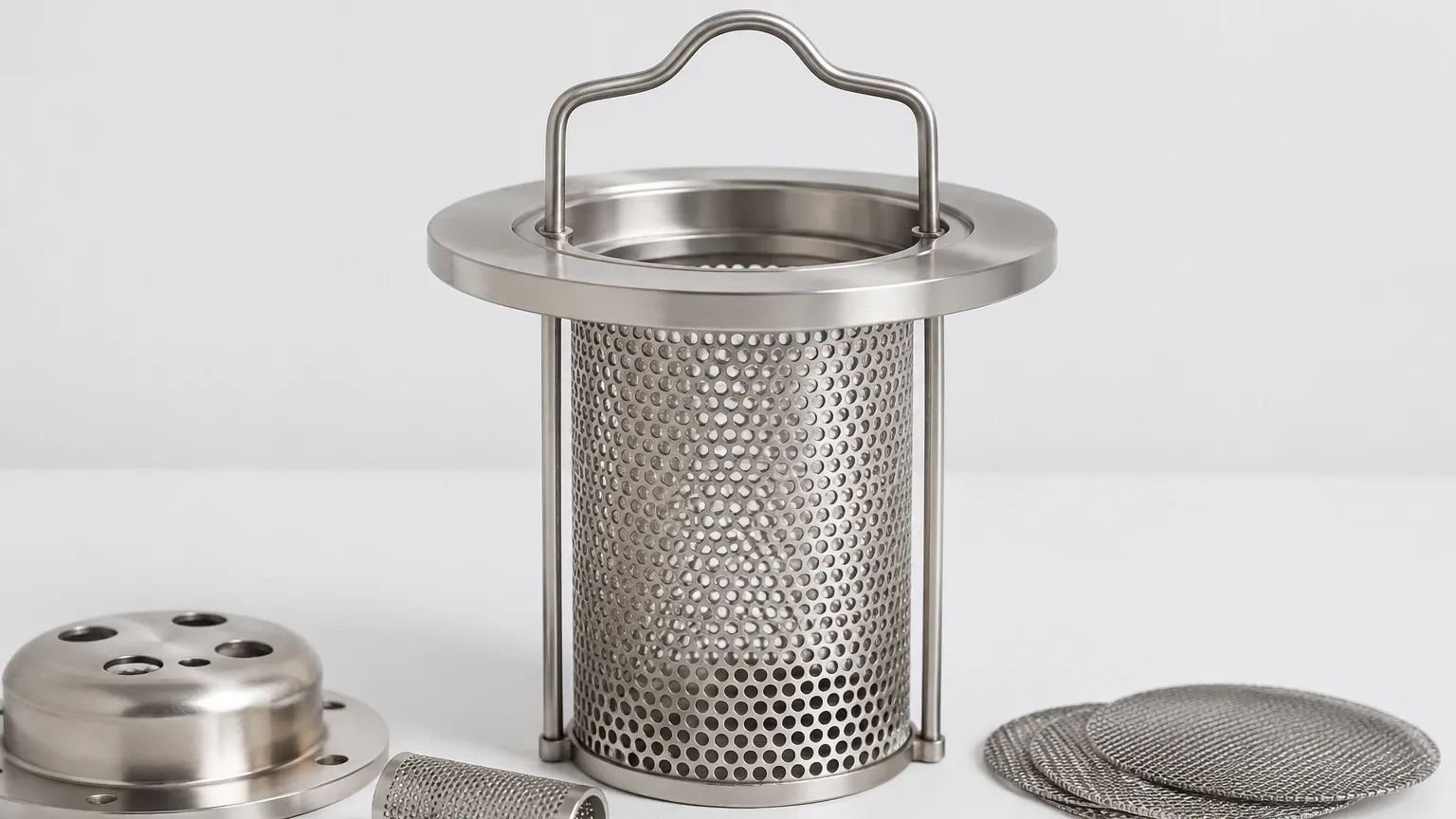
Customized filtration solutions allow for the modification of the basket handle and seating mechanism. For vertical orientations, a "slant-top" basket or a reinforced bottom plate may be necessary to optimize the flow path and debris collection. Manufacturers like Kaifil can provide OEM designs that incorporate these features, ensuring that the internal components are optimized for the specific flow dynamics of the installation site.
Maintenance Accessibility
One of the most significant drawbacks of vertical installation is the difficulty of maintenance. In a horizontal setup, the cover is typically on top, allowing for easy basket removal. In a vertical setup, the cover may be positioned sideways. This requires sufficient clearance for the maintenance team to pull the basket out horizontally. Engineers must confirm that the surrounding infrastructure—walls, other pipes, or electrical conduits—does not obstruct the removal of the basket for cleaning.
Common Risks and Mitigation Strategies
Failure to account for the unique requirements of a basket strainer vertical installation can lead to several operational risks. Below are common issues and how to mitigate them:
* Air Entrapment: Vertical lines are susceptible to air pockets, which can cause cavitation in downstream pumps and inaccurate pressure readings. To mitigate this, a vent valve should be installed at the highest point of the strainer housing to bleed off trapped air during commissioning and after maintenance cycles.
* Difficult Cleaning: If the strainer is installed in a downward flow configuration, the basket will be filled with fluid and debris. Removing a side-mounted cover can result in significant fluid loss and mess. Installing a drain valve at the lowest point of the housing allows the operator to empty the chamber before opening the cover, improving safety and cleanliness.
* Gasket Failure: Vertical orientations can put uneven pressure on the housing gaskets, especially if the cover is heavy. Using high-quality, reinforced gaskets and following strict torque sequences during installation is necessary to maintain a leak-free seal.
Installation and Maintenance Best Practices
To maximize the performance of Strainers & Baskets in vertical configurations, follow these professional guidelines:
1. Verify Flow Direction: Always double-check the flow arrow on the strainer housing. In vertical installations, ensuring the flow is downward is the single most important factor for debris retention.
2. Install Pressure Gauges: Place pressure gauges on both the inlet and outlet sides of the strainer. The differential pressure is the only reliable indicator of when the basket requires cleaning. In vertical setups, waiting too long to clean the basket can lead to excessive weight and potential structural damage to the basket support.
3. Secure the Basket: Ensure the basket is properly seated in its machined groove. For vertical units, verify that the hold-down mechanism (if equipped) is engaged before closing the cover.
4. Regular Inspection: Periodically inspect the basket for signs of mechanical fatigue or mesh deformation. The concentrated flow in vertical lines can cause localized wear that might not be seen in horizontal applications.
Conclusion: Making Informed Purchasing Decisions
A basket strainer vertical installation is a viable and often necessary solution in modern industrial piping. However, it is not as simple as rotating a horizontal unit 90 degrees. Success depends on selecting the right equipment, confirming downward flow, and ensuring the internal basket design is robust enough to handle the orientation.
For engineers and purchasing teams, the key is to work with manufacturers who understand the technical complexities of filtration. By specifying the exact application requirements—including flow rate, fluid viscosity, particle size, and piping orientation—you can secure Strainers & Baskets that deliver reliable performance and low total cost of ownership. Whether you require a standard stainless steel mesh or a highly customized OEM component, verifying the structural and hydraulic suitability of the strainer for vertical use is the most effective way to protect your critical industrial assets.
