


Basket Strainer Zoloto
In industrial piping systems, the protection of downstream equipment such as pumps, meters, and control valves is paramount to operational longevity. Among the various mechanical filtration solutions available, the basket strainer zoloto remains a frequent specification for engineers managing water treatment, HVAC, and chemical processing lines. These components serve as the first line of defense, capturing large-scale debris and particulate matter that could otherwise lead to catastrophic mechanical failure or significant downtime.
Selecting the correct filtration component requires a deep understanding of fluid dynamics, material compatibility, and the specific structural requirements of the application. As a manufacturer specializing in high-performance Strainers & Baskets, Kaifil provides the technical expertise necessary to evaluate standard specifications against custom industrial requirements, ensuring that filtration performance meets the rigorous demands of modern manufacturing.
Engineering Fundamentals of Basket Strainers
A basket strainer is a closed vessel with a cleanable screen element designed to remove foreign particles from a process line. Unlike Y-strainers, which are often utilized for smaller amounts of debris in high-pressure steam or gas lines, basket strainers are engineered for liquid services where high flow rates and significant solids loading are expected.
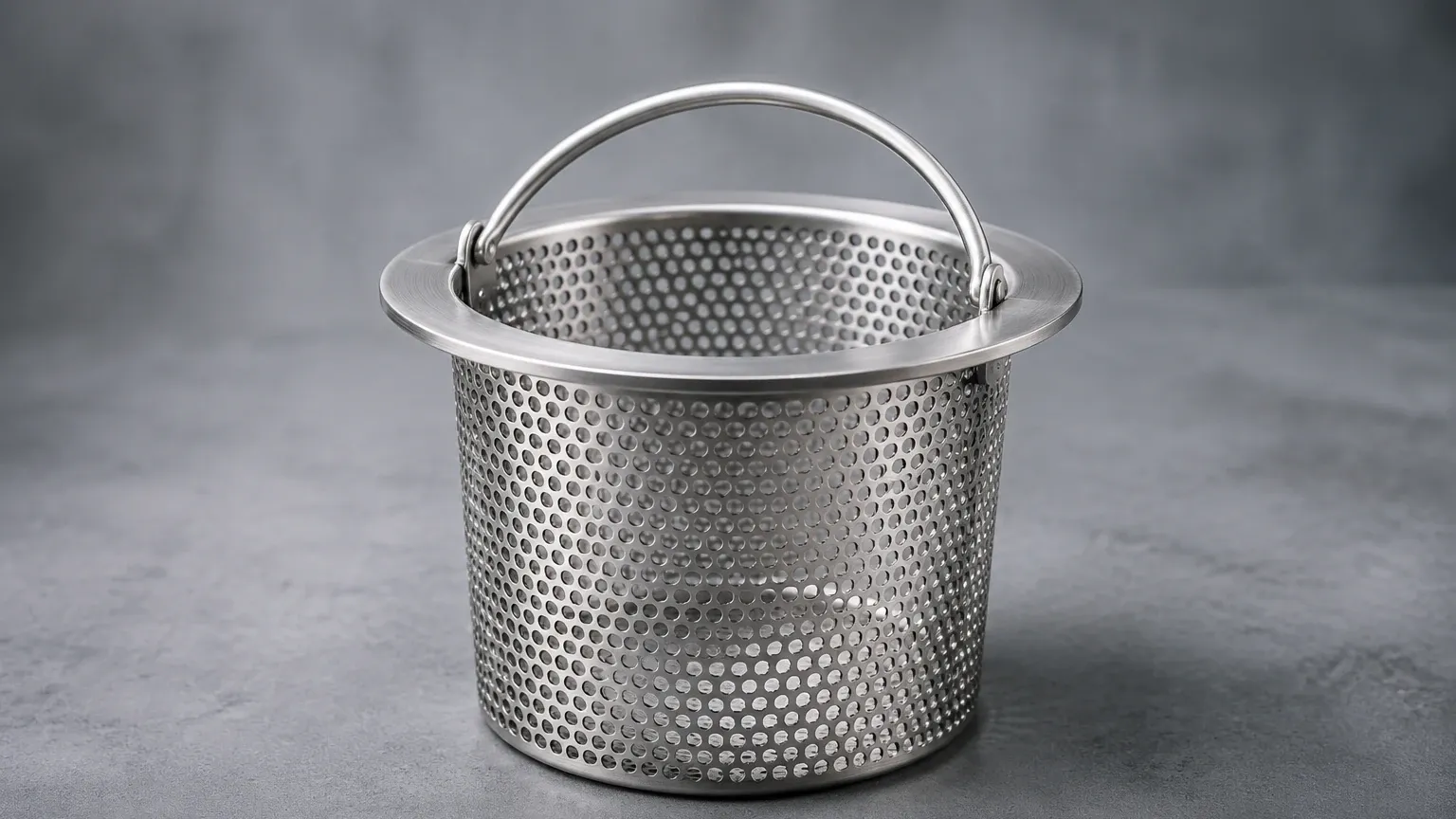
The primary advantage of the basket design is its large storage capacity for debris and the relative ease of maintenance. Most industrial units, including the basket strainer zoloto series, feature a top-entry design. This allows maintenance personnel to access the internal basket without draining the entire piping system in many configurations, provided the line is isolated. The "basket" shape provides a much larger surface area than a standard cylindrical filter, which directly translates to a lower pressure drop and longer intervals between cleaning cycles.
From an engineering perspective, the "Open Area Ratio" (OAR) is the most critical metric. This is the ratio between the total open area of the strainer screen and the internal cross-sectional area of the inlet pipe. A high-quality industrial strainer typically aims for an OAR of at least 4:1 or 6:1. This ensures that even as the basket begins to fill with debris, the flow remains relatively unimpeded, preventing cavitation in downstream pumps.
Technical Specifications of the Basket Strainer Zoloto Series
When engineers specify a basket strainer zoloto, they are typically looking for a component that adheres to specific international standards for pressure and temperature. These strainers are commonly available in various body materials, including Cast Iron (ASTM A126 Gr. B) and Ductile Iron, with stainless steel internal baskets.
Key technical parameters often associated with these units include:
* Pressure Ratings: Common ratings include PN10, PN16, and Class 125/150. These ratings determine the maximum allowable working pressure (MAWP) at specific temperatures. For instance, a PN16 rated strainer is designed to handle up to 16 bar of pressure at ambient temperatures.
* End Connections: Most industrial basket strainers utilize flanged ends (complying with BS 10, ANSI, or DIN standards) to ensure a leak-proof connection and ease of installation in large-diameter piping.
* Material Composition: While the housing may be cast iron for cost-effectiveness in water applications, the internal basket is almost exclusively made of stainless steel (SS 304 or SS 316). This provides the necessary corrosion resistance to withstand constant exposure to the process fluid.
Understanding these specifications is vital for procurement teams. However, for specialized chemical processes or high-purity pharmaceutical applications, standard cast iron housings may not suffice. In these instances, a fully stainless steel solution from Kaifil’s range of Strainers & Baskets is often required to prevent fluid contamination and ensure chemical compatibility.
Material Selection and Chemical Compatibility
The longevity of a basket strainer is dictated by its resistance to both erosion and corrosion. Erosion occurs when high-velocity fluids carrying abrasive particles wear down the internal surfaces of the strainer and the basket mesh. Corrosion, on the other hand, is a chemical reaction between the fluid and the strainer material.
1. Cast Iron and Ductile Iron: Suitable for non-corrosive fluids like water, oil, and some gases. These are common in HVAC and general industrial water lines where cost is a primary factor.
2. Stainless Steel (SS 304/316): Essential for food and beverage, pharmaceutical, and chemical processing. SS 316, containing molybdenum, offers superior resistance to chlorides and acetic acids.
3. Specialty Alloys: For highly aggressive environments, such as seawater or concentrated acids, materials like Duplex stainless steel or Monel may be required.
When evaluating a basket strainer zoloto, engineers must confirm that the gasket and seal materials (often EPDM, NBR, or Viton) are also compatible with the process fluid. A failure in the seal can lead to external leaks, while a failure in the basket material can lead to "bypass," where debris passes through the strainer and damages sensitive downstream equipment.
Evaluating Filtration Accuracy: Mesh vs. Perforation
The filtration performance of any basket strainer is defined by the openings in the basket. There are two primary types of basket construction: perforated metal and wire mesh.
* Perforated Baskets: These are made from a single sheet of metal with punched holes. They are structurally robust and used for "coarse" straining, typically removing particles larger than 1/16 inch (approx. 1.5mm). They are often used as a support structure for finer mesh liners.
* Wire Mesh Baskets: For finer filtration requirements, a stainless steel wire mesh is layered over or inside a perforated basket. Mesh sizes can range from 20 mesh (approx. 840 microns) down to 400 mesh (approx. 37 microns).
Choosing the right filtration level is a balance between protection and performance. If the mesh is too fine, the strainer will clog rapidly, leading to high maintenance costs and frequent production halts. If it is too coarse, it will fail to protect downstream equipment. Kaifil specializes in manufacturing custom wire mesh inserts that can be retrofitted into standard housings, including the basket strainer zoloto, to optimize filtration for specific particulate sizes.
Engineering Considerations for Installation and Flow Dynamics
Proper installation is as important as the selection of the strainer itself. A basket strainer must be installed in a horizontal line with the basket chamber hanging downward. This allows gravity to assist in trapping the debris within the basket and prevents the debris from falling back into the inlet pipe during cleaning.
Engineers must also consider the "straight pipe run" requirements. To ensure a uniform flow profile entering the strainer, it is generally recommended to have at least five to ten pipe diameters of straight pipe upstream of the strainer. Turbulent flow caused by elbows or valves placed too close to the strainer inlet can cause uneven loading of the basket and localized erosion of the mesh.
Furthermore, the installation of differential pressure (DP) gauges is highly recommended. By measuring the pressure difference between the inlet and the outlet, operators can precisely determine when the basket is full. A common rule of thumb is to clean or replace the basket when the differential pressure reaches 5-10 psi (0.35-0.7 bar) above the clean pressure drop.
Customization and OEM Solutions in Industrial Filtration
While standard products like the basket strainer zoloto meet many general industrial needs, many applications require customized solutions. Customization may involve modifications to the basket handle for easier removal, the addition of magnetic inserts to capture fine iron particles, or the engineering of high-pressure housings that exceed standard PN16 ratings.
Kaifil provides comprehensive OEM capabilities for Strainers & Baskets, allowing engineers to specify exact dimensions, material grades, and filtration levels. This is particularly useful when dealing with legacy systems where original parts are no longer available or when a process change requires a higher degree of filtration accuracy than the original equipment was designed to provide.
Custom filtration components can also be designed with reinforced baskets to withstand high differential pressures without collapsing. This is a critical safety consideration in high-viscosity fluid applications where the pressure drop across a clogged basket can rise almost instantaneously.
Maintenance, Cleaning, and Total Cost of Ownership
The total cost of ownership (TCO) of a basket strainer includes the initial purchase price, installation costs, and the ongoing costs of maintenance and downtime. A cheaper strainer that is difficult to clean or requires frequent basket replacements will quickly become more expensive than a high-quality, well-engineered unit.
Maintenance Best Practices:
* Regular Inspection: Periodically check the housing for signs of corrosion or thinning, especially in chemical services.
* Proper Cleaning: Baskets should be cleaned with a soft brush or ultrasonic cleaner. Avoid using hard metal scrapers that can damage the wire mesh and change the filtration rating.
* Spare Parts: Always maintain a stock of spare baskets and gaskets. Having a clean basket ready for immediate swap-out can reduce downtime from hours to minutes.
By focusing on durable construction and precise engineering, manufacturers like Kaifil help industrial facilities minimize their TCO. Whether you are utilizing a standard basket strainer zoloto or a custom-designed stainless steel system, the goal remains the same: reliable, efficient, and cost-effective protection of your industrial infrastructure.
For engineers and purchasing teams looking to optimize their filtration processes, understanding these technical nuances is the first step toward achieving superior system performance. Reviewing the available Strainers & Baskets options can provide further insight into the specialized designs available for modern industrial challenges.
