


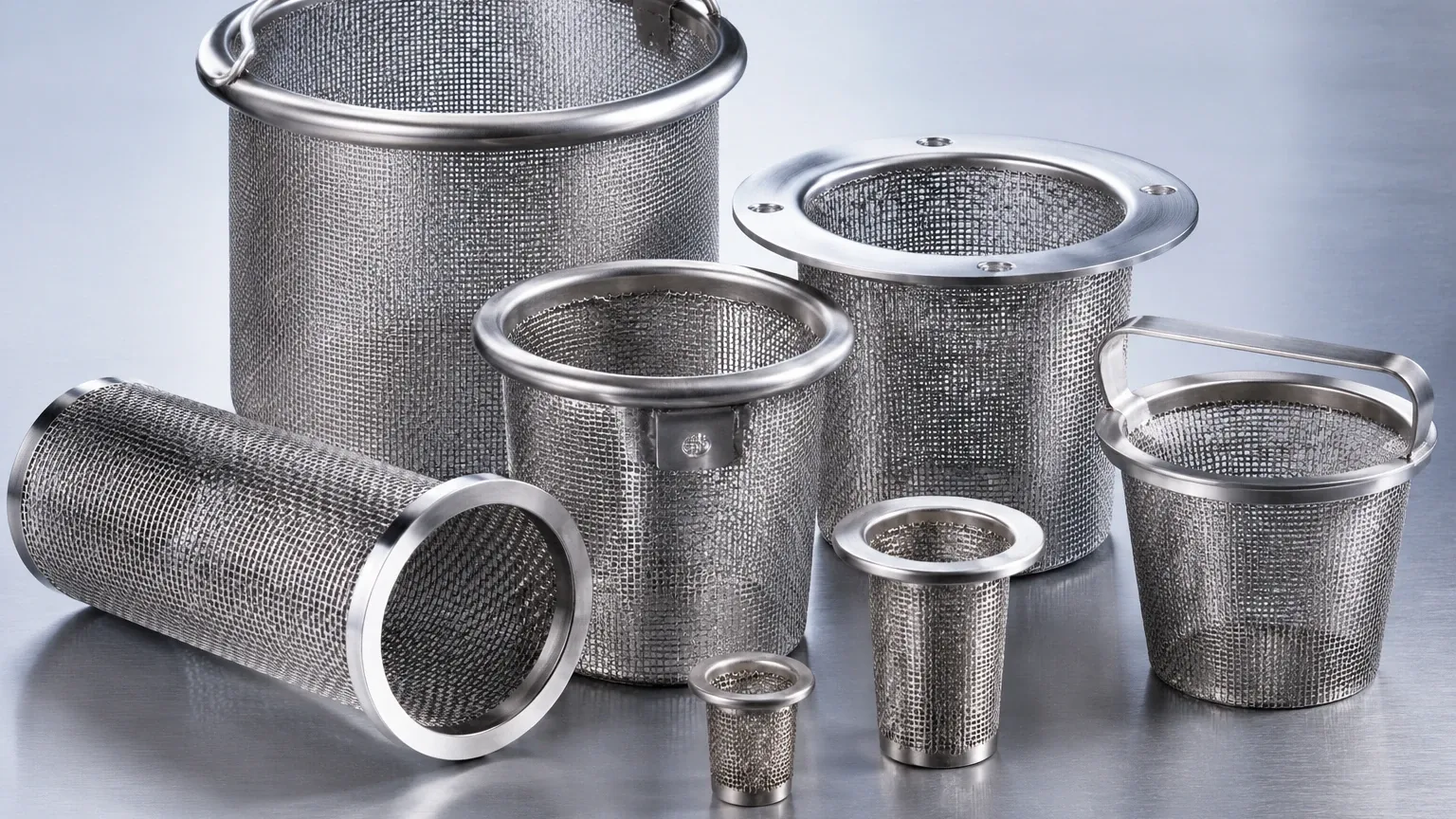
Baskets Strainer
In industrial fluid handling systems, the protection of sensitive downstream equipment—such as pumps, valves, flow meters, and heat exchangers—is a primary engineering concern. The presence of particulate matter, scale, or debris can lead to catastrophic mechanical failure, unplanned downtime, and significant repair costs. A baskets strainer serves as the critical line of defense in these systems, providing mechanical separation of solids from liquids or gases. Unlike standard Y-strainers, which are often used for smaller amounts of debris, basket strainers are designed for applications requiring higher dirt-holding capacities and easier maintenance access.
For engineers and procurement professionals, selecting the correct Strainers & Baskets involves more than simply matching pipe sizes. It requires a deep understanding of flow dynamics, material compatibility, and the specific filtration requirements of the process environment. As a specialist in stainless steel filtration, Kaifil provides precision-engineered solutions tailored to the rigorous demands of the chemical, pharmaceutical, and food processing industries.
Principles of Operation and Design
A baskets strainer operates on the principle of mechanical filtration. The fluid enters the strainer housing, passes through a perforated or mesh-lined basket, and exits through the outlet. The basket is designed to trap solids while allowing the fluid to flow through with minimal resistance.
The "basket" configuration is particularly effective because it offers a larger surface area compared to other strainer types. This increased area results in a lower initial pressure drop and longer intervals between cleaning cycles. In industrial settings, the basket is typically oriented vertically, allowing it to hold a significant volume of debris without obstructing the main flow path. When the basket becomes full, it can be removed, cleaned, and replaced, making it a sustainable and cost-effective component in long-term operations.
Technical Variations: Simplex vs. Duplex Systems
When specifying a baskets strainer, the first major decision is often between a simplex and a duplex configuration. This choice is dictated by the process's tolerance for downtime.
Simplex Basket Strainers
Simplex strainers are used in batch processes or systems where the flow can be temporarily halted for maintenance. To clean a simplex strainer, the system must be depressurized and the flow diverted or stopped. These are ideal for cooling water systems, fuel lines, and chemical transfer applications where periodic shutdowns are already scheduled.
Duplex (Twin) Basket Strainers
Duplex strainers consist of two separate strainer chambers connected by a diverting valve. This design allows the fluid to be diverted from one chamber to the other without interrupting the flow. While one basket is being cleaned, the other remains in operation. This is essential for continuous-flow industries, such as power generation, large-scale chemical processing, and hydraulic systems, where an unscheduled stop could result in significant production losses.
Material Selection and Engineering Integrity
The durability of a baskets strainer is heavily dependent on the materials used in its construction. In industrial filtration, stainless steel is the gold standard due to its corrosion resistance and structural integrity under high pressure and temperature.
1. 304 Stainless Steel: This is the standard grade for general industrial use. It offers excellent resistance to atmospheric corrosion and many organic and inorganic chemicals. It is commonly used in water treatment and general manufacturing.
2. 316L Stainless Steel: For more aggressive environments, such as those found in the pharmaceutical and marine industries, 316L is preferred. The addition of molybdenum provides superior resistance to chlorides and pitting. Furthermore, the low carbon content (316L) is essential for components that require welding, as it prevents carbide precipitation and ensures the longevity of the filter’s structural seams.
3. Specialized Alloys: In high-temperature or highly acidic environments, engineers may specify Hastelloy or other nickel-based alloys to ensure the strainer does not degrade over time.
Kaifil focuses on high-grade stainless steel fabrication, ensuring that every baskets strainer can withstand the mechanical stresses of high-velocity flow while maintaining the purity of the processed fluid.
Filtration Accuracy: Perforation and Mesh Linings
The performance of a baskets strainer is defined by its filtration accuracy, which is determined by the size of the openings in the basket. There are two primary methods for achieving the desired level of filtration:
Perforated Metal
For coarse filtration (removing large debris like stones, scale, or metal shards), baskets are often made from perforated stainless steel sheets. The hole size is specified in inches or millimeters. Perforated baskets are exceptionally durable and can withstand high differential pressures.
Wire Mesh Linings
When finer filtration is required, the perforated basket serves as a support structure for a fine wire mesh lining. Mesh is measured by the number of openings per linear inch. For example, a 100-mesh screen has 100 openings per inch and can trap particles down to approximately 150 microns. In high-precision industries like food and beverage or pharmaceuticals, multi-layer sintered mesh may be used to provide both fine filtration and the mechanical strength needed to resist back-pressure during cleaning.
Calculating Pressure Drop and Flow Capacity
One of the most critical engineering considerations when selecting a baskets strainer is the "clean pressure drop" (Delta P). Every component placed in a flow line introduces some resistance. If the pressure drop is too high, it can starve downstream pumps or reduce the efficiency of the entire system.
Factors affecting pressure drop include:
* Fluid Viscosity: Thicker fluids (like heavy oils or syrups) require larger basket openings or a larger housing to maintain flow.
* Flow Velocity: Higher speeds increase turbulence and resistance.
* Open Area Ratio: This is the ratio of the total open area of the basket holes to the cross-sectional area of the inlet pipe. A high-quality baskets strainer typically offers an open area ratio of at least 6:1, ensuring that even as the basket begins to fill with debris, the pressure drop remains manageable.
Engineers must ensure that the selected Strainers & Baskets are sized correctly to accommodate the maximum flow rate of the system while leaving a margin for particulate accumulation.
Customization and OEM Capabilities
Industrial applications rarely follow a one-size-fits-all model. Customization is often necessary to integrate a strainer into an existing piping layout or to meet specific regulatory standards. Kaifil’s expertise as a manufacturer allows for several levels of customization:
* Connection Types: Beyond standard NPT threads, strainers can be equipped with RF (Raised Face) flanges, RTJ (Ring Type Joint) flanges, or sanitary tri-clamp fittings for the food and pharmaceutical sectors.
* Specialized Linings: For abrasive fluids, baskets can be reinforced with heavier gauge wire or specialized coatings.
* Magnetic Inserts: In hydraulic and machining applications, magnetic rods can be placed inside the basket to capture fine ferrous particles that might otherwise pass through the mesh.
* Heating Jackets: For fluids that solidify at room temperature (like resins or chocolate), steam or electric heating jackets can be added to the strainer housing to maintain the fluid’s viscosity.
Maintenance and Operational Life Cycle
The total cost of ownership for a baskets strainer is largely determined by its maintenance requirements. A well-designed strainer should allow for rapid tool-free access to the basket. Quick-opening covers—using swing bolts or kamlok-style clamps—significantly reduce the time required for cleaning.
Monitoring Differential Pressure
To optimize maintenance cycles, it is recommended to install differential pressure gauges across the inlet and outlet of the strainer. By monitoring the pressure rise, operators can identify exactly when the basket needs cleaning, preventing unnecessary inspections and avoiding the risk of basket collapse due to excessive clogging.
Cleaning Procedures
Stainless steel baskets are designed to be reusable. Cleaning typically involves removing the basket and using a high-pressure water jet or ultrasonic bath to dislodge trapped particles. In food-grade applications, the baskets must also be compatible with CIP (Clean-In-Place) chemicals to ensure sterilization without dismantling the entire housing.
Critical Questions for Procurement and Engineering
Before finalizing a purchase for a baskets strainer, technical teams should confirm the following data points with their manufacturer:
1. What is the maximum operating pressure and temperature? Ensure the housing and seals (O-rings) are rated for the extremes of your process.
2. What is the specific gravity and viscosity of the fluid? This impacts the sizing of the basket and the required mesh count.
3. What is the nature of the solids being removed? Are they hard, abrasive, or soft and "slimy"? Soft particles may require a different mesh weave to prevent blinding.
4. Are there regulatory requirements? Does the strainer need to meet ASME Section VIII, FDA, or 3A sanitary standards?
5. What is the required flow rate (GPM or M3/h)? This determines the physical size of the strainer housing needed to keep the velocity within safe limits.
Conclusion
A baskets strainer is a fundamental component for ensuring the reliability and efficiency of industrial fluid systems. By selecting a high-performance solution that balances filtration accuracy with mechanical durability, companies can protect their capital equipment and reduce long-term operational costs. Whether you require a standard simplex unit for water treatment or a highly customized duplex system for chemical processing, focusing on material quality and precision engineering is essential.
Kaifil continues to support global industries by manufacturing high-quality stainless steel Strainers & Baskets designed for the most demanding environments. By combining advanced manufacturing techniques with a deep understanding of industrial filtration principles, Kaifil ensures that every component provides the reliability and performance that modern engineering demands.
