


Bbl Strainers
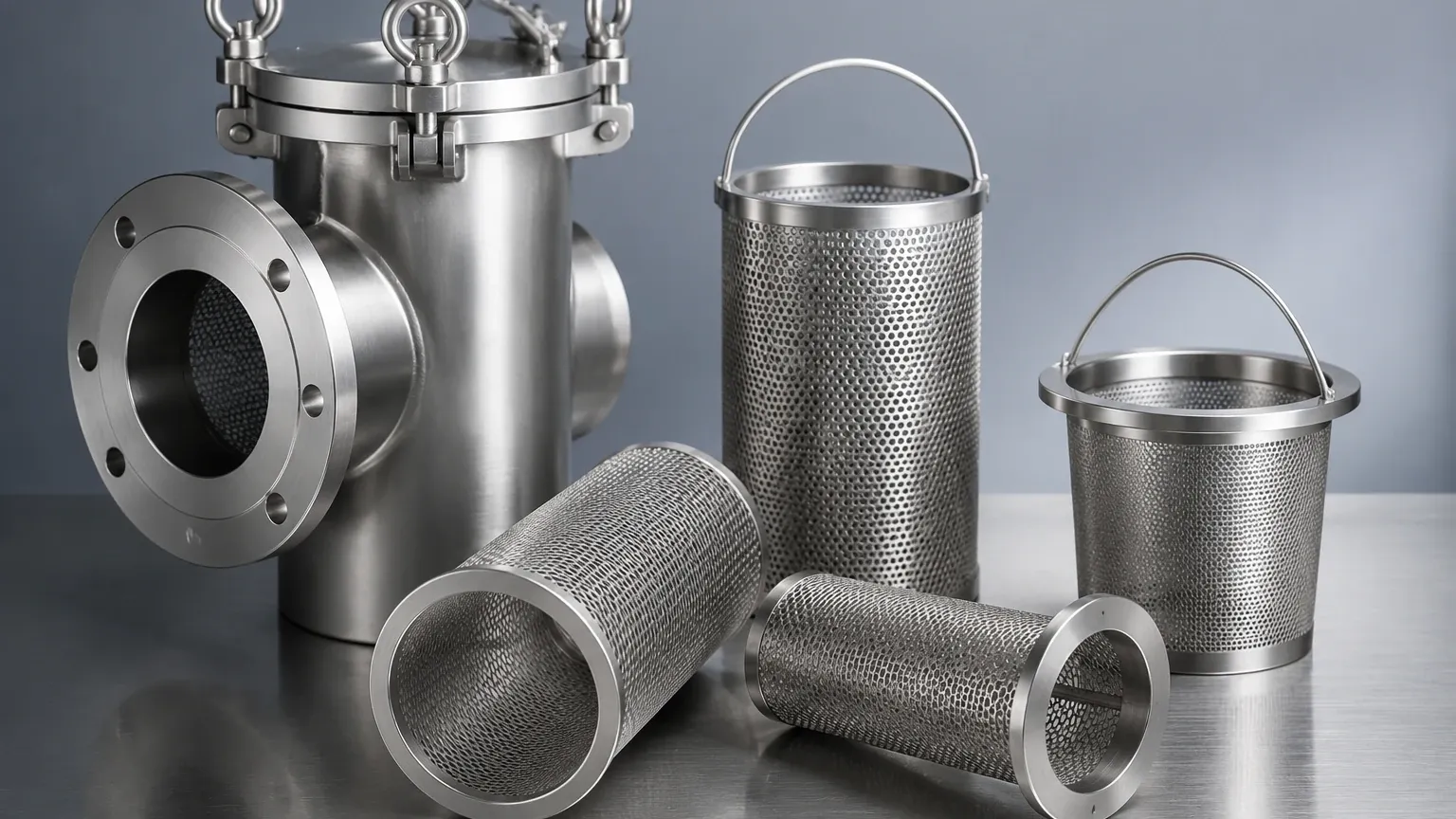
In industrial fluid management, the integrity of downstream equipment depends heavily on the efficiency of primary filtration components. Among these, bbl strainers—often referred to in the context of high-volume barrel-capacity processing—serve as a critical line of defense. These robust filtration units are designed to remove large-scale particulate matter from liquid streams, protecting pumps, valves, and heat exchangers from damage and clogging. For engineers and procurement specialists, selecting the right configuration of Strainers & Baskets involves a deep understanding of flow dynamics, material compatibility, and structural engineering.
As a specialized manufacturer of stainless steel filtration solutions, Kaifil provides precision-engineered components that meet the rigorous demands of chemical processing, food and beverage production, and hydraulic systems. This guide examines the technical nuances of bbl strainers, focusing on the engineering criteria that dictate performance in industrial environments.
The Role of Bbl Strainers in Industrial Systems
Bbl strainers are high-capacity filtration devices typically integrated into piping systems where large volumes of liquid (often measured in barrels or high-flow gallons per minute) must be processed continuously. Unlike fine micron filters that target microscopic particles, these strainers are designed to capture larger debris, scale, and foreign objects that could cause catastrophic mechanical failure in downstream components.
In sectors such as oil and gas, water treatment, and chemical manufacturing, the term "bbl" signifies the scale of operation. The strainers used in these applications must balance high flow rates with minimal pressure drop. If a strainer is undersized or poorly designed, it becomes a bottleneck, forcing pumps to work harder and increasing energy consumption across the entire facility.
Engineering Considerations for High-Capacity Filtration
When specifying bbl strainers for an industrial application, several engineering variables must be evaluated to ensure long-term reliability and filtration accuracy.
1. Flow Rate and Differential Pressure
The most critical factor in strainer selection is the relationship between flow rate and pressure drop (delta P). Every bbl strainer introduces some resistance to the fluid stream. Engineers must calculate the "clean pressure drop" to ensure it falls within the system's allowable limits. As debris accumulates in the basket, the pressure drop increases. A well-designed basket provides a high ratio of open area to pipe area—typically 6:1 or higher—to extend the time between cleaning cycles.
2. Filtration Media and Micron Ratings
The choice of filtration media within the strainer determines what size of particles will be captured. Bbl strainers often utilize a combination of perforated metal for structural strength and fine wire mesh for precise filtration.
* Perforated Metal: Provides the primary structural cage. Common hole patterns include staggered rounds or squares, chosen based on the required mechanical strength.
* Wire Mesh Liners: For finer filtration, a stainless steel wire mesh is sintered or welded to the interior of the basket. This allows for filtration levels ranging from 20 mesh down to 400 mesh or finer, depending on the fluid viscosity and the nature of the contaminants.
3. Structural Integrity and Burst Pressure
In high-pressure systems, the basket within the strainer is subjected to significant mechanical stress, especially when it becomes partially clogged. If the differential pressure exceeds the basket's structural limits, it can collapse, sending both the debris and the damaged filter media into the downstream equipment. Kaifil designs custom baskets with reinforced frames and heavy-duty longitudinal welds to withstand these high-stress conditions.
Material Selection: The Stainless Steel Advantage
For most industrial bbl strainers, stainless steel is the preferred material due to its mechanical properties and chemical resistance. Depending on the environment, different grades are utilized:
* SS304/304L: The standard choice for general industrial applications, offering good corrosion resistance and excellent fabrication characteristics. It is widely used in water treatment and general chemical handling.
* SS316/316L: Contains molybdenum, which provides superior resistance to chlorides and acetic acids. This is the industry standard for marine environments, pharmaceutical manufacturing, and the food and beverage sector where stringent hygiene and corrosion resistance are mandatory.
* Specialty Alloys: In highly aggressive chemical environments, duplex stainless steel or nickel-based alloys may be required to prevent pitting and stress corrosion cracking.
Kaifil’s expertise in material selection ensures that every component is matched to the specific chemical profile and temperature range of the application, preventing premature failure due to material degradation.
Design Variations in Strainers & Baskets
The physical configuration of bbl strainers is usually dictated by the installation space and the requirement for continuous operation. The two primary designs are simplex and duplex strainers.
Simplex Strainers
Simplex designs are used in systems where the flow can be temporarily shut down to clean or replace the basket. These are cost-effective and compact, making them ideal for batch processing or systems with redundant piping runs.
Duplex Strainers
In critical applications where downtime is not an option, duplex strainers are employed. These units consist of two separate strainer chambers connected by a diversion valve. When one basket reaches its debris capacity, the flow is switched to the clean chamber, allowing the operator to service the full basket without interrupting the process. This is common in lubrication systems, continuous chemical reactors, and cooling water loops.
Custom Basket Geometries
Beyond the housing, the basket itself can be customized. Slanted baskets, multi-basket designs, and pleated mesh inserts are all options used to increase the effective filtration area (EFA). By increasing the EFA, the velocity of the fluid passing through the mesh is reduced, which lowers the pressure drop and improves the capture efficiency of the strainer.
Application-Specific Requirements
Different industries impose unique demands on bbl strainers. Understanding these requirements is essential for proper procurement.
Chemical and Petrochemical
In these sectors, bbl strainers must handle aggressive solvents and high temperatures. The seals and gaskets used in the strainer housing must be compatible with the process fluid (e.g., PTFE or Viton). Furthermore, the structural design must often comply with ASME Section VIII pressure vessel codes.
Food and Beverage
Hygiene is the priority here. Strainers must feature smooth internal surfaces (low Ra finish) to prevent bacterial growth and allow for effective Clean-in-Place (CIP) procedures. Stainless steel 316L is typically required, and the baskets must be designed for easy removal and thorough sanitization.
Hydraulic and Lube Oil Systems
In these applications, the primary goal is protecting sensitive pumps and bearings. Bbl strainers are often placed on the suction side of the pump. Because pumps are sensitive to cavitation, the pressure drop across the suction strainer must be kept extremely low, necessitating large baskets with high-porosity mesh.
Maintenance and Total Cost of Ownership
While the initial purchase price of bbl strainers is an important factor, the total cost of ownership (TCO) is largely determined by maintenance requirements and operational efficiency. A poorly designed strainer that requires frequent manual cleaning or causes significant pressure loss will quickly become more expensive than a high-quality custom solution.
Monitoring Performance
To optimize maintenance cycles, many industrial systems utilize differential pressure gauges across the strainer. By monitoring the delta P, operators can identify the exact moment a basket requires cleaning, preventing both unnecessary downtime and the risk of basket collapse.
Cleaning and Reusability
One of the primary benefits of stainless steel Strainers & Baskets is their reusability. Unlike disposable cartridge filters, stainless steel baskets can be cleaned via backwashing, ultrasonic cleaning, or chemical soaking. This significantly reduces the waste stream and long-term consumable costs of the filtration system.
Confirming Specifications Before Purchase
When partnering with a manufacturer like Kaifil for custom bbl strainers, engineers should have the following data points confirmed:
1. Fluid Characteristics: Viscosity, density, and chemical composition.
2. Operating Parameters: Maximum flow rate, operating pressure, and temperature fluctuations.
3. Contaminant Profile: The type of debris expected (sludge, scale, sand) and the desired particle retention size.
4. Connection Requirements: Flanged, NPT, or socket-weld connections, and the relevant piping standards (ANSI, DIN, JIS).
5. Space Constraints: The physical footprint available for the strainer housing and the clearance required for basket removal.
Conclusion
Bbl strainers are indispensable components in the infrastructure of modern industry. By selecting high-quality stainless steel constructions and focusing on precision engineering, facilities can ensure the longevity of their mechanical systems and the purity of their process fluids. Whether the application requires a standard simplex unit or a highly customized multi-basket duplex system, the focus should always remain on balancing filtration efficiency with system hydraulics.
Kaifil continues to support global industries by providing technical expertise and manufacturing excellence in the field of industrial filtration. By addressing the specific challenges of each application—from material compatibility to custom flow geometries—Kaifil ensures that every filtration solution delivers dependable performance in the most demanding environments.
