


Best Strainers
In industrial fluid handling systems, the term "best" is rarely a universal designation. The efficiency of a filtration system depends entirely on the alignment between the strainer’s technical specifications and the operational demands of the application. For engineers and procurement professionals, identifying the best strainers involves evaluating mechanical integrity, material compatibility, and the specific nature of the contaminants being removed.
Industrial strainers serve as the primary line of defense for downstream equipment, such as pumps, flow meters, and control valves. By removing coarse particles from liquid or gas streams, these components prevent mechanical wear, clogging, and costly system downtime. This guide explores the engineering considerations and selection criteria necessary to identify the optimal filtration solution for demanding industrial environments.
Defining the Best Strainers for Industrial Applications
When evaluating filtration components, the "best" choice is the one that balances filtration precision with system throughput and maintenance requirements. In a B2B context, the best strainers are characterized by their ability to maintain structural integrity under pressure while providing a predictable service life.
Key performance indicators include:
* Filtration Accuracy: The ability to capture particles of a specific micron size without causing excessive resistance to flow.
* Structural Durability: Resistance to pressure surges, corrosion, and mechanical fatigue.
* Ease of Maintenance: The speed and safety with which a filter element can be cleaned or replaced.
* Total Cost of Ownership (TCO): Balancing the initial purchase price against the longevity and cleaning frequency of the unit.
For most heavy-duty applications, stainless steel is the preferred material due to its high strength-to-weight ratio and excellent resistance to chemical degradation.
Critical Engineering Considerations for Strainer Selection
Selecting the best strainers requires a deep dive into the fluid dynamics and chemical properties of the process media. Engineering teams must confirm several variables before finalizing a design or purchase order.
1. Flow Rate and Pressure Drop
Every strainer introduces some level of resistance to the flow, known as pressure drop (ΔP). The best strainers are designed with a high "Open Area Ratio" (OAR). The OAR is the relationship between the total area of the openings in the strainer element and the cross-sectional area of the inlet pipe. A higher OAR generally results in a lower initial pressure drop and longer intervals between cleanings. For most industrial basket strainers, an OAR of 6:1 or 8:1 is considered ideal for maintaining flow efficiency.
2. Micron Rating and Mesh Selection
Filtration requirements are defined by the size of the smallest particle that must be removed. This is typically measured in microns or mesh size.
* Perforated Metal: Used for coarse filtration, providing high mechanical strength for large debris.
* Wire Mesh: Used for finer filtration. Multiple layers of stainless steel wire mesh can be sintered together to provide both fine filtration and structural support.
Selecting a mesh that is too fine for the application will lead to rapid clogging and frequent maintenance, while a mesh that is too coarse will fail to protect downstream equipment.
3. Material Compatibility
The best strainers for chemical processing or pharmaceutical applications must be constructed from materials that will not react with the process fluid. Grade 304 stainless steel is suitable for many general-purpose applications, but Grade 316 or 316L is often required for environments involving chlorides, acids, or high-temperature steam. In highly corrosive environments, specialty alloys like Monel or Hastelloy may be necessary.
Types of Industrial Strainers and Baskets
To choose the best strainers, one must understand the structural differences between common designs. Each configuration is suited to specific flow patterns and debris loads.
Y-Strainers
Y-strainers are characterized by their compact, "Y" shaped body. They are typically used in pressurized lines, either liquid or gas, where the amount of material to be removed is relatively small. Their primary advantage is that they can be installed in either horizontal or vertical positions, provided the "leg" of the Y points downward to collect debris.
Basket Strainers
Basket strainers feature a larger housing and a removable, basket-shaped element. Because the basket has a much larger surface area than a Y-strainer element, it can hold more debris before requiring cleaning. This makes them the best strainers for applications with higher solids loading. They are generally installed in horizontal pipelines where the strainer can be serviced from the top.
Duplex Strainers
In processes where the flow cannot be shut down for maintenance, duplex strainers are the standard choice. These units consist of two separate strainer baskets connected by a diverting valve. When one basket becomes clogged, the flow is diverted to the second basket, allowing the first to be cleaned without interrupting the process. This is critical in chemical plants and power generation facilities where continuous operation is mandatory.
For a comprehensive look at available configurations, engineers can Review product options and application support to determine which geometry fits their existing piping layout.
The Role of Customization in High-Performance Filtration
Off-the-shelf solutions often fall short in specialized industrial environments. The best strainers are frequently those that have been customized to meet specific spatial constraints or unique filtration challenges. Customization options often include:
* Custom Flange Connections: Ensuring the strainer fits perfectly into existing infrastructure without the need for complex adapters.
* Reinforced Baskets: Adding internal support structures to prevent basket collapse during high-pressure differentials.
* Multi-Layer Sintered Mesh: Combining different mesh counts to achieve depth filtration, which increases the dirt-holding capacity compared to single-layer screens.
* Magnetic Inserts: Adding magnets to the strainer basket to capture fine metallic particles that might otherwise pass through the mesh.
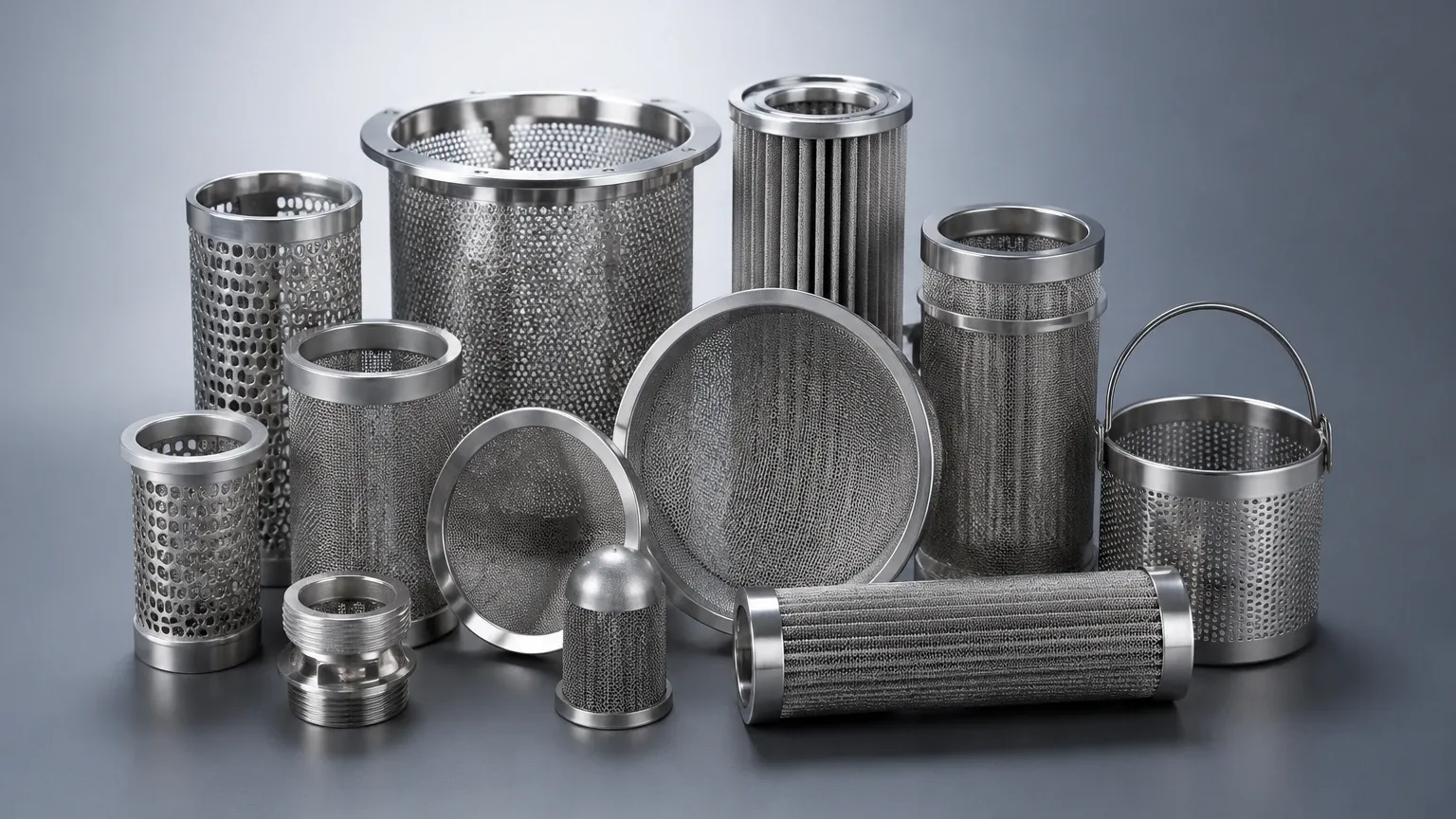
As a professional manufacturer, Kaifil specializes in these types of tailored Strainers & Baskets, ensuring that the filtration component is an exact match for the operational environment.
Industry-Specific Requirements
The criteria for the best strainers shift significantly depending on the industry sector:
Food and Beverage
In this sector, the best strainers must meet hygienic standards. This involves using 316L stainless steel with high-quality surface finishes (often electropolished) to prevent bacterial growth. The design must eliminate "dead legs" where fluid can stagnate and spoil.
Pharmaceutical and Biotech
Filtration in the pharmaceutical industry requires extreme precision and traceability. Strainers must be capable of withstanding rigorous Clean-in-Place (CIP) and Steam-in-Place (SIP) cycles. Material certifications and compliance with international standards are non-negotiable.
Oil and Gas / Hydraulic Systems
These applications deal with high pressures and often viscous fluids. The best strainers here are those with high mechanical strength and the ability to handle significant pressure differentials without bypass or structural failure.
Maintenance and Replacement Cycles
Even the best strainers require a structured maintenance program to ensure long-term performance. The frequency of cleaning is dictated by the pressure drop across the element. Most systems are equipped with differential pressure gauges; when the ΔP reaches a predetermined limit (typically 5-10 psi above the clean pressure drop), the strainer must be cleaned.
Cleaning Procedures for Stainless Steel Strainers:
1. Isolation: Safely isolate the strainer from the flow and relieve internal pressure.
2. Extraction: Remove the basket or element carefully to avoid damaging the mesh.
3. Cleaning: Use ultrasonic cleaning, high-pressure water, or chemical baths depending on the type of contaminant. For stainless steel wire mesh, avoiding abrasive tools is essential to maintain the integrity of the weave.
4. Inspection: Check for signs of mesh blinding, corrosion, or mechanical deformation before re-installation.
Failure to clean strainers promptly can lead to "breakthrough," where the pressure forces debris through the mesh, or complete basket failure, which sends metal fragments into the downstream equipment.
Evaluating Suppliers for Industrial Strainers
When sourcing the best strainers, the manufacturer’s technical expertise is as important as the product itself. A reliable supplier should provide:
* Material Certification: Verification of the stainless steel grade (e.g., MTRs).
* Engineering Support: Assistance in calculating pressure drops and selecting the correct OAR for the application.
* OEM Capabilities: The ability to manufacture components based on proprietary drawings or specific performance requirements.
* Quality Control: Rigorous testing protocols to ensure filtration accuracy and weld integrity.
Conclusion
Identifying the best strainers for an industrial system is a technical process that requires a thorough understanding of the fluid, the contaminants, and the operational environment. By focusing on material grade, open area ratios, and structural design, engineering teams can significantly reduce maintenance costs and protect high-value downstream assets.
Whether the application requires a standard Y-strainer for steam lines or a custom-engineered duplex basket system for chemical processing, the focus should always remain on durability and precision. For organizations looking to optimize their filtration processes, consulting with a specialized manufacturer like Kaifil ensures that the Strainers & Baskets selected are engineered for maximum reliability and performance.
