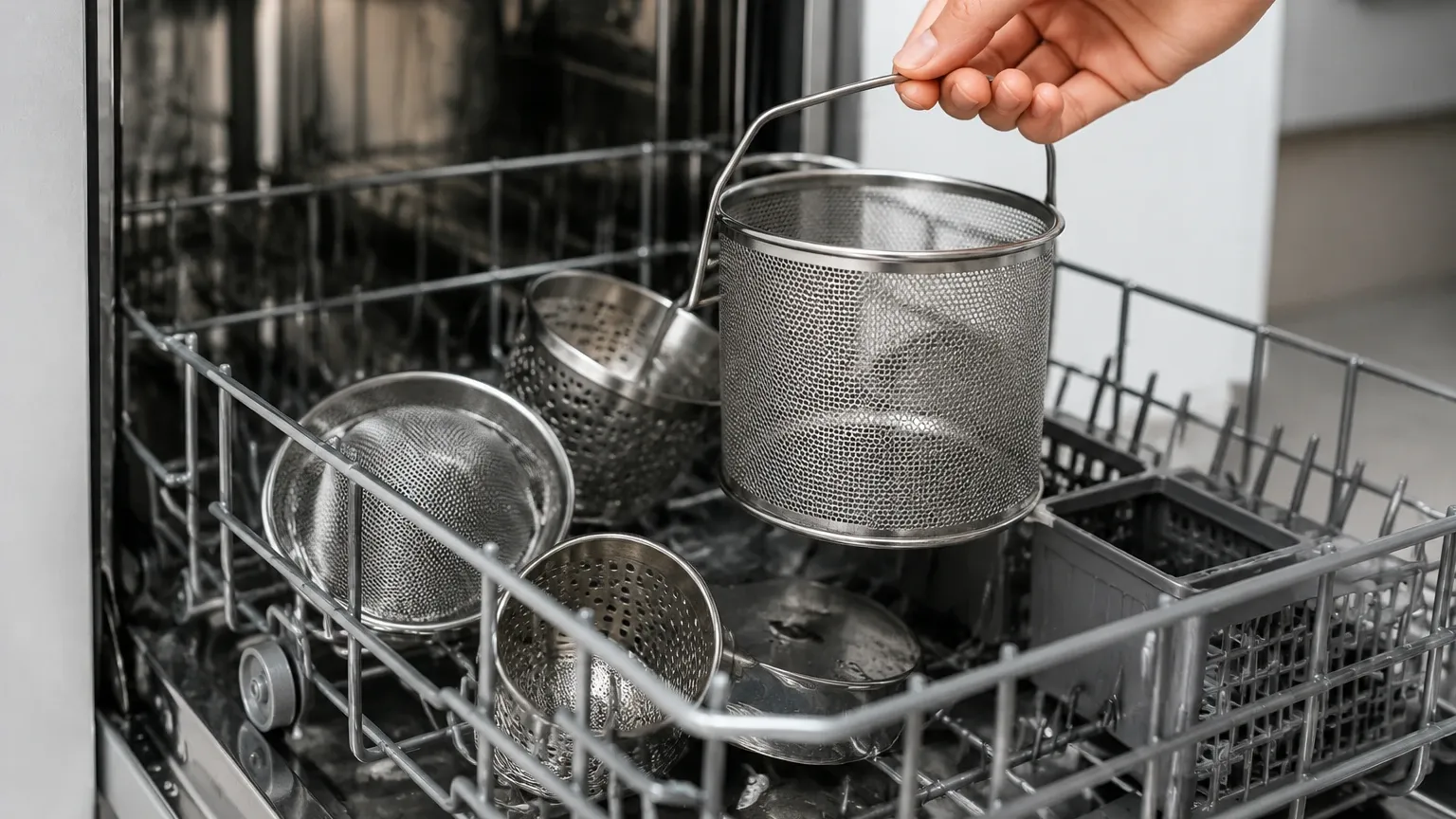
Can Strainers Go in the Dishwasher
In industrial processing environments, the maintenance and sanitation of filtration components are critical to operational efficiency, product purity, and equipment longevity. For engineers and facility managers, the question of whether Strainers & Baskets can be cleaned in automated systems—ranging from commercial-grade dishwashers to industrial parts washers—is a matter of material science, structural engineering, and chemical compatibility. While high-grade stainless steel filtration components are designed for extreme durability, the decision to use automated aqueous cleaning involves several technical variables that must be evaluated to prevent premature failure or loss of filtration accuracy.
Material Science: Stainless Steel Grades and Thermal Resilience
The primary factor determining if a strainer can withstand automated cleaning is its material composition. Industrial strainers are typically manufactured from austenitic stainless steel, most commonly Type 304 or Type 316L. These materials are chosen for their exceptional corrosion resistance and their ability to maintain structural integrity across a wide temperature spectrum.
When addressing the specific question, "can strainers go in the dishwasher," it is essential to look at the thermal limits of the metal. Standard commercial sanitizing cycles typically reach temperatures between 150°F and 180°F (65°C to 82°C). Stainless steel does not begin to undergo structural changes or annealing until temperatures exceed 800°F. Therefore, from a purely thermal standpoint, high-quality metal baskets are entirely safe for automated washing. However, the risk is not the heat itself, but the thermal expansion and contraction cycles. In low-quality components, repeated thermal cycling can stress inferior weld points, leading to micro-cracking over time. Kaifil utilizes advanced manufacturing processes to ensure that every weld is capable of withstanding these repetitive thermal stresses without compromising the unit's geometry.
Mechanical Design: Evaluating Structural Integrity Under Impingement
Beyond the material, the mechanical design of the filtration component dictates its suitability for automated cleaning. Industrial Strainers & Baskets often feature complex geometries, including multi-layered wire mesh, perforated metal supports, and precision-machined flanges. The cleaning action in a dishwasher is primarily "impingement-based," meaning it relies on the physical force of water jets hitting the surface.
For a coarse perforated basket, this pressure is negligible. However, for a fine mesh strainer (e.g., 20 to 100 microns), the high-velocity water can be problematic. If the mesh is not properly supported by a heavier backing screen or a perforated metal cage, the pressure from an automated washer might cause the mesh to "oil-can" (flex back and forth), eventually leading to work-hardening and fatigue failure of the wires.
Furthermore, engineers must consider the risk of mesh blinding. If the dishwasher's filtration system is not adequate, it may recirculate small particulates that become lodged in the fine pores of the strainer being cleaned. This creates a counter-productive cycle where the cleaning process actually introduces new contaminants. At Kaifil, we design our custom baskets with reinforced support structures specifically to handle the mechanical stresses of high-pressure cleaning systems, ensuring the mesh remains taut and the filtration rating stays accurate.
Chemical Compatibility: The Impact of Detergents on Passivation
The efficacy and safety of cleaning Strainers & Baskets in an automated system are heavily influenced by the chemistry of the cleaning agents. In industrial sectors like pharmaceutical and food processing, alkaline cleaners (high pH) or phosphoric acid-based detergents are common.
Stainless steel relies on a passive chromium oxide layer for its corrosion resistance. When asking "can strainers go in the dishwasher," one must audit the detergent's chemical profile.
1. Chlorides: The presence of chlorides in some industrial detergents poses a severe risk of pitting corrosion, particularly in Type 304 stainless steel. If the automated cycle does not include a rigorous fresh-water rinse, residual chlorides can concentrate in the crevices of the mesh or weld zones, leading to rapid localized failure.
2. pH Extremes: While stainless steel is generally resistant to alkaline solutions, prolonged exposure to highly acidic environments can strip the passive layer. If the passivation is compromised, the strainer becomes susceptible to "rouging" (the formation of iron oxide), which can contaminate the process stream.
3. Surfactants: Industrial dishwashers often use heavy-duty surfactants to break down oils. These are generally safe for the metal but must be thoroughly rinsed to ensure no chemical carryover occurs when the strainer is returned to service.
Industrial Cleaning Methodologies: Dishwashers vs. Ultrasonic Systems
While the term "dishwasher" is often used, industrial facilities often have a choice between impingement washers and ultrasonic cleaning tanks. Understanding the difference is vital for maintaining Strainers & Baskets.
* Impingement (Dishwasher) Cleaning: Best for removing large-scale debris, fats, and surface oils. It is highly effective for perforated baskets and coarse mesh. It is less effective for "blind" holes or deep crevices where the water jet cannot directly strike.
* Ultrasonic Cleaning: This method uses high-frequency sound waves to create cavitation bubbles in a cleaning solution. These bubbles implode on the surface of the metal, reaching deep into the weave of the mesh and into complex weldments. For high-precision filters or those used in hydraulic and pharmaceutical applications, ultrasonic cleaning is often superior to a standard dishwasher because it provides a more thorough clean without the mechanical stress of high-pressure water jets.
For many B2B applications, a hybrid approach is used: a standard automated wash to remove bulk contaminants, followed by an ultrasonic cycle for deep-pore cleaning. Engineers should verify that their strainer manufacturer uses TIG welding or other high-integrity joining methods, as ultrasonic energy can occasionally vibrate loose components that are only held by friction or low-quality spot welds.
Maintenance Best Practices: Ensuring Longevity and Filtration Accuracy
To maximize the service life of industrial filtration components, a standardized maintenance protocol should be established. Whether using an automated washer or manual cleaning, the following steps are recommended for industrial strainers:
* Pre-Cleaning Inspection: Before placing Strainers & Baskets in a dishwasher, inspect them for structural damage. A torn mesh or a cracked weld will only worsen under the stress of an automated cycle.
* Strategic Orientation: Place baskets in the washer in an orientation that prevents "pooling." Trapped water in the bottom of a basket can lead to concentrated chemical deposits upon drying, which may cause localized corrosion.
* Post-Wash Validation: For critical applications, a simple visual inspection is insufficient. Facilities should use a light-box test to check for mesh integrity or a pressure-drop test after the strainer is re-installed to ensure that the cleaning cycle successfully restored the component's flow characteristics.
* Drying Protocols: Rapid drying is essential. While stainless steel is rust-resistant, stagnant water in tight crevices can eventually lead to crevice corrosion. If the dishwasher does not have a high-heat drying cycle, components should be air-dried in a clean, low-humidity environment.
Custom Engineering: Designing Strainers for Automated Cleaning Cycles
Kaifil understands that in many modern facilities, labor costs and sanitation requirements make automated cleaning a necessity rather than an option. When we partner with global customers to develop custom filtration solutions, we take the "cleanability" of the component into account during the engineering phase.
We offer several enhancements for Strainers & Baskets that are destined for frequent automated cleaning:
* Electropolishing: This electrochemical process removes the outer layer of the metal, leaving a microscopically smooth surface. Electropolished strainers are significantly easier to clean in a dishwasher because contaminants have fewer places to adhere.
* Reinforced Weave Designs: For fine-micron applications, we can utilize sintered mesh—where multiple layers of wire cloth are fused together—to provide the necessary rigidity to withstand high-pressure water jets without deformation.
* Material Upgrades: In environments where aggressive detergents or high-chloride water are used, we recommend Type 316L or even high-nickel alloys to ensure the component survives hundreds of cleaning cycles without pitting.
In conclusion, the answer to "can strainers go in the dishwasher" is a qualified yes. For standard stainless steel baskets, automated cleaning is an efficient and effective maintenance strategy. However, for precision-engineered filtration components, the process must be carefully controlled. By focusing on material quality, structural reinforcement, and chemical compatibility, engineers can ensure that their filtration systems remain both clean and functional over a long service life.
For technical assistance in selecting the most durable filtration components for your specific industrial environment, Review product options and application support to find a solution tailored to your operational needs.