


Groco Sea Strainers
In industrial and marine fluid management, the protection of downstream equipment from raw water contaminants is a critical engineering priority. Sea strainers serve as the primary line of defense for heat exchangers, cooling systems, and pumps by removing macro-particles, organic debris, and sediment from intake lines. Among the industry standards for these components, Groco sea strainers have established a reputation for durability and reliability. However, for engineers and procurement professionals, understanding the technical nuances of these systems—and the specialized Strainers & Baskets that drive their performance—is essential for optimizing system uptime and reducing maintenance overhead.
This guide examines the engineering principles, material considerations, and selection criteria associated with high-performance sea strainers, providing a technical framework for evaluating filtration solutions in demanding environments.
The Engineering Role of Sea Strainers in Industrial Systems
Sea strainers are essentially specialized pressure vessels designed for coarse filtration. Unlike fine-micron filters used in chemical polishing or pharmaceutical sterile fill, a sea strainer’s primary objective is high-flow capacity with minimal pressure drop. In a typical raw water intake system, the strainer must handle significant volumes of water while capturing debris that could otherwise cause catastrophic failure in high-speed impellers or clog the narrow passages of a plate-and-frame heat exchanger.
When evaluating groco sea strainers or similar industrial intake solutions, engineers focus on the "open area ratio." This is the ratio of the total area of the holes in the internal basket to the cross-sectional area of the inlet pipe. A high ratio, typically 6:1 or greater, ensures that even as the basket begins to accumulate debris, the system does not experience a significant increase in backpressure. Maintaining this ratio is critical for the longevity of centrifugal pumps, which can suffer from cavitation if the suction side is restricted.
Material Science: Corrosion Resistance and Durability
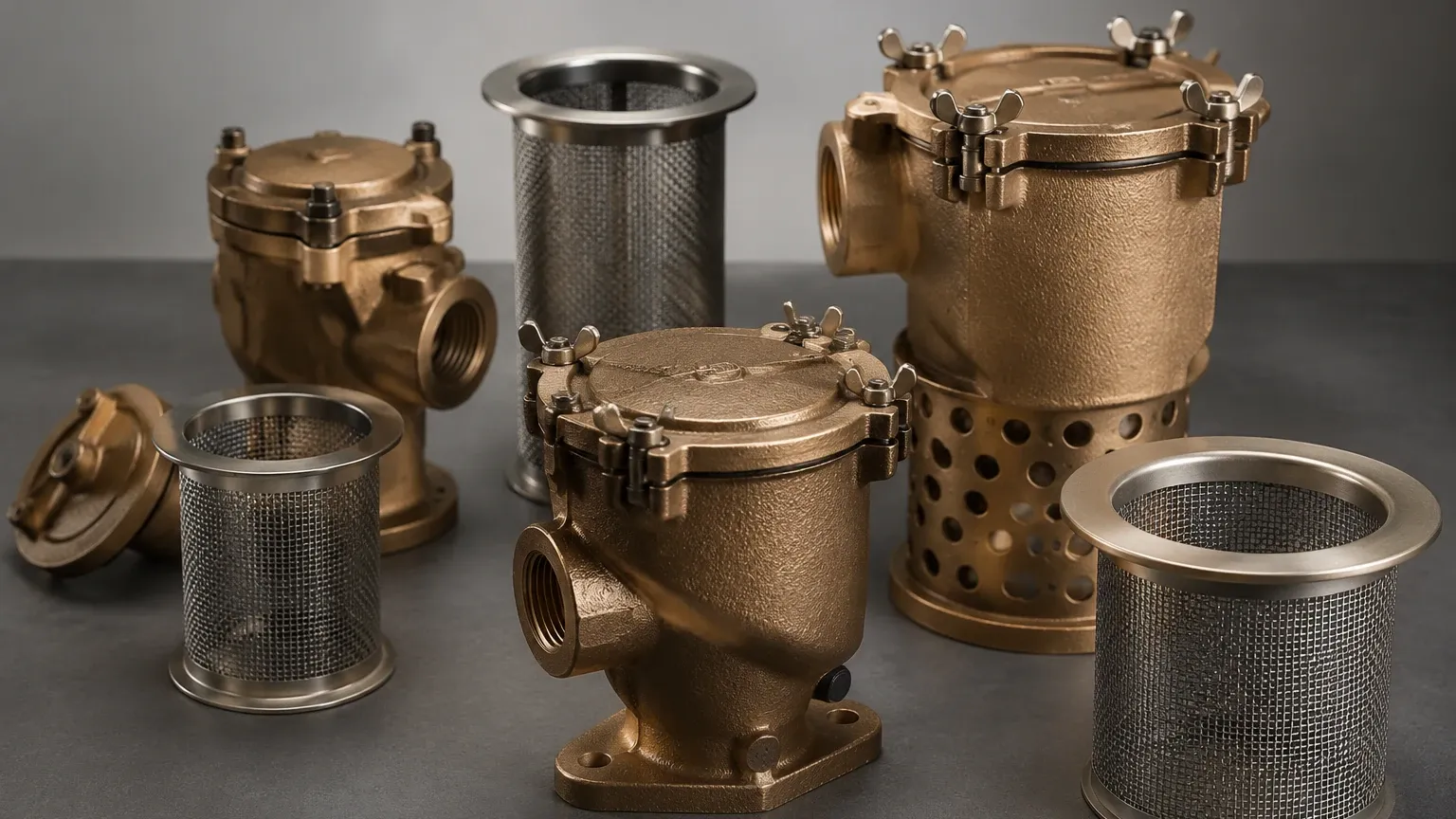
In marine and brackish water applications, material selection is the single most important factor in determining the total cost of ownership (TCO). Groco sea strainers typically utilize high-grade bronze housings, known for their resistance to dezincification and general corrosion in saltwater. However, the internal components—specifically the baskets—are where the actual filtration occurs and where material fatigue is most common.
Stainless Steel vs. Alternative Alloys
Most high-performance Strainers & Baskets are manufactured from stainless steel, specifically Grade 304 or 316.
* 304 Stainless Steel: Suitable for freshwater and less corrosive industrial fluids. It offers excellent structural integrity but is susceptible to pitting in high-chloride environments.
* 316 Stainless Steel: The industry standard for marine and chemical processing. The addition of molybdenum provides enhanced resistance to chloride-induced pitting and crevice corrosion.
* Monel and Super Duplex: For extreme environments where even 316 stainless steel fails, specialized alloys are utilized to prevent galvanic corrosion and stress corrosion cracking.
For engineers replacing components in existing groco sea strainers, it is vital to ensure that the basket material is compatible with the housing to prevent galvanic action. Using a stainless steel basket in a bronze housing is generally acceptable in marine environments due to the relatively close positions of these metals on the galvanic series, provided that sacrificial anodes are maintained within the system.
Technical Specifications of Filter Baskets
The performance of a strainer is dictated by the geometry and construction of its internal basket. When sourcing replacements or custom designs for industrial applications, several technical parameters must be confirmed.
Perforation vs. Wire Mesh
Baskets are typically constructed in two ways: perforated metal or wire mesh over a perforated support.
1. Perforated Metal: These are robust and easy to clean, typically used for larger debris. Hole sizes usually range from 1/32" to 1/4". They are ideal for protecting large pumps from rocks, shells, and heavy plastic debris.
2. Wire Mesh Liners: When finer filtration is required—such as protecting sensitive nozzles or heat exchanger plates—a stainless steel wire mesh is sintered or welded to the interior of a perforated basket. This allows for filtration ratings down to 50 microns or less while maintaining the structural rigidity needed to withstand high flow velocities.
Structural Integrity and Flow Dynamics
A common failure point in groco sea strainers is the collapse of the basket under high differential pressure. This occurs when the basket becomes heavily fouled and the pump continues to pull a vacuum. Engineering high-quality baskets involves calculating the maximum allowable pressure drop (ΔP) and reinforcing the basket with longitudinal ribs or heavier gauge end caps to prevent deformation.
Maintenance Cycles and Performance Monitoring
Effective filtration management requires a proactive maintenance schedule. In many industrial settings, sea strainers are equipped with transparent sight glasses (often made of high-impact polycarbonate or acrylic) to allow for visual inspection without breaking the seal. However, visual inspection is often insufficient for high-turbidity environments.
Differential Pressure Monitoring
For critical systems, engineers should install differential pressure gauges across the strainer. A rise in ΔP indicates that the Strainers & Baskets are reaching their debris-holding capacity. Cleaning should typically occur before the pressure drop exceeds 5-10 psi, depending on the pump's NPSH (Net Positive Suction Head) requirements.
Cleaning Protocols
The ease of cleaning is a hallmark of well-designed groco sea strainers. Features such as swing-bolt lids or quick-release knobs allow maintenance teams to extract the basket, rinse it, and return it to service in minutes. In industrial B2B contexts, minimizing this downtime is essential. If the process cannot be stopped, a duplex strainer configuration—where flow can be diverted to a secondary chamber while the first is cleaned—is the recommended engineering solution.
Customization and OEM Solutions for Sea Strainers
While standard groco sea strainers meet many marine requirements, industrial applications often demand customized internal components. Manufacturing expertise in stainless steel filtration allows for the development of bespoke baskets that fit existing Groco housings but offer modified performance characteristics.
Custom Micron Ratings
Standard off-the-shelf baskets may not provide the specific filtration accuracy required for specialized chemical processes. Custom manufacturers can produce baskets with specific mesh counts (e.g., 20×20, 40×40, or 100×100 mesh) to balance flow rate with particle retention.
Reinforced Designs for High-Pressure Systems
In hydraulic or high-pressure water injection systems, standard baskets may fail. Custom-engineered Strainers & Baskets can be built with thicker gauge materials, specialized welding techniques (such as TIG or plasma welding), and internal baffles to manage turbulent flow and extend the component's lifespan.
Common Risks and Mitigation Strategies
When managing sea strainers, engineers must account for several operational risks:
1. Biofouling: In marine environments, barnacles and algae can grow inside the strainer housing. Utilizing copper-based alloys or specialized coatings can mitigate this, but regular mechanical cleaning remains the most effective strategy.
2. Gasket Failure: The seal between the lid and the housing is a frequent leak point. Using high-quality elastomers like Viton or EPDM, which are resistant to temperature fluctuations and chemical exposure, is critical for maintaining system vacuum.
3. Air Ingress: If a strainer is located above the waterline, any leak in the lid seal can allow air into the pump intake, leading to loss of prime and potential pump damage. Ensuring the lid is properly torqued and the O-ring is lubricated is a standard but vital maintenance step.
Procurement Checklist for Engineers
Before purchasing or specifying components for groco sea strainers, technical teams should confirm the following data points:
* Pipe Size and Thread Type: Ensure compatibility with NPT, BSPP, or flanged connections.
* Maximum Flow Rate (GPM/LPM): Verify that the housing and basket can handle the peak flow without exceeding the target pressure drop.
* Filtration Grade: Determine the smallest particle size that must be removed to protect downstream equipment.
* Chemical Compatibility: Confirm that both the housing (bronze/aluminum) and the basket (304/316/Monel) are suitable for the fluid being processed.
* Space Constraints: Sea strainers can be bulky; verify that there is sufficient clearance for basket removal during maintenance.
Conclusion
Groco sea strainers represent a robust solution for raw water filtration, but their effectiveness is entirely dependent on the quality and suitability of the internal Strainers & Baskets. By focusing on material science, flow dynamics, and precise manufacturing standards, engineers can ensure that their filtration systems provide maximum protection with minimal maintenance. Whether utilizing standard components or seeking customized OEM filtration solutions, a deep understanding of these technical variables is the key to operational efficiency in any industrial or marine application.
