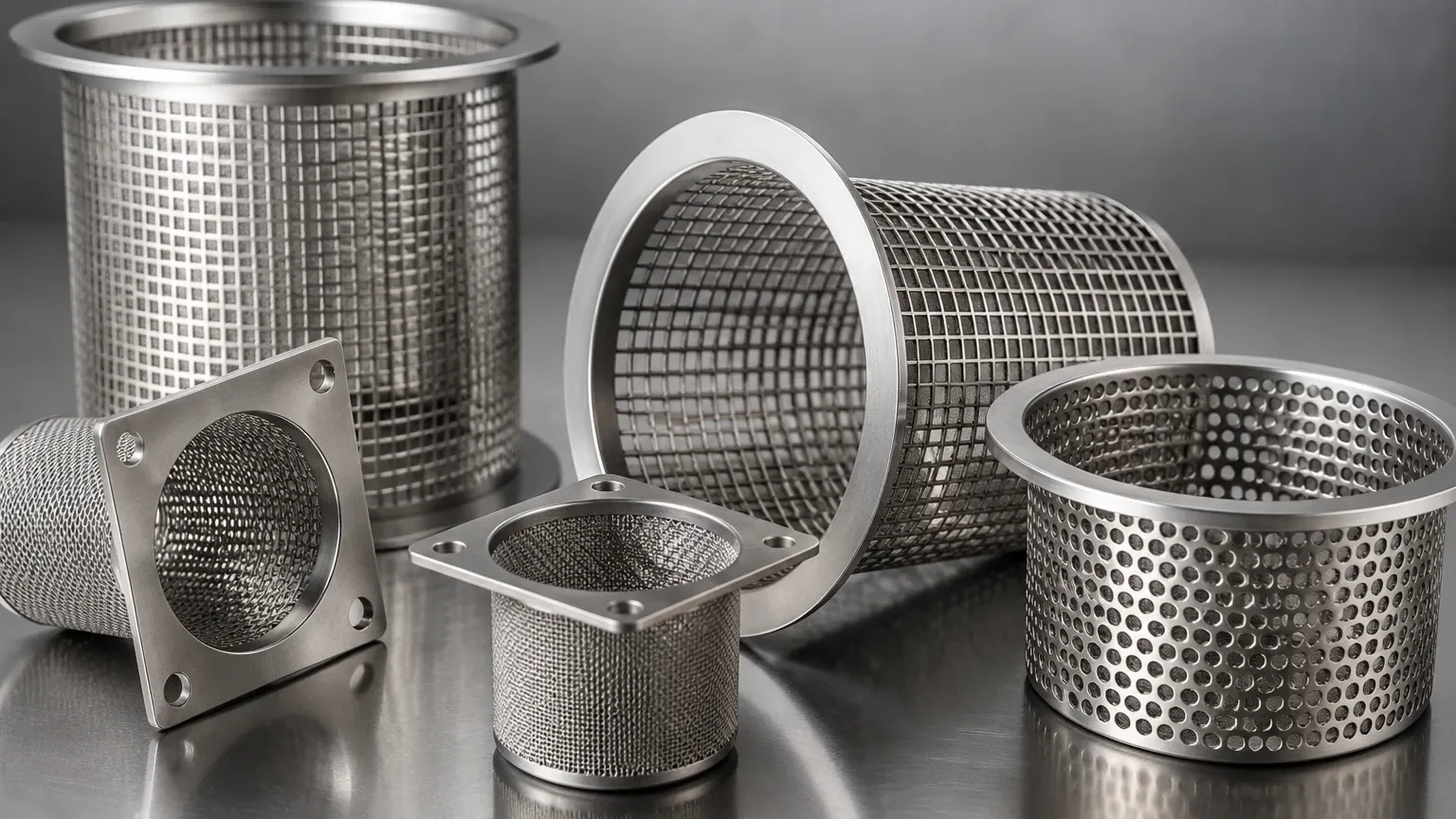
Grid Strainers
In industrial fluid handling systems, the protection of downstream equipment—such as pumps, valves, heat exchangers, and instrumentation—is a critical engineering priority. Grid strainers serve as a primary line of defense, designed to remove large particulate matter and debris from process streams. Unlike fine filtration systems that target microscopic contaminants, these robust components are engineered for high-flow capacity and mechanical strength. As a specialized manufacturer of Strainers & Baskets, Kaifil provides precision-engineered solutions that balance filtration efficiency with structural integrity.
Understanding the Role of Grid Strainers in Industrial Processes
Grid strainers are typically categorized as coarse filtration or "straining" components. Their primary function is to intercept solids that could cause mechanical failure or clogging in more sensitive system components. The term "grid" refers to the structural arrangement of the straining element, which often utilizes a heavy-duty perforated metal sheet or a reinforced wire mesh structure to create a rigid, stable barrier.
In sectors such as chemical processing, water treatment, and power generation, these strainers are indispensable. They are often installed at the intake of a system or immediately upstream of high-value machinery. By ensuring that large debris—such as scale, weld slag, or organic matter—is captured early, engineers can significantly extend the service life of the entire system and reduce the frequency of unscheduled maintenance shutdowns.
Structural Engineering and Design Considerations
The effectiveness of grid strainers is not merely a function of the hole size but also the mechanical design of the basket or element. Industrial environments often subject filtration components to high pressures, turbulent flow, and mechanical vibrations. Therefore, the construction of the grid must account for several engineering variables:
1. Mechanical Strength: The straining element must withstand the differential pressure (ΔP) that occurs as the strainer becomes loaded with debris. If the grid is too weak, it may collapse or deform, allowing contaminants to bypass the system or causing a total blockage.
2. Support Structures: For larger industrial applications, grid strainers are often reinforced with internal or external support cages. These cages provide the necessary rigidity to handle high-velocity flows without compromising the integrity of the filtration medium.
3. Sealing Integrity: To prevent bypass, the interface between the strainer basket and the housing must be precisely machined. Kaifil utilizes advanced manufacturing techniques to ensure that the flange or ring of the strainer seats perfectly within the housing, ensuring that 100% of the fluid passes through the grid.
Material Selection for Durability and Corrosion Resistance
Material science is at the heart of industrial filtration. The choice of alloy determines the strainer's resistance to chemical attack, temperature fluctuations, and abrasive wear. For most grid strainers, stainless steel is the industry standard due to its versatile performance characteristics.
* Grade 304 Stainless Steel: This is the most common material for general industrial applications. It offers excellent strength and good corrosion resistance in non-aggressive environments, such as municipal water treatment or standard hydraulic systems.
* Grade 316/316L Stainless Steel: For applications involving corrosive chemicals, saltwater, or high-temperature steam, Grade 316 is preferred. The addition of molybdenum enhances its resistance to pitting and crevice corrosion, particularly in chloride-rich environments.
* Specialty Alloys: In extreme cases, such as highly acidic chemical processing or high-temperature petrochemical refining, specialty alloys like Monel, Inconel, or Hastelloy may be required. These materials are selected based on the specific chemical compatibility profile of the process fluid.
Beyond the alloy type, the surface finish of the grid strainers can also impact performance. Electropolishing or passivation may be applied to enhance corrosion resistance and reduce the likelihood of bacterial growth in food-grade or pharmaceutical applications.
Optimizing Flow Dynamics and Open Area Ratios
One of the most critical metrics for an engineer selecting a strainer is the "Open Area Ratio" (OAR). This ratio compares the total open area of the straining holes to the cross-sectional area of the inlet pipe. A well-designed grid strainer typically aims for an OAR of at least 4:1 or 6:1.
A high OAR is essential for several reasons:
* Reduced Pressure Drop: A larger open area allows the fluid to pass through the strainer with minimal resistance. This reduces the energy required by pumps to maintain flow rates and minimizes the initial pressure drop across the clean strainer.
* Extended Cleaning Cycles: A higher OAR means the strainer can accumulate a larger volume of debris before the pressure drop reaches a critical level. This directly translates to longer intervals between maintenance cycles, improving overall plant efficiency.
* Velocity Control: By distributing the flow over a larger surface area, the localized velocity through the grid openings is reduced. This prevents "jetting" effects that can drive soft contaminants through the mesh or cause erosion of the strainer material.
When specifying grid strainers, engineers must calculate the expected pressure drop based on the fluid's viscosity, specific gravity, and flow rate. Kaifil provides technical support to help determine the optimal hole size and arrangement to meet these performance requirements.
Customization and OEM Capabilities for Specialized Applications
Standard off-the-shelf strainers often fail to meet the unique constraints of specialized industrial equipment. Customization is frequently required to accommodate specific housing dimensions, flow patterns, or filtration targets. As a manufacturer specializing in custom stainless steel filtration, Kaifil works closely with OEM partners to develop bespoke grid strainers.
Customization options include:
* Bespoke Dimensions: Adjusting the height, diameter, and flange thickness to fit existing strainer housings without the need for piping modifications.
* Handle and Lifting Lug Designs: In large-scale systems, the weight of a debris-laden strainer basket can be significant. Custom handles, slanted tops, or heavy-duty lifting lugs facilitate safer and faster removal during maintenance.
* Multi-Layered Construction: For applications requiring both structural strength and finer filtration, a grid strainer can be designed with a heavy perforated metal outer layer and a fine wire mesh inner liner. This "composite" approach provides the benefits of both technologies.
* Reinforced Bottoms: In high-turbulence applications, the bottom of the strainer basket is often the most vulnerable point. Reinforcing the base with solid plates or additional cross-bars prevents mechanical failure.
Maintenance, Cleaning, and Operational Best Practices
The longevity of grid strainers depends heavily on proper maintenance and monitoring. Because these components are designed to capture debris, they will inevitably clog over time. Failure to clean a strainer can lead to high differential pressure, which may damage the strainer element or starve downstream pumps of fluid.
Pressure Monitoring: The most effective way to monitor strainer performance is through the use of differential pressure gauges. By measuring the pressure before and after the strainer, operators can identify exactly when the basket needs to be cleaned. A common rule of thumb is to clean the strainer when the pressure drop increases by 10-15 psi over the clean pressure drop.
Cleaning Procedures: Most grid strainers are designed for manual cleaning. The process typically involves isolating the strainer housing, venting pressure, and removing the basket. The debris can then be removed using high-pressure water, steam, or chemical cleaning agents, depending on the nature of the contaminant. It is essential to inspect the grid for signs of wear, corrosion, or mechanical deformation during each cleaning cycle.
Spare Parts Strategy: For critical processes, maintaining a set of spare baskets is highly recommended. This allows for a "swap-and-clean" strategy, where a clean basket is immediately installed, and the dirty one is cleaned offline. This reduces system downtime from hours to minutes.
Selecting the Right Strainer for Your Process
When engineers and purchasing teams evaluate Strainers & Baskets, several questions should be addressed to ensure the selected product is fit for purpose:
1. What is the maximum allowable pressure drop? This will dictate the required open area and hole size.
2. What are the chemical properties of the fluid? This determines the necessary stainless steel grade or specialty alloy.
3. What is the smallest particle that must be removed? While grid strainers are for coarse filtration, the specific hole size (e.g., 1/8", 1/4", or specific mesh counts) must be chosen to protect the most sensitive downstream component.
4. What are the flow conditions? High-velocity or pulsating flows may require reinforced grid structures to prevent fatigue failure.
By addressing these technical considerations during the design and procurement phase, industrial facilities can ensure reliable performance and minimize the total cost of ownership. Kaifil’s expertise in manufacturing precision metal filter components ensures that each grid strainer is built to the highest standards of durability and filtration accuracy, providing dependable protection for demanding industrial environments.
In conclusion, grid strainers are more than simple baskets; they are engineered components that play a vital role in system reliability. Whether for a new installation or a replacement for an existing system, focusing on material quality, structural design, and flow optimization is the key to successful industrial filtration.