


Jamison Products Strainers
In industrial fluid handling and pipeline management, the protection of downstream equipment such as pumps, valves, and flow meters is a critical operational requirement. Jamison Products strainers have long been established as a standard for high-capacity filtration in sectors ranging from oil and gas to chemical processing. For engineers and procurement teams, understanding the technical nuances of these components—and how they integrate with high-performance Strainers & Baskets—is essential for maintaining system integrity and minimizing unplanned downtime.
Industrial strainers are essentially coarse filters that remove larger particles from a process stream. Unlike fine filtration systems that may require frequent cartridge changes, a strainer is designed for durability and high flow rates. However, the effectiveness of any strainer assembly is heavily dependent on the design of the housing and the precision of the internal basket. This guide examines the engineering considerations associated with Jamison Products strainers and the broader technical landscape of industrial basket filtration.
Types of Industrial Strainers and Their Applications
When evaluating Jamison Products strainers, the first consideration is the mechanical configuration required for the specific application. The choice between simplex, duplex, or Y-type strainers depends largely on the permissible downtime for cleaning and the nature of the fluid being processed.
Simplex Strainers
Simplex strainers are used in systems where the flow can be shut down periodically for maintenance. These are typically used in batch processes or in systems with redundant piping. The primary advantage of a simplex design is its simplicity and lower initial capital cost. In these units, the fluid enters a large chamber where a basket captures debris. When the differential pressure reaches a predetermined limit, the system is depressurized, and the basket is removed for cleaning.
Duplex Strainers
For continuous flow applications where the process cannot be interrupted, duplex strainers are the industry standard. These units consist of two separate strainer chambers connected by a diverter valve. When one side becomes clogged, the operator can switch the flow to the clean chamber without stopping the process. This is particularly vital in lubrication systems, cooling water circuits, and fuel oil lines where a flow interruption could lead to catastrophic equipment failure.
Y-Type Strainers
Y-strainers are generally used for steam, gas, or liquid applications where the amount of debris to be removed is relatively small. They are compact and can be installed in either horizontal or vertical orientations. While they offer a lower holding capacity than basket-style strainers, they are often preferred for high-pressure applications due to their robust structural design.
Engineering Metrics: Pressure Drop and Flow Capacity
One of the most critical factors in selecting Strainers & Baskets is the calculation of pressure drop (∆P). Every strainer introduces a restriction into the piping system. If the pressure drop is too high, it can lead to cavitation in pumps or insufficient flow to downstream processes.
The Clean Pressure Drop
The "clean pressure drop" refers to the resistance offered by the strainer when the basket is completely free of debris. This is influenced by the viscosity of the fluid, the velocity of the flow, and the open area ratio (OAR) of the basket. Engineers typically aim for a clean pressure drop of less than 2 PSI.
Open Area Ratio (OAR)
The OAR is the ratio of the total open area of the holes in the basket to the cross-sectional area of the inlet pipe. A higher OAR (typically 6:1 or 8:1) ensures that the strainer can operate for longer periods between cleanings. When sourcing replacement baskets for Jamison Products strainers, it is vital to ensure that the mesh or perforation pattern maintains the required OAR to prevent excessive backpressure.
Material Selection and Chemical Compatibility
Industrial environments often involve corrosive fluids, high temperatures, or cryogenic conditions. The longevity of a strainer housing and its internal components depends on proper material selection.
1. Carbon Steel: Commonly used for oil and gas applications where corrosion is manageable and cost is a factor.
2. Stainless Steel (304/316): The standard for chemical processing, food and beverage, and pharmaceutical applications. Stainless steel offers excellent resistance to oxidation and a wide range of chemicals.
3. Specialty Alloys: For highly corrosive environments involving seawater or strong acids, materials like Monel, Hastelloy, or Duplex Stainless Steel may be required.
Beyond the housing, the internal basket must be compatible with the process fluid. A common failure point in industrial filtration is galvanic corrosion, which occurs when the basket material differs significantly from the housing material in the presence of an electrolyte. Ensuring that both the housing and the Strainers & Baskets are metallurgically compatible is a key engineering priority.
The Critical Role of the Internal Basket
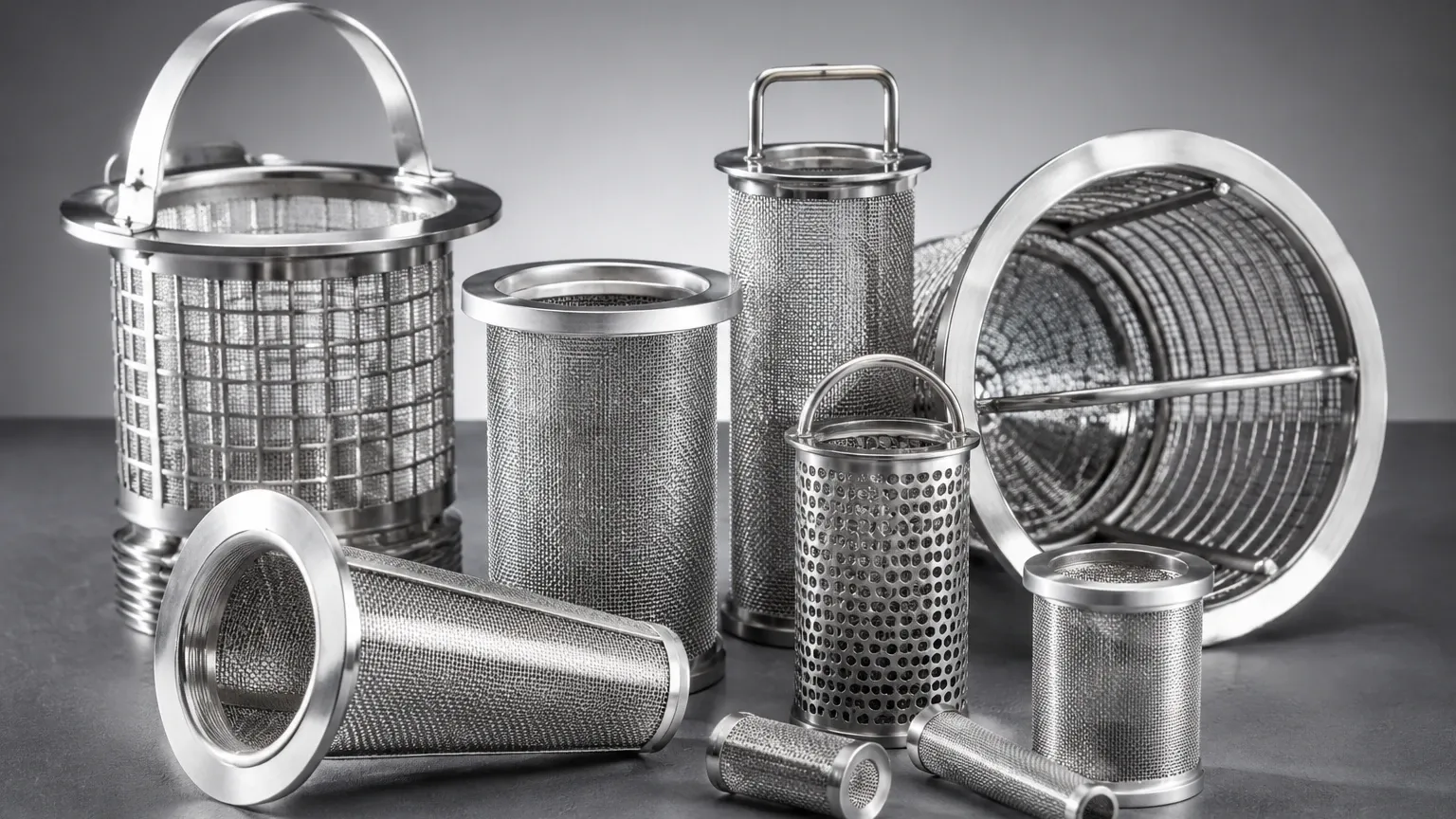
While the housing provides the pressure vessel, the basket is the functional heart of the strainer. The performance of Jamison Products strainers is fundamentally limited by the quality and precision of the basket used inside them.
Perforated Plate vs. Wire Mesh
Baskets are typically constructed from a perforated metal plate which provides structural strength. For finer filtration, this perforated plate is lined with a woven wire mesh.
* Perforations: These are suitable for removing large solids (e.g., 1/16" to 1/4" particles).
* Wire Mesh: This allows for much finer filtration, often down to 40 microns or less. The mesh must be securely bonded or welded to the perforated support to prevent bypass or structural collapse under high differential pressure.
Customization for Specific Applications
Standard baskets may not always meet the needs of specialized industrial processes. Custom-engineered baskets allow for modifications such as:
* Magnetic Inserts: Used to capture fine ferrous particles that might otherwise pass through a standard mesh.
* Reinforced Bottoms: To prevent deformation in high-velocity systems.
* Specialized Handle Designs: To facilitate easier removal in tight spaces or for use with automated lifting equipment.
Maintenance and Replacement Cycles
A common question for plant engineers is when to clean or replace the strainer basket. Operating a strainer beyond its rated capacity or with a heavily fouled basket can lead to basket collapse, which allows debris to bypass the filter and damage expensive downstream equipment.
Differential Pressure Monitoring
The most reliable method for determining maintenance cycles is the use of differential pressure gauges. These gauges measure the pressure before and after the strainer. A significant increase in the ∆P indicates that the basket is reaching its holding capacity. Most industrial standards recommend cleaning the basket when the pressure drop reaches 10-15 PSI over the clean pressure drop.
Inspection Protocols
During routine maintenance, baskets should be inspected for:
* Mesh Integrity: Look for tears, broken wires, or areas where the mesh has pulled away from the support frame.
* Gasket/Seal Condition: Ensure that the seals between the basket and the housing are intact. A compromised seal allows for "bypass," where fluid skips the filtration media entirely.
* Structural Deformation: Any bowing or denting of the perforated plate suggests that the strainer is being subjected to pressures beyond its design limits.
Procurement Checklist for Engineers
When specifying Jamison Products strainers or seeking high-quality replacement Strainers & Baskets, engineers should confirm the following technical details to ensure a successful installation:
* Flange Rating: Does the strainer meet ASME B16.5 or other relevant standards for the system’s design pressure and temperature?
* Filtration Level: Is the micron rating or perforation size appropriate for the smallest orifice in the downstream equipment?
* Seal Material: Are the O-rings or gaskets (Viton, EPDM, PTFE) compatible with the process fluid and temperature?
* Flow Direction: Is the system designed for inside-to-outside flow (standard for most baskets) or outside-to-inside flow?
* Certification Requirements: Does the application require NACE compliance (for sour gas), FDA approval (for food/pharma), or ASME Section VIII pressure vessel stamps?
Conclusion
Jamison Products strainers provide a robust foundation for industrial fluid management, but their long-term effectiveness depends on technical precision and regular maintenance. By focusing on the engineering fundamentals of pressure drop, material compatibility, and basket design, facilities can ensure that their filtration systems provide maximum protection with minimal energy loss. Whether you are installing a new system or optimizing an existing one, the quality of the internal Strainers & Baskets remains the most significant factor in achieving reliable, high-performance filtration.
