


Netting Strainers
In industrial fluid handling systems, the integrity of downstream equipment such as pumps, valves, and heat exchangers depends heavily on the efficiency of primary filtration. Netting strainers, often categorized within the broader scope of Strainers & Baskets, serve as a critical line of defense. These components are engineered to remove coarse solids from liquid or gas streams, preventing mechanical damage and reducing maintenance-related downtime. For engineers and procurement teams, selecting the appropriate netting strainer requires a technical understanding of material compatibility, flow dynamics, and the specific structural requirements of the application.
The Functional Role of Netting Strainers in Industrial Systems
Netting strainers are primarily used for coarse filtration, typically handling particles larger than 50 microns. Unlike fine depth filters that may require frequent replacement, these strainers are designed for durability and cleanability. Their primary function is to protect high-value assets from "tramp" solids—debris such as scale, weld slag, or foreign objects that may have entered the piping system during installation or maintenance.
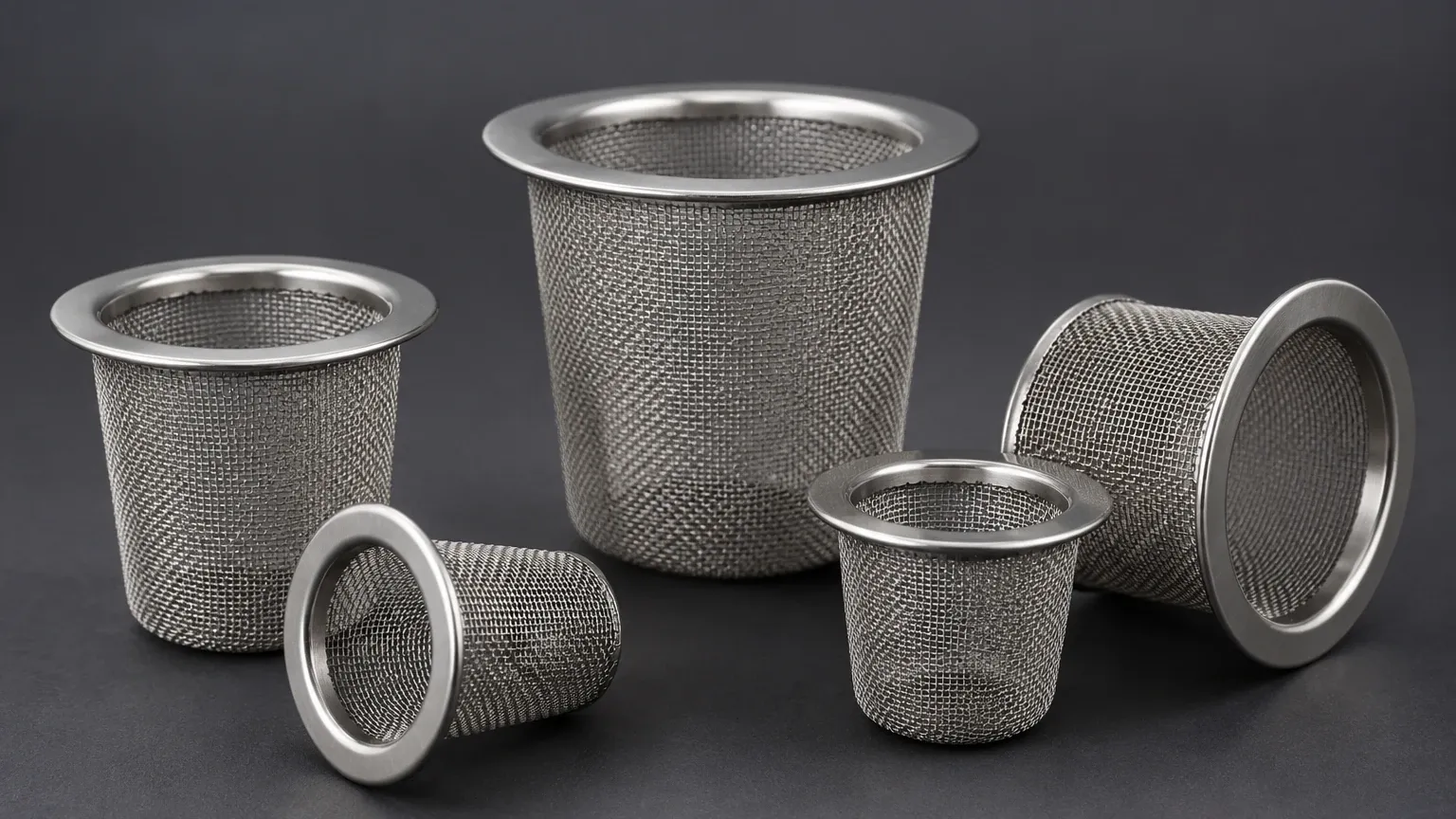
In a typical industrial circuit, the strainer is positioned upstream of a pump. This prevents cavitation and mechanical wear on the pump’s internal components. Because netting strainers are often the first point of contact for contaminated media, they must withstand significant physical stress. This necessitates a robust construction, usually involving a stainless steel mesh (the "netting") supported by a perforated metal cage to prevent the mesh from collapsing under high differential pressure.
Material Selection and Engineering Standards
Material selection is the most significant factor in determining the service life of netting strainers. Since these components are frequently exposed to corrosive chemicals, high temperatures, and abrasive solids, stainless steel is the industry standard.
Stainless Steel 304 vs. 316
* Type 304 Stainless Steel: This is the most common material for general industrial applications. It offers excellent strength and good corrosion resistance for water treatment, hydraulic oils, and mild chemical processing.
* Type 316/316L Stainless Steel: For more demanding environments, such as pharmaceutical manufacturing or chemical processing involving chlorides, Type 316 is preferred. The addition of molybdenum enhances its resistance to pitting and crevice corrosion, making it suitable for marine environments and acidic media.
Beyond basic metallurgy, engineers must consider the "open area ratio." This is the ratio of the total area of the holes in the mesh to the total area of the pipe inlet. A high open area ratio is essential for minimizing pressure drop. In most high-performance designs, an open area ratio of 4:1 or higher is targeted to ensure that the strainer does not become a bottleneck in the system.
Technical Specifications of Mesh and Weave Patterns
The "netting" in netting strainers is defined by its weave pattern and wire diameter. These factors determine the filtration accuracy (micron rating) and the mechanical strength of the strainer basket.
1. Plain Weave: The simplest and most common weave where each warp wire crosses alternately over and under each weft wire. It provides a consistent aperture size and is easy to clean.
2. Twill Weave: Used for heavier wire diameters or finer meshes. The wires are woven such that they pass over two and under two wires, allowing for a more robust mesh structure that can handle higher pressure loads.
3. Dutch Weave: This pattern uses different wire diameters for the warp and weft. It results in a much tighter, denser mesh that offers superior strength and is often used in high-pressure hydraulic applications where fine filtration is required alongside high mechanical stability.
When specifying netting strainers, it is important to distinguish between "mesh count" and "micron rating." Mesh count refers to the number of openings per linear inch, while the micron rating defines the actual size of the particles that will be retained. Engineers must ensure that the wire diameter is sufficient to prevent "wire migration" or deformation during high-velocity flow events.
Engineering Considerations: Flow Rate and Pressure Drop
A common challenge in the implementation of Strainers & Baskets is the management of differential pressure ($ΔP$). As solids accumulate on the netting, the available flow area decreases, leading to an increase in pressure drop. If the $ΔP$ exceeds the structural limits of the netting, the mesh may rupture, allowing contaminants to bypass the filter.
Calculating Effective Filtration Area
To optimize performance, the effective filtration area must be calculated based on the maximum expected solids loading. For systems with high particulate concentrations, a larger basket or a multi-layered netting approach may be necessary. Engineers should look for designs that incorporate:
* Low Initial Pressure Drop: A clean strainer should ideally contribute less than 2 PSI to the total system pressure drop.
* High Dirt Holding Capacity: The volume of the basket should be sufficient to allow for reasonable maintenance intervals.
* Structural Reinforcement: For high-flow applications, the netting should be spot-welded or seam-welded to a perforated metal support to ensure it maintains its shape under load.
Customization and Design Variations
Industrial applications rarely allow for "off-the-shelf" solutions without some level of modification. Customization of netting strainers allows for seamless integration into existing piping architectures and specific process requirements.
Basket Configurations
* Slant-Top Baskets: Designed for easy removal in tight spaces.
* Flat-Bottom Baskets: Provide maximum volume for solids collection in vertical housing units.
* Multi-Bag or Multi-Basket Systems: Used in high-flow environments where continuous operation is required; one side can be cleaned while the other remains in service.
Handle and Seal Designs
For ease of maintenance, handles can be customized (e.g., heavy-duty lifting eye bolts for large baskets). Furthermore, the sealing surface between the basket and the housing is critical. Options include O-ring seals for high-pressure gas applications or machined flange faces for liquid systems to ensure zero-bypass performance.
Application-Specific Requirements
Different industries impose unique constraints on the design of netting strainers. Understanding these nuances is vital for selecting the right component.
* Chemical Processing: Requires high resistance to aggressive solvents. Strainers often utilize 316L stainless steel or specialized alloys to prevent chemical degradation.
* Food and Beverage: Focuses on "sanitary" design. The netting strainers must feature smooth surface finishes (often electropolished) and be free of crevices where bacteria could proliferate. Compliance with FDA or 3A standards is often mandatory.
* Pharmaceuticals: Similar to food and beverage but with even tighter tolerances for material traceability and surface roughness (Ra values).
* Water Treatment: Often involves large-scale strainers designed to handle organic debris and sand. Durability and ease of backwashing are the primary concerns here.
Maintenance, Cleaning, and Total Cost of Ownership
While the initial purchase price of a netting strainer is an important factor, the total cost of ownership (TCO) is largely determined by maintenance requirements and the lifespan of the component. A well-engineered stainless steel strainer can last for years if maintained correctly.
Cleaning Protocols
Manual cleaning involves removing the basket and using a high-pressure water jet or ultrasonic bath to dislodge trapped particles. It is essential to inspect the netting for any signs of fraying or mechanical fatigue during every cleaning cycle. In automated systems, backwashing (reversing the flow) can be used to clear the mesh, though this is generally more effective for specific weave types like Dutch weave.
Replacement Indicators
The most reliable way to monitor a strainer’s condition is through the installation of differential pressure gauges. By setting a clear "change-out" or "cleaning" threshold (e.g., 10-15 PSI $ΔP$), facilities can prevent mesh failure and ensure consistent flow rates.
When the netting eventually shows signs of permanent deformation or when the mesh begins to separate from the support structure, replacement is necessary. Using high-quality OEM or custom-manufactured baskets ensures that the replacement fits perfectly within the existing housing, maintaining the original engineering specifications of the system.
Conclusion for Technical Buyers
Selecting netting strainers involves more than just matching a pipe size. It requires a detailed analysis of the media's physical and chemical properties, the required filtration accuracy, and the mechanical demands of the process. By focusing on high-quality materials and robust construction methods found in professional Strainers & Baskets, engineers can ensure their systems remain protected against contamination while optimizing throughput and minimizing maintenance costs. Whether for a new installation or a retrofit, confirming the mesh type, open area ratio, and structural reinforcement will lead to a more reliable and cost-effective filtration solution.
