


Noodle Strainers
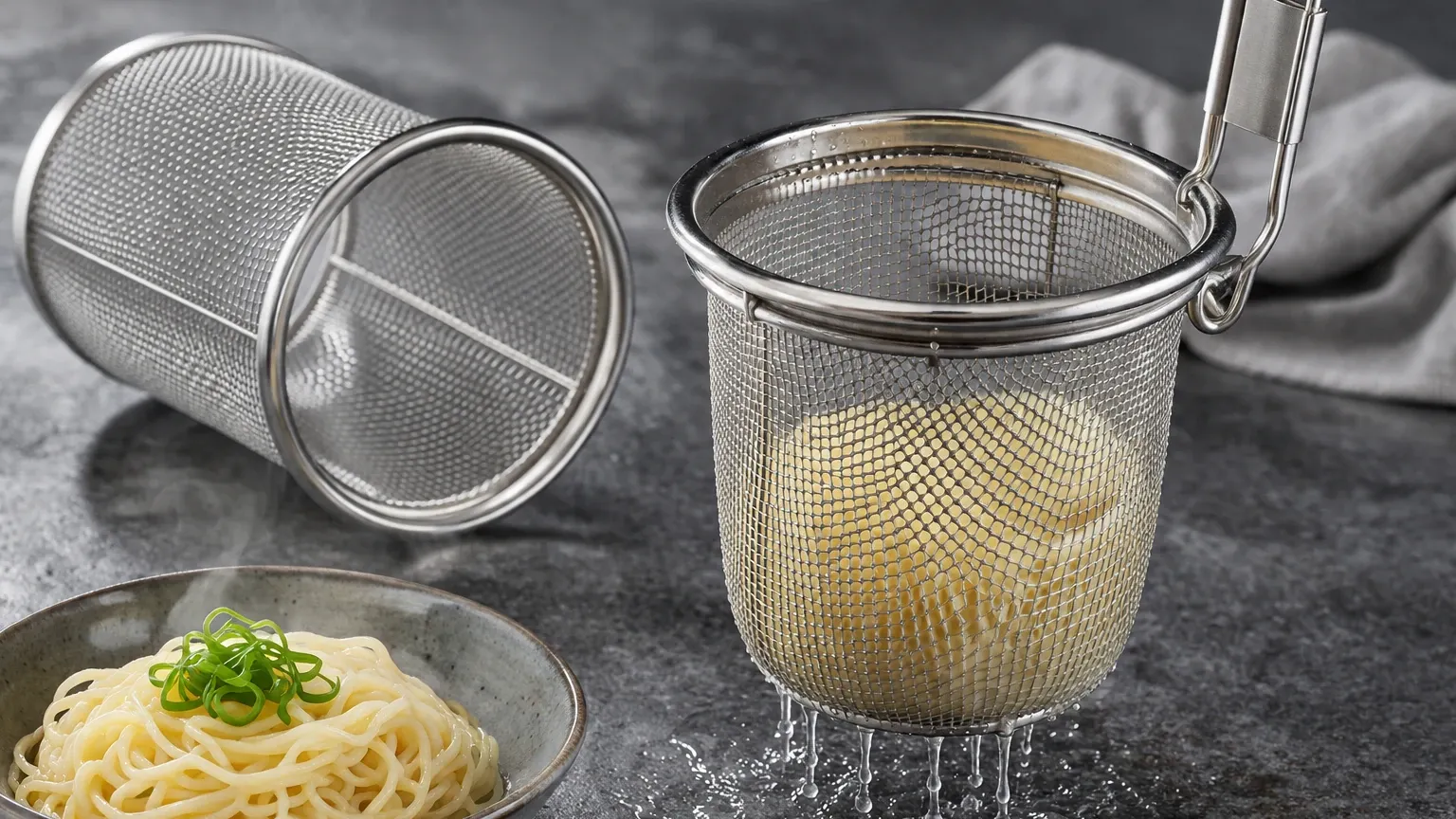
In the landscape of industrial food processing and large-scale commercial kitchens, the term "noodle strainers" refers to more than just a simple kitchen utensil. For engineers and procurement specialists, these components are critical elements of the broader category of Strainers & Baskets, designed to facilitate rapid liquid-solid separation under high-temperature and high-frequency conditions. Achieving the right balance between filtration precision, structural integrity, and hygiene compliance is essential for maintaining production efficiency and food safety standards.
When evaluating noodle strainers for industrial applications, the focus shifts from basic ergonomics to technical specifications such as material grade, mesh geometry, and weld durability. As a specialized manufacturer of stainless steel filtration solutions, Kaifil provides high-performance Strainers & Baskets that meet the rigorous demands of the modern food and beverage industry.
Engineering Specifications for Industrial Noodle Strainers
Industrial-grade noodle strainers must withstand continuous exposure to boiling water, steam, and acidic or alkaline cleaning agents. Unlike consumer products, these industrial components are engineered with specific technical parameters to ensure longevity and performance.
Material Selection: 304 vs. 316 Stainless Steel
The choice of material is the first and most critical decision in the engineering process. Most industrial noodle strainers are fabricated from AISI 304 or 316L stainless steel.
* AISI 304: Offers excellent corrosion resistance and is the standard for most food processing applications. It provides the necessary durability for high-temperature water immersion.
* AISI 316L: Recommended for environments involving high salt concentrations or specific chemical additives. The addition of molybdenum enhances resistance to pitting and crevice corrosion, which is vital for long-term structural integrity in harsh processing environments.
Mesh Configuration and Filtration Accuracy
The "mesh" of a noodle strainer determines both the drainage speed and the retention of solids. For industrial applications, the wire diameter and the aperture size must be precisely calculated. A mesh that is too fine may lead to rapid clogging and slow drainage, while a mesh that is too coarse may allow smaller food particles to pass through, potentially fouling downstream pumps or heat exchangers.
Structural Design and Hydraulic Efficiency
The efficiency of a strainer is largely dictated by its geometry. In high-volume production lines, the transition from boiling to cooling or packaging must happen within seconds. Therefore, the hydraulic conductivity of the strainer is a primary engineering concern.
Basket Geometry and Flow Dynamics
The shape of the basket—whether cylindrical, conical, or rectangular—affects how liquid moves through the mesh. A deeper basket increases the surface area for filtration but may create "dead zones" where heat is retained longer than desired. Engineers must calculate the open area percentage of the wire mesh to ensure that the flow rate meets the requirements of the production cycle.
Reinforcement and Load Bearing
Industrial noodle strainers often handle significant weights, especially when saturated with water. Structural reinforcement, such as support ribs or thickened rims, is necessary to prevent the mesh from deforming under the weight of the product. At Kaifil, we focus on precision welding techniques, such as TIG (Tungsten Inert Gas) or resistance welding, to ensure that the joints between the mesh and the frame remain intact under thermal expansion and mechanical stress.
Hygiene Standards and Surface Finishing
In the food and pharmaceutical sectors, the "cleanability" of a component is as important as its filtration performance. Noodle strainers must be designed to eliminate areas where organic matter can accumulate, which could lead to bacterial growth.
Electropolishing and Surface Roughness
To achieve the highest hygiene standards, industrial strainers often undergo electropolishing. This electrochemical process removes a fine layer of material from the surface, smoothing out microscopic peaks and valleys. The result is a mirror-like finish with a low Ra (Roughness Average) value, which significantly reduces the adhesion of food particles and makes the cleaning-in-place (CIP) process more effective.
Crevice-Free Construction
Engineers must ensure that all overlap joints and mesh-to-frame connections are fully sealed. Any small gap or crevice can become a harbor for contaminants. Using advanced manufacturing techniques, Kaifil ensures that our Strainers & Baskets feature smooth transitions and sanitary welds, complying with international food safety regulations.
Common Risks and Evaluation Criteria for Procurement
When sourcing noodle strainers for a facility, purchasing teams must look beyond the initial unit cost. Low-quality strainers often present hidden risks that can lead to significant downtime and safety hazards.
Identifying Potential Failure Points
1. Mesh Fraying: In poorly manufactured strainers, the individual wires of the mesh can break and enter the food stream. This is a major safety violation. High-quality strainers use lock-crimp or welded mesh to prevent wire migration.
2. Corrosion at Weld Points: If the welding process is not controlled (e.g., lack of shielding gas), the area around the weld can lose its stainless properties, leading to "weld decay" and eventual structural failure.
3. Inadequate Heat Treatment: Rapid cycling between boiling and cold water can cause thermal fatigue. Industrial strainers must be stress-relieved to handle these fluctuations without cracking.
Technical Confirmation Checklist
Before finalizing a purchase, engineers should confirm the following with their supplier:
* Material Certification: Request mill test reports (MTRs) to verify the chemical composition of the stainless steel.
* Load Capacity: Ensure the basket is rated for the maximum wet-weight of the product.
* Chemical Compatibility: Verify that the mesh and frame can withstand the specific detergents used in the facility’s sanitation protocol.
Customization and OEM Solutions
Standard off-the-shelf noodle strainers rarely meet the specific needs of automated industrial lines. Customization is often required to integrate the strainer into existing machinery or to handle unique product shapes.
Tailored Filtration Solutions
Kaifil specializes in OEM manufacturing, allowing for the customization of every aspect of the strainer:
* Custom Dimensions: Matching the exact footprint of the processing vat or conveyor system.
* Variable Mesh Sizes: Utilizing multi-layer mesh or perforated metal backups for high-pressure applications.
* Integrated Handling Features: Designing custom handles, mounting brackets, or automated tipping interfaces that align with the facility's robotics or manual labor workflows.
By working closely with an experienced manufacturer, engineering teams can optimize the filtration process to reduce waste and improve product consistency.
Total Cost of Ownership (TCO) in Industrial Filtration
While high-performance stainless steel strainers require a higher initial investment than light-duty alternatives, the Total Cost of Ownership (TCO) is significantly lower. A durable, well-engineered strainer reduces the frequency of replacements, minimizes the risk of batch contamination, and lowers labor costs associated with difficult cleaning procedures.
Longevity and Maintenance
Maintenance cycles for industrial noodle strainers involve regular inspection for mesh integrity and weld stability. Because high-quality 316L stainless steel is resistant to the aggressive chemicals used in heavy-duty cleaning, these components can remain in service for years, whereas lower-grade materials might fail within months. The ability to withstand repeated sterilization cycles without losing structural rigidity is the hallmark of a professional-grade filtration component.
Conclusion: Selecting the Right Partner
Selecting the appropriate noodle strainers for industrial use is a technical process that requires a deep understanding of material science, fluid dynamics, and food safety engineering. By focusing on high-quality Strainers & Baskets, facilities can ensure they are equipped with tools that enhance rather than hinder their production goals.
Kaifil remains committed to providing the engineering expertise and manufacturing precision needed to solve complex filtration challenges. Whether you require a standard basket design or a fully customized OEM filtration component, our focus on quality and durability ensures that your operations run smoothly and safely. When making your next procurement decision, prioritize technical specifications and proven manufacturing reliability to achieve the best long-term results for your facility.
