


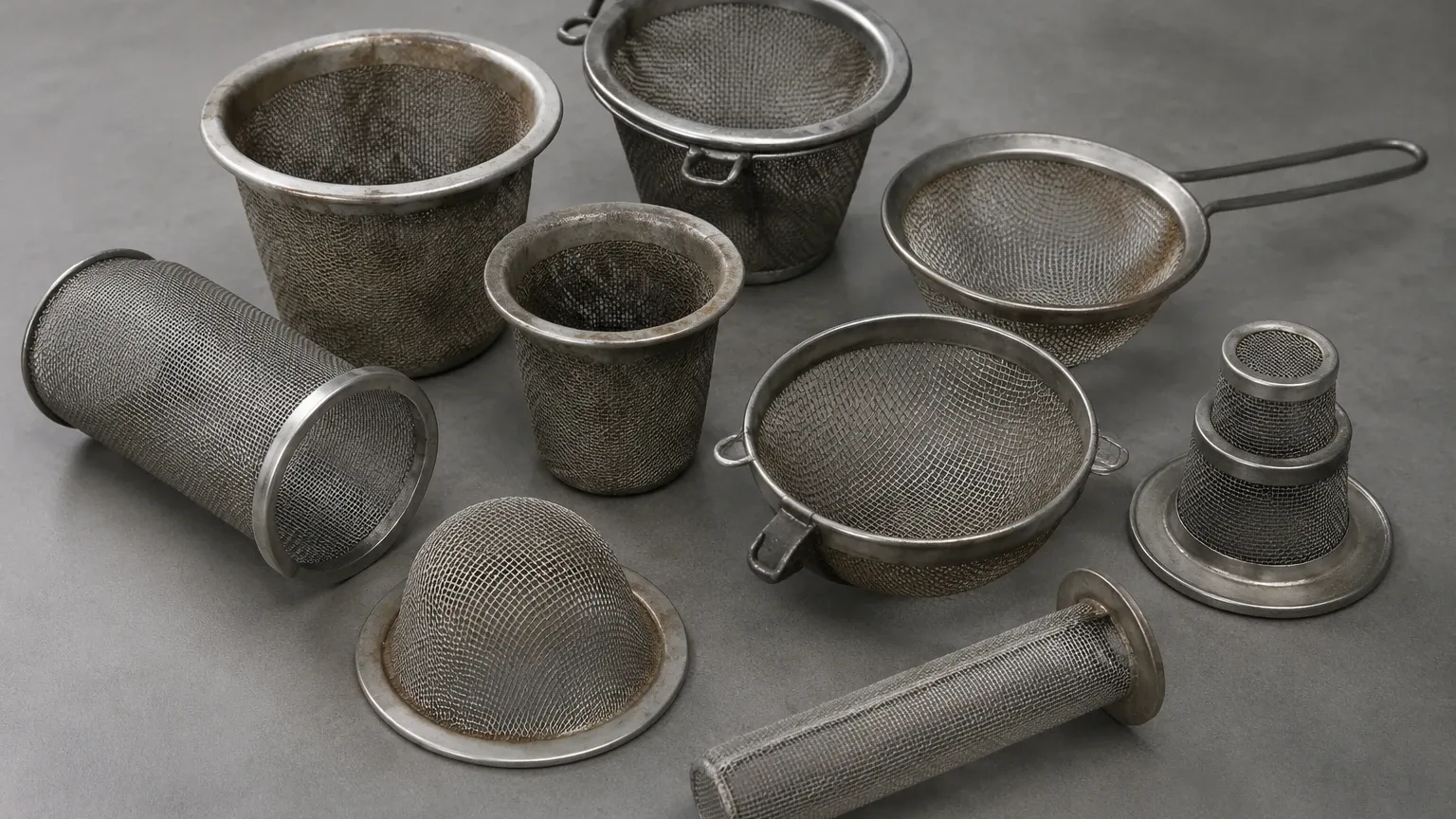
Old Wire Strainers
In industrial fluid handling systems, the integrity of filtration components is paramount to protecting downstream equipment such as pumps, valves, and heat exchangers. Among these components, wire strainers and baskets serve as the first line of defense against particulate contamination. However, many facilities continue to operate with old wire strainers that have exceeded their optimal service life. While these legacy components may appear functional, they often harbor hidden structural weaknesses and performance inefficiencies that can lead to costly system failures.
Understanding the engineering implications of maintaining old wire strainers versus upgrading to modern Strainers & Baskets is essential for maintenance engineers and procurement teams. This guide explores the technical evaluation of legacy filtration components, the risks associated with aging mesh, and the engineering considerations required when transitioning to high-performance stainless steel solutions.
Assessing the Structural Integrity of Old Wire Strainers
The evaluation of old wire strainers begins with a detailed physical and structural audit. Unlike modern precision-engineered components, legacy strainers may have been subjected to decades of pressure fluctuations, thermal cycling, and chemical exposure, all of which contribute to material fatigue.
Wire Fatigue and Mesh Displacement
Industrial wire mesh is designed to maintain a specific aperture size to ensure consistent filtration accuracy. In old wire strainers, the repeated stress of fluid flow can cause "wire migration" or displacement. When wires shift, the uniform openings of the mesh are compromised, leading to larger-than-rated particles passing through the system. Engineers should inspect for areas where the weave appears loose or where individual wires have thinned due to erosion.
Weld Point Failure
Most industrial baskets are constructed by welding wire mesh to a structural frame or perforated metal support. In aging components, these weld points are common failure sites. Intergranular corrosion can occur at the heat-affected zones of the welds, especially if the original manufacturing process did not utilize low-carbon stainless steel grades like 316L. A failure at a single weld point can cause the mesh to pull away from the frame under pressure, resulting in a total bypass of unfiltered fluid.
Mechanical Deformation
Old wire strainers often exhibit signs of mechanical deformation, such as bowing or crushing. This usually occurs when the strainer has been subjected to a differential pressure ($ \Delta P $) that exceeds its structural limits. A deformed basket may no longer seat correctly within the strainer housing, allowing fluid to bypass the filtration media entirely through the gaps around the flange.
The Risks of Legacy Filtration Components
Continuing to use old wire strainers without a rigorous replacement schedule introduces several operational risks that can impact the total cost of ownership (TCO) of a fluid system.
Contamination from Media Migration
One of the most significant risks associated with aging wire mesh is the potential for the filter media itself to become a contaminant. As stainless steel wires become brittle over time due to work hardening or corrosion, small fragments can break off and enter the process stream. In industries such as food processing or pharmaceuticals, this type of contamination can lead to entire batch rejections and significant financial loss.
Unpredictable Pressure Drops
Over years of service, old wire strainers often develop "blinding"—a condition where particles become permanently lodged within the mesh or where scale buildup narrows the effective filtration area (EFA). Even after standard cleaning cycles, these legacy filters may exhibit a higher baseline pressure drop than new components. This forces pumps to work harder, increasing energy consumption and reducing the overall efficiency of the hydraulic circuit.
Chemical Incompatibility and Corrosion
Material science has advanced significantly since many legacy systems were installed. Old wire strainers might be composed of alloys that are less resistant to modern cleaning chemicals or updated process fluids. Pitting corrosion and stress-corrosion cracking (SCC) are particularly prevalent in older 304-grade stainless steel components exposed to chloride-rich environments. Modernizing to 316L or specialized alloys ensures better longevity in aggressive chemical processing applications.
Engineering Considerations for Replacement and Retrofitting
When engineers decide to replace old wire strainers, the process involves more than simply matching the physical dimensions. It is an opportunity to optimize the filtration performance based on current process requirements.
Filtration Accuracy and Mesh Selection
The choice of mesh weave—whether plain, twilled, or Dutch weave—greatly influences both the filtration rating and the flow characteristics. For many legacy systems, the original filtration requirements may no longer be documented. Engineers must perform a particle size distribution (PSD) analysis of the process fluid to determine the optimal micron rating for the new Strainers & Baskets. Upgrading from a simple coarse mesh to a multi-layered sintered mesh can provide superior strength and finer filtration without sacrificing flow capacity.
Open Area Ratio (OAR)
The Open Area Ratio is the relationship between the total area of the holes in the mesh and the total surface area of the strainer. A higher OAR results in a lower initial pressure drop and longer intervals between cleanings. When replacing old wire strainers, it is often possible to select modern wire diameters and weave patterns that increase the OAR while maintaining the necessary structural strength, thereby improving the system's hydraulic efficiency.
Structural Reinforcement
For high-pressure applications, modern baskets often incorporate a "sandwich" construction, where the fine wire mesh is protected by a layer of coarser mesh or a perforated metal backup tube. This design prevents the fine mesh from stretching or tearing under high differential pressure, a common failure mode in older, unsupported wire strainers.
Customization Options for Retrofitting Legacy Systems
A common challenge in upgrading old wire strainers is that the original equipment manufacturer (OEM) may no longer exist, or the housing dimensions may be non-standard. Custom manufacturing allows for the creation of drop-in replacements that meet modern performance standards while fitting perfectly into existing infrastructure.
Dimensional Precision
Accurate measurement of the flange diameter, basket depth, and seating surface is critical. Custom manufacturers can utilize CNC machining and precision welding to ensure that the replacement basket provides a leak-proof seal within the old housing. This eliminates the need for expensive piping modifications or housing replacements.
Handle and Lifting Configurations
Maintenance safety is a key consideration in modern industrial environments. Old wire strainers often featured rudimentary handles that were difficult to grasp with safety gloves or lacked the strength for mechanical lifting. New custom baskets can be designed with ergonomic handles, heavy-duty lifting lugs, or even magnetic inserts to capture ferrous fines that the mesh might otherwise miss.
Material Upgrades
Retrofitting provides an opportunity to upgrade the material of construction. If an old wire strainer made of galvanized steel or standard 304 stainless steel has shown signs of premature corrosion, it can be replaced with 316L, Monel, or Hastelloy. These materials offer superior resistance to specific corrosive agents, significantly extending the mean time between failures (MTBF).
Total Cost of Ownership: Maintenance vs. Replacement
While the initial cost of replacing old wire strainers may seem like a significant expenditure, the long-term economics often favor replacement over continued maintenance of aging components.
Cleaning Costs
Old wire strainers require more frequent and aggressive cleaning. The labor costs associated with downtime, along with the chemical and water usage for cleaning, add up over time. Furthermore, aggressive cleaning (such as high-pressure washing or chemical baths) further weakens aging wire, accelerating the cycle of degradation.
Energy Efficiency
As noted previously, the increased pressure drop across a blinded or inefficient old strainer increases the load on the system's pumps. In large-scale industrial operations, even a small reduction in differential pressure can result in thousands of dollars in annual energy savings. Transitioning to modern Strainers & Baskets with optimized OAR is a direct way to improve energy performance.
Risk Mitigation
The cost of a single catastrophic failure caused by a broken wire or a bypassed strainer—resulting in a damaged high-speed pump or a contaminated product batch—far outweighs the cost of a proactive replacement program. Engineers should view the replacement of old wire strainers as an insurance policy for the entire process line.
Conclusion: Taking the Next Step in Filtration Optimization
Managing old wire strainers requires a balance between operational continuity and technical foresight. By performing regular audits and understanding the failure modes of aging mesh, engineers can identify the optimal time for replacement. Modern filtration technology offers significant advantages in terms of material durability, filtration precision, and structural integrity.
When moving forward with a replacement project, it is essential to work with a manufacturer that understands the technical nuances of industrial filtration. Confirming the specific chemical environment, flow rates, and required micron ratings will ensure that the new components provide reliable service for years to come. Whether you are dealing with standard sizes or require a custom-engineered solution to fit a legacy housing, upgrading your Strainers & Baskets is a critical step in maintaining a high-performance, cost-effective industrial fluid system.
