


Over the Sink Strainers
In industrial, laboratory, and commercial food processing environments, the management of fluid-solid separation often begins at the point of manual rinsing or batch preparation. Over the sink strainers, while appearing simple in design, are critical components in maintaining workflow efficiency and ensuring that debris does not enter downstream drainage systems or contaminate sensitive processes. For engineers and facility managers, selecting the right strainer involves more than just sizing; it requires an understanding of material science, mesh dynamics, and structural integrity under load.
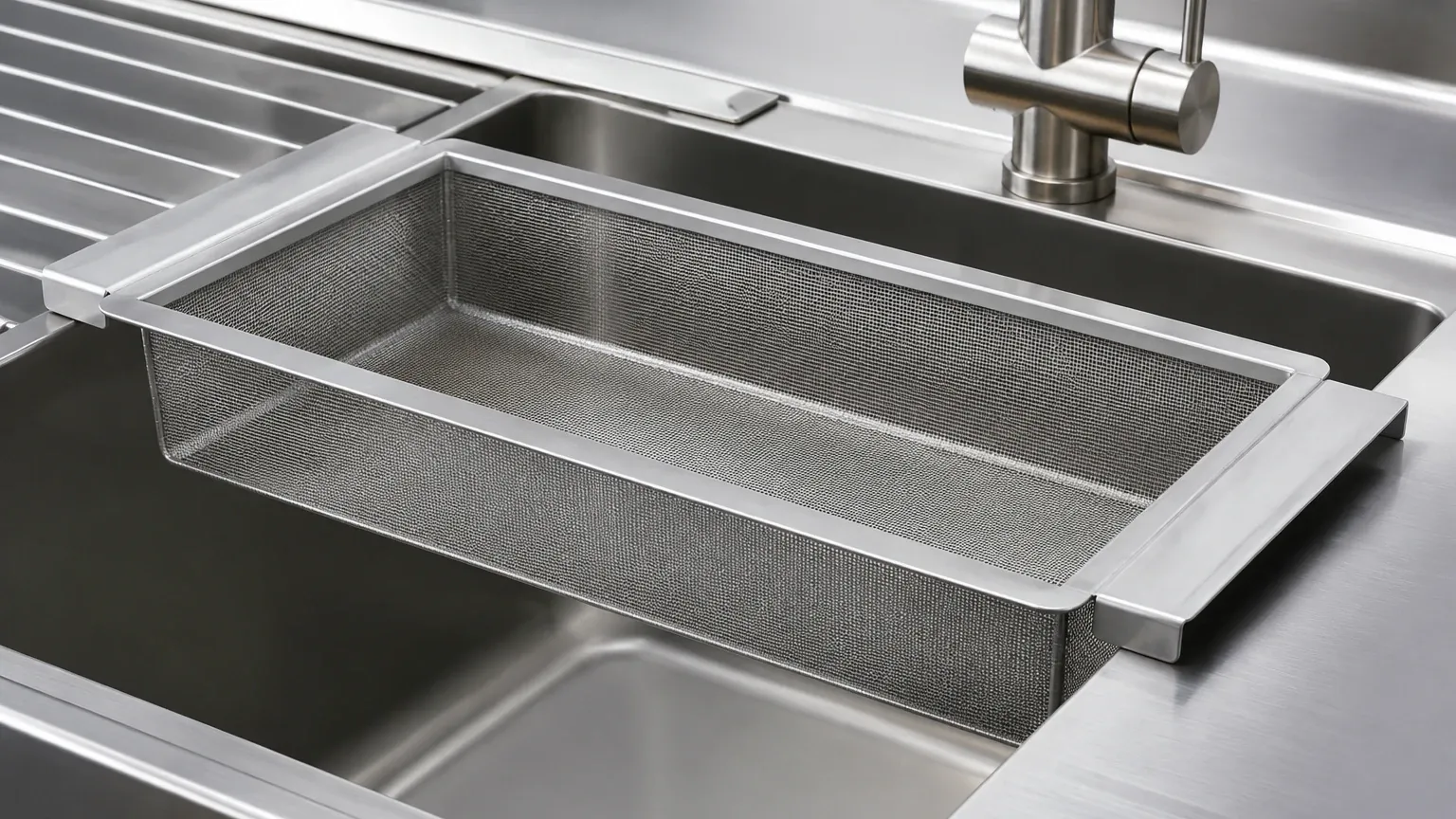
Within the broader category of Strainers & Baskets, over the sink variants serve as the first line of defense. These tools are designed to bridge the span of a workstation sink, providing a stable platform for rinsing, draining, or temporary storage of processed materials. When manufactured to industrial standards, these strainers provide the durability required for high-volume use in chemical, pharmaceutical, and food-grade applications.
The Role of Over the Sink Strainers in Industrial Workflows
Industrial workflows often necessitate the manual handling of raw materials or components that require cleaning or fluid extraction. Over the sink strainers are utilized to facilitate these tasks without the risk of losing small parts or clogging facility plumbing. In a laboratory setting, they are used for the recovery of precipitates; in food processing, they are essential for the initial wash of produce or the draining of blanched products.
Unlike consumer-grade alternatives, industrial over the sink strainers must withstand constant exposure to moisture, varying temperatures, and potentially corrosive cleaning agents. The integration of these strainers into a facility’s standard operating procedures (SOPs) helps in maintaining a clean workspace and protecting expensive wastewater treatment systems from solid waste accumulation. By capturing solids at the source, these baskets reduce the frequency of maintenance required for grease traps and secondary filtration units.
Material Selection: Why Stainless Steel is the Standard
Material selection is the most significant factor in the longevity and safety of industrial filtration components. For over the sink strainers, stainless steel is the preferred material due to its mechanical strength and resistance to oxidation.
Grade 304 Stainless Steel
Grade 304 is the most common material for general-purpose industrial strainers. It offers excellent corrosion resistance and is suitable for most food processing and light chemical applications. It is easy to sanitize, which is a primary requirement in environments governed by HACCP (Hazard Analysis and Critical Control Points) or FDA regulations.
Grade 316 Stainless Steel
In more demanding environments, such as pharmaceutical manufacturing or chemical processing involving high salt concentrations or acidic solutions, Grade 316 stainless steel is required. The addition of molybdenum in 316 stainless steel enhances its resistance to pitting and crevice corrosion, particularly in chloride-rich environments. For engineers specifying equipment for cleanroom or harsh industrial use, 316 stainless steel ensures that the strainer will not introduce metallic contaminants into the process due to surface degradation.
Engineering Specifications for Industrial Strainers & Baskets
When evaluating over the sink strainers for professional use, technical specifications regarding the mesh and the frame are paramount. These specifications dictate the filtration efficiency and the weight-bearing capacity of the unit.
Mesh Count and Micron Rating
The "mesh count" refers to the number of openings per linear inch. A higher mesh count indicates a finer filtration level. In industrial applications, the choice of mesh depends on the particle size that needs to be retained. For instance, a coarse mesh (e.g., 10 to 20 mesh) is sufficient for rinsing vegetables or large metal parts, while a fine mesh (e.g., 100 mesh or higher) is necessary for capturing fine powders or small biological samples. Engineers must balance the need for fine filtration with the requirement for rapid drainage; a mesh that is too fine may lead to "blinding" or clogging, slowing down the workflow.
Wire Diameter and Open Area
The diameter of the wire used in the mesh affects both the strength of the strainer and the "open area" percentage. The open area is the ratio of the total area of the openings to the total area of the mesh. A higher open area allows for faster flow rates but may compromise the structural rigidity of the basket if the wire diameter is too small. Industrial designs often utilize a heavy-duty support mesh or a perforated metal backing to provide strength while maintaining a high flow rate.
Structural Frame and Handles
Over the sink strainers are subject to significant mechanical stress when filled with heavy materials. The frame must be constructed from thick-gauge stainless steel wire or tubing to prevent warping. Many industrial designs feature expandable handles with non-slip coatings to ensure a secure fit across various sink widths. The welding points—typically TIG or spot welds—must be smooth and free of burrs to prevent injury to operators and to eliminate areas where bacteria or debris could accumulate.
Key Evaluation Criteria for Procurement Teams
Purchasing teams must look beyond the initial cost and evaluate the total cost of ownership and performance reliability. The following criteria are essential when selecting industrial-grade strainers:
1. Load Capacity: Confirm the maximum weight the strainer can support when fully extended across a sink. Structural failure during operation can lead to material loss and safety hazards.
2. Sanitation Compliance: Ensure the design is "hygienic," meaning it lacks sharp corners, crevices, or exposed threads that are difficult to clean. For food and pharmaceutical industries, electro-polishing the stainless steel surface can further enhance cleanability by reducing surface roughness.
3. Dimensional Compatibility: Verify the minimum and maximum extension lengths of the handles. A strainer that does not fit securely on the sink rim is a significant operational risk.
4. Filtration Accuracy: Match the mesh size to the specific application requirements to ensure effective separation without unnecessary flow restriction.
Common Operational Risks and Mitigation Strategies
Even high-quality strainers can fail or underperform if not correctly specified or maintained. Understanding common risks allows engineers to implement better procurement and maintenance strategies.
Corrosion and Passivation
While stainless steel is corrosion-resistant, it is not corrosion-proof. Exposure to harsh chemicals or improper cleaning can lead to surface rust. To mitigate this, many industrial strainers undergo a passivation process, which involves treating the surface with a mild oxidant (like nitric acid) to remove free iron and enhance the protective chromium oxide layer. When purchasing, confirm if the products have been passivated to ensure maximum service life.
Mechanical Fatigue
Repeated loading and unloading, combined with the vibration of nearby industrial machinery, can lead to stress cracks at the weld points. Regular inspections should be conducted to identify signs of fatigue. Choosing strainers with reinforced corners and high-quality welds significantly reduces this risk.
Bypass and Clogging
If the strainer is not seated correctly or if the mesh is damaged, "bypass" occurs, allowing solids to enter the drain. Conversely, if the mesh is too fine for the particulate load, it will clog rapidly. Using a tiered filtration approach—where a coarse over the sink strainer is followed by a finer secondary filter—can optimize the process and prevent frequent downtime for cleaning.
Customization and OEM Solutions for Specialized Applications
Standard off-the-shelf strainers often fail to meet the precise needs of specialized industrial processes. In these cases, custom-engineered Strainers & Baskets are the most effective solution. Customization allows for the optimization of every design element:
* Custom Dimensions: Tailoring the basket depth and width to fit specific industrial sinks or processing tanks.
* Specialized Mesh Configurations: Utilizing multi-layer sintered mesh for extreme durability or specific micron ratings not available in standard products.
* Integrated Features: Adding feet for standalone use, specialized mounting brackets, or reinforced rims for heavy-duty lifting.
* Material Upgrades: Utilizing exotic alloys like Hastelloy or Monel for environments where even 316 stainless steel would fail.
By working with a manufacturer like Kaifil, engineers can develop OEM filtration components that are perfectly aligned with their specific application requirements, ensuring both performance and longevity.
Maintenance and Cleaning Recommendations
To maintain the filtration efficiency of over the sink strainers, a consistent cleaning regimen is necessary. In food and pharmaceutical sectors, this often involves Clean-in-Place (CIP) or manual scrubbing with approved detergents. For fine mesh strainers that have become blinded by oils or fine particulates, ultrasonic cleaning is highly effective. This process uses high-frequency sound waves to create cavitation bubbles that dislodge contaminants from deep within the mesh structure without damaging the wires.
It is also important to avoid using steel wool or carbon steel brushes for cleaning, as these can leave behind iron particles that will cause the stainless steel to rust. Only stainless steel brushes or non-metallic scouring pads should be used.
Conclusion: Optimizing Filtration Efficiency
Over the sink strainers are fundamental tools that bridge the gap between manual handling and automated filtration systems. While they may seem like simple hardware, their impact on facility hygiene, process efficiency, and equipment protection is substantial. By focusing on high-quality materials like 304 or 316 stainless steel, precise engineering of mesh specifications, and robust structural design, industrial users can ensure they are investing in tools that will withstand the rigors of a professional environment.
When standard products do not meet the technical demands of a specific process, seeking customized solutions is the most reliable path forward. For more information on technical specifications and custom manufacturing options for industrial filtration components, engineers and purchasing professionals can Review product options and application support to find the ideal solution for their operational needs. Proper selection today prevents operational failures tomorrow, ensuring that filtration processes remain seamless and cost-effective.
