


Quick Cleaning Strainers Are Installed
In industrial fluid handling systems, the integrity of downstream equipment such as pumps, valves, and heat exchangers depends heavily on the effective removal of solid contaminants. Industrial Strainers & Baskets serve as the first line of defense, capturing debris that could otherwise cause mechanical wear, clogging, or process contamination. Among the various configurations available, quick-cleaning models have become a standard in facilities where process continuity and minimal downtime are critical. Understanding how and why quick cleaning strainers are installed requires a deep dive into engineering specifications, fluid dynamics, and maintenance logistics.
Understanding Industrial Strainers & Baskets
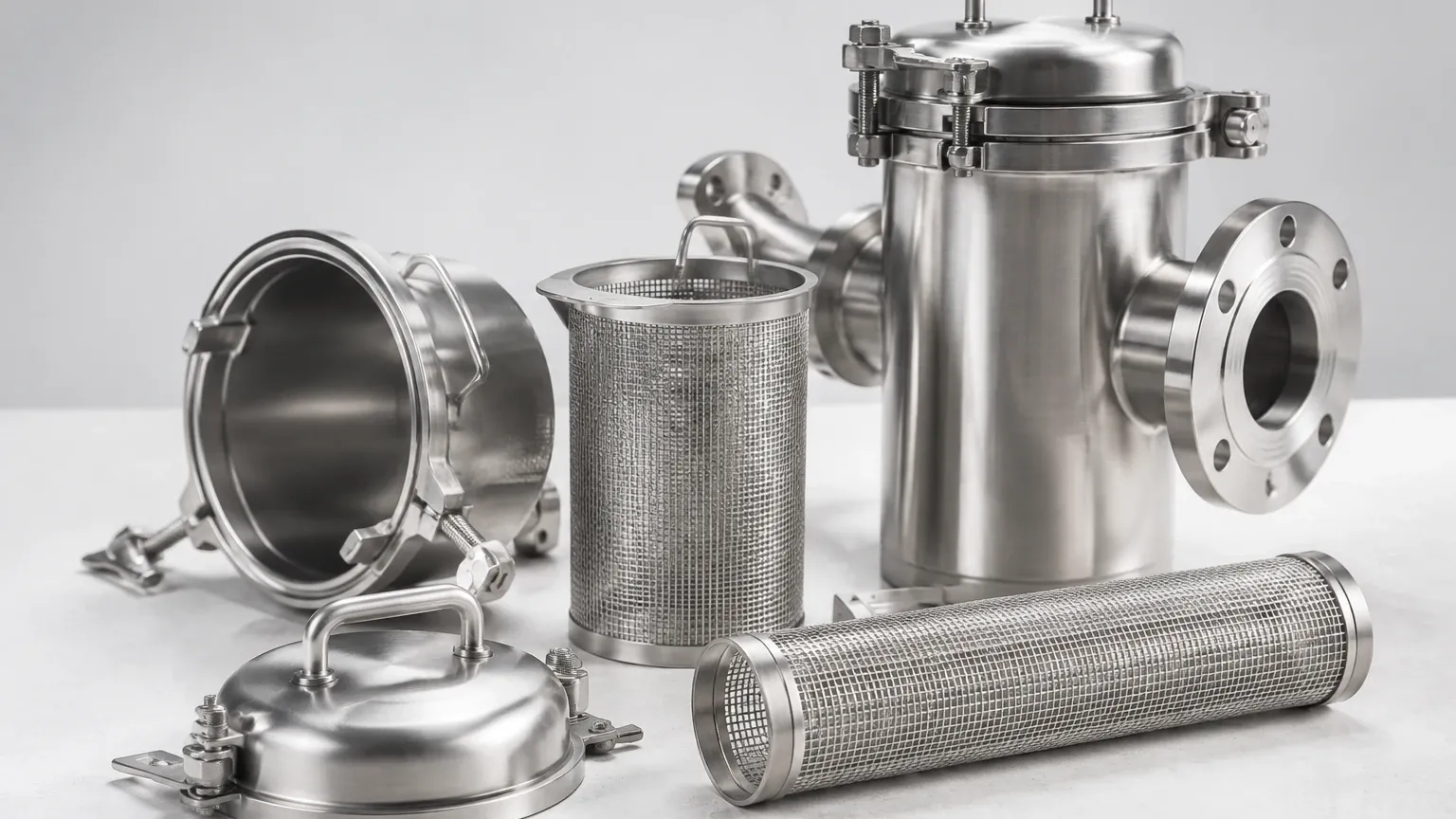
Industrial strainers are essentially closed vessels with a removable screen or basket designed to remove large particles from a process stream. Unlike fine filters that may target sub-micron particles, strainers typically handle larger debris, ranging from several millimeters down to approximately 40 microns. The primary component is the basket, often constructed from perforated stainless steel or reinforced wire mesh.
The selection of a strainer depends on several variables: the viscosity of the fluid, the expected solids loading, the required flow rate, and the allowable pressure drop. In high-flow applications, basket strainers are preferred over Y-strainers because they offer a larger surface area, which translates to a lower initial pressure drop and longer intervals between cleaning cycles. For engineers, the goal is to balance filtration efficiency with the mechanical constraints of the piping system.
The Engineering Behind Quick Cleaning Mechanisms
The "quick cleaning" designation typically refers to the closure mechanism of the strainer housing. Standard industrial strainers often use bolted flange covers, which require a technician to remove multiple nuts and bolts using heavy tools. This process can take thirty minutes to an hour, during which the process line must be shut down or diverted.
Quick cleaning strainers utilize alternative closure technologies, such as:
* Swing-Bolt Closures: These allow the operator to loosen the nuts without removing them completely, enabling the bolts to swing out of the way so the cover can be lifted.
* V-Clamp or Tri-Clamp Fittings: Common in food, beverage, and pharmaceutical applications, these allow for tool-free access to the internal basket.
* Quick-Opening Lever Handles: These use a cam-action or threaded hand-wheel to seal the lid, reducing access time to seconds.
By reducing the time required to access the internal basket, these designs significantly lower the Total Cost of Ownership (TCO) by minimizing labor costs and production interruptions.
Strategic Placement: Where Quick Cleaning Strainers Are Installed
The efficacy of a filtration system is largely determined by its placement within the piping architecture. When quick cleaning strainers are installed, engineers must consider both the protection of equipment and the ease of operator access.
Suction Side Protection
One of the most common locations for these units is on the suction side of a pump. Pumps are highly susceptible to damage from large solids; even a small piece of weld slag or a stray bolt can destroy an impeller or mechanical seal. Installing a strainer here ensures that only clean fluid enters the pump casing. However, engineers must carefully calculate the Net Positive Suction Head (NPSH) to ensure the pressure drop across the strainer does not lead to pump cavitation.
Batch Processing and Loading Stations
In industries like chemical manufacturing or food processing, quick cleaning strainers are installed at loading and unloading stations. When transferring raw materials from a tanker truck to a storage silo, the risk of external contamination is high. A quick-clean design is essential here because the strainer may need to be emptied after every batch to prevent cross-contamination or to clear the high volume of debris often found in bulk shipments.
Protection of Heat Exchangers and Spray Nozzles
Heat exchangers with narrow plate gaps or shell-and-tube designs are prone to fouling. Similarly, precision spray nozzles used in coating or cleaning processes can clog instantly if solids are present. Placing a basket strainer immediately upstream of these components prevents expensive maintenance and ensures consistent process performance.
Material Selection and Technical Specifications
For industrial applications, material compatibility is non-negotiable. Stainless steel is the industry standard due to its corrosion resistance and mechanical strength. At Kaifil, we focus on high-grade alloys to ensure longevity in demanding environments.
1. 304 Stainless Steel: Suitable for general industrial use, water treatment, and non-corrosive chemical applications.
2. 316/316L Stainless Steel: Preferred for pharmaceutical, food and beverage, and marine environments where resistance to chlorides and organic acids is required.
3. Specialty Alloys: For highly aggressive chemical processing, materials like Monel or Hastelloy may be utilized for the internal mesh components.
The mesh or perforation size must be selected based on the "danger size" of the particles. If a spray nozzle has an orifice of 2mm, the strainer basket should typically have a retention rating of 0.5mm to 1mm to provide a safety margin. Over-filtering (selecting a mesh that is too fine) leads to rapid clogging and unnecessary pressure drops, while under-filtering risks equipment damage.
Operational Monitoring and Maintenance Cycles
Installing the strainer is only the first step; maintaining it is what ensures process stability. The most reliable method for determining when a strainer needs cleaning is monitoring the differential pressure (DP). As debris accumulates on the basket surface, the open area decreases, causing the pressure upstream to rise relative to the pressure downstream.
Most industrial systems are designed with a "clean" pressure drop of 2 psi or less. Once the DP reaches 10-15 psi, the basket is considered fouled and must be cleaned. If quick cleaning strainers are installed with DP gauges or electronic sensors, operators can be alerted automatically before the flow is significantly restricted.
The Cleaning Process
For manual quick-clean units, the process involves:
1. Isolating the strainer using upstream and downstream valves.
2. Venting the internal pressure and draining the housing.
3. Opening the quick-access cover.
4. Removing the basket and rinsing it (or replacing it with a clean spare to further reduce downtime).
5. Inspecting the O-ring or gasket for wear.
6. Reinstalling the basket and securing the cover.
Customization and OEM Considerations
Every industrial facility has unique spatial and performance requirements. Standard off-the-shelf strainers may not always fit into existing piping footprints or handle specific viscosities. This is where custom manufacturing becomes essential. Engineers often require specific inlet/outlet configurations (such as offset nozzles), custom leg heights for floor mounting, or specialized coatings for the interior of the housing.
When designing custom Strainers & Baskets, manufacturers like Kaifil look at the Reynolds number of the fluid to predict flow behavior. For high-viscosity fluids like resins or heavy oils, the basket design must be reinforced to withstand the high structural loads caused by the pressure differential. Furthermore, OEM partners often require private labeling and specific certification compliance (such as PED or ASME) to meet international safety standards.
Avoiding Common Installation Risks
While the benefits of quick-clean designs are clear, improper installation can lead to operational failures. One common error is failing to provide enough clearance for basket removal. If a strainer is installed in a tight corner without vertical space to lift the basket, the "quick clean" feature becomes useless.
Another risk is the omission of a bypass line. In continuous processes that cannot be shut down, quick cleaning strainers are installed in a duplex configuration or with a valved bypass. This allows the flow to be diverted through a second strainer or a temporary pipe while the primary basket is being serviced. Without a bypass, even a 30-second cleaning cycle requires a total system halt.
Finally, engineers must ensure that the gaskets and O-rings are compatible with the process fluid. A quick-clean cover relies on a high-quality seal; if the elastomer swells or degrades due to chemical exposure, the unit will leak, creating safety hazards and environmental concerns.
Conclusion: Optimizing Filtration Performance
The decision to utilize quick-clean technology in industrial filtration is a move toward operational excellence. By understanding the specific points in a system where quick cleaning strainers are installed, and by selecting the appropriate materials and mesh sizes, facilities can protect their capital equipment while maximizing uptime. Whether for a chemical refinery, a food processing plant, or a hydraulic power unit, the right strainer configuration serves as a critical safeguard for both product quality and mechanical reliability.
