


Q Strainer
In industrial fluid handling, the protection of sensitive downstream equipment—such as pumps, valves, and heat exchangers—is a critical engineering priority. The q strainer, a specialized component within the broader category of Strainers & Baskets, serves as a primary line of defense against particulate contamination. These strainers are designed to remove coarse solids from liquid or gas streams, ensuring that the process media meets the required purity standards while preventing mechanical damage or clogging in the system.
For engineers and procurement professionals, selecting the correct q strainer involves a deep understanding of flow dynamics, material compatibility, and the specific filtration requirements of the application. Whether utilized in chemical processing, food and beverage production, or pharmaceutical manufacturing, the performance of a strainer is defined by its structural integrity and the precision of its filtration element.
Engineering and Design Principles of the Q Strainer
The "Q" designation in strainer terminology often refers to specific configurations designed for quick-access maintenance or sanitary applications, frequently utilizing Tri-Clamp or similar rapid-release connections. Unlike permanent filtration systems that may require extensive downtime for servicing, the q strainer is engineered for operational efficiency.
Flow Dynamics and Pressure Drop
One of the most critical factors in strainer design is the relationship between the open area of the filter element and the cross-sectional area of the inlet pipe. A well-engineered q strainer typically maintains an open area ratio of at least 4:1 or higher. This high ratio is essential to minimize the initial pressure drop (clean differential pressure) across the unit.
When fluid enters the strainer body, it undergoes a change in velocity and direction. If the internal basket or mesh element is too restrictive, the resulting turbulence and pressure loss can lead to cavitation in downstream pumps or reduced flow rates in the entire process line. Engineers must calculate the maximum allowable pressure drop ($ΔP$) at the peak flow rate to ensure the strainer does not become a bottleneck.
Structural Configurations
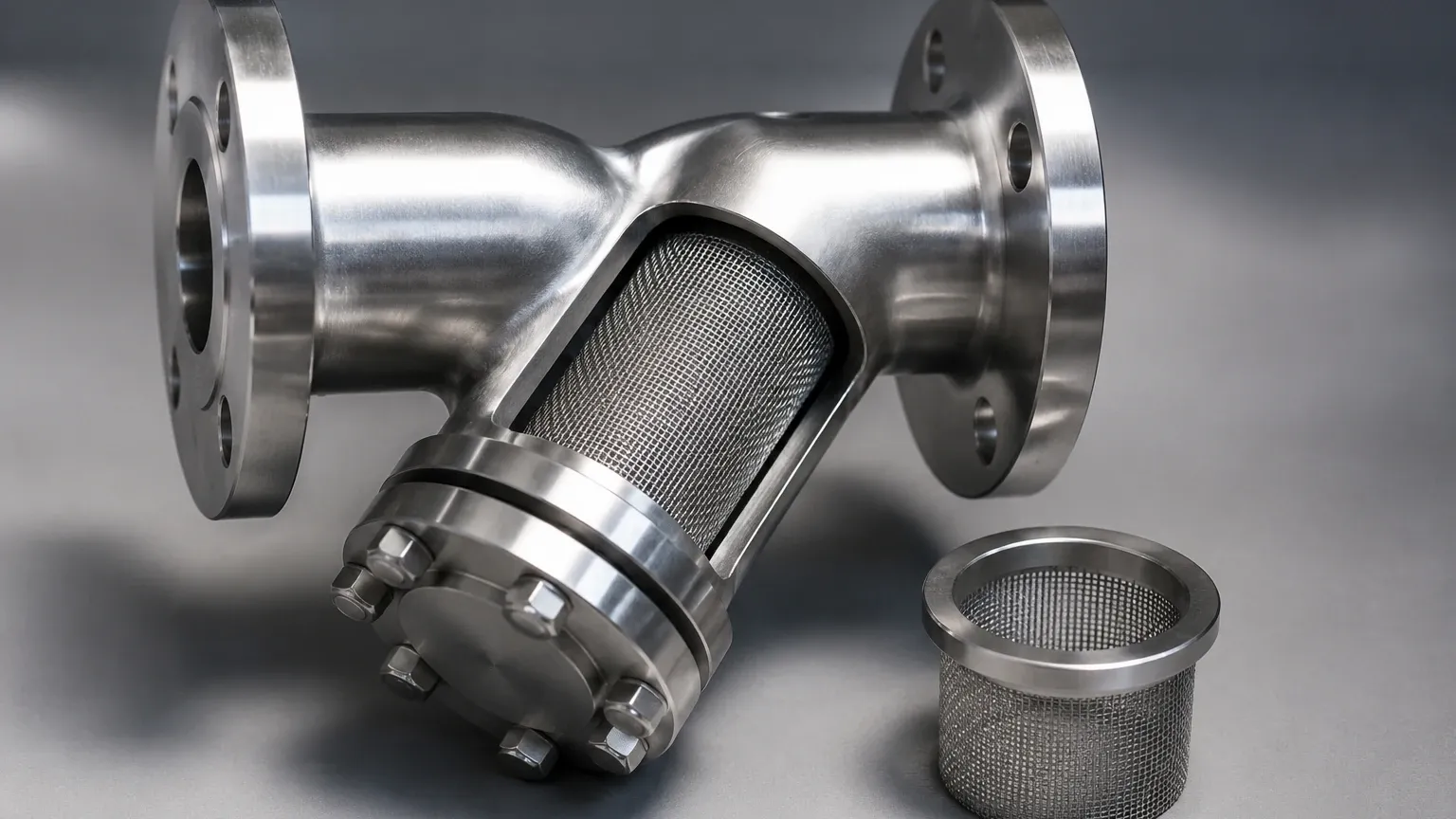
Q strainers are generally available in inline or angled configurations. The inline design allows for a streamlined flow path, which is ideal for systems where space is limited. The internal element—the basket or screen—is positioned to intercept the flow, forcing all media through the stainless steel mesh. The housing must be rated for the system's maximum operating pressure and temperature, often complying with ASME or ISO standards for pressure vessels.
Material Selection and Chemical Compatibility
In industrial environments, the longevity of a q strainer is dictated by its resistance to the process media. Stainless steel is the industry standard due to its mechanical strength and corrosion resistance. Kaifil specializes in manufacturing these components from high-grade austenitic stainless steels, which are essential for maintaining process purity.
Grade 304 vs. 316L Stainless Steel
* Grade 304: This is the most common material for general industrial applications. It offers excellent resistance to atmospheric corrosion and many organic and inorganic chemicals. It is suitable for water treatment, hydraulic systems, and general manufacturing.
* Grade 316L: For more demanding environments, such as those involving chlorides, acids, or high-purity pharmaceutical processes, 316L is preferred. The addition of molybdenum enhances its resistance to pitting and crevice corrosion. The "L" (low carbon) designation is crucial for components that require welding, as it prevents carbide precipitation and ensures the integrity of the weld zones.
Surface Finish and Sanitary Requirements
In the food, beverage, and pharmaceutical industries, the internal surface finish of the q strainer is as important as the material itself. Surfaces must be smooth to prevent bacterial growth and facilitate Clean-in-Place (CIP) procedures. This is often measured in Ra (Roughness Average). A typical sanitary q strainer may require an internal finish of Ra < 0.8 μm, achieved through mechanical polishing or electropolishing. This prevents the entrapment of particulates and ensures that the system remains sterile.
Filtration Media: Mesh and Perforation Options
The core of any Strainers & Baskets solution is the filtration media. The choice between perforated metal and woven wire mesh depends on the size of the contaminants that need to be removed.
Perforated Plate Elements
For removing large debris, such as scale, weld slag, or stones, a perforated stainless steel plate is often sufficient. These elements are robust and can withstand significant differential pressure without deforming. The hole size and staggered pattern determine the effective filtration area. Common hole diameters range from 1/32" to 1/4" or larger.
Woven Wire Mesh Elements
When finer filtration is required, woven wire mesh is layered over a perforated support basket. This allows for precision down to the micron level. Engineers must specify the mesh count (the number of openings per linear inch) or the absolute micron rating.
* Single Layer Mesh: Used for low-pressure, low-viscosity fluids.
* Multi-Layer Sintered Mesh: For high-pressure applications where the mesh might otherwise collapse. Sintering bonds multiple layers of mesh together, providing both high permeability and extreme structural strength.
Installation and Operational Best Practices
Proper installation is paramount to the performance of a q strainer. Incorrect orientation can lead to air pockets, incomplete filtration, or difficulty in cleaning.
Orientation and Flow Direction
Most q strainers are designed for a specific flow direction, typically marked on the housing. In liquid applications, the strainer should be installed so that the basket collects debris from the "inside-out." This ensures that when the basket is removed for cleaning, the collected contaminants are lifted out with it, rather than falling back into the downstream piping.
Monitoring Differential Pressure
To prevent the collapse of the internal element and ensure consistent flow, operators should monitor the differential pressure across the q strainer. As the mesh becomes loaded with particulates, the $ΔP$ will increase. A common practice is to install pressure gauges on both the inlet and outlet sides. A predetermined "dirty" pressure drop (e.g., 10-15 psi) should trigger a maintenance cycle to clean or replace the element.
Gasket and Seal Integrity
The quick-release nature of the q strainer relies on effective sealing. Depending on the chemical composition and temperature of the fluid, seals may be made from EPDM, Viton (FKM), PTFE, or Silicone. Choosing the wrong seal material can lead to swelling, degradation, and eventual leaks, which can compromise the entire filtration process.
Maintenance and Lifecycle Management
One of the primary advantages of the q strainer is its ease of maintenance. However, a structured maintenance protocol is necessary to maximize the service life of the equipment and ensure total cost of ownership (TCO) remains low.
1. Regular Inspection: Even if the pressure drop remains within limits, periodic visual inspections are recommended to check for mesh fatigue, corrosion, or gasket wear.
2. Cleaning Procedures: For non-disposable elements, cleaning should be performed using compatible solvents or ultrasonic baths. In sanitary applications, ensuring the element is compatible with caustic cleaning agents used in CIP cycles is essential.
3. Spare Parts Inventory: To minimize downtime, facilities should maintain an inventory of replacement baskets and gaskets. Because the q strainer often protects critical equipment, a sudden failure of the mesh element can lead to expensive repairs downstream.
Selection Criteria for Industrial Procurement
When sourcing a q strainer, technical professionals should provide manufacturers like Kaifil with a comprehensive set of operational parameters. This ensures the supplied component is fit for purpose and optimized for the specific environment.
* Fluid Characteristics: What is the viscosity, density, and chemical composition of the media? High-viscosity fluids require larger surface areas to maintain flow.
* Operating Conditions: What are the maximum and normal operating pressures and temperatures?
* Contaminant Profile: What is the nature of the solids being removed? Are they hard, abrasive particles or soft, deformable organic matter?
* Filtration Target: What is the required micron rating? Over-filtering (selecting a mesh that is too fine) can lead to excessive maintenance and pressure loss, while under-filtering risks damaging downstream components.
* Connection Type: Does the system require NPT threads, flanged connections, or sanitary Tri-Clamp fittings?
By addressing these factors, engineers can select a q strainer that balances performance, durability, and ease of use. As a professional manufacturer, Kaifil provides customized stainless steel filtration solutions that meet these rigorous industrial standards, ensuring reliable operation in the most demanding environments. For more detailed specifications on available configurations, technical teams are encouraged to Review product options and application support to find the optimal solution for their specific filtration challenges.
