


Quick Coupling Plate Strainers
In industrial fluid handling, the protection of downstream equipment—such as pumps, flow meters, and heat exchangers—is a critical operational priority. Debris, scale, and particulate matter can cause catastrophic mechanical failure or significant process contamination. Among the various solutions available, quick coupling plate strainers represent a specialized category of filtration hardware designed to balance high-efficiency particulate removal with the need for rapid maintenance and minimal system downtime. As industrial processes become increasingly automated and demanding, the selection of robust Strainers & Baskets becomes a fundamental engineering decision.
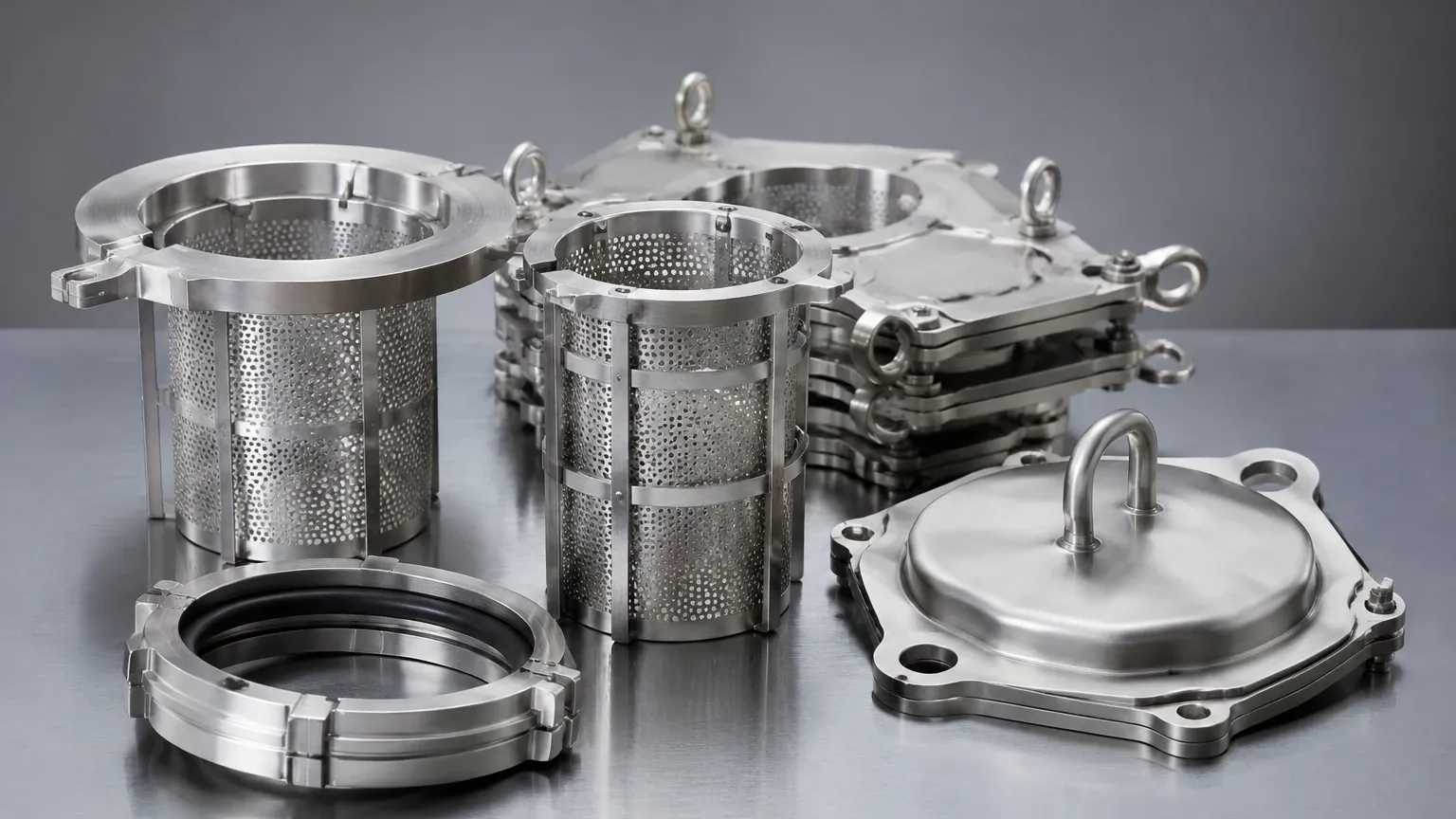
Quick coupling plate strainers are engineered to facilitate the removal of solids from liquid or gas streams using a perforated plate or a mesh-lined plate assembly. The "quick coupling" designation refers to the closure mechanism of the strainer housing, which allows operators to access the internal filter element without the need for specialized tools or extensive labor. This article examines the technical specifications, engineering considerations, and application-specific benefits of these essential filtration components.
Engineering Fundamentals of Quick Coupling Plate Strainers
The design of quick coupling plate strainers centers on two primary objectives: structural integrity under pressure and ease of access. Unlike traditional bolted-flange strainers that may require the removal of multiple heavy bolts to access the basket, quick coupling versions utilize mechanisms such as V-band clamps, swing bolts, or cam-lock systems. These designs significantly reduce the time required for cleaning cycles, which is vital in continuous processing environments.
Material Selection and Durability
Most industrial quick coupling plate strainers are constructed from high-grade stainless steel, typically Type 304 or Type 316L.
* Type 304 Stainless Steel: Suitable for general industrial applications, providing excellent strength and basic corrosion resistance for water treatment and non-corrosive chemical handling.
* Type 316L Stainless Steel: Preferred for pharmaceutical, food and beverage, and aggressive chemical environments. The addition of molybdenum and a lower carbon content enhances resistance to pitting and crevice corrosion, particularly in chloride-rich environments.
The internal "plate" component often consists of a heavy-gauge perforated metal sheet that serves as the primary straining media or as a support structure for a finer wire mesh. This dual-layer approach ensures that the strainer can withstand high differential pressures (ΔP) without deforming, while still providing the precise micron rating required for the specific process.
Advantages of Quick-Release Mechanisms in Filtration
The integration of quick-release technology into strainer housings addresses the primary bottleneck in industrial filtration: maintenance downtime. In many high-volume production lines, every minute a system is offline for filter cleaning translates directly into lost revenue.
Tool-Free Maintenance
Quick coupling plate strainers are designed for manual operation. By utilizing a single-lever or a hand-tightened clamp mechanism, an operator can open the housing, remove the contaminated plate or basket, and replace it with a clean unit in a fraction of the time required for traditional designs. This not only improves throughput but also reduces the physical strain on maintenance personnel.
Enhanced Operational Safety
Modern quick-release designs often incorporate safety features that prevent the housing from being opened while under pressure. Pressure relief valves or safety interlocks ensure that the internal environment is equalized with atmospheric pressure before the coupling can be disengaged. This is a critical consideration when handling hazardous chemicals or high-temperature fluids.
Consistent Sealing Performance
Reliability in a strainer depends heavily on the integrity of its seals. Quick coupling systems are engineered to provide uniform circumferential pressure on the gasket or O-ring. Common sealing materials include EPDM, Viton (FKM), and PTFE, selected based on the chemical compatibility and temperature profile of the process fluid. The design of the quick-release clamp ensures that the seal is seated correctly every time the unit is closed, reducing the risk of bypass or external leaks.
Technical Specifications and Performance Metrics
When specifying quick coupling plate strainers, engineers must evaluate several technical parameters to ensure the component meets the demands of the system. Performance is not merely about the size of the particles removed, but how the strainer interacts with the overall hydraulic circuit.
Micron Rating and Open Area Ratio
The effectiveness of a strainer is defined by its micron rating—the size of the smallest particle it is designed to trap. However, a finer mesh increases resistance to flow. To counteract this, engineers look at the "Open Area Ratio" (OAR). This is the ratio of the total area of the holes in the strainer plate to the cross-sectional area of the inlet pipe. A high OAR (typically 4:1 or higher) ensures that the strainer can accumulate a significant amount of debris before the pressure drop becomes excessive, thereby extending the intervals between cleanings.
Pressure Drop (ΔP) Considerations
Every component in a fluid system contributes to pressure loss. Quick coupling plate strainers must be sized to ensure that the initial (clean) pressure drop is within acceptable limits for the pump's performance curve. Factors influencing ΔP include:
* Fluid viscosity and density.
* Flow velocity (GPM or m³/h).
* The percentage of open area in the strainer plate.
* The accumulation of solids over time.
Flow Configuration
Strainers are typically available in Y-pattern, T-pattern, or basket (simplex/duplex) configurations. Quick coupling mechanisms are most commonly found in basket or T-pattern designs where the orientation allows for easy vertical or horizontal removal of the plate assembly without disrupting the main piping alignment.
Industrial Applications for Quick Coupling Plate Strainers
The versatility of quick coupling plate strainers makes them suitable for a wide range of sectors where hygiene, speed, and reliability are paramount.
Food and Beverage Processing
In the food industry, filtration systems must comply with strict sanitary standards. Quick coupling designs allow for frequent "clean-in-place" (CIP) or manual cleaning procedures required to prevent bacterial growth. Stainless steel 316L strainers are used to remove pulp from juices, seeds from preserves, or charred particles from frying oils.
Chemical and Petrochemical Sectors
Chemical processing often involves fluids that are either highly viscous or prone to rapid scaling. Quick coupling plate strainers allow operators to quickly clear obstructions in lines carrying resins, polymers, or catalysts. The robust construction of these strainers ensures they can handle the thermal expansion and contraction cycles common in chemical manufacturing.
Water and Wastewater Treatment
In water treatment, these strainers serve as pre-filters for membrane systems or UV sterilizers. They remove sand, grit, and organic debris that could damage sensitive downstream components. The ease of access provided by the quick-release clamp is particularly beneficial in municipal or industrial water plants where maintenance staff may be managing hundreds of filtration points.
Hydraulic and Lubrication Systems
Protecting high-pressure hydraulic pumps and precision bearings requires the removal of metallic shavings and environmental contaminants. Quick coupling strainers integrated into return lines or off-line kidney loop systems ensure that lubricants remain within the required ISO cleanliness codes, extending the life of the entire mechanical system.
Customization and Engineering Support
Standard off-the-shelf strainers may not always meet the unique requirements of a specialized industrial process. Manufacturers like Kaifil provide customized solutions that tailor the strainer's design to specific operational constraints. Customization options for quick coupling plate strainers include:
* Bespoke Micron Ratings: Engineering specific mesh and perforated plate combinations to target precise particle sizes.
* Specialized Coatings: Applying electropolishing for sanitary applications or specialized linings for high-corrosion environments.
* Custom Inlet/Outlet Orientations: Modifying the housing to fit into tight footprints or existing piping manifolds.
* Heating Jackets: For processes involving fluids that solidify at room temperature, such as chocolate, waxes, or heavy resins, steam or electric heating jackets can be integrated into the strainer housing.
When selecting a manufacturer, it is essential to confirm their capabilities in material traceability and pressure testing. Reliable Strainers & Baskets should be accompanied by documentation verifying the alloy grade and the structural integrity of the housing under the intended operating pressures.
Maintenance Best Practices for Longevity
While the quick coupling design simplifies maintenance, the longevity of the strainer depends on adherence to proper operational protocols.
1. Differential Pressure Monitoring: Installing pressure gauges upstream and downstream of the strainer is the most effective way to determine when cleaning is required. Relying on a fixed schedule can lead to either unnecessary downtime or, conversely, a blinded strainer that risks structural collapse.
2. Gasket Inspection: Every time the quick coupling is opened, the O-ring or gasket should be inspected for nicks, compression set, or chemical degradation. Keeping a stock of replacement seals is a low-cost way to prevent unexpected leaks.
3. Cleaning Techniques: Depending on the contaminant, plates should be cleaned using ultrasonic baths, high-pressure water jets, or compatible chemical solvents. Care must be taken not to damage the wire mesh or enlarge the perforations in the plate during cleaning.
4. Spare Elements: To achieve the fastest possible turnaround, facilities should maintain spare clean plate assemblies. This allows the operator to swap the dirty element for a clean one immediately, deferring the cleaning of the contaminated element to a later time without keeping the process offline.
Conclusion
Quick coupling plate strainers are an indispensable tool for modern industrial engineers seeking to optimize process efficiency and protect valuable equipment. By combining the durability of stainless steel construction with the operational speed of tool-free access, these components solve the fundamental conflict between high-quality filtration and the need for continuous uptime. Whether in a pharmaceutical cleanroom or a heavy industrial water plant, the correct implementation of these strainers ensures a cleaner, safer, and more productive fluid handling system. When evaluating options, focusing on material quality, pressure drop characteristics, and the specific needs of the application will lead to a filtration solution that delivers long-term value and reliable performance.
