


R Strainer
In industrial fluid handling, the protection of downstream equipment—such as pumps, valves, and heat exchangers—is a critical engineering priority. The r strainer, a specialized configuration within the broader category of Strainers & Baskets, serves as a primary defense mechanism against particulate contamination. These components are designed to remove coarse solids from liquid or gas streams, ensuring that process integrity is maintained and mechanical wear is minimized.
Selecting an r strainer requires a deep understanding of fluid dynamics, material science, and the specific mechanical requirements of the application. Unlike fine filtration systems that target sub-micron particles, industrial strainers focus on high-flow efficiency and the removal of larger debris that could cause catastrophic equipment failure. This article explores the technical specifications, engineering considerations, and selection criteria for these essential industrial components.
The Role of R Strainers in Industrial Fluid Systems
The r strainer is typically integrated into piping systems where high flow rates and low pressure drops are required. Its primary function is the mechanical separation of solids from a flowing medium. In many industrial contexts, the "R" designation refers to specific basket-style configurations or high-capacity return strainers used in hydraulic and process loops.
From an engineering perspective, the strainer acts as a sacrificial barrier. By capturing scale, rust, jointing compound, and other foreign matter, it prevents these materials from reaching precision-machined components. In the chemical processing and oil and gas sectors, an r strainer is often the first line of defense in a multi-stage filtration strategy. Its ability to be cleaned and reused makes it a cost-effective solution for managing heavy particulate loads that would quickly clog disposable filter cartridges.
Design Specifications and Structural Integrity
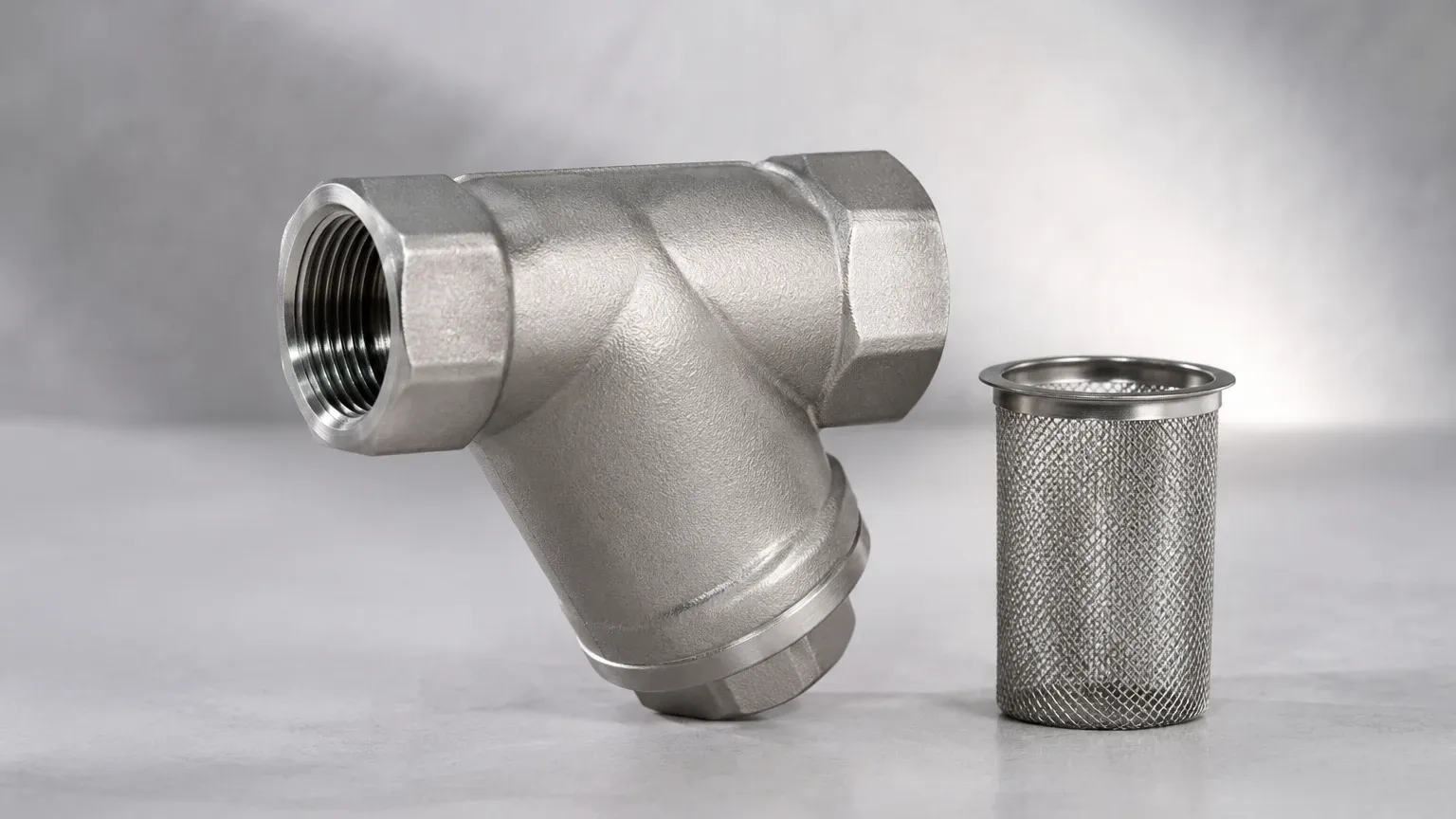
The performance of an r strainer is largely dictated by its internal geometry and the construction of the strainer element. Most industrial versions utilize a basket-style design, which offers a larger surface area compared to Y-strainers. This increased surface area is vital for maintaining a low clean pressure drop and extending the interval between maintenance cycles.
Perforated vs. Mesh Linings
The core of the r strainer is the element itself. This is usually constructed from a perforated metal sheet which provides structural rigidity. For finer filtration requirements, the perforated basket is lined with a precision-woven stainless steel wire mesh. The combination of a heavy-duty perforated support and a fine mesh lining allows the strainer to withstand high differential pressures without collapsing.
Open Area Ratio (OAR)
A critical metric for engineers is the Open Area Ratio. This is the ratio of the total open area of the strainer holes to the cross-sectional area of the inlet pipe. A high-quality r strainer typically offers an OAR of at least 4:1 or 6:1. A higher ratio ensures that even as the basket begins to fill with debris, the flow remains relatively unimpeded, preventing a rapid spike in backpressure that could damage pumps or disrupt the process.
Material Compatibility in Corrosive Environments
Material selection is perhaps the most significant factor in determining the service life of an r strainer. Because these components are often exposed to aggressive chemicals, high temperatures, and abrasive slurries, the choice of alloy is paramount.
1. Stainless Steel 304: Suitable for general industrial applications where basic corrosion resistance is required. It is commonly used in water treatment and food processing environments where conditions are not excessively acidic or saline.
2. Stainless Steel 316/316L: The industry standard for chemical processing and marine applications. The addition of molybdenum provides superior resistance to pitting and crevice corrosion, particularly in chloride-rich environments. The "L" (low carbon) variant is preferred for welded components to prevent intergranular corrosion in the heat-affected zone.
3. Specialty Alloys: For highly specialized applications, such as those involving hot concentrated acids or seawater, materials like Monel, Hastelloy, or Duplex stainless steel may be required. These materials ensure that the r strainer maintains its structural integrity over decades of service.
Optimizing Flow Efficiency and Pressure Management
Every component added to a piping system introduces a degree of flow resistance, known as pressure drop ($ΔP$). In B2B procurement, engineers must balance the need for fine filtration with the energy costs associated with overcoming high pressure drops. An r strainer must be sized correctly to ensure that the initial pressure drop is within the system's allowable limits.
Calculating Differential Pressure
Factors influencing pressure drop include the viscosity of the fluid, the flow velocity, and the micron rating of the mesh. As the r strainer accumulates debris, the effective open area decreases, and the differential pressure increases. It is standard practice to install differential pressure gauges across the strainer. This allows operators to monitor the "loading" of the basket and schedule cleaning before the pressure reaches a critical threshold that could cause the strainer element to rupture.
Flow Path Engineering
The internal flow path of the r strainer is designed to minimize turbulence. Smooth internal transitions and optimized basket placement help maintain laminar flow as much as possible, which reduces energy loss and minimizes the risk of erosion on the internal surfaces of the strainer housing.
Customization and OEM Manufacturing for Specialized Needs
Standard off-the-shelf strainers often fail to meet the unique constraints of complex industrial projects. This is where custom manufacturing and OEM capabilities become essential. An r strainer can be tailored in several ways to meet specific application requirements:
* Custom Dimensions: Adjusting the height, diameter, and connection types (flanged, threaded, or socket weld) to fit into existing piping layouts with minimal modification.
* Reinforced Elements: For high-pressure applications or systems subject to hydraulic shock (water hammer), the strainer basket can be reinforced with external rings or heavy-duty longitudinal supports.
* Handle and Lifting Lug Integration: For larger r strainers, the weight of the basket can be significant. Custom designs often include ergonomic handles or lifting lugs to facilitate safe removal and cleaning by maintenance personnel.
* Multi-Stage Filtration: Some r strainers are designed with nested baskets of varying mesh sizes, allowing for graduated filtration within a single housing.
By working closely with a manufacturer like Kaifil, engineers can ensure that the Strainers & Baskets they specify are optimized for the precise chemical and mechanical demands of their facility.
Maintenance Protocols and Operational Longevity
The primary advantage of an r strainer over other filtration methods is its cleanability. However, the longevity of the component depends on rigorous maintenance protocols.
Cleaning Procedures
When the differential pressure reaches the predetermined limit (often 5-10 psi above the clean pressure drop), the strainer must be serviced. In a simplex r strainer setup, the flow must be diverted or stopped. The cover is removed, and the basket is extracted. Cleaning typically involves high-pressure water washing or ultrasonic cleaning, depending on the nature of the contaminants. It is vital to inspect the mesh for any signs of tearing or wire displacement during this process.
Gasket and Seal Integrity
Every time an r strainer is opened for cleaning, the integrity of the cover gasket or O-ring should be checked. Using the correct seal material—such as EPDM, Viton, or PTFE—is necessary to prevent leaks and ensure the safety of the operators, especially when handling hazardous fluids.
Selecting the Right Strainer for Your Application
To make an informed purchasing decision, technical professionals should confirm several key data points before finalizing a specification for an r strainer:
* Fluid Characteristics: Viscosity, density, and chemical composition.
* Operating Conditions: Maximum operating pressure and temperature ranges.
* Filtration Target: The size and nature of the particles to be removed (e.g., hard sand vs. soft organic matter).
* Flow Rate: Both the normal operating flow and the maximum potential surge flow.
* Space Constraints: The physical footprint available for installation and the clearance required for basket removal.
By evaluating these factors, purchasing teams can avoid the common pitfalls of undersizing (which leads to frequent cleaning and high pressure drops) or oversizing (which leads to unnecessary capital expenditure and space wastage).
Conclusion
The r strainer is a fundamental component in modern industrial infrastructure. Whether utilized in a chemical plant, a food processing facility, or a hydraulic power unit, its role in protecting expensive downstream equipment cannot be overstated. By focusing on high-quality materials like 316L stainless steel, optimizing the open area ratio, and leveraging custom OEM designs, engineers can ensure reliable, long-term performance. Understanding the technical nuances of Strainers & Baskets allows for better system design, reduced downtime, and a lower total cost of ownership across the lifecycle of the fluid handling system.
